Anker SOLIX X1 Three-Month Test: Seamless Outage Switching and How Home Energy Storage Cuts Electricity Bills

Australian mountain family tests Anker SOLIX X1 with PowerDock Pro, cutting grid electricity use by 98% over three months.
The article documents a real-world experience of an Australian mountain family after installing the Anker SOLIX X1 battery system and PowerDock Pro energy management hub. Previously, during outages they had to haul a portable power station to power the water tank; after installation, a simulated main-breaker trip showed lights and appliances continuing to run with millisecond seamless switching and no perceptible interruption. Three months of usage data show September total consumption of 735 kWh with only 16 kWh purchased from the grid, solar plus battery covering about 98% of demand; the battery discharged 358 kWh while 495 kWh of surplus was exported. Surplus solar can also charge an EV, further expanding savings. The article concludes the solution suits areas with unstable grids and households with existing solar looking to raise self-consumption, though long-term battery degradation and cost payback still need more samples to verify.
From "Portable Power Cart" to Whole-Home Backup: A Real Home Energy Storage Retrofit
In the mountainous regions of Australia, where eucalyptus trees are everywhere, the grid goes down whenever a storm hits—a fact of life the video protagonist's sister and brother-in-law have long taken for granted. Living on a rural property, they previously relied on solar during the day and bought electricity at night, and during outages they had to haul a large portable power station on a cart to power the water tank just to keep the toilet flushing. Three months ago, they installed the Anker SOLIX X1 battery system and the PowerDock Pro energy management hub, upgrading their aging solar setup into a modern power supply that works whether or not the grid is online. According to the real-world test log shared on a YouTube channel, this combination has completely freed the family from outage anxiety.

Black Start Test: Millisecond Switching, Not a Flicker
The most convincing segment in the video is when they deliberately pulled the main breaker in the distribution panel to simulate an outage. The lights didn't go out, and appliances kept running—in their own words, "if the grid drops out within milliseconds, nothing changes at all, as if the grid never went down."
The key to this experience isn't how large the battery capacity is, but how quickly PowerDock Pro, acting as the "brain," detects and switches between grid-tied and off-grid states. Traditional home backup solutions often require manual switching or involve a brief power interruption, whereas the SOLIX X1 system compresses the switching process to a level users can't even perceive.

Grid-tied/off-grid switching and black start are two key capabilities of a home energy storage system. When operating grid-tied, the storage inverter synchronizes with the grid, able to both draw power from and feed power to the grid; once a grid voltage loss is detected, the system must disconnect from the grid within an extremely short time (anti-islanding protection) and establish its own voltage and frequency reference to switch to off-grid supply—a process known as black start. If the switching time exceeds tens of milliseconds, ordinary lights may flicker and sensitive devices like computers may reboot; with millisecond-level seamless switching, users barely notice. Traditional solutions often rely on manual transfer switches or mechanical changeover switches, which inevitably cause a power interruption during switching; energy management hubs like PowerDock Pro use solid-state switches and fast detection algorithms to compress switching to milliseconds, while coordinating power balance among PV, battery, and loads to avoid voltage dips caused by sudden load application at the moment of going off-grid.
Three-Month Electricity Bill: Solar + Battery Covers the Vast Majority of Demand
Three months after installation, the family reported being "more than satisfied." The most tangible change shows up on the electricity bill. In September, for example, the home used 735 kWh in total, but only 16 kWh was purchased from the grid—meaning the solar-plus-battery system covered about 98% of electricity demand. Of that, the battery discharged 358 kWh, nearly half of the month's total usage. This means the sunshine stored during the day can be used directly at night, rather than buying electricity from the grid after sunset.
On the other side, they also exported 495 kWh of surplus power to the grid that month. The storage system captures excess solar that would otherwise flow straight to the grid and prioritizes it for the home's own use—a considerable saving in itself.
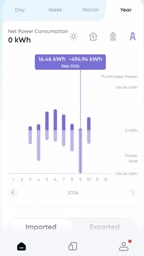
The "kilowatt-hour" (kWh) mentioned repeatedly in the article is a unit of electrical energy; 1 kWh is what is commonly called one unit of electricity. 735 kWh means the household consumed 735 units of electricity in September, and purchasing 16 kWh from the grid means 16 units. Understanding these figures also requires distinguishing PV self-consumption rate from self-sufficiency rate: the self-sufficiency rate refers to the proportion of household electricity demand met by the home's own system (PV + battery), here about 98%; the self-consumption rate refers to the proportion of PV generation directly consumed by the household. The surplus 495 kWh exported to the grid is typically bought back at a fraction of the retail price (feed-in tariffs vary widely among Australian states), whereas avoiding grid purchases saves the higher retail price—so "storing it for self-use" usually has greater economic value than "exporting surplus power." The battery discharging 358 kWh, nearly half of total consumption, shows the system effectively shifts energy to evening peak hours.
The Savings Logic Goes Beyond the Electricity Bill: EV Charging Also Gets "Free Sunshine"
The family specifically mentioned that after storing surplus solar in the battery and then using the stored power to charge their EV, the savings "increased significantly." This actually points to the second layer of value in home energy storage: when PV generation, battery storage, and EV charging form a closed loop, the household's dependence on the grid extends from "electricity use" to "transportation energy," so what's saved is more than just the monthly electricity bill.
For families living in remote areas where the grid is already unstable, energy storage also provides a sense of security that's hard to measure in money. One line repeatedly emphasized in the video: "Knowing you'll be safe through a disaster is itself a huge plus."

The PV-storage-EV charging loop is an important trend in home energy management in recent years. EV batteries typically have a capacity of 40–100 kWh, and a single charge can consume several days' worth of household electricity; charging during evening peak hours noticeably raises electricity costs. By scheduling charging through an energy management hub during periods of surplus PV output or when the battery is well charged, you're essentially driving the vehicle with surplus power that might otherwise be exported at a low price—at near-zero marginal cost. Some systems also support dynamically adjusting charging power based on PV forecasts and price signals to avoid exceeding the home's main service capacity limit. For rural residents, an EV is not only a means of transport—during an outage its large battery can also serve as a backup power source (V2H/V2L), complementing home storage and further enhancing energy resilience.
Who Is This Solution For?
Based on three months of actual use, the Anker SOLIX X1 plus PowerDock Pro combination is better suited to two types of households: first, rural or mountain residents with poor grid reliability and frequent outages; second, households that already have solar and want to store surplus daytime power for their own use at night. The video notes at the end that summer storms had already arrived early, while it was only just the beginning of spring—for those living in areas prone to extreme weather, setting up a seamlessly switching energy storage system in advance is far more comfortable than hauling a portable power station out after an outage.
One caveat: this is feedback from a single household, and long-term battery degradation, performance under different climate conditions, and the payback period of installation costs still need validation over longer timeframes and with more samples.
Related articles

AI's New Species FDE in Practice: Core Responsibilities and Career Guide
An in-depth look at the three core responsibilities of the AI-era FDE (Forward Deployed Engineer), role boundaries with algorithm, backend, and product teams, and an interview and career preparation guide, illustrated with a real-world learning platform agent transformation case to help developers understand this key role in the last mile of AI deployment.
LangChain + MCP in Practice: Architecture Protocol and Agent Tool Integration
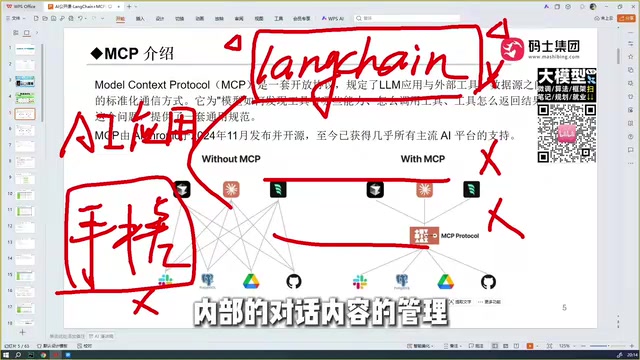
Starting from LangChain and Agent encapsulation, this article explains how the MCP protocol solves cross-model, cross-framework tool reuse, compares MCP with Function Calling, and outlines the LangChain stack and Agent development.
Codex in Practice: From Environment Setup to Skills and MCP Calls
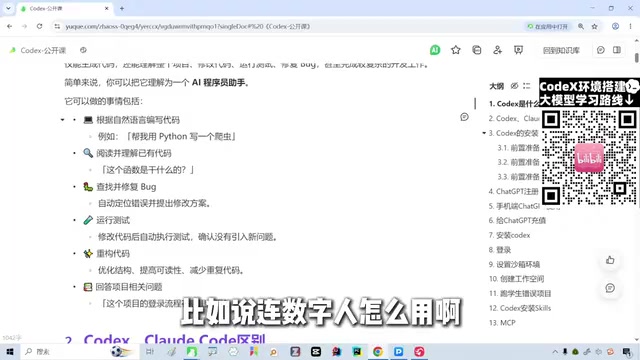
Codex is OpenAI's AI coding assistant. This guide covers its positioning, how it compares to Claude Code, model configuration pitfalls, and practical Skills and MCP usage for beginners.