Anthropic CEO Dario Amodei Calls for Slowing Down AI Development

Anthropic CEO Dario Amodei calls for slowing AI development, spotlighting the tension between capability racing and safety risks.
Anthropic CEO Dario Amodei has made a rare public call to slow down AI development — a striking signal coming from one of today's most aggressive players in the large model race. Long known as an AI safety advocate, Amodei's stance reflects the "cautionist" camp's deep concerns about alignment and model controllability. Yet the call faces a fundamental collective action problem: any company that unilaterally slows down simply cedes market share to competitors. His appeal is thus directed at industry-wide coordination and external regulatory frameworks, not just corporate self-restraint.
An Unusual Call from an AI Leader
Anthropric CEO Dario Amodei has publicly called for slowing down the pace of artificial intelligence development. What makes this statement noteworthy is who it's coming from — a leader standing at the very forefront of the AI wave. Anthropic is one of the most aggressive players in today's large model race, with its Claude series competing directly against products from OpenAI and Google.
When the head of an AI company voluntarily talks about "slowing down," it often reflects a deep anxiety within the industry about the risks of losing control over the technology. Amodei himself has long been known as an "AI safety advocate." One of the founding motivations behind Anthropic was precisely to keep safety and controllability at the core, even while pursuing capability improvements.
Why Amodei, and Why Now
Amodei's position is not an isolated incident. In recent years, as large model capabilities have rapidly advanced, discussions within the AI research community about the alignment problem, model interpretability, and potential societal risks have continued to intensify. As a practitioner deeply involved in frontier research, Amodei has a more direct sense of the boundaries of model capabilities than most outside observers.
The stance he represents is essentially an attempt to find a balance between "accelerationism" and "cautionism." On one hand, competitive pressure forces companies to continuously release more powerful models. On the other hand, increasingly powerful systems also mean increasingly unpredictable behavior patterns. Calling for a slowdown is, in effect, a reminder to the entire industry: the pace of capability growth should not far outstrip our ability to understand and control these systems.
The Real Tensions Behind the Call to Slow Down
What makes this call worth thinking about is how deeply contradictory it is. Anthropic is a heavily funded, highly valued commercial company operating in fierce market competition. Truly "slowing down" is not something any single company can achieve on its own — if one player voluntarily decelerates, competitors may seize the opportunity to capture market share.
This is the classic "collective action problem" in AI governance: all participants may agree that slowing down is beneficial for long-term safety, yet no one is willing to be the first to sacrifice their competitive advantage. Amodei's call is, to some extent, a push for coordination at the industry level and even at the regulatory level — not merely a call for corporate self-restraint.
Potential Impact on the Industry and Regulation
Public statements like this from leaders of top companies often carry a signal value that goes beyond the words themselves. They may provide backing for regulators to push forward more concrete AI governance frameworks, and they may also shape how capital markets and the general public perceive AI risks.
That said, caution is warranted. Public discussion of this statement has so far been limited, and the specific content, context, and policy proposals behind the call lack complete details. Exactly how Amodei proposes slowing down — whether targeting model scale, deployment speed, or capability research itself — still requires more primary source material to substantiate.
Conclusion: The Long Game Between Safety and Speed
Regardless of the specifics, Amodei's statement once again brings the core tension between "safety and speed" to the forefront. The AI industry is at a critical stage of capability explosion, and how to strike a balance between innovation and risk will be an unavoidable issue for the years ahead. A leading figure's call to "hit the brakes" may not immediately change the industry's momentum — but it serves as a reminder that while technology races forward, the steering wheel matters just as much.
Related articles
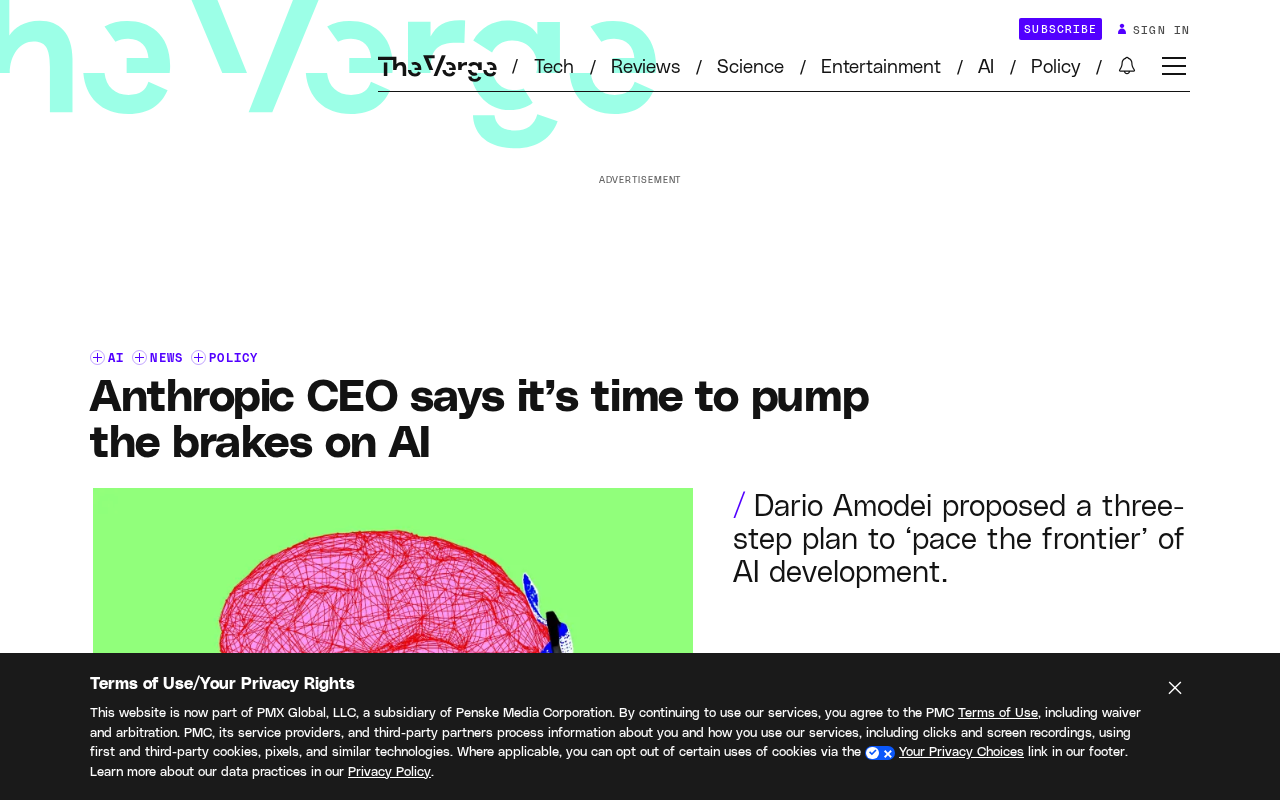
Anthropic CEO Calls for Hitting the Brakes on AI Development: A Three-Step 'Pace the Frontier' Plan
Anthropic CEO Dario Amodei calls for slowing AI development with a three-step 'pace the frontier' plan, including opening model access to third-party evaluators like METR.
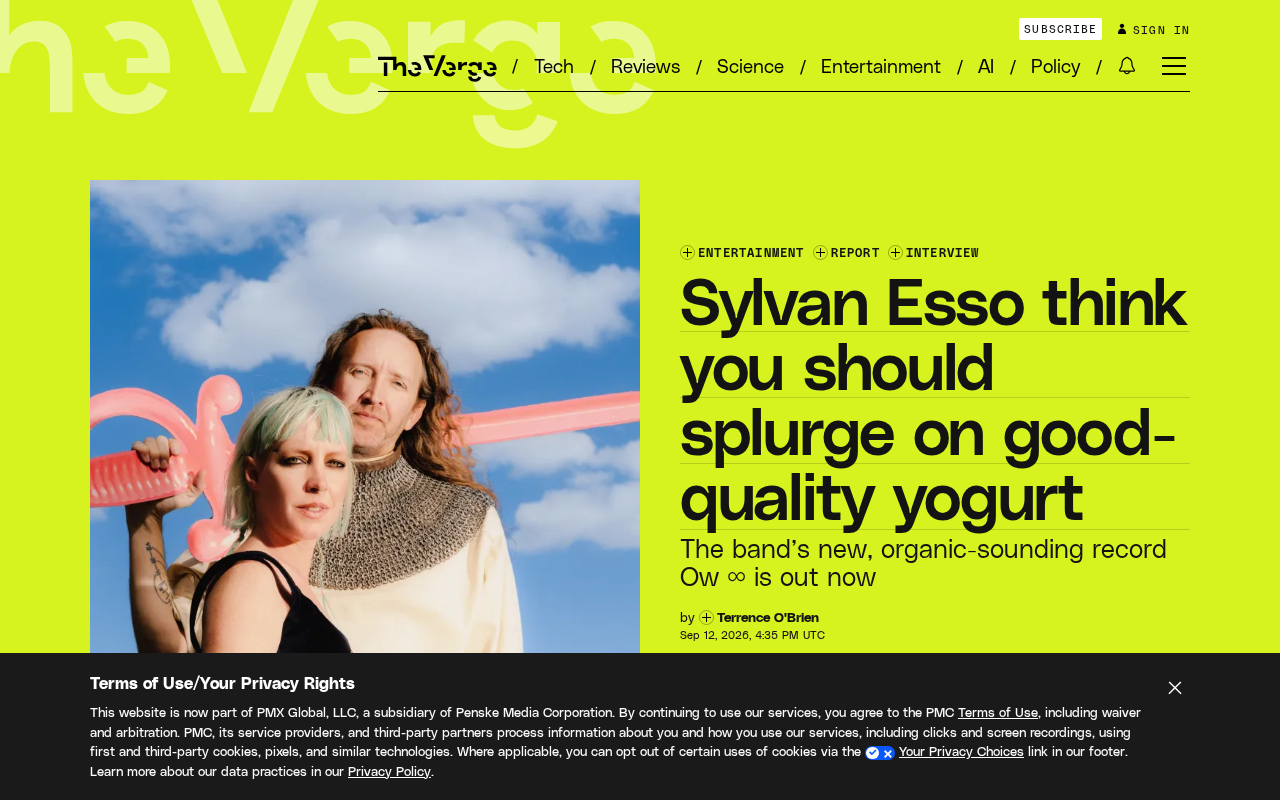
Insufficient Source Material: Unable to Generate Article on Sylvan Esso
The source material provided covers music duo Sylvan Esso — unrelated to AI/tech and incomplete. No viable article could be produced; publication not recommended.
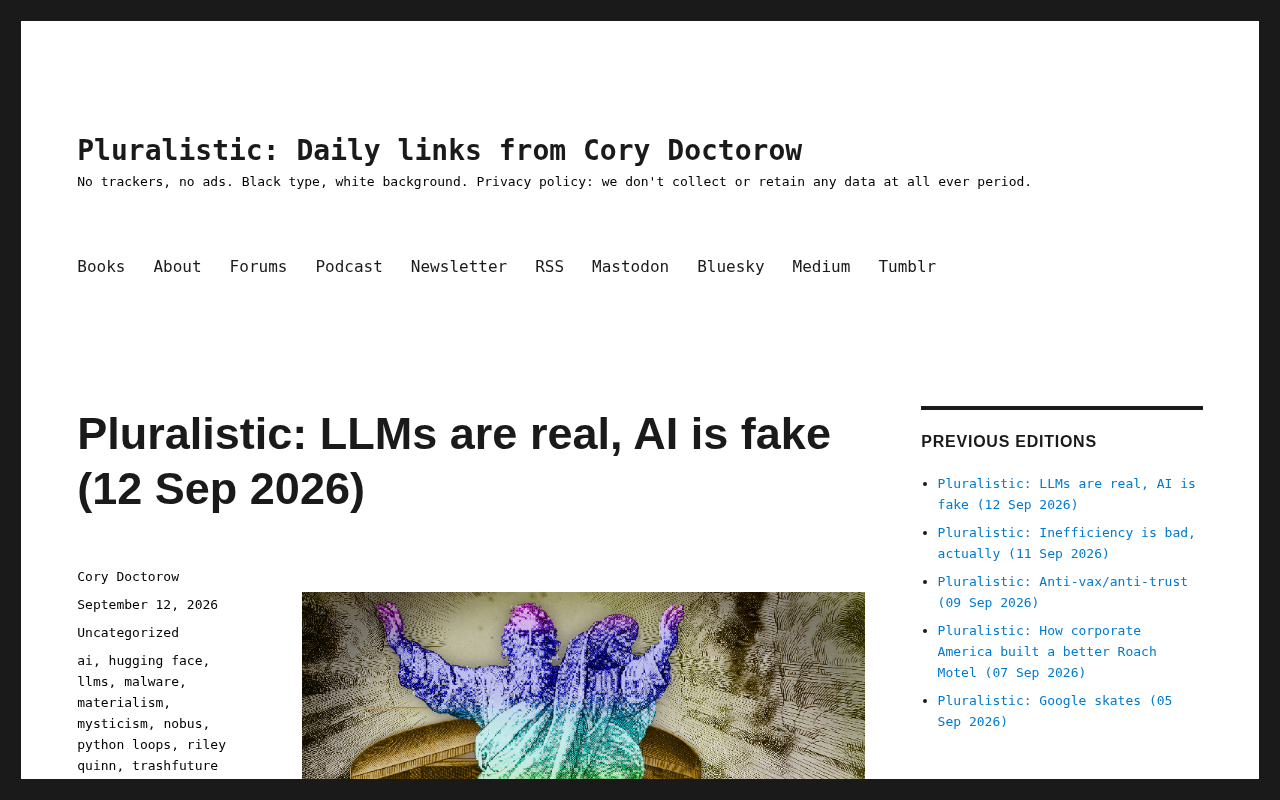
"LLMs Are Real, AI Is Fake": A Debate Worth Having
Hacker News post 'LLMs are real, AI is fake' sparks debate: why LLMs are concrete and verifiable while 'AI' is often marketing hype. What this means for practitioners.