Anthropic CEO Proposes 'Pace the Frontier' Plan: A New Approach to AI Development

Anthropic's CEO proposes 'pace the frontier' to strike a sustainable balance between AI capability and safety.
Anthropic's CEO has introduced the concept of 'pace the frontier,' offering a new framework for thinking about the speed of AI development. The idea neither advocates for a complete slowdown nor unchecked acceleration, but emphasizes actively creating space for safety evaluation and governance while advancing AI capabilities. The article highlights a core industry tension: intense model competition makes unilateral restraint risky, while increasingly powerful systems become harder to govern. Whether this approach can be realized in practice depends on industry-wide coordination and regulatory follow-through.
What Is 'Pace the Frontier'?
Anthropicʼs CEO recently introduced a thought-provoking concept: "pace the frontier." This idea attempts to answer a fundamental question: at what speed should frontier AI labs push the boundaries of technology in an era of rapidly advancing AI capabilities?
"Pacing" implies not simply racing toward the fastest possible breakthroughs, but rather finding a sustainable balance between capability advancement and safety and controllability. This reflects Anthropicʼs longstanding positioning — as a frontier lab that places AI safety at its core, it seeks to chart a path that balances progress with caution in a fiercely competitive industry.
The Industry Tension Behind the Concept
The very framing of "pace the frontier" reflects the deep contradictions facing the AI industry today. On one hand, major labs are locked in fierce competition on model capabilities, and any slowdown risks losing market share and influence. On the other hand, more capable models carry greater potential risks, and safety evaluation and governance frameworks need time to keep pace.
Anthropicʼs stance has always been relatively clear — it advocates for responsible AI advancement rather than an unconstrained race to the capability ceiling. "Pace the frontier" can be understood as a concrete expression of this philosophy: staying competitive at the frontier and maintaining technological leadership, while actively controlling the pace of progress to leave room for safety governance.
What This Plan Actually Means
Based on available information, the core question remains: what does "pace the frontier" actually mean in practice? This is an open-ended inquiry. It likely involves several dimensions:
- Controlling the cadence of capability releases: Not rushing to deploy more powerful model capabilities until safety evaluations are properly completed.
- Industry coordination mechanisms: Restraint by a single lab is unlikely to be effective; some form of consensus on the pace of advancement is needed at the industry level.
- Rebalancing safety and competition: Under commercial pressure, how can safety commitments be translated into concrete, actionable strategies?
It is worth noting that unilateral "deceleration" by one lab faces a real dilemma — if competitors continue at full speed, restraint may simply cede market ground. Whether "pacing" can truly be implemented therefore depends largely on cooperation across the industry and, ultimately, at the regulatory level.
Conclusion
As a concept, "pace the frontier" offers a new lens for thinking about the speed of AI development. It is neither pure deceleration nor unlimited acceleration, but rather an attempt to find a sustainable middle path between the two. However, given the limited public information currently available, the specific mechanisms, execution pathways, and real-world effectiveness of this plan remain to be seen. This makes it a topic well worth tracking as the AI governance conversation continues to evolve.
Related articles
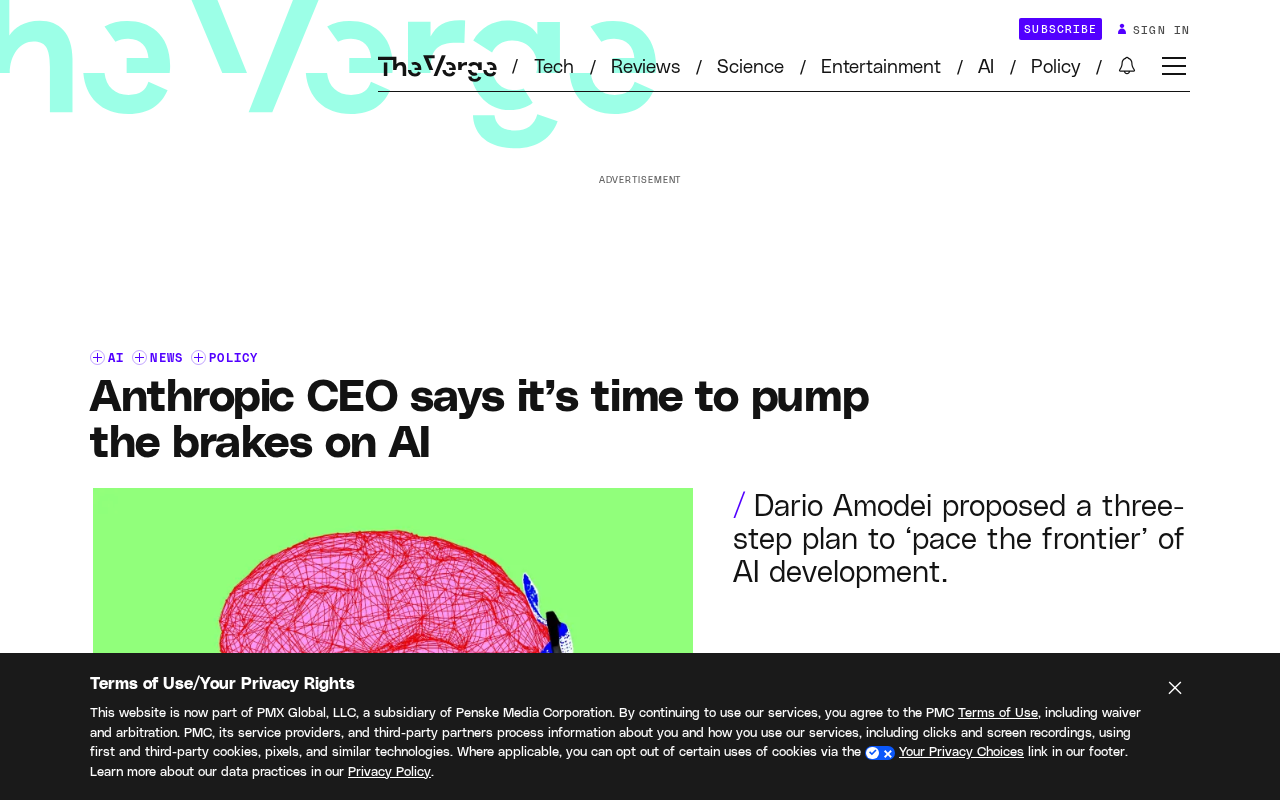
Anthropic CEO Calls for Hitting the Brakes on AI Development: A Three-Step 'Pace the Frontier' Plan
Anthropic CEO Dario Amodei calls for slowing AI development with a three-step 'pace the frontier' plan, including opening model access to third-party evaluators like METR.

Insufficient Source Material: Unable to Generate Article on Sylvan Esso
The source material provided covers music duo Sylvan Esso — unrelated to AI/tech and incomplete. No viable article could be produced; publication not recommended.
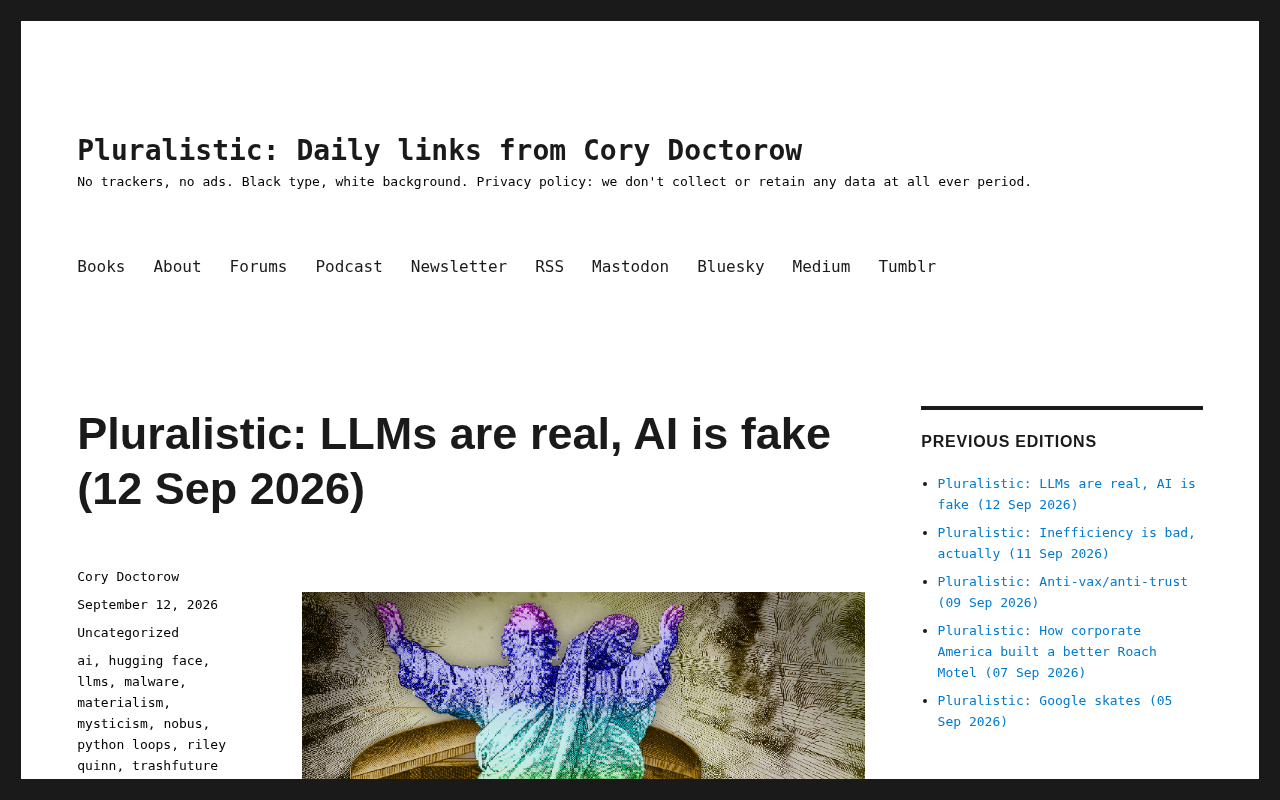
"LLMs Are Real, AI Is Fake": A Debate Worth Having
Hacker News post 'LLMs are real, AI is fake' sparks debate: why LLMs are concrete and verifiable while 'AI' is often marketing hype. What this means for practitioners.