Anthropic Files S-1: Behind the Trillion-Dollar Valuation and Massive Losses
Anthropic files its S-1: revenue surges but growth is unsustainable, while governance and a trillion-dollar valuation face scrutiny.
Anthropic has filed its S-1, becoming the first frontier AI lab seeking a listing. The filing shows first-half revenue of $16.3 billion, up more than tenfold year over year, but the company warns growth is unsustainable. Most of the net loss comes from fair value adjustments on convertible instruments; operating cash flow has turned positive, and compute costs have fallen from ten times revenue to 55%, marking an inflection in unit economics. 80% of revenue comes from consumption-based billing; customer concentration has improved, but internal model downgrading is eroding revenue. On governance, seven founders control key voting rights through Class F shares, a long-term benefit trust controls the board, and the public benefit corporation structure has drawn criticism from governance experts. Investors have revised reasonable valuation expectations down to around the trillion-dollar level; the underwriting syndicate is led by Goldman Sachs and Morgan Stanley, with listing expected before Thanksgiving.
A Much-Anticipated IPO
Anthropic has finally taken a key step toward the public markets. The frontier AI lab founded by former OpenAI members has filed its S-1, becoming the first AI company whose core business is developing frontier large models to seek a U.S. listing.
For a long time, outsiders could only piece together the financial situation of these top AI labs from scattered leaks. The S-1 tears away that veil: a company whose revenue has surged within half a year, whose gross margin has hit an inflection point, but whose net losses are equally staggering—all while carrying unprecedented long-term infrastructure commitments.
According to Bloomberg, after discussions with underwriters, investors have revised their reasonable valuation expectations for Anthropic down to around the trillion-dollar level. That number is still enormous, but it has moderated compared with the higher expectations previously circulating in the market.
The S-1 is a registration statement that U.S. companies are required to submit to the SEC before an IPO under the Securities Act of 1933, and it is the legal channel through which investors first gain systematic access to a company's financial and risk information. The document typically includes sections on business description, audited financial statements, management discussion and analysis, risk factors, and governance structure. Due to the SEC review process, an S-1 often takes months from initial filing to official listing, during which multiple rounds of amendments may occur. Anthropic's decision to file now means its listing process has entered a substantive stage, and the document's public release also subjects its long-opaque financial situation to public scrutiny for the first time.
Revenue Soaring and the Truth Behind the Losses
The most eye-catching number in the S-1 is revenue growth. The filing shows that Anthropic's revenue reached $16.3 billion in the first half of the year, compared with just $1.2 billion in the same period last year—a more than tenfold increase. This explosive growth, rare in the software industry, is the core narrative supporting its high valuation.
But the same document also issues a clear warning: such growth will not last. The company attributes this to the AI market maturing, while emphasizing that growth will inevitably be affected if AI safety safeguards are to be seriously implemented.
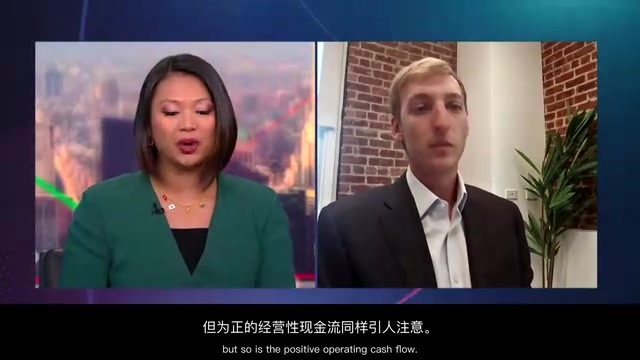
The net loss figure on paper is as high as tens of billions of dollars, but it needs to be broken down—the vast majority comes from fair value adjustments on convertible instruments and financing tools, which are accounting-level losses rather than operating cash outflows. What truly deserves attention is that operating cash flow has turned positive, meaning the core business itself is generating cash.
A more critical inflection point appears in the unit economics. In 2023, compute costs were ten times revenue; by the first half of this year, that ratio had fallen to about 55% of revenue. How much revenue each dollar of compute generates is improving rapidly, providing some support for the sustainability of infrastructure investment.
Concerns About Customer Structure and Revenue Quality
The details of revenue composition are also worth examining. In the first half of the year, 80% of revenue came from consumption-based billing—customers pay based on actual usage of Claude rather than prepaid subscriptions. This model offers high revenue elasticity, but it also means fluctuations in customer usage are directly transmitted to revenue.
There is good news on customer concentration: in the third quarter, about 80% of revenue came from customers outside the top five, indicating the customer base is broadening. However, the filing also acknowledges that customers shifting from the most expensive flagship models to cheaper ones is one of the important sources of slowing revenue growth.
According to a Bloomberg program analysis cited by a Bilibili creator, this phenomenon of "internal model downgrading" is already eroding revenue. For investors, this means they need to assess pricing pressure on both the external competition and internal product structure fronts.
Governance Structure: An Experiment in Trust
Compared with the financial data, Anthropic's governance arrangements may be more unsettling to traditional investors. Seven co-founders hold a majority of voting power on key matters through Class F shares, while a long-term benefit trust can appoint and remove a majority of the board, with trust members receiving fixed compensation and holding no company stock.
The company is registered as a public benefit corporation (PBC), legally required to balance shareholder interests with the public interest. Governance expert Nell Minow said bluntly on a Bloomberg program that this structure is "like a platypus"—assembling too many incompatible parts together, with almost no enforceability. The provision she would most like to change is the lack of a sunset clause: founder super-voting rights should have an expiration date.
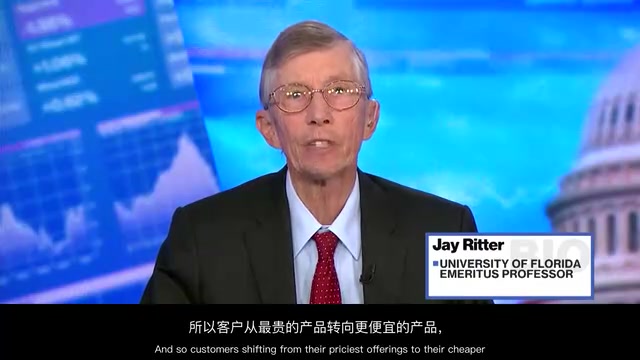
IPO researcher Jay Ritter points out that the trust's members have no financial incentive to maximize shareholder value, but instead have a strong incentive to keep the company focused on safety issues. That is good for society, but for ordinary shareholders buying in the secondary market, all they get is stock price movement, with no say.
The risk factors section exceeds 90 pages and includes warnings that AI may act in unexpected or autonomous ways. Minow's comment is sharp: if insurance cannot price this risk, investors naturally cannot price it either.
A public benefit corporation (PBC) is a corporate form permitted in U.S. jurisdictions such as Delaware, requiring the company to state one or more public benefit missions in its charter and to balance shareholder economic interests with public benefit goals in decision-making. When fulfilling fiduciary duties, the board may legally weigh the public benefit mission rather than treating shareholder value maximization as the sole guiding principle. This provides a legal vehicle for Anthropic's core mission of AI safety, but it also raises doubts among traditional corporate governance scholars: public benefit goals lack quantifiable standards and may cause board decisions to deviate from shareholder interests, meaning further weakening of say for secondary-market investors.
A Test of Capital Market Capacity
Anthropic's S-1 is only part of this week's AI capital narrative. According to Bloomberg, Meta launched a large-scale equity and convertible financing plan in the same period, with the total scale possibly expanding further. The convertible bond market has already seen substantial issuance this year, a considerable proportion of which came from AI infrastructure-related issuers.
Barclays' head of U.S. equity strategy points out that Meta is following the approach of Google and Oracle by using convertible structures with heavier equity characteristics. While expanding funding sources, this approach also opens space for subsequent debt financing.
But risks are not evenly distributed. Neocloud companies are seen by many market participants as the riskiest link in the AI narrative—they are essentially a spread business, requiring continuous financing to buy chips, lease data centers, and then sublease them. Their business model is far less mature than that of hyperscalers. Musk previously warned that the neocloud sector would see "guppy-level" deaths and consolidation.
Citadel co-chief investment officer Pablo Salame expressed another concern in a rare interview: the enormous capital demands behind the AI revolution are colliding with lenders unwilling to bear all the risk. Credit markets have yet to find effective ways to disperse these risks.
Convertible bonds are a hybrid financing instrument in which holders can convert the bond into the issuer's stock under agreed conditions. Coupon rates are usually lower than ordinary bonds, but conversion dilutes existing shareholders' equity. Convertibles with heavier equity characteristics are designed more like delayed equity issuance: for issuers, they reduce initial interest burden, while for investors they provide bond-floor protection and upside from conversion. Meta's use of such structures expands funding sources without immediately and substantially raising leverage, while preserving room for subsequent debt financing—a financing arrangement preferred recently by large tech companies.
Neocloud refers to emerging cloud service providers that lease GPU compute to AI customers. Their business model is essentially a spread business: they raise debt or equity to buy chips, lease data centers, and then sublease to AI development companies at higher prices. This model is highly dependent on continued financing capacity; once chip prices fall, leasing demand fluctuates, or interest rates rise, the spread may rapidly narrow or even invert. Compared with hyperscalers, neoclouds lack their own ecosystems and diversified revenue, and have weak cyclical resilience, which is why market participants see them as the most risk-concentrated link in the AI capital chain.
What Exactly Is This IPO Selling?
Putting the clues together, investors buying into Anthropic's IPO are in fact underwriting three things at once: software-style revenue growth, infrastructure-style fixed commitments, and a mission-first governance structure.
Ritter's judgment is worth pondering: a trillion-dollar valuation means investors believe the company can generate tens of billions of dollars in annual profit in the future, and historically only a handful of companies have achieved that. The growth story is compelling, but execution risk is equally real.
Kate El-Hillow, president and chief investment officer of Russell Investments, advises clients to look at the issue at the portfolio level: whether investing in frontier labs, hyperscalers, or data centers, one may ultimately be exposed to the same AI ecosystem flywheel, and true diversification is harder to achieve than it appears.
According to Bloomberg, the underwriting syndicate is led by Goldman Sachs and Morgan Stanley, with 20 banks participating, and formal marketing is expected to begin in early November. The market widely expects the company to complete its listing before Thanksgiving. As for whether the final pricing can reconcile primary-market enthusiasm with secondary-market caution, only time will tell.
Related articles
Mysterious Synchronized Disturbances Hit Global Power Grids — German Team Finds the Culprit
Mysterious synchronized power drops hit grids worldwide. A German team found the culprit. This article explains the coordinated disturbances, the research breakthrough, and what it means for grid monitoring and operations.
NVIDIA Board Investigates Espionage Ca…
NVIDIA Board Investigates Espionage Case: CEO's Admission of Extramarital Affair Sparks Internal Turmoil
NVIDIA's board has launched an espionage investigation following the CEO's admission of an extramarital affair. This article analyzes the background, corporate governance logic, and potential impact on NVIDIA, noting that current information is limited and should be viewed rationally.
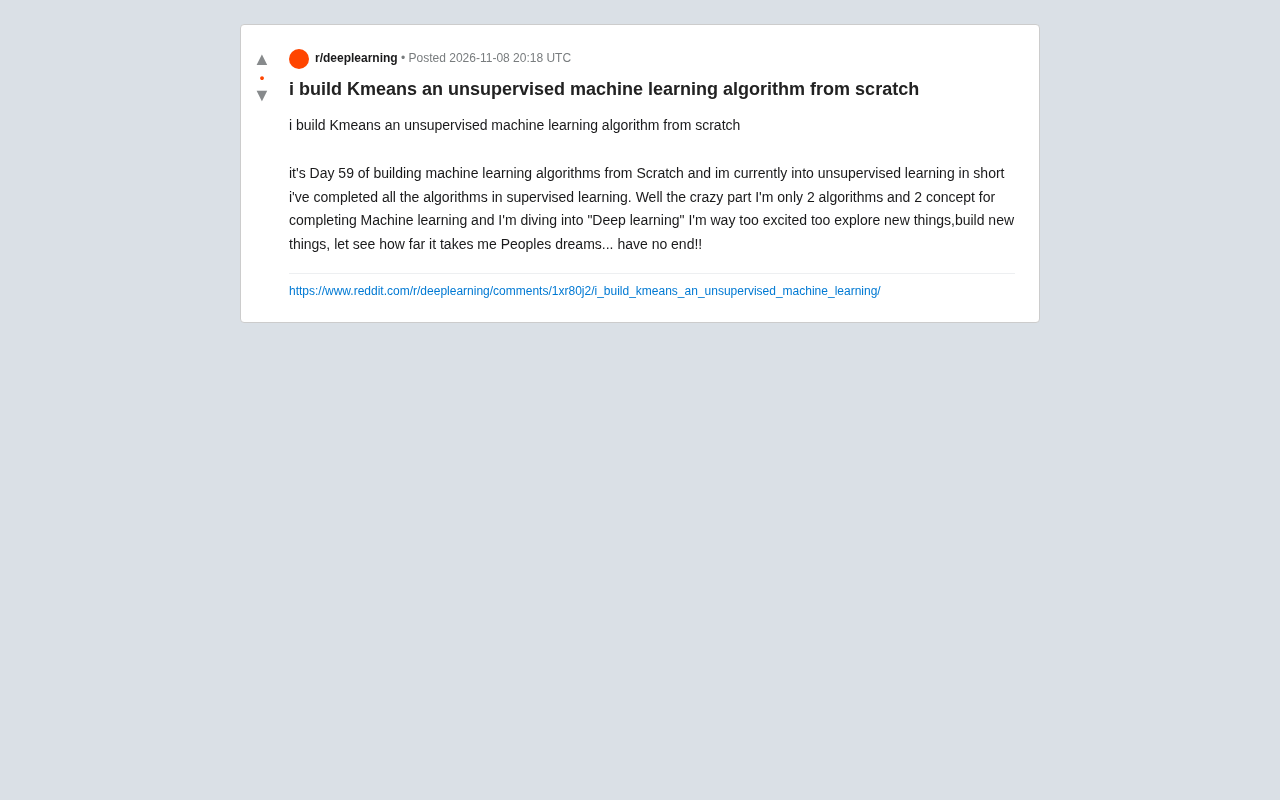
Writing K-Means from Scratch: One Developer's Journey into Machine Learning
A developer shares day 59 of writing K-Means from scratch: finishing all supervised learning algorithms and entering unsupervised learning, covering K-Means++ initialization, vectorized distances, convergence and empty clusters.