Anthropic IPO Filing Revealed: The Battle Between $112 Billion in Cash and Massive Compute Commitments
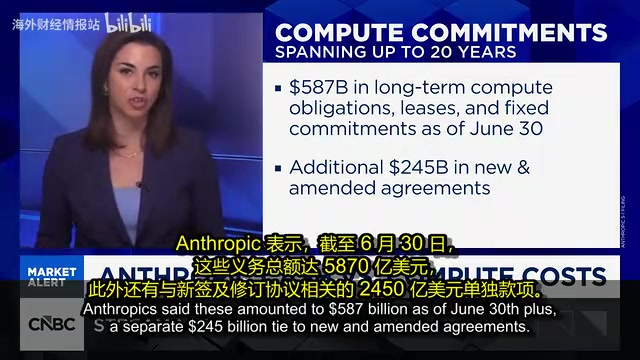
Anthropic's S-1 filing shows cash reserves exceeding Microsoft's, but with $587B in compute commitments, IPO pricing will test the balance between growth and spending.
Anthropic's S-1 filing reveals $112.4B in cash and $19B in short-term investments, surpassing Meta, Microsoft, Nvidia, and Amazon. Yet it also carries $587B in long-term compute commitments and $245B in new agreement obligations. Cash comes mainly from fundraising, with H1 non-GAAP operating profit of $1.6B. Q3 data is missing, sparking speculation; revenue reportedly exceeds H1 total but growth has slowed to about 50%. A rare tiered lock-up design balances release pressure and index inclusion. 22 banks underwrite, with fees estimated over $500M. Ultimately, IPO pricing hinges on whether investors believe the company can turn compute into sustainable profits amid slowing growth.
An S-1 Filing That Shakes the Market
Anthropic's IPO filing has finally surfaced, and the hundreds of pages of its S-1 offer the market a glimpse into the true financial foundations of this AI star company. The most striking finding: as of June 30, Anthropic held a staggering $112.4 billion in cash, plus $19 billion in short-term investments. What does that number mean? It exceeds the cash reserves of Meta, Microsoft, Nvidia, and even Amazon.
According to cross-analysis of the filing by Bilibili UP hosts and YouTube channels, if Anthropic raises another hundred-billion-dollar-scale amount in its IPO, its cash position would surpass Apple's, ranking behind only Berkshire Hathaway and Alphabet and making it one of the most "cash-rich" non-bank companies in the United States.
But cash is only one side of the story. The other side: Anthropic simultaneously carries $587 billion in long-term compute commitments, leases, and fixed expenditures, with terms ranging from 1 to 20 years. In addition, there are $245 billion in obligations tied to new and amended agreements. Cash is king, but compute may be the heaviest burden on the crown.
Where Does the Cash Come From? A Fundamental Difference from Tech Giants
Anthropic's cash comes primarily from multiple prior funding rounds rather than operating cash flow. This is fundamentally different from established tech giants like Microsoft and Amazon, which typically generate cash continuously through profitability. One detail: Meta recently announced a massive equity financing plan as well, showing that even mature giants are re-examining their cash strategies in the AI arms race.
On an adjusted non-GAAP basis, Anthropic achieved $1.6 billion in operating profit in the first half of this year (before stock-based compensation). This figure shows the company is not purely a cash-burning machine, but relative to its valuation expectations and future commitments, profitability still needs to improve substantially.
According to discussions among multiple analysts in videos, market expectations for Anthropic's valuation are in the trillion-dollar range, with some reports mentioning even higher ranges. To support such a valuation, the company needs to prove that growth can be sustained long-term—not just that historical growth rates look impressive.
Non-GAAP is key to understanding Anthropic's profit data. GAAP (U.S. Generally Accepted Accounting Principles) requires companies to expense stock-based compensation, while tech companies often exclude this item on a non-GAAP basis to highlight core operating performance. Anthropic's $1.6 billion "operating profit (before stock-based compensation)" for the first half falls into this category of adjustment. Stock-based compensation is often enormous at startups; if included, profits could shrink dramatically or even turn into losses. Therefore, while non-GAAP profits can reflect business growth momentum, they mask the true cost of equity dilution, and investors need to evaluate them alongside cash flow and committed expenditures.
Speculation and Truth Behind the Missing Q3 Data
The S-1 filing does not include third-quarter data, which has sparked various conspiracy theories on social media. Some believe the data is too poor to disclose, while others think the accounting treatment simply isn't complete yet.
According to people familiar with the matter who spoke to the media, Q3 data will be supplemented in subsequent amended filings, expected within days to weeks. Information previously shared at investor meetings showed that Q3 revenue exceeded the total of the first half, but revenue growth showed signs of slowing, with year-over-year growth of about 50%. Although this growth rate has declined from previous levels, it remains strong at such a scale.
Concerns about slowing growth are related to the accounting treatment of compute contracts. The S-1 explicitly states: capacity is not expensed or counted as compute cost until it is actually used. This means that as compute utilization increases in the future, the expense side may change significantly, thereby affecting cash burn and profit performance.
Lock-Up Arrangement: A Rare Tiered Design
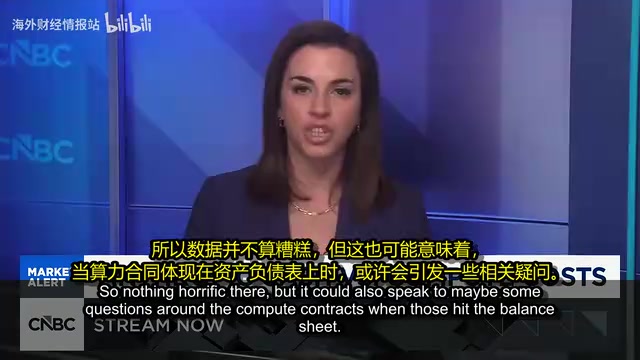
Another unusual aspect of this S-1 filing is the lock-up arrangement. According to analysts involved in interpreting the filing, it lists about two dozen different lock-up dates, starting 27 days after the IPO, interspersed with earnings release dates, and extending to about 365 days later.
This tiered or waterfall-style release arrangement is similar to SpaceX's previous approach. The logic: lock-up expirations typically put pressure on stock prices, but on the other hand, as the float expands, index inclusion rules may bring passive fund inflows, creating a hedge. Investment banks attempt to balance these two opposing forces through carefully arranged lock-up timing to stabilize post-IPO stock performance.
The problem is that the filing does not disclose the proportion of shares released on each date. This uncertainty is itself a risk, and the market will look for more clues in subsequent amendments.
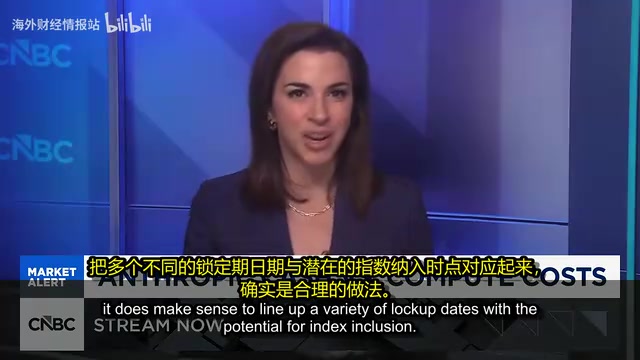
Lock-up Period is a selling restriction agreed upon between underwriters and insiders (employees, early investors) in an IPO, typically 180 days, to prevent massive selling after listing from depressing the stock price. When traditional lock-ups expire, the market often faces concentrated selling pressure. Anthropic's tiered design spreads the release across multiple time points and intersperses them with earnings releases, aiming to smooth the supply shock. At the same time, index inclusion rules (such as those of the S&P and Russell indices) typically require stocks to have sufficient float and trading history; tiered releases can gradually expand the float, meeting inclusion criteria earlier and attracting passive fund buying, thereby hedging lock-up pressure. The stabilizing effect of this arrangement on the stock price depends on the proportion released in each tranche and market demand, and the S-1 does not disclose the proportions, adding uncertainty.
Underwriting Syndicate and Fee Pool: A Feast for 22 Banks
The underwriting lineup for this IPO is luxurious—22 banks are listed on the cover, with Goldman Sachs serving as lead left. According to estimates by Evercore ISI analyst Glenn Schorr, the fee pool could exceed $500 million, shared among 22 banks, with Goldman Sachs and Morgan Stanley receiving the largest shares.
If the SpaceX model is any guide, the underwriting fee rate could be pushed very low. In SpaceX's previous IPO, Goldman Sachs and Morgan Stanley each received $100 million in fees—large in absolute terms, but the percentage rate was far below normal levels. Anthropic is likely to adopt a similar strategy.
A Notable Detail: Spark Capital
In the capitalization table, Spark Capital is the only venture capital firm listed—because only it met the disclosure threshold. Given Anthropic's funding scale and valuation, it is surprising that other VCs did not meet the disclosure threshold. Spark Capital's returns are said to be extremely impressive, but specific figures were not disclosed in the video. Subsequent amendments may reveal more about investors' holdings.
Compute Commitments: The Real Long-Term Test
Back to the core contradiction: $112.4 billion in cash versus $587 billion in compute commitments. Some of these commitments are non-cancelable, meaning Anthropic will need to keep paying for years to come regardless of business progress.
This requires the company to have multiple capabilities: continuous fundraising (equity and debt), a clear path to profitability, and the execution ability to convert compute into revenue. Although Q3 growth remains at about 50%, if the slowing trend continues, it will directly test the valuation logic.
From a broader perspective, Anthropic's IPO filing reveals a harsh reality of the AI race: top AI companies are both beneficiaries of the capital feast and hostages of the compute arms race. The thickness of cash reserves determines how long they can fight, while the scale of compute commitments determines how long they must fight.
How this IPO is ultimately priced will depend on whether investors believe that a company with more cash than Microsoft but also record commitments can convert compute into sustainable profits amid slowing growth. The answer will gradually unfold in the coming weeks.
Non-cancelable compute commitments typically refer to long-term capacity reservation agreements Anthropic signs with cloud providers (such as AWS, Google Cloud) or chip suppliers, specifying minimum purchase volumes or fixed fees payable regardless of actual usage. Such commitments are listed in the S-1 as long-term obligations with terms of up to 20 years, effectively locking in future cash flows. Their accounting treatment is unusual: capacity is not expensed or counted as compute cost until actually used, meaning the current income statement does not yet fully reflect the burden of these commitments. Once compute utilization increases, expenses will be recognized in concentrated fashion, potentially significantly affecting profits and cash burn. Investors need to pay attention to the flexibility of the commitments (e.g., whether they can be transferred or renegotiated) and the company's assumptions about utilization, which directly relate to long-term profitability and financial risk.
One-line Summary
Anthropic's S-1 filing shows cash reserves exceeding Microsoft's, but with $587 billion in compute commitments, the IPO pricing will test the balance between growth and spending.
Paragraph Summary
Anthropic's S-1 filing reveals it holds $112.4 billion in cash and $19 billion in short-term investments, surpassing Meta, Microsoft, Nvidia, and Amazon in cash scale. However, the company simultaneously carries $587 billion in long-term compute commitments and $245 billion in obligations from new agreements, creating a stark contrast. Cash comes mainly from fundraising rather than operating cash flow, with non-GAAP operating profit of $1.6 billion in the first half. The absence of Q3 data has sparked speculation; revenue is said to exceed the first-half total but growth has slowed to about 50%. The lock-up uses a rare tiered design to balance release pressure and index inclusion effects. 22 banks are underwriting, with the fee pool estimated at over $500 million. Ultimately, IPO pricing depends on whether investors believe the company can convert compute into sustainable profits amid slowing growth.
Related articles

Hermes Agent Beginner's Guide: Hands-On with a Self-Evolving AI Agent
A beginner's guide to Hermes Agent, the open-source self-evolving AI agent that gained 41.7K GitHub stars in two months—covering Harness Engineering, the learning loop, three-layer memory, WSL installation, and hands-on configuration.

AI Agent in Action: Building a Smart Office Assistant with WorkBuddy
A practical case study shows how Tencent WorkBuddy batch-converts and archives files, compares chat LLMs with AI Agents, and analyzes WorkBuddy's credit system, use cases, and positioning for office automation selection.

From Single-GPU Bottlenecks to Hundreds of Billions of Parameters: 6 Key Questions in Large Model Distributed Parallelism
Based on a Bilibili tutorial, this article organizes core knowledge of large model distributed parallelism: starting from decoder-only architecture's token-by-token generation and the essence of X times W computation, it analyzes six key questions including data parallelism, tensor parallelism, and pipeline parallelism under single-GPU bottlenecks. Suitable for learners in private deployment and model training scenarios to build systematic understanding.