Anthropic IPO Investment Guide: Valuation, Risks, and Buying Strategy

Breaking down Anthropic IPO's growth myth, S-1 risks, SVR valuation, and governance peculiarities, with a decision framework for retail investors.
Based on an in-depth analysis video, this article systematically breaks down the key highlights and risks of Anthropic's IPO. It notes that Anthropic's quarter-over-quarter growth is a record in tech history, its compute input-output ratio continues to improve, and its operating margin has turned positive in the most recent quarter. The S-1 shows that the media-hyped $80 billion loss mainly stems from accounting treatment; what truly deserves attention is the massive gap between $620 billion in irrevocable infrastructure commitments and approximately $230 billion in cash reserves. On valuation, the SVR is about 43 based on a $2 trillion market cap, far above the average of 8.3 for 150 disruptive tech companies. The article also analyzes customer concentration, cloud marketplace channel dependency, and the peculiarities of public benefit corporation governance, and recommends that investors set personal SVR thresholds and wait for the first 10-Q disclosure before deciding, avoiding emotional chasing on IPO day.
Growth Myth and Cost Efficiency
Anthropic's most striking label is "growth." The video points out that its growth rate is extremely rare in the history of tech companies—and more critically, this is quarter-over-quarter growth, not annual data. This explosive momentum stems from the commercialization of AI models, with Claude's penetration in the enterprise market far exceeding expectations.
But growth requires burning money, especially on compute. Anthropic's core business model is buying compute and converting it into AI service revenue. Surprisingly, its operating margin has already turned positive in the most recent quarter. The S-1 breaks down compute spending into two parts: "cost of revenue" and "R&D expenses," with the latter essentially being Claude optimizing itself—what is called "recursive improvement." This explains why Claude's capabilities iterate so quickly.
Looking at the trend, revenue generated per dollar of compute investment is growing rapidly, operating efficiency continues to improve, and gross margins are on an upward trajectory. This means the company isn't simply "burning money for growth" but gradually building cost advantages as it scales.

Reading the S-1: Cash, Commitments, and Off-Balance-Sheet Risks
On the surface, the "$80 billion loss" hyped by the media mainly comes from accounting treatment. The video explains that Amazon previously provided Anthropic with approximately $6.8 billion in loans (of which $6.2 billion were convertible notes). As equity value soared, the appreciation of these notes was recorded as a liability, creating a book loss rather than an actual cash outflow.
What truly deserves attention are commitments off the balance sheet. Anthropic currently holds approximately $132 billion in cash and short-term investments, and market rumors suggest the IPO aims to raise about $100 billion, implying post-IPO cash reserves of roughly $230 billion. However, the S-1 discloses irrevocable infrastructure service agreements totaling $620 billion, with approximately $523 billion payable over the next five years. The funding gap will likely be filled through additional share issuances and debt—once the capital environment tightens, pressure will emerge.
More complex is the partnership with Broadcom. The filing discloses a $160 billion five-year lease agreement under which Broadcom funds and holds the chip assets while Anthropic leases compute. Broadcom simultaneously plays the roles of supplier, lessor, potential lender, and shareholder—this "circular financing" structure involves conflicts of interest, and the related liabilities remain partially off-balance-sheet.

S-1 filing is the registration statement a U.S. company submits to the Securities and Exchange Commission (SEC) when applying for an IPO, essentially the company's "prospectus." It must disclose core information including the company's business model, financial condition, risk factors, management compensation, major shareholders, and use of proceeds. Compared with subsequent periodic reports (10-Q quarterly reports, 10-K annual reports), the S-1 is the first document in which a company comprehensively presents itself to the public, so investors often treat it as foundational material for evaluating an IPO's value. Because the S-1 contains numerous forward-looking statements and unaudited financial data, investors should interpret it prudently against industry context, paying particular attention to potential risks the company itself acknowledges in the risk factors section.
Valuation: Using SVR Instead of P/E
Anthropic is not yet profitable, so a P/E ratio is out of the question. The video's author uses the "Simple Valuation Ratio" (SVR), defined as market cap divided by annualized revenue (last quarter's revenue multiplied by four). For fast-growing companies, this metric is more sensitive than trailing twelve-month data.
Assuming the media-rumored upper valuation of $2 trillion, divided by $46 billion in annualized revenue, the SVR is approximately 43. For comparison, the author compiled SVRs for about 150 disruptive tech companies, with an average of 8.3. Palantir is around 62—even higher than Anthropic's assumed valuation. Considering that Anthropic may be the fastest-growing company in history, whether 43x is outrageous depends on your judgment of its sustainability.
The video's operational advice is: first set your own SVR threshold for "too expensive" (you can reference industry average multiples), then calculate using the actual market cap after the IPO. Only consider buying if the stock price falls below that threshold. Additionally, the author adheres to one discipline: no IPO is included in investment consideration before its first 10-Q or 10-K is filed—let market sentiment settle while observing the real post-IPO balance sheet.

SVR (Simple Valuation Ratio) is an alternative valuation metric designed by the article's author for high-growth companies that are not yet profitable, calculated as market cap divided by annualized revenue (typically the most recent quarter's revenue multiplied by 4). For tech companies with rapidly growing revenue, trailing twelve-month (TTM) revenue may significantly lag current business scale, whereas annualized revenue more sensitively reflects the latest growth momentum. The limitation of SVR is that it ignores differences in profit margins, cash flow, and capital structure, making it more suitable for horizontal comparisons among companies in the same industry or at similar growth stages. When using it, investors should combine it with the company's gross margin trends, customer acquisition costs, and market ceiling for comprehensive judgment rather than relying on a single ratio in isolation.
Customer Structure and Governance Peculiarities
The operational data disclosed in the S-1 is also worth a close look. Customer concentration risk is manageable: in the first half of this year, one customer contributed 11% of revenue, with no other customer exceeding 10%; the top five customers combined accounted for approximately 25% of revenue in the first three quarters. Geographically, the U.S. market contributes 72% of revenue. In terms of revenue structure, consumption-based (usage-based) accounts for about 80%, with subscription-based making up the remainder. Net revenue retention is as high as 900%, indicating rapid expansion among existing customers.
Channel dependency is another risk: approximately 48% of revenue is generated through cloud marketplaces (hyperscale cloud providers), meaning relationships with cloud providers directly affect revenue stability.
On governance, Anthropic is registered as a public benefit corporation with a "Long-Term Benefit Trust," where independent individuals ensure company decisions balance shareholder interests with the overall interests of humanity. The S-1's risk factors even state bluntly that its technology "could destroy humanity"—a candor that is rare in IPO filings. The company will trade under the ticker ANT.
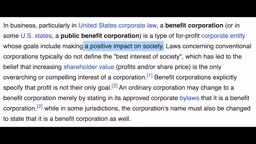
Public Benefit Corporation (PBC) is a special U.S. corporate legal form that requires an explicit commitment to pursuing one or more public benefit objectives, as stated in the company's charter, while also pursuing financial returns for shareholders. Unlike ordinary companies, a PBC's board of directors is empowered to balance shareholder interests with social mission in its decisions, rather than maximizing shareholder value as the sole objective. Anthropic has also established a "Long-Term Benefit Trust," with independent trustees ensuring that company decisions consider the overall interests of humanity. This governance structure may influence the formulation and execution pace of major strategies after the IPO, such as commercialization restrictions on high-risk AI capabilities. Investors should note that the PBC form may reduce the company's sensitivity to short-term profitability pressure, but may also trigger governance friction with some activist shareholders.
Risk Checklist and Action Framework
Company-specific risks often come from internal "unknown unknowns." The video mentions that the current cybersecurity landscape is severe, with security issues exposed in the past month accounting for 3% of the historical total. Optimists believe only Anthropic can prevent catastrophe, while pessimists worry that a large-scale coordinated attack could trigger a global ban, in which case the circular financing chain would be the first to suffer.
For ordinary investors, actionable disciplines include: setting a fixed dollar cap for any single position; writing down valuation thresholds in advance; and not chasing highs due to media-driven hype. The video's author explicitly states that they will wait until Anthropic files its first 10-Q before reassessing, and will not enter on IPO day.
This "let the dust settle" strategy was validated with SpaceX: its SVR was as high as 100 at IPO and has now fallen to 34. For a company as full of imagination as Anthropic, patience may be more valuable than enthusiasm.
This article is compiled from public video analysis and does not constitute investment advice. Forward-looking statements and undisclosed risks in IPO filings should be independently assessed.
Related articles

VERS: Editing Activation Explanations to Halve Reasoning Model Tokens
VERS guides reasoning models by editing activation explanations, cutting 45.8% of tokens on GSM8K with only a 0.82 pp accuracy drop and transferring to larger models, but losing accuracy on competition problems.

Finding Errors Is Not Enough: Selective Model Escalation for Entity-Targeted Sentiment Analysis
This study explores selective model escalation for entity-targeted sentiment analysis, comparing data collection ordering, uncertainty-driven re-examination, and model routing—finding that minority-class priority only helps at very small data volumes, the oracle upper bound far exceeds actual gains, and escalation must be tailored to each dataset.

WAS-PO: Using Whitened Advantages to Solve the Correlation Trap in Multi-Reward Reinforcement Learning
WAS-PO paper proposes whitening advantages to correct correlation bias in multi-reward RL: when rewards are correlated, naive weighted summation effectively applies Σ^{1/2}w instead of w. Experiments show training reward improves steadily, but held-out accuracy does not improve in sync, and under two rewards it actually falls behind.