Anthropic's IPO Paradox: Claiming AI Could Destroy Humanity While Going Public to Raise Capital

Anthropic's IPO plans clash with its own warnings that its AI could pose an existential threat to humanity.
Anthropic publicly acknowledges building technology that may pose an existential threat to humanity, yet is simultaneously preparing an IPO — a paradox this article critically examines. Through analogies to aviation and healthcare, it exposes the absurdity of such statements in any life-critical industry. The piece argues that existential risk narratives serve a dual function: genuine safety warning and strategic amplifier of commercial value. At its core, the problem is a regulatory vacuum — unlike healthcare or aviation, AI lacks frameworks that hold safety commitments and commercial behavior mutually accountable.
A Self-Contradictory Narrative
A thought-provoking paradox has emerged in the AI industry: Anthropic openly states that it is building technology that could pose an existential threat to humanity and that reliable control mechanisms don't yet exist — while simultaneously preparing to launch an IPO on the public markets within weeks.
As one commentator put it: "Anthropic is essentially saying, 'Hey, we're building something we currently have no plan to control, and it has the potential to destroy all of humanity. By the way, we're going public in a few weeks. Can you help me make sense of that?'"
In any normal business context, this kind of statement would be extraordinary. When a company describes its core product as carrying catastrophic risk, yet simultaneously seeks capital from public investors and pursues valuation growth, the two positions are logically difficult to reconcile.

Testing the Logic Against Other High-Risk Industries
Commentators have raised a particularly sharp analogy: what would happen if you "translated" this kind of language into industries like healthcare or aviation, where human lives are directly on the line?
Imagine an airline CEO standing before investors at a roadshow and saying: "The planes we build could crash and cause mass casualties, and we currently have no way to prevent that from happening — but please invest in our upcoming IPO." Or picture a pharmaceutical company announcing that its drug could harm countless patients' lives, while still pushing forward with a public offering.

In those heavily regulated industries where safety is a baseline requirement, any CEO who made such public statements would be seen as having lost their mind. Regulators would intervene immediately, investors would flee, and public trust would collapse overnight.
What makes this analogy so cutting is that the AI industry appears to operate outside the universal logic of risk accountability. The same kind of statement, reframed in an AI context, gets packaged as a "responsible" posture — and even becomes part of the fundraising story.
The Tension Between Existential Risk Narratives and Commercial Incentives
This reflects a deeper tension at the heart of AI safety discourse. Emphasizing the potential dangers of the technology may stem from genuine safety concerns — but it also objectively elevates the technology's perceived importance and influence. After all, if your product is powerful enough to "destroy humanity," its strategic value and market imagination expand accordingly.
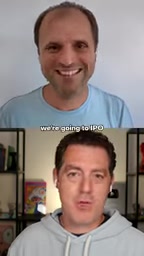
The problem is that when a company is simultaneously the creator of the risk, the broadcaster of the risk narrative, and the commercial beneficiary of that narrative, it becomes nearly impossible for outsiders to judge whether its statements represent cautious warnings or marketing rhetoric.
If the risks are truly as severe as described, the logical course of action would be to slow down, prioritize solving the control problem, and not accelerate commercialization or push for an IPO. Conversely, if the company genuinely believes it can manage these risks, then language like "uncontrollable, potentially capable of destroying humanity" sounds exaggerated. Either way, placing an IPO alongside an existential risk narrative creates a contradiction that deserves serious scrutiny.
This narrative structure has specific historical roots in the AI industry. "Effective accelerationism" (e/acc) and "AI safety" represent two opposing currents of thought in Silicon Valley today, and Anthropic has positioned itself as the flagship representative of the latter. Co-founder Dario Amodei has used the phrase "extinction-level risk" in multiple public forums and framed the company's mission as "responsibly developing AI for the benefit of all humanity." The core logic — that if powerful AI is inevitable, it's better to have safety-conscious teams leading the way — is what differentiates Anthropic from OpenAI and Google.
The question is what happens to that logic once capital market pressures enter the picture. An IPO means quarterly earnings expectations, investor return pressure, and accelerated competition. These structural forces are in inherent conflict with any promise to "slow down and prioritize safety first."
Implications for the Industry and Regulators
This paradox points to a clear gap in the current regulatory framework for AI. In healthcare and aviation, explicit legal and institutional constraints link safety commitments to commercial behavior. In AI, companies can freely declare existential-level risks while simultaneously chasing capital markets — with no mechanism to balance the two.

This is a reminder that the public and investors evaluating AI companies need to maintain a sharp, critical eye toward "safety narratives." Real risk management shows up in actions — whether deployment is being slowed, whether publicly verifiable safety solutions exist, whether external oversight is being accepted — not in verbal warnings alone.
When the gap between what a company says and what it does is this visible, that gap itself is a signal worth serious reflection by everyone involved.
The closest thing to systematic regulation in the AI space today is the EU's AI Act, which formally took effect in 2024. It classifies AI systems by risk level, outright prohibits "unacceptable risk" categories, and imposes mandatory auditing and transparency requirements on "high-risk" categories. However, the threshold for determining whether general-purpose AI (GPAI) models constitute "systemic risk" remains contested, and enforcement mechanisms are still being established. In the United States, governance relies primarily on the Biden administration's 2023 executive order framework and voluntary commitment mechanisms, with no legally binding standards in place.
This means companies like Anthropic can currently operate in an environment with almost no external mandatory constraints — simultaneously making existential risk declarations and pursuing capital market activity. That is the concrete manifestation of the institutional gap this article identifies.
Related articles

iPhone Duo Hands-On: Is the $2,000 Small-Screen Foldable Worth It?
YouTube's Allison shares her iPhone Duo hands-on: dual-screen multitasking doubles efficiency, great video viewing, nice matte finish—but thick body, small outer screen, and a $2,000 luxury price.

Sentry's Ad Cracks Up Developers: Can On-call Actually Be Fun?
Sentry's ad short film taps into developers' on-call anxiety, using humorous dialogue to showcase its observability platform—errors, logs, traces, metrics, replays, and releases in one place.

LLM App Getting Worse With Every Change? Build an Effective Evaluation System in Three Steps
How do you know if your LLM app is getting better or worse? A Reddit-based guide to test sets, automated regression evaluation, LLM-as-judge scoring, and structured agent tracing.