Apple Home Collection Launches: A Smart Home Starter Kit Arrives

Apple teams up with LG and Schneider Electric to launch Apple Home Collection, a smart home starter kit built around ecosystem integration.
Apple has partnered with LG Electronics and Schneider Electric to launch Apple Home Collection, a smart home starter kit featuring a security camera, video doorbell, smart lock, and two thermostats, emphasizing ease of installation and use. The partnership reflects Apple's strategy of ecosystem integration over in-house hardware: Apple provides brand endorsement and a unified Home app experience, while manufacturing is handled by established appliance and electrical companies. The kit targets ordinary households new to smart homes, aiming to reduce fragmentation and drive the shift from individual devices to scenario-based solutions. Pricing, models, launch dates, and feature details remain undisclosed.
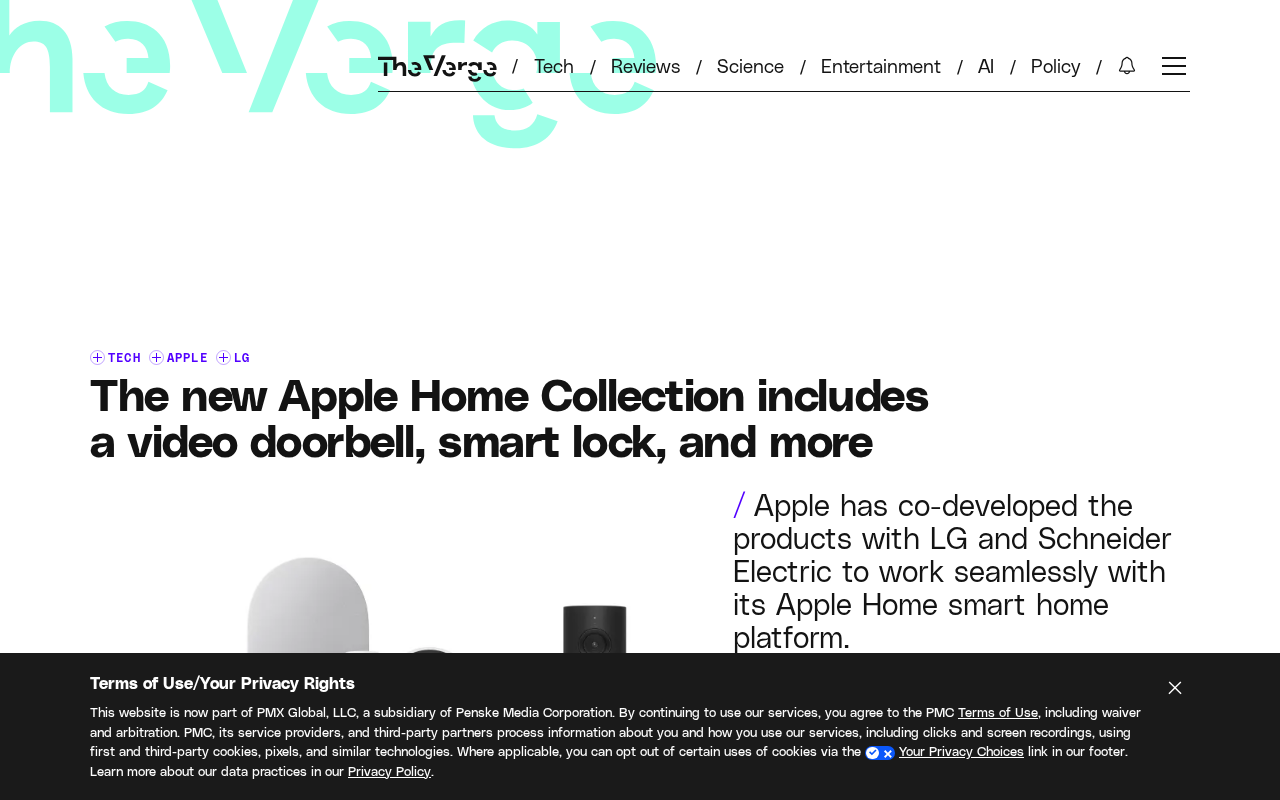
Apple is entering the smart home race with a more "bundled" approach. According to RSS sources, Apple has partnered with LG Electronics and Schneider Electric to launch a smart home product bundle called Apple Home Collection. Positioned as a "smart home starter kit," the bundle includes a security camera, a video doorbell, a smart lock, and two thermostats.
A "Ready-to-Use" Smart Home Kit
The core selling point of Apple Home Collection is its emphasis on "easy to install, easy to use." For users who haven't yet built a smart home system, buying individual devices often means dealing with protocol compatibility issues, complicated network setup, and a fragmented ecosystem. Apple chose to partner with established manufacturers in the appliance and electrical space, using a bundle format to reduce the user's decision-making burden.
In terms of product composition, the bundle covers several high-frequency categories in the home:
- Security camera: For indoor or outdoor monitoring
- Video doorbell: Combining visitor identification with front-door security
- Smart lock: Enabling keyless entry and remote management
- Two thermostats: Adapted for temperature control needs in different rooms or floors
This configuration essentially covers the two core smart home scenarios of "security + climate control," and follows the typical functional coverage logic of a starter kit.
Why LG and Schneider Electric?
The choice of partners reveals Apple's consistent approach to smart home hardware strategy. LG Electronics has mature manufacturing and channel capabilities in consumer electronics and home appliances, while Schneider Electric has deep expertise in electrical infrastructure, energy management, and building automation. The involvement of these two companies means Apple Home Collection is not an extension of Apple's own hardware development, but rather a product of ecosystem integration.
Apple's previous role in the smart home space was primarily at the software level, through the HomeKit protocol and the Home app. By launching an entire hardware lineup as a "Collection," Apple is essentially converting the appeal of its software ecosystem into a concrete product bundle, while delegating hardware manufacturing to partners who are better suited for it. This division of labor is not unusual in the smart home industry, but Apple's brand endorsement and the unified experience of the Home app remain the key differentiators between this product and ordinary third-party kits.
HomeKit and Matter: Two Key Terms for Understanding Apple's Smart Home Ecosystem
HomeKit is a smart home framework Apple introduced in 2014. It is not hardware itself, but a protocol and certification system that allows third-party devices to securely connect with Apple devices such as iPhone, iPad, Apple Watch, and HomePod. Devices must be HomeKit-certified (through the MFi program) to be directly recognized and controlled by the system-level "Home" app, with support for Siri voice commands, automation scenes, and end-to-end encryption.
Matter, on the other hand, is a cross-ecosystem application-layer standard launched in 2022 by Apple, Google, Amazon, Samsung, and others through the CSA Connectivity Standards Alliance. Its goal is to let devices from different brands interoperate under a single protocol. Apple's HomeKit has been gradually moving toward Matter compatibility, which means devices in Apple Home Collection likely support both HomeKit and Matter. Understanding the relationship between these two layers helps determine whether this kit is about "locking users into the Apple ecosystem" or "preserving cross-brand interoperability while maintaining the Apple experience."
Potential Impact on the Smart Home Market
The smart home market has long faced criticism for being "fragmented." The interoperability experience between different brands varies widely, and users often need to switch between multiple apps. Apple Home Collection attempts to reduce this friction with a unified entry point—devices are built around the Home app and the HomeKit ecosystem, with installation and daily control all taking place within Apple's framework.
For Apple, this product line is also a way to extend its services ecosystem into the home. Beyond hardware sales, the stickiness of the Home app and its integration with iPhone and Apple Watch could all become reasons for users to stay within the Apple ecosystem. For LG and Schneider Electric, joining the Apple ecosystem means reaching users who have high expectations for experience and brand consistency.
It's worth noting that key information about this product line—including pricing, specific models, launch dates, and regional availability—remains limited. Specific functional details of the video doorbell, lock, and thermostats have also not been disclosed. This information will directly affect the competitiveness of Apple Home Collection in the actual market.
What Exactly Does Smart Home "Fragmentation" Mean?
The fragmentation mentioned in the article typically involves three layers. First, the protocol layer: multiple wireless protocols such as Wi-Fi, Zigbee, Z-Wave, Thread, and Bluetooth coexist, and different devices require different gateways or bridges. Second, the application layer: users may simultaneously use Brand A's app to control lights and Brand B's app to control door locks, creating a disjointed experience. Third, the account and privacy layer: data is scattered across multiple manufacturers' servers, making it difficult to establish unified security and privacy boundaries.
The proliferation of Matter and Thread is already easing the first two layers, while Apple's differentiated advantage is concentrated in the third: HomeKit emphasizes local processing and end-to-end encryption, which is especially important for products involving video data such as doorbells and cameras. The competitiveness of Apple Home Collection largely depends on whether it can translate "privacy and unified experience" into tangible selling points for users—not just another set of hardware with an Apple label.
The Competitive Logic of Smart Home Starter Kits
The "starter kit" positioning is worth noting. Its default target users are not geeks who already own multi-brand smart devices, but ordinary households that haven't yet systematically built a smart home. These users value convenience over tinkering, have moderate price sensitivity, but demand that devices "just work" together.
Apple's decision to launch a full product lineup at this point may also be a test of how receptive the market is to smart homes evolving from "individual smart devices" to "scenario-based solutions." If the starter kit model proves successful, extending into more scenario bundles (such as bedroom kits or kitchen kits) would be a natural next step.
From a broader perspective, competition in smart homes is shifting from a battle over protocol standards to a battle over experience integration. Whoever can help users accomplish the most with the fewest actions is more likely to capture the home entry point. Apple Home Collection is Apple's concrete answer to this challenge—whether it holds up will depend on real-world performance once the products launch.
One-line Summary
Apple partners with LG and Schneider Electric to launch Apple Home Collection smart home starter kit, entering the home space through ecosystem integration.
Paragraph Summary
Apple has partnered with LG Electronics and Schneider Electric to launch Apple Home Collection, a smart home starter kit featuring a security camera, video doorbell, smart lock, and two thermostats, emphasizing ease of installation and use. The partnership reflects Apple's strategy of ecosystem integration over in-house hardware: Apple provides brand endorsement and a unified Home app experience, while manufacturing is handled by established appliance and electrical companies. The kit targets ordinary households that haven't yet systematically built a smart home, aiming to reduce market fragmentation through a unified entry point and drive the evolution from individual smart devices to scenario-based solutions. Pricing, models, launch dates, and specific feature details have not yet been announced.
Related articles

A Single Prompt Triggers a Global PHP Security Storm: Is AI a Savior or a Hidden Risk?
A single AI prompt triggered a global PHP security crisis affecting Wikipedia and the Internet Archive. This article reviews the incident, analyzes the OpenAI-Amazon controversy, and explores the security paradox of lowered vulnerability discovery barriers in the AI era and developer response strategies.

When AI Is Taken Away: How Reliance on Shortcuts Undermines Your Problem-Solving Resilience
A study of 1,222 people found that after using AI to answer questions, once AI was removed, people gave up on more problems than a control group that never used AI. The article analyzes the impact of AI reliance on learning resilience and metacognition, and explores design implications for AI learning tools.

Carta and NewView Partner to Let Startup Employees Cash Out Equity Early
Carta and NewView Capital partner to simplify startup tender offers, helping employees sell equity early. Analysis of the mechanism, liquidity pain points, and impact.