Apple HomePod mini 2 Launches: The Mini Smart Speaker Built for Siri AI
Apple launches the $149 HomePod mini 2 with modest hardware upgrades, betting big on future Siri AI.
Apple launched the HomePod mini 2 on Product Hunt at $149, shipping October 30. It keeps the spherical design, adds Sound Glow lighting and 360-degree audio, and comes in new colors. The key shift is positioning: it's hardware built for a future personalized Siri AI update, with real capabilities unlocked via OTA. Ecosystem upgrades include Mac audio, multi-room playback, Apple TV 4K surround sound, and hands-free HomeKit control. The $149 entry price aims to drive multi-room adoption, but Siri AI's actual performance remains unverified.
Apple quietly launched its next-generation compact smart speaker, the HomePod mini 2, on Product Hunt. Priced at $149, it's now available for pre-order and will begin shipping on October 30. The hardware design hasn't changed dramatically, but the entire product narrative revolves around one core idea — getting ready for the upcoming Siri AI experience.
Hardware Upgrades: 360-Degree Audio and Sound Glow Lighting
The HomePod mini 2 retains its signature spherical design, but the internal acoustic structure has been retuned to deliver richer 360-degree surround sound. This means that no matter where you place the speaker in a room, the audio performance is more consistent and full.
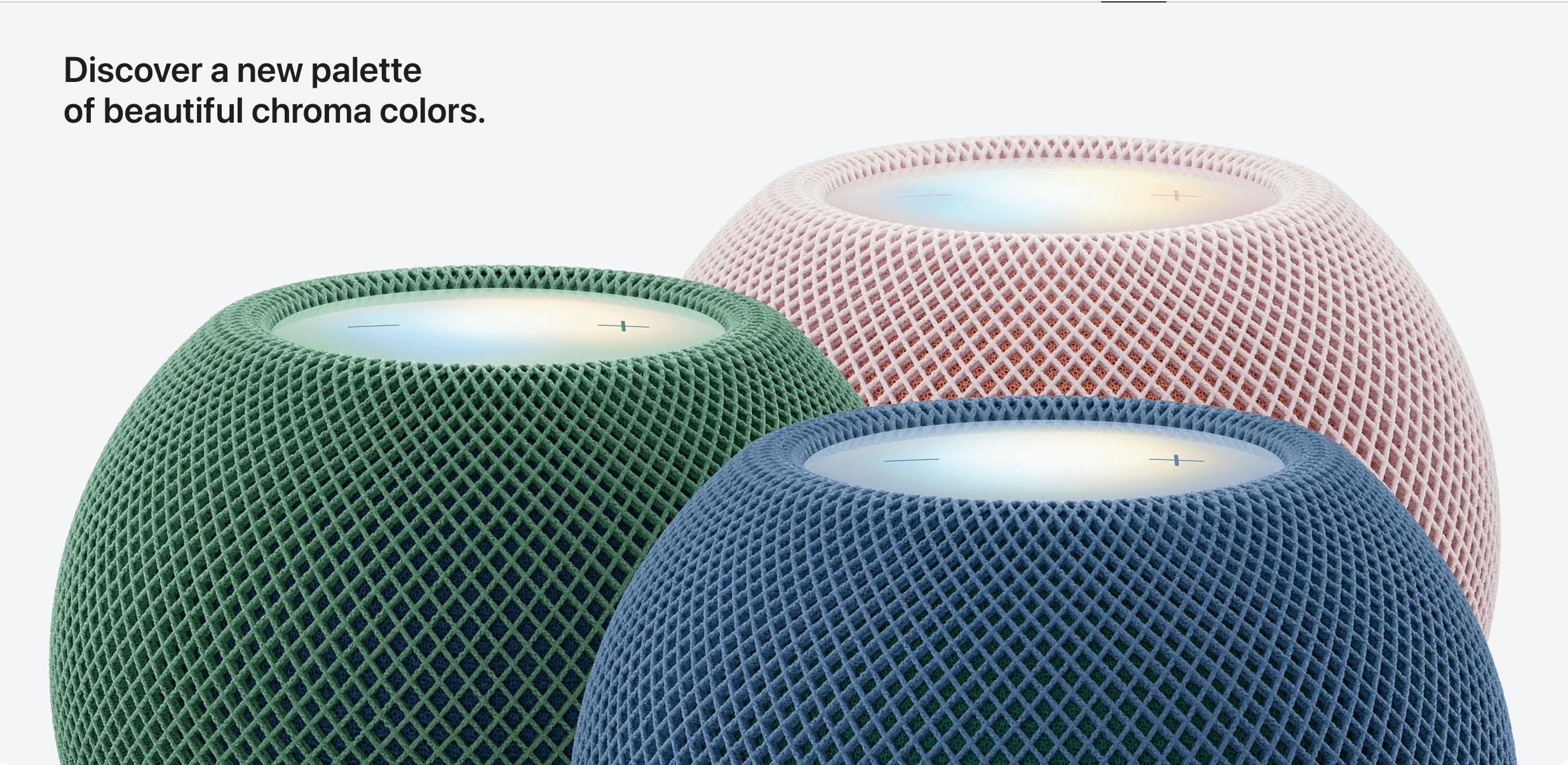
The newly added Sound Glow lighting system is the most visible external change this time around. The lights respond to the rhythm and mood of the music, giving the speaker a visual layer of expression during playback. Apple has also introduced new colorways for this product, further reinforcing its role as a home decor piece — after all, the HomePod mini was never just a speaker; it's also a smart home entry point sitting on your countertop.
Built for Siri AI: A Generational Leap for the Voice Assistant
The most noteworthy aspect of this product is that its positioning logic has shifted. Apple explicitly states that the HomePod mini 2 is built for a "more personalized Siri AI experience," which will be rolled out through future software updates.
In other words, the hardware you buy now won't unlock its true core capabilities until later updates arrive. This strategy isn't uncommon in Apple's product line, but it carries different implications for the smart speaker category. Over the past few years, Siri has consistently been seen as the laggard in the smart assistant race, and the HomePod lineup has suffered from a lack of compelling reasons to buy as a result.
The HomePod mini 2 essentially represents Apple laying the groundwork at the hardware level: get the device ready, and once Siri AI capabilities mature, activate them directly via OTA. For users already invested in the Apple ecosystem, this is a low-cost bet — $149 for a smart assistant experience that could improve significantly in the future.
What is Siri AI? When Apple announced Apple Intelligence at WWDC 2024, it revealed plans for the largest Siri overhaul since its debut in 2011, powered by large language models (LLMs) under the hood, giving it contextual understanding, cross-app operations, and personalized semantic search capabilities. This is fundamentally different from the existing Siri architecture, which relies on intent-recognition templates: the old Siri depends on predefined "intent-slot" parsing with a limited range of commands it can handle; the new Siri uses generative models to understand natural language, enabling multi-turn conversations and ambiguous expressions. Apple has confirmed that some capabilities will roll out in phases, with initial delays in certain regions due to regulatory reasons such as the EU's DMA. The chip and microphone array in the HomePod mini 2 need to meet the new Siri's on-device processing requirements — this is the technical foundation behind its "hardware-first" logic.
Ecosystem Integration: Mac Audio, Multi-Room, and Home Theater
The HomePod mini 2 also has enhanced synergy within the Apple ecosystem.
Improved Mac Audio Experience: When used as an external speaker for a Mac, audio performance has been optimized, with improvements in both latency and sound quality. For desktop users, this is a practical upgrade.
Multi-Room Playback: Supports multiple HomePods forming a multi-room audio system, allowing the same song or different content to play in different rooms. This is Apple's core feature for competing with brands like Sonos in the smart home audio space.
Apple TV 4K Surround Sound: When paired with an Apple TV 4K, it can form a surround sound system, turning the HomePod mini 2 into part of a home theater setup. This feature expands the mini speaker's use cases from "listening to music" to "watching movies."
Hands-Free Smart Home Control: Control HomeKit-compatible devices via Siri voice commands without reaching for your phone. This is the HomePod's foundational capability as a smart home hub.
The Underlying Mechanics of Multi-Room Audio and AirPlay 2: The HomePod's multi-room capability is built on the AirPlay 2 protocol, which allows multiple devices to join the same audio session and uses Apple's proprietary wireless synchronization algorithm to keep playback time-aligned across rooms (typically within microsecond-level precision). Users can assign each HomePod to a specific room in the "Home" app, then use "audio grouping" to achieve whole-home synchronized playback or independent zone playback. Unlike Sonos, which relies on its own mesh network, AirPlay 2 leverages Wi-Fi networks and peer-to-peer coordination between Apple devices directly. This means the ceiling for multi-room experience is limited by home Wi-Fi quality and is deeply tied to the Apple ecosystem — Android devices and third-party speakers cannot join as senders.
What This Pricing Means
The $149 starting price is consistent with the previous-generation HomePod mini, placing it at the entry level in Apple's product lineup.
The signal this pricing strategy sends is clear: Apple doesn't intend to position the HomePod mini 2 as a high-end audio device, but rather as an "entry-level" product for the Apple ecosystem — cheap enough that people are willing to buy several, blanketing every room and forming a home network centered on Siri as the interaction hub.
Compared to competitors, entry-level products from Amazon Echo and Google Nest are typically priced lower, but Apple clearly isn't taking the value-for-money route — it's betting on ecosystem stickiness and AI experience differentiation. Whether this bet pays off depends on whether future Siri AI updates can deliver on their promises.
The Competitive Landscape of the Smart Speaker Market: According to market research firms, global smart speaker shipments have been declining steadily since peaking in 2021, with Amazon Echo, Google Nest, and Xiaomi dominating the entry-level market at price points mostly in the $50–100 range, with some promotional models dropping as low as $30. These products generally follow a "subsidize hardware, monetize services" strategy, offering voice assistant capabilities for free. Apple, by contrast, has always maintained hardware profit margins without relying on advertising or data monetization, making an Amazon-style low price impossible. The HomePod mini 2's $149 price tag is essentially a play on two moats — "ecosystem lock-in" and "AI differentiation" — what users are buying isn't just a speaker, but an entry point into Apple's smart home and future Siri services.
Buying Advice
If you're already deeply invested in the Apple ecosystem and need smart home control, the HomePod mini 2 is a reasonable addition. The combination of multi-room audio and Apple TV surround sound currently has no better alternative within the Apple ecosystem.
But if you're expecting a Siri that gets smarter immediately, you may want to wait. This product's core selling point is "preparing for the future," and how far the future Siri AI experience can actually go remains unverified — there's no hands-on demo available yet.
On Product Hunt, this product received 69 upvotes, ranking 12th, indicating moderate-to-above-average interest from the developer community, though the level of discussion isn't particularly high — which may also reflect the market's cautious attitude toward "futures-style" AI features.
One-line Summary
Apple launches the $149 HomePod mini 2 with modest hardware upgrades, betting big on the future Siri AI experience.
Paragraph Summary
Apple launched the HomePod mini 2 on Product Hunt, priced at $149, shipping October 30. The product retains its spherical design, adds Sound Glow lighting and 360-degree audio, and introduces new colorways. The biggest change is its positioning: it's hardware built for a future "personalized Siri AI" update, with real capabilities requiring an OTA unlock. On ecosystem integration, it enhances Mac external audio, multi-room playback, Apple TV 4K surround sound, and hands-free HomeKit control. The $149 entry-level price aims to encourage multi-room deployment, but Siri AI's actual performance remains unverified, and Product Hunt interest is moderate.
Related articles

A Single Prompt Triggers a Global PHP Security Storm: Is AI a Savior or a Hidden Risk?
A single AI prompt triggered a global PHP security crisis affecting Wikipedia and the Internet Archive. This article reviews the incident, analyzes the OpenAI-Amazon controversy, and explores the security paradox of lowered vulnerability discovery barriers in the AI era and developer response strategies.

When AI Is Taken Away: How Reliance on Shortcuts Undermines Your Problem-Solving Resilience
A study of 1,222 people found that after using AI to answer questions, once AI was removed, people gave up on more problems than a control group that never used AI. The article analyzes the impact of AI reliance on learning resilience and metacognition, and explores design implications for AI learning tools.

Carta and NewView Partner to Let Startup Employees Cash Out Equity Early
Carta and NewView Capital partner to simplify startup tender offers, helping employees sell equity early. Analysis of the mechanism, liquidity pain points, and impact.