Apple HomeView Review: Privacy and Ecosystem Trade-offs of the First Smart Display

Apple HomeView is the best smart home control hub, but it has privacy concerns.
Apple's first smart display, HomeView, is designed like a larger iPad with an always-on display, fast response, doubles as a digital photo frame, and features Siri AI for hands-free voice control—very friendly to Apple Home ecosystem users. Its highlight "Personal Context" feature uses facial recognition to automatically switch user information, but has a privacy loophole: content remains viewable for up to 10 seconds after the user leaves. The device requires an iPhone/iPad, costs around $300, and only supports the Apple Home ecosystem, unable to control non-HomeKit devices. Overall, HomeView suits users deeply invested in Apple's smart home, but privacy-sensitive users or those with multi-brand devices should consider carefully.
Design and Basic Experience: Fast, Always-On, Multi-Functional
Apple has finally released its first smart display, HomeView. Can it uphold Apple's usual high quality while solving the pain points in smart home control? After a period of in-depth testing, I found that it is both the best smart home control hub available today and leaves unsettling concerns regarding privacy protection.
The first impression of HomeView is very much like a larger iPad, but its purpose goes far beyond that. The device stays always-on, responds as quickly as an iPad, and operates smoothly without lag. In addition to serving as a smart home control panel, it can also transform into a beautiful digital photo frame, adding a touch of warmth to the home environment.
As Apple's first smart home device equipped with Siri AI, HomeView naturally supports hands-free voice assistant functionality. You can control lights, thermostats, and other devices in your home via voice commands without lifting a finger. For users already deeply invested in the Apple Home ecosystem, this seamless integration is quite friendly.
Personal Context Feature: The Trade-off Between Convenience and Privacy
One of HomeView's most notable features is "Personal Context." It is not just a smart screen but an extension of your iPhone—a large display accessible to the whole family. When you approach the device, it uses the camera for facial recognition (not Face ID) to automatically switch and display your information, including text messages, calendar, and Find My devices.
This feature sounds futuristic, but the actual experience is full of contradictions. During testing, I found that I could indeed read my daughter's text messages as long as she was still within the device's field of view. More concerning is that the device has a "grace period": when a user leaves, the content does not lock immediately. Sometimes I could continue scrolling through text messages for up to 10 seconds after she left. While quickly swiping away the message interface can reliably prevent others from snooping, it is not foolproof.

This raises a core question: if you are someone who values privacy and has many secrets you don't want your family to know, HomeView may not be the right device to keep at home. Apple claims the device is designed for privacy, but its actual performance shows that convenience sometimes comes at the expense of privacy.

The Difference Between Facial Recognition and Face ID
The article mentions that HomeView uses camera-based facial recognition rather than Face ID. These two differ in technical principles and privacy implications. Face ID is the 3D structured light facial recognition system Apple uses on iPhone/iPad. It projects tens of thousands of invisible light dots to build a facial depth map, stores data encrypted in the device's local Secure Enclave, and requires the user to actively look at the screen to unlock. The facial recognition used by HomeView is closer to 2D image recognition, relying on a standard camera to capture facial features for matching. It is typically used to identify "who is in front of the device" rather than for high-security identity authentication. This approach is lower cost and offers a wider field of view, but it can be easily fooled by photos or videos, and recognition accuracy is affected by lighting and angle. Therefore, HomeView's facial recognition is essentially a convenience feature, not a security verification mechanism. This also explains why it can automatically switch interfaces when a user approaches but cannot ensure, like Face ID, that only the owner can unlock sensitive information.
Ecosystem and Price: A Sweet Spot for Apple Users, a Barrier for Others
The biggest barrier with HomeView is that you must be "all in" on the Apple ecosystem. You need an iPhone or iPad to use it, and you must be willing to pay around $300. This price is considerably higher than entry-level Echo Show or Google Nest Hub devices.
More importantly, Amazon and Google's smart home ecosystems are much broader, meaning users have more device choices and functional flexibility. For example, I cannot control my smart coffee maker with HomeView, nor can I connect Ring or Google Nest cameras. For users who already own a large number of non-Apple smart devices, this is a significant limitation.

The Apple Home Ecosystem and the Matter Protocol
Apple Home is Apple's smart home platform, managing compatible accessories through the "Home" app. Its core is the HomeKit framework, which requires accessories to be Apple-certified (MFi) and supports local control and end-to-end encryption. In recent years, Apple has partnered with Amazon, Google, and others to launch the Matter open-source protocol, aimed at breaking down ecosystem barriers so devices from different brands can interconnect across platforms. However, Matter currently covers mainly basic categories (such as lights, plugs, and sensors), with limited support for complex devices like coffee makers and cameras, and manufacturers still need to adapt separately for each platform. As a dedicated control center for Apple Home, HomeView naturally prioritizes HomeKit/Matter devices but cannot directly control third-party devices without Matter certification (for example, Ring cameras require bridging via HomeBridge). This explains the limitations mentioned in the article—"cannot control smart coffee makers, cannot connect Ring cameras"—which are not problems with HomeView itself but rather indicate that ecosystem compatibility is not yet fully seamless.
Conclusion: Who Is It For?
If you already have the Apple Home ecosystem deployed in your home, or are planning to do so, HomeView is undoubtedly one of the most worthwhile smart displays to buy today. It is fast, has an always-on display, offers a great voice assistant, and doubles as a digital photo frame. But if you are extremely privacy-sensitive, or have many non-Apple smart devices at home, HomeView may not be the best choice.
Its Personal Context feature showcases the prototype of the future smart home—devices that can recognize different users and provide personalized information—but the accompanying privacy risks cannot be ignored. Apple needs to find a better balance between convenience and privacy, such as shortening the grace period, adding more obvious lock indicators, or allowing users to more granularly control which information can be displayed on the large screen.
Regardless, the launch of HomeView marks Apple's official entry into the smart display market, and future iterations are worth looking forward to.
Related articles

17 Million Lines of Code Challenge the Riemann Hypothesis: AI Proof Milestone or Trust Crisis?
Anthropic mathematician and Claude complete a Generalized Riemann Hypothesis proof in 17M lines of Lean code in 41 days—machine-verified with zero errors, yet no one can read it.
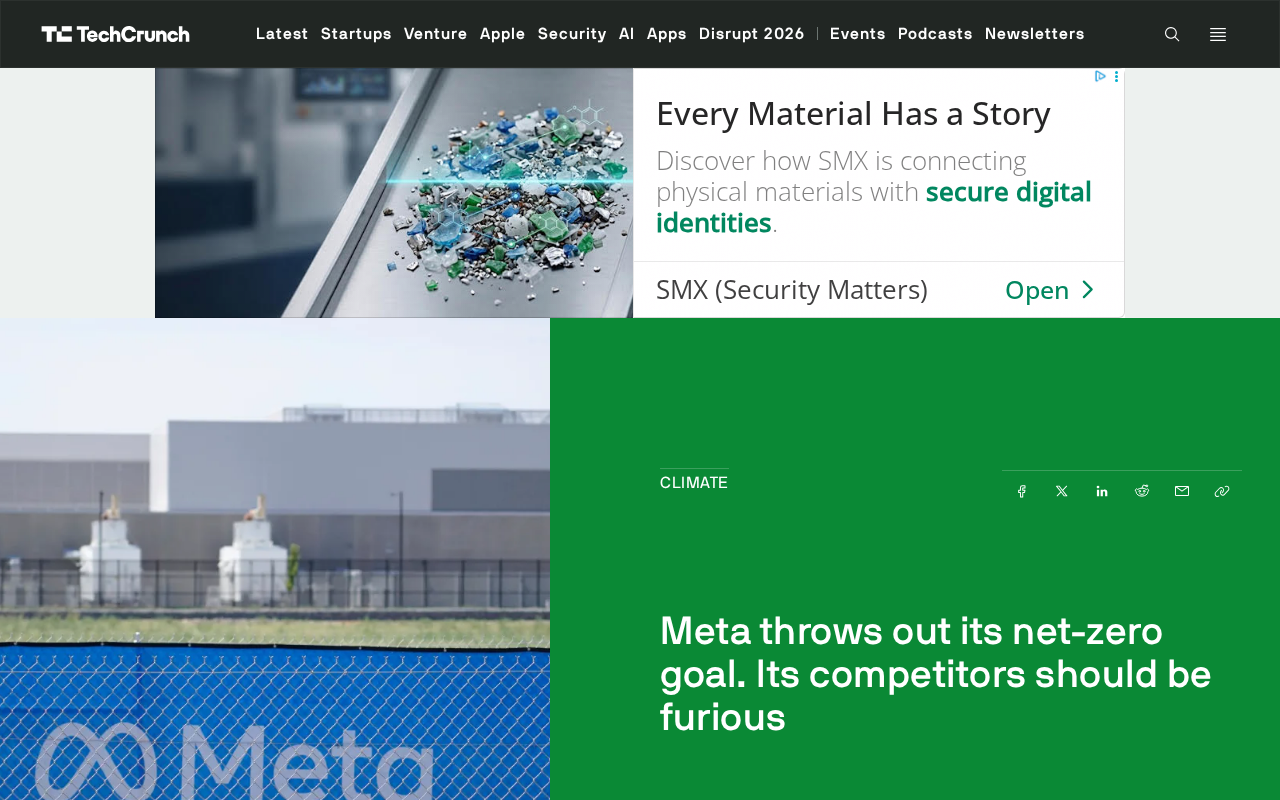
Meta Abandons 2030 Net Zero Target, Tech Industry Climate Pledges Face a Reckoning
Meta withdraws its 2030 net zero target in its 2026 sustainability report, triggering a chain reaction in tech climate pledges. This analysis examines the impact on competitive dynamics, ESG investment strategies, and industry self-regulation.

Philosopher Rejects Anthropic's AI Consciousness Argument: A Dangerous Business Narrative
Anthropic listed AI consciousness as a risk factor ahead of its IPO, prompting a prominent philosopher to publicly reject its consciousness argument. This article analyzes the business motives, scientific honesty, and AI industry narrative strategies behind the debate.