Apple September 9 Event Preview: Foldable iPhone Ultra Takes Center Stage
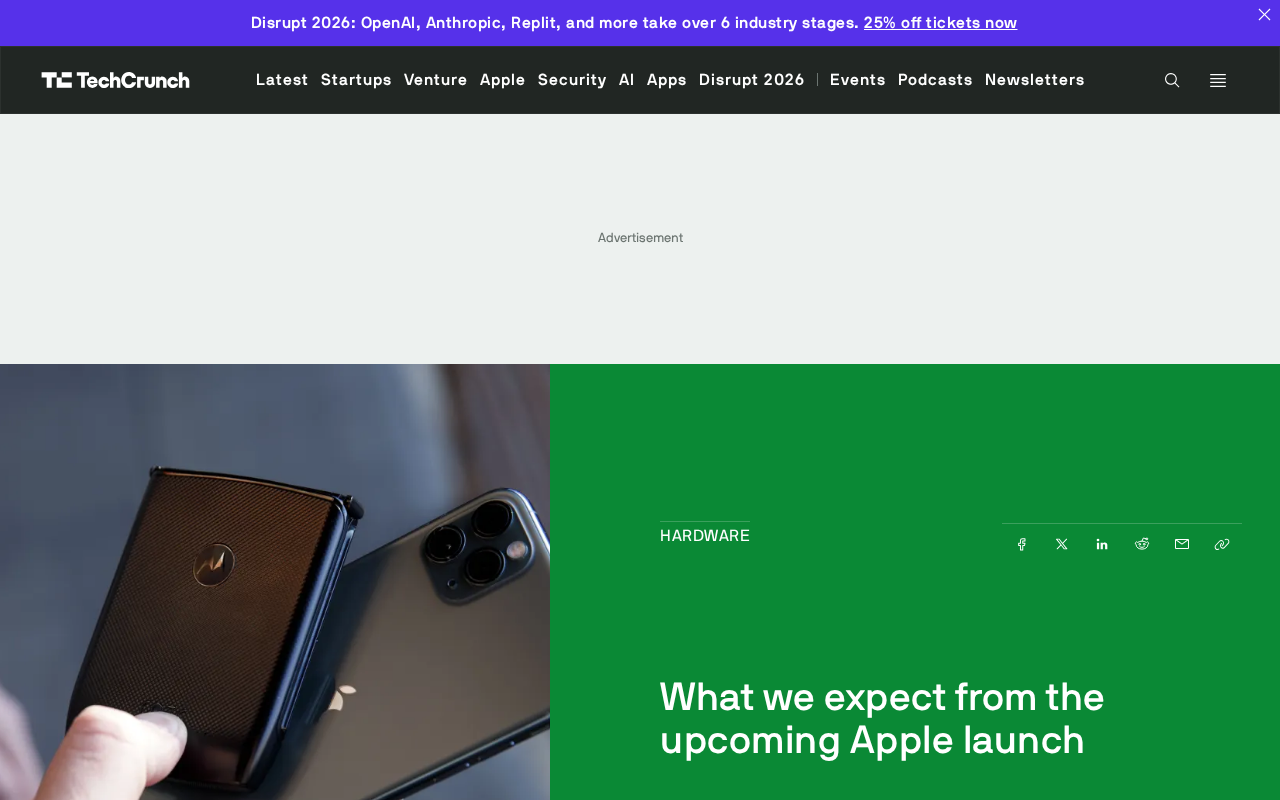
Apple's September 9 event to unveil foldable iPhone Ultra alongside AirPods and HomePod updates.
Apple's September 9 fall event is set to debut the long-awaited foldable iPhone Ultra, marking the company's official entry into the foldable screen market. Named to signal premium flagship positioning, the device aims to leverage Apple's software ecosystem and chip advantages to outperform rivals. The event will also feature AirPods and HomePod updates, reinforcing Apple's broader ecosystem strategy.
Apple's Fall Event Approaches, with Foldable Screen as the Biggest Highlight
Apple is set to hold its latest fall product launch event on September 9, and the most anticipated star of the show is undoubtedly the long-rumored first foldable device — the iPhone Ultra. Representing a major breakthrough in smartphone form factor for Apple, the debut of the foldable iPhone marks the tech giant's official entry into the foldable screen arena, going head-to-head with Samsung, Huawei, and other manufacturers.
Beyond the foldable iPhone, the event is also expected to bring updates on the AirPods and HomePod lineups. Apple is not only pursuing form factor innovation in its flagship products but also continuing to refine its audio and smart home ecosystem.
Foldable iPhone Ultra: Apple's Long-Awaited Form Factor Revolution
Late to the Game, but Worth the Wait
Compared to other Android manufacturers, Apple's approach to the foldable screen market has been notably cautious. Samsung launched its first Galaxy Fold back in 2019, and brands like Huawei and OPPO have already iterated through multiple generations of foldable products. Apple's decision to enter the market now, when the technology is relatively mature, is likely a deliberate move to avoid the common pain points of early foldable products — poor hinge durability, visible screen creases, and insufficient battery life.
Core Challenges of Foldable Screen Technology
Foldable screen technology relies on the coordinated design of flexible OLED display panels and precision hinge mechanisms. Flexible OLED replaces traditional glass substrates with plastic ones, using multi-layer thin-film encapsulation to protect the organic light-emitting materials and allow the screen to withstand repeated folding. Hinge technology presents another major challenge — it must ensure a long opening-and-closing lifespan (industry standards typically require over 200,000 cycles) while minimizing the screen's bending radius to reduce visible creases. Early products commonly suffered from fragile screen protective layers, loose hinges, and inadequate dust and water resistance. Known for product quality and user experience, Apple delayed its entry precisely to wait for supply chain technology to mature enough to meet its stringent product standards — avoiding a repeat of Samsung's first-generation Galaxy Fold, which faced mass recalls due to screen failures.
One interesting detail: Apple's choice to name it "iPhone Ultra" rather than adopting industry-common terms like "Fold" or "Flip" suggests the company intends to position this foldable device as a premium flagship within its product lineup, rather than a mere experimental product. This naming strategy aligns with Apple's recent brand language emphasizing "ultimate performance," as seen in products like the Apple Watch Ultra.
The Industry Significance of Apple Entering the Foldable Market
Apple's entry is generally seen as a landmark signal that a niche market is reaching maturity. Leveraging its deep expertise in supply chain management, software ecosystem, and customer loyalty, the foldable iPhone has the potential to drive broader adoption and standardization across the entire foldable phone market.
The Unique Advantage of the iOS Ecosystem
iOS has a distinct competitive edge over Android when it comes to foldable screen adaptation. Apple's closed ecosystem allows it to enforce app optimization for new form factors through the App Store review process, effectively avoiding the widespread issues in the Android camp where third-party apps display incorrectly or have misaligned interactions on foldable screens. More importantly, the mature features iPadOS has accumulated over the years — split-screen multitasking, drag-and-drop between apps, floating windows, and external keyboard support — can be seamlessly migrated to the foldable iPhone's large-screen mode. Additionally, Apple's in-house M-series and A-series chips, with their advantages in performance scheduling and energy efficiency, are better equipped to handle the graphics processing and power consumption challenges that come with larger screen areas and higher resolutions on foldable devices. These integrated hardware-software advantages are likely to be the key differentiators in Apple's competition against Samsung, Huawei, and other rivals.
Of course, the foldable iPhone also faces significant challenges. A steep price tag, a relatively thick and heavy body, and widespread consumer skepticism about the practicality of foldable screens are all hurdles that Apple will need to overcome through outstanding product design and effective market education.
AirPods and HomePod Updates: Continuing Apple's Ecosystem Strategy
AirPods Audio Lineup Upgrades
Beyond the foldable iPhone, this Apple event is also expected to bring new AirPods products or feature updates. As one of the highest-engagement accessories in the Apple ecosystem, AirPods have long held a leading position in the global wireless earbuds market.
Ongoing Evolution of Audio Technology
Potential upgrades may include more powerful active noise cancellation algorithms, longer battery life, and deeper integration with health monitoring features. Active Noise Cancellation (ANC) technology works by using external microphones to capture ambient noise, then having the chip generate inverse sound waves in real time for cancellation. The existing Adaptive EQ technology in AirPods Pro adjusts noise cancellation intensity in real time based on earbud fit. The next generation may introduce machine learning-based smart noise cancellation algorithms that use neural networks to identify different types of noise (such as voices, traffic noise, wind noise, etc.) and apply targeted processing for a more natural noise cancellation experience. Furthermore, the combination of Spatial Audio with head tracking, along with ultra-low-latency audio transmission enabled by the next-generation H2 chip, are key technologies that help AirPods maintain their market competitiveness.
Continued Investment in HomePod and Smart Home
News on the HomePod front is equally worth watching. Apple has traditionally kept a relatively low profile in the smart home space, but HomePod serves as a core hub of Apple's home ecosystem, playing a vital role in connecting HomeKit devices and providing Siri voice interaction.
The Strategic Value of the HomeKit Ecosystem
HomeKit is Apple's smart home platform standard, which uses end-to-end encrypted communication protocols and strict device certification mechanisms, making privacy protection and local control its core selling points. Compared to competitors like Google Home and Amazon Alexa that rely on cloud-based processing, HomeKit supports fewer devices but offers higher security, better serving privacy-conscious users. As the central device of the HomeKit ecosystem, HomePod has built-in Thread wireless protocol support, enabling low-power smart device Mesh networking. Notably, Apple has also been a driving force behind the development of the Matter unified smart home standard, aiming to break down interoperability barriers between different brands. A new HomePod may further strengthen its role as a smart home hub through more powerful local computing capabilities and a richer sensor suite, forming a tighter connection with Apple's overall hardware ecosystem strategy.
Summary: An Event That Could Reshape the Industry Landscape
The September 9 event may well become one of Apple's most talked-about product launches in recent years. The debut of the foldable iPhone Ultra signifies not just the birth of a new piece of hardware, but a major shift in Apple's stance on smartphone form factor innovation. Combined with simultaneous updates to AirPods and HomePod, Apple is reinforcing its competitive moat across the board — from flagship products to ecosystem accessories.
For consumers, this event is both a long-awaited tech spectacle and a crucial test of Apple's innovative capabilities. Whether the foldable iPhone can replicate the glory of the original iPhone and redefine the competitive landscape of the premium smartphone market is something well worth keeping an eye on.
Note: The above content is based on pre-event industry rumors and analyst expectations. Specific product details are subject to Apple's official announcement.
Related articles

AI Large Model Interview Trends: 625 Real Post-Interview Reviews Reveal Core Focus Areas
Based on real data from 1,700+ students and 625 interview reviews, discover what AI large model interviewers focus on: multi-Agent architecture, deep fundamentals, and enterprise project experience.

HouseSpaceAI: Upload 2D Floor Plans, AI Automatically Generates Interior Design Schemes
HouseSpaceAI is an AI interior design tool where users upload 2D floor plans or sketches and AI Agents generate multiple design schemes in minutes. Deep dive into its features, use cases, and real-world limitations.

Nathan Fielder Documentary Focuses on Elizabeth Holmes and the Theranos Scandal
Comedy director Nathan Fielder premieres documentary You Can See Everything at Telluride, offering a unique perspective on Elizabeth Holmes and the Theranos fraud scandal, exploring Silicon Valley's startup mythology and the boundaries of deception.