Apple Unveils Its First Touchscreen MacBook Pro: OLED Display Steals the Show
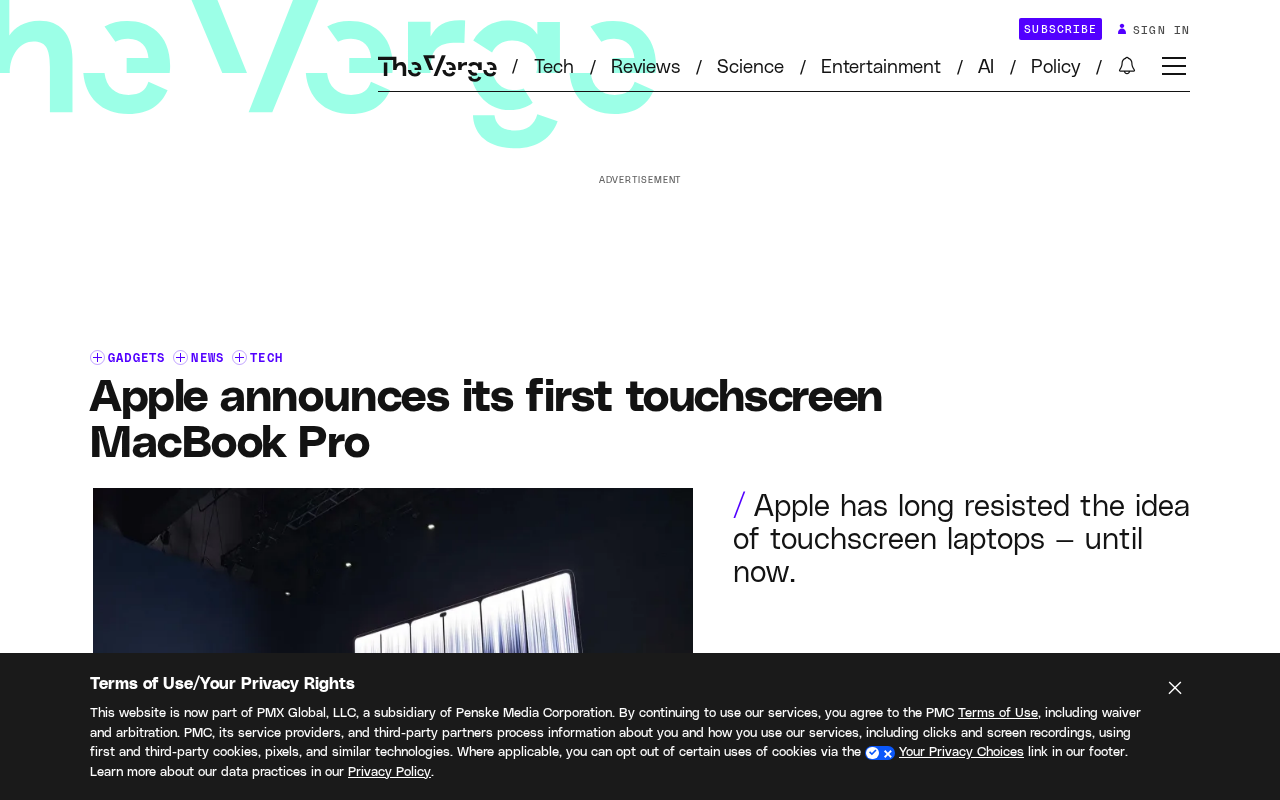
Apple unveils its first OLED touchscreen MacBook Pro with a tandem OLED panel, marking a product direction shift.
At its "Pro and tell" event, Apple unveiled the all-new MacBook Pro, its first Mac laptop with an OLED touchscreen, named ProLED XDR. The display uses a tandem OLED structure with 2,000-nit peak brightness, 120Hz refresh rate, and 10,000,000:1 contrast, aimed at HDR content and professional color grading. The touchscreen breaks Apple's long-held "Mac doesn't need touch" stance amid overlapping iPad Pro/MacBook positioning and pressure from Windows touch laptops. Price, release date, and chip details remain unannounced, and whether touch deeply integrates with macOS workflows is the key question.
Apple officially unveiled its all-new MacBook Pro at Wednesday's "Pro and tell" event, and the most striking change is that the MacBook line now features an OLED touchscreen for the first time. For a company that long insisted "the Mac doesn't need a touchscreen," this marks a clear shift in product direction.
Display Specs: What Is ProLED XDR
Apple calls this display "ProLED XDR," which is essentially a tandem OLED panel. According to officially released figures, it supports peak brightness of up to 2,000 nits, a 120Hz refresh rate, and a 10,000,000:1 contrast ratio.
Tandem OLED works by stacking two emissive layers, boosting brightness while keeping power consumption and panel lifespan in check. This approach already had a foundation on iPad Pro, and bringing it down to the MacBook Pro line means Apple now has enough confidence in OLED durability at laptop sizes. The 2,000-nit peak brightness, combined with OLED's per-pixel light control, will offer clear advantages in HDR content consumption and professional color grading scenarios.
How Touch Changes the Interaction
Adding a touchscreen is more than just a hardware addition. How well macOS adapts to touch input, and whether professional software (such as video editing and photo retouching tools) will redesign its interaction logic, are the questions users really care about. Apple has not yet disclosed specific system adaptation details in the available materials, so this information awaits further updates.
The technical principles of Tandem OLED
A traditional OLED panel has only a single organic emissive layer. In laptop scenarios that require prolonged high-brightness display, a single-layer structure tends to accelerate material aging due to excessive current density, while peak brightness is also limited. Tandem OLED uses an evaporation process to stack two (or more) emissive layers in series; under the same current, light output doubles, so higher brightness can be achieved at lower current density, balancing lifespan and power consumption. In addition, the multi-layer structure shares the emissive load and reduces the risk of burn-in—precisely the prerequisite that gave Apple the confidence to use it in the MacBook Pro.
The technical background of macOS touch adaptation
macOS's interaction framework has long been designed around pointers (mouse/trackpad); its UI element sizes, hover states, and context menus are not optimized for finger touch. To support touch, Apple would need to introduce touch-target size guidelines similar to iPadOS and could leverage Mac Catalyst or SwiftUI to help developers adapt. Historically, Apple tested the waters of touch interaction with the Touch Bar, but market feedback was poor. If the system is deeply adapted this time, it could mean macOS will introduce a separate touch mode, or offer switchable touch workspaces in professional apps (such as Final Cut Pro and Logic Pro).
Why This Shift Matters
For years Apple rejected touchscreens on the Mac on the grounds that "operating with your arm suspended in the air isn't ergonomic." This exception reflects pressure on two fronts: the ongoing overlap in positioning between iPad Pro and MacBook, and the penetration of Windows touchscreen ultrabooks among creative professionals. Bringing touch capability into the MacBook Pro is, in a sense, an attempt to unify the expected experience across the two product lines.
From an industry perspective, the OLED transition for laptops is accelerating. Apple's adoption of tandem OLED in its high-end products will have a ripple effect on supply chains and competitors' display choices.
The evolution of Apple's stance on Mac touchscreens
Apple executives have publicly dismissed the necessity of a Mac touchscreen multiple times. In 2016, Phil Schiller said "tapping a vertical screen with your finger isn't ergonomic," and in 2020, Craig Federighi also said "the indirect input model of the Mac is more efficient." Behind this stance was Apple's insistence on differentiating iPad and Mac: touch belongs to iPad, keyboard and mouse belong to Mac. However, as iPad Pro gained M-series chips and the Magic Keyboard made it increasingly laptop-like, the boundary between the two product lines has blurred. Introducing touch on the MacBook Pro is essentially a revision of that differentiation strategy and hints that Apple may be rethinking the path toward a "unified computing experience."
What's Known and What's Still Unconfirmed
The confirmed information centers on the display: tandem OLED, the ProLED XDR name, 2,000-nit brightness, 120Hz refresh rate, and a 10,000,000:1 contrast ratio. Key details such as price, release date, processor model, and stylus support have not yet appeared in the available materials and will require Apple's official follow-up announcements.
For professional users, the leap in display quality is the most tangible part of this update; whether touch can truly integrate into the macOS workflow will determine whether this shift is a marketing concept or a genuine productivity upgrade.
One-line Summary
Apple unveils its first OLED touchscreen MacBook Pro, featuring a tandem OLED panel and marking a shift in product direction.
Paragraph Summary
At its "Pro and tell" event, Apple unveiled the all-new MacBook Pro, equipping a Mac laptop with an OLED touchscreen for the first time, named ProLED XDR. The display uses a tandem OLED structure with 2,000-nit peak brightness, a 120Hz refresh rate, and a 10,000,000:1 contrast ratio, targeting HDR content consumption and professional color grading. The addition of touch breaks Apple's long-held stance that "the Mac doesn't need a touchscreen," driven by dual pressures: the overlapping positioning of iPad Pro and MacBook, and the penetration of Windows touchscreen laptops. Price, release date, chip model, and other details remain unannounced, and whether touch can deeply integrate with the macOS workflow remains the key open question.
Related articles

AI Agent Trust Crisis: Markdown Injection Attacks Have Moved from Lab to Reality
Security researchers document an in-the-wild Markdown injection attack: malicious document content is misclassified by AI agents as trusted instructions, executing unauthorized tool calls with full credentials. This article analyzes the attack mechanism, the root cause of ambient trust, and defense approaches for trust boundaries in production environments.
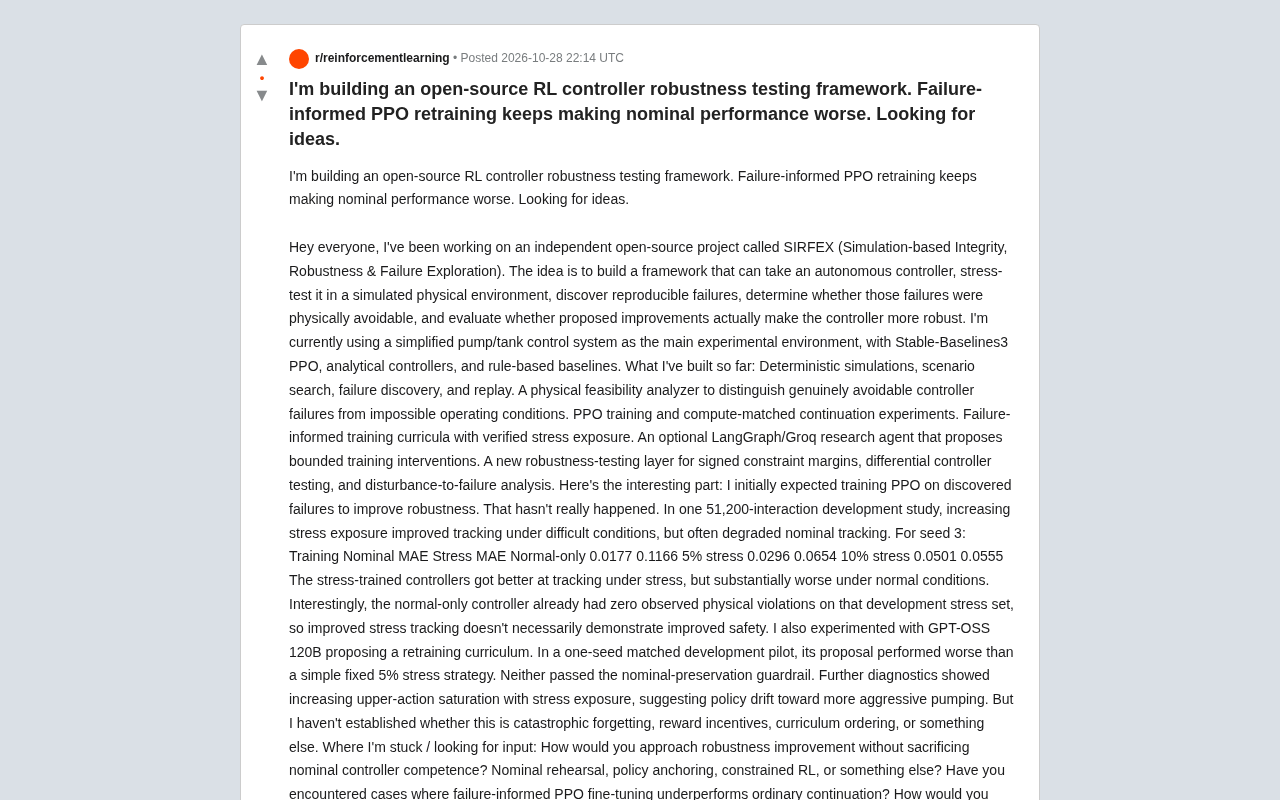
Open-Source Robustness Testing Framework SIRFEX: Why Does Failure-Driven PPO Retraining Hurt Nominal Performance?
Open-source framework SIRFEX fine-tunes PPO on failure scenarios, yet nominal performance degrades. We analyze the experimental data, causes of negative results, and the balance between robustness and nominal performance.

AI Gateway Introduces Virtual Models: Switch Models Without Changing Code
Vercel AI Gateway launches Virtual Models, abstracting model strings and configuration into reusable IDs so model switching needs no code changes or redeployment, with centralized governance of fallback, Zero Data Retention, and permission control.