Art4: The Mac App That Turns Your Desktop Into a Private Art Museum

Art4 is a Mac app combining classic artwork browsing, art stories, and HD wallpapers with a one-time purchase model.
Art4, developed by unvalley, is a lightweight Mac tool that ranked 20th on Product Hunt on its launch day. Positioned as a "small art museum for your desktop," it lets users browse classic paintings, read curated story descriptions for each work, and set their favorites as high-resolution wallpapers. Unlike random wallpaper scrapers, Art4 emphasizes curation and lightweight art education. It uses a one-time purchase model with no subscription, fitting its focused, minimalist character. The size of its artwork library and update plans have yet to be publicly disclosed — key considerations for potential buyers.
A Mac Tool That Puts Masterpieces on Your Desktop
Do you love Monet's gardens or Van Gogh's starry skies? Art4 brings that appreciation for classic art into your everyday workflow — it's a Mac app designed to turn your desktop into a "small art museum."
On Product Hunt, the app — developed by unvalley — earned 62 upvotes and ranked 20th on its launch day, listed under the Mac, Art, and Wallpaper categories. While modest in scale, it tackles an angle most desktop customization tools overlook: rather than simply providing attractive wallpapers, Art4 builds a complete experience around art appreciation.
Core Features: Browse, Read, and Set as Wallpaper
According to its official description, Art4 revolves around three main pillars.
Browse Classic Artworks
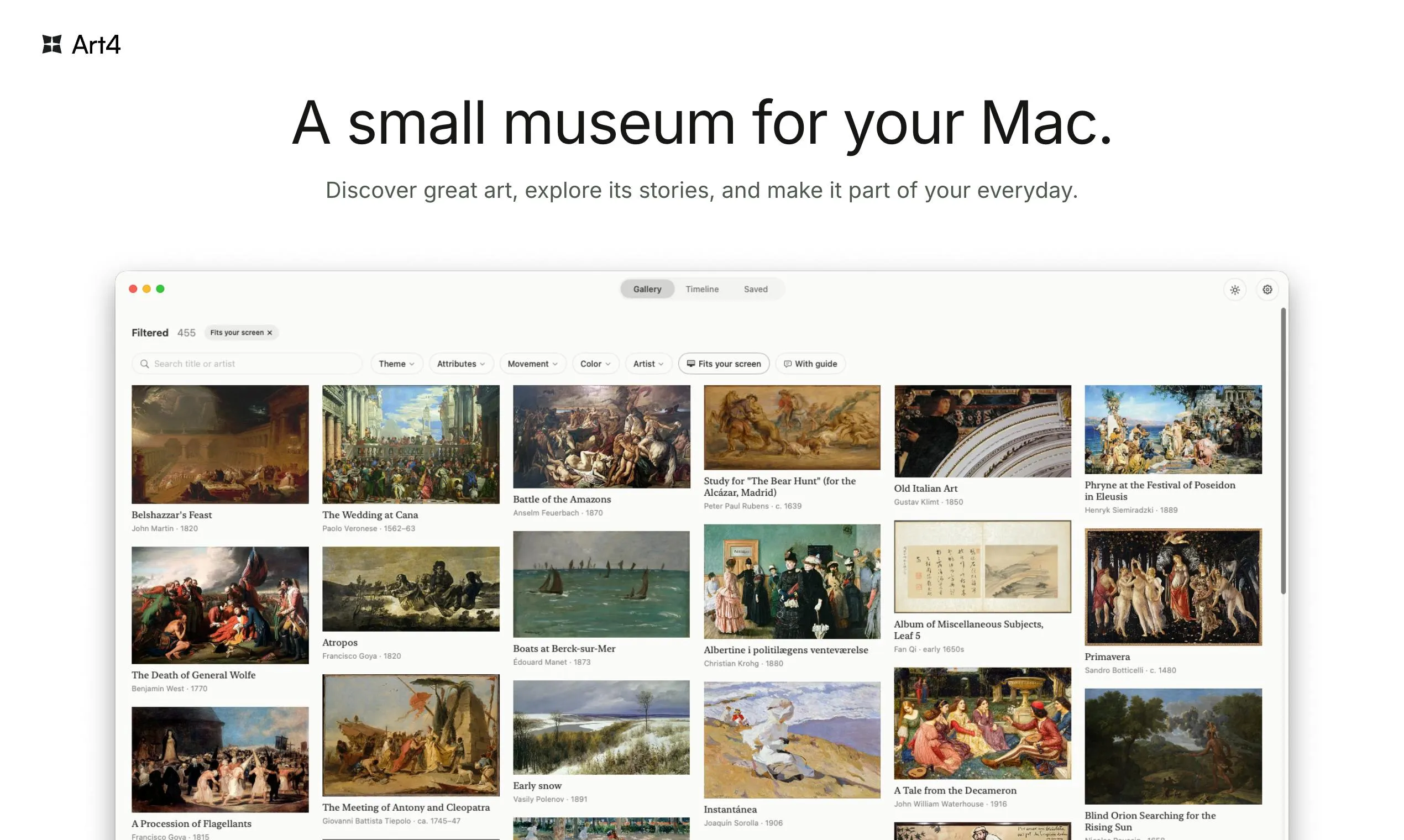
The app includes a curated collection of classic paintings that users can scroll through like visiting a gallery. Unlike wallpaper tools that randomly scrape images from the web, Art4 emphasizes a "curated" feel — content is organized around renowned artists and works, making the browsing experience itself a pleasure.
Paired Art Stories
What sets Art4 apart is that each artwork comes with a short accompanying story. This means it's not just about looking at images — it provides context. You can learn about the creative background behind a painting or the artist's intent. For anyone who wants to pick up a bit of art history during spare moments, this "lightweight education" offers more value than simply swapping wallpapers.
This "image-plus-text" approach to art appreciation has a unique advantage in the digital age. Wall labels in traditional museums are constrained by physical space and often limited to a few sentences. A digital app, however, can flexibly present creative backgrounds, stylistic movements, and even anecdotes from an artist's life. Notably, major institutions like the Metropolitan Museum of Art and the Art Institute of Chicago have already released vast portions of their collections under Public Domain licenses, allowing commercial applications to use high-resolution images for free. This gives apps like Art4 a legitimate content foundation — and it's a key reason why desktop art apps have been able to flourish in recent years.
One-Click High-Resolution Wallpaper
Spot a painting you love? You can set it directly as your desktop wallpaper. The official description specifically highlights that wallpapers are "crisp and perfectly sized" — addressing a common pain point with wallpaper tools: blurry images, insufficient resolution, or mismatched aspect ratios. For users who stare at their screens for hours, image quality and fit directly affect the overall experience.
One-Time Purchase, No Subscription
At a time when subscription pricing has become the default in software, Art4 opts for a "one-time purchase, no subscription" model. This is explicitly called out in the Product Hunt listing — clearly an intentional selling point from the developer.
For users, a one-time payment means no ongoing cost pressure and no worry about losing access if you stop paying. For a lightweight, focused desktop app, this pricing strategy aligns well with the product's character — it's selling a long-term desktop companion, not a content-heavy service requiring constant updates.
The tension between perpetual licenses and subscription models is one of the most hotly debated topics in the indie developer community in recent years. While subscriptions provide developers with stable recurring revenue, user resistance is growing — especially for lightweight tools with relatively fixed features and infrequent content updates. The one-time purchase model has seen plenty of success stories in the Mac indie app scene, and the rise of platforms like Setapp reflects user preference for "pay once, use indefinitely." The challenge for developers with a perpetual license model is that they need version upgrades or new features to drive repurchases, rather than relying on passive renewals.
Who Is It For?
Art4's product logic is clear: rather than piling on features, it focuses on doing one small thing well — combining art appreciation with desktop customization. Its target audience is equally defined: Mac users who enjoy classical paintings, want a more refined work environment, or simply want to learn a little about art while changing their wallpaper.
To be realistic, the depth of content and the size of the artwork library will largely determine how long the app can keep users engaged. The publicly available information doesn't yet disclose exactly how many works are included or whether the library will receive ongoing updates. For potential buyers, these are key factors worth considering before purchasing.
Wrap-Up
Art4 represents a "small but refined" product philosophy: rather than building a sprawling, all-in-one tool, it fully addresses a specific aesthetic need. Artwork browsing, accompanying stories, high-resolution wallpapers, and a no-subscription price point together form a clearly positioned desktop app. If you already have a soft spot for classical art, it might just add a touch of museum-like ritual to your everyday Mac experience.
Related articles

Gemini 4 Argon Hands-On: AI Builds Board Games, Constructs Temples, and Trains Robots Autonomously
Gemini 4 Argon hands-on roundup: AI autonomously builds a desk racetrack and temple in Blender, writes a ray tracing engine, trains a humanoid robot to sink 7 shots, plus API pricing and developer access.

The Magic Octagonal Coin: Why Only 9% of People Can Predict Its Flip?
Only 9% of people can correctly predict the Magic Octagon coin flip. This article explains its spatial rotation mechanism, common cognitive pitfalls, and a new hypothesis based on Relevance Theory, exploring the limits of human spatial reasoning.

Sam Altman: AI Is Entering the Era of Scientific Discovery — Math Breakthroughs Will Replicate in Biology and Energy
Sam Altman says AI is entering the era of scientific discovery — math breakthroughs will replicate in biology, materials science, and energy to help develop new drugs and energy sources.