Atari VCS Platform Bows Out Next Year: Software Store Shuts Down, a Decade-Long Rocky Road Comes to an End

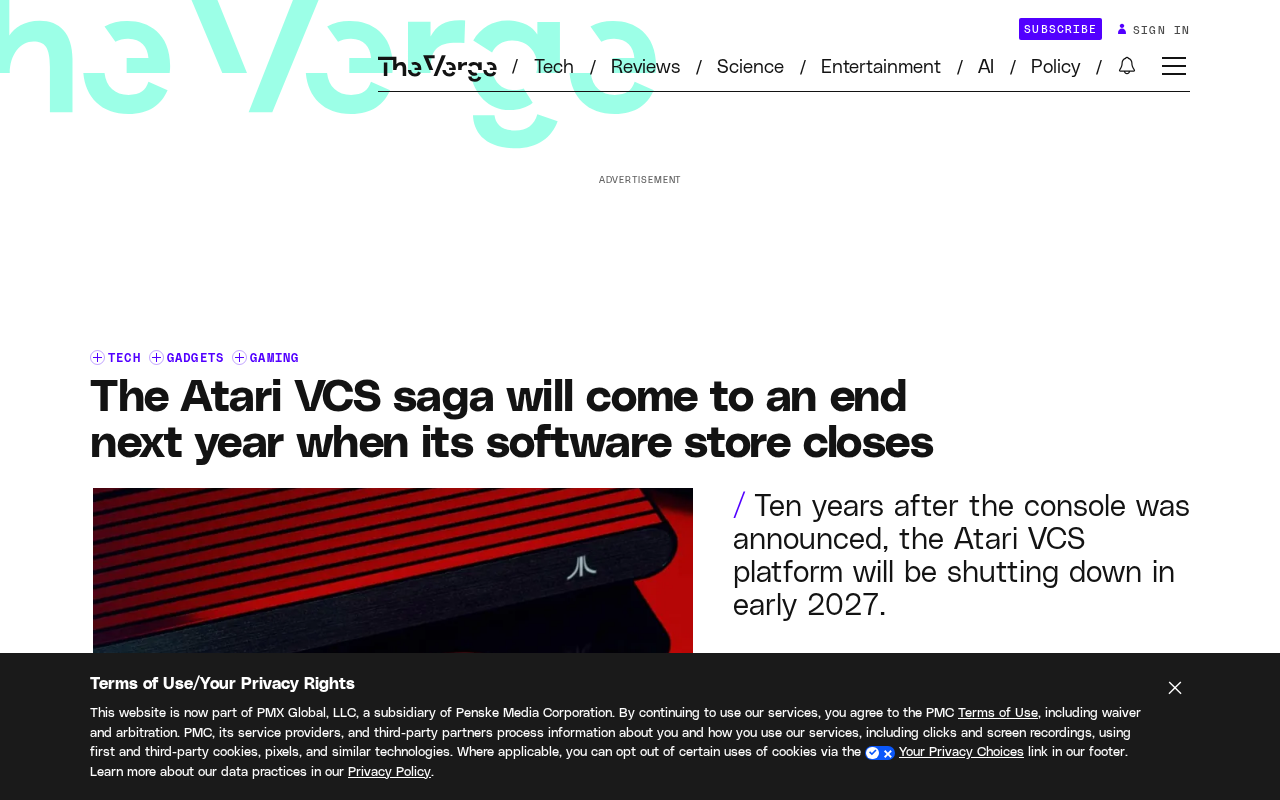
The Atari VCS software store will close on February 1, 2027, ending a decade-long crowdfunded hardware experiment.
The Atari VCS software store has confirmed it will close on February 1, 2027, marking the end of this crowdfunded retro console's platform lifecycle. The console first appeared as the Ataribox, launched an Indiegogo campaign in 2017, promised delivery in 2019 but was delayed until 2020, and endured rebranding, delays, and a trust crisis. After the store closes, users cannot buy new content, it is unclear whether purchased content can still be downloaded, and Atari has not announced refund or migration plans. The article contrasts this outcome with the success of Nintendo's mini NES/SNES, arguing that nostalgia must be paired with sustained content investment and clear positioning, and sounding a warning bell for retro hardware and the crowdfunding model.
From Crowdfunding Star to Quiet Exit: Atari VCS's Decade of Struggle
The Atari VCS story began with an ambitious crowdfunding campaign and ends with the closure of its software store. According to an RSS source, the Atari VCS software store will officially close on February 1, 2027, marking the end of this retro console's platform lifecycle. The official announcement was posted in the Atari community, confirming the closure date but not disclosing further follow-up arrangements.
Looking back at its history, the Atari VCS endured a decade of delays, rebranding, and the awkward situation of Atari having to assure crowdfunding backers that the console would not die. From the initial Indiegogo crowdfunding campaign to its eventual launch, the product was accompanied by doubt and uncertainty throughout.
A Tortuous Development Journey
The Atari VCS first appeared under the name "Ataribox" and was later renamed Atari VCS due to trademark issues. The project launched its crowdfunding campaign in 2017, promising delivery in 2019, but actual shipping was delayed until 2020, and the initial software ecosystem was sparse. During this period, Atari repeatedly reassured backers, insisting the project was still moving forward.
This history reflects a typical dilemma: an established game company tries to leverage nostalgia to enter the hardware market, only to be constrained by the multiple challenges of supply chain, software development, and community operations.
Indiegogo and the Trust Mechanism of Crowdfunded Hardware
Indiegogo is a crowdfunding platform founded in 2008, and alongside Kickstarter it is one of the main fundraising channels for hardware projects. Under its "fixed goal" model, projects that fail to reach their target are refunded; under the "flexible goal" model, creators can keep the funds raised, which exposes backers to higher risk. The Atari VCS raised millions of dollars on Indiegogo, and backers essentially played the role of early investors without equity or debt protection, relying only on the creator's promise to deliver. This structure has repeatedly sparked controversy in hardware crowdfunding: when delivery is delayed, specifications are reduced, or refunds are difficult, backers often lack effective recourse. Atari's repeated public assurances that the project would not die were precisely aimed at maintaining backer confidence in the context of a fragile crowdfunding trust mechanism.
What the Software Store Closure Means
After the software store closes, users will no longer be able to purchase new games or apps, but it remains unclear whether previously purchased content can still be downloaded. Atari did not state in the announcement whether it would provide offline downloads or refund options. For a modern console that relies on digital distribution, the closure of the store is equivalent to the death of the platform.
This is similar to the pattern of other small platforms exiting in recent years: first stopping new content listings, then closing the store, and finally taking servers offline. The Atari VCS's user base was already limited, and this move may accelerate community attrition.
Common Patterns of Digital Store Closures and the Handling of Purchased Content
The exit of a digital distribution platform typically follows a three-stage path: "stop listing new content—close the store—take servers offline." After the store closes, users can no longer purchase new content, but whether previously purchased content can be re-downloaded depends on whether the platform retains license verification and content distribution servers. Some platforms provide a transition period allowing users to download purchased content or release offline installation packages; others simply cut off access. In industry practice, refunds are rare because user agreements usually reserve the platform's right to terminate service. Atari did not state whether it would provide offline downloads or refund options, which means there is a substantial risk to the accessibility of users' purchased content and highlights the fragility of digital ownership when a platform's lifecycle ends.
Implications for the Retro Console Market
The fate of the Atari VCS sounds a warning bell for retro gaming hardware. Nostalgia can attract initial attention, but long-term survival requires sustained content investment and clear user value. By contrast, Nintendo's mini NES/SNES succeeded through curated game libraries and plug-and-play experiences, while the Atari VCS tried to combine modern PC functions with retro gaming, and its ambiguous positioning left it pleasing neither side.
In the future, similar projects that want to avoid repeating this mistake need to clearly define their software support cycle during the crowdfunding stage and establish a sustainable content distribution strategy.
Two Paths for Mini Consoles and Retro Hardware
Nintendo's mini NES/SNES represent the "closed curated" path: a built-in fixed game library, plug-and-play, and no reliance on an online store, so there is no problem of content becoming inaccessible due to store closure. The Atari VCS took the "open platform" path: based on PC architecture, running its own operating system, relying on an online store for content distribution, and trying to combine retro games with modern PC functions. The cost of the open path is sustained content investment, developer relations, and server maintenance costs, which are difficult to amortize when the user base is insufficient. The difference between the two paths shows that the sustainability of retro hardware depends not only on nostalgia but also on whether the distribution model and content strategy match its user scale.
Subsequent Reactions from Users and the Community
Currently, users on the Atari community forums have expressed disappointment, with some worried that purchased games will become inaccessible. Atari has not yet announced compensation or migration plans. For players still using the console, it is advisable to watch for official follow-up announcements and consider backing up important data.
The Atari VCS's exit is not only the end of a product but also a reflection on the crowdfunded hardware model. When the passion fades, what remains is a reckoning with promises and execution.
User Data Backup Recommendations When a Platform Exits
When a digital store faces closure, measures users can take to protect themselves include: downloading purchased content as much as possible before closure and saving it to local storage; checking whether the console supports exporting games and save data via USB or external storage; recording purchase receipts and account information for future rights protection or refund requests; and watching official announcements for offline authorization or migration tools. For content that relies on online verification, it may not run after the server is disconnected, so users should prioritize such items. These measures cannot change the outcome of a platform's exit, but they can reduce the loss of personal digital assets to some extent.
One-line Summary
The Atari VCS software store will close on February 1, 2027, bringing a decade-long crowdfunded hardware experiment to an end.
Paragraph Summary
The Atari VCS software store has confirmed it will close on February 1, 2027, marking the end of this crowdfunded retro console's platform lifecycle. The console first appeared under the name Ataribox, launched an Indiegogo crowdfunding campaign in 2017, promised delivery in 2019 but was delayed until 2020, and endured rebranding, delays, and a trust crisis along the way. After the store closes, users will not be able to purchase new content, it remains unclear whether purchased content can still be downloaded, and Atari has not announced refund or migration plans. The article contrasts this outcome with the success of Nintendo's mini NES/SNES, pointing out that nostalgia must be paired with sustained content investment and clear positioning, and sounding a warning bell for retro hardware and the crowdfunding model.
Related articles

Gemini 4 Argon Hands-On: AI Builds Board Games, Constructs Temples, and Trains Robots Autonomously
Gemini 4 Argon hands-on roundup: AI autonomously builds a desk racetrack and temple in Blender, writes a ray tracing engine, trains a humanoid robot to sink 7 shots, plus API pricing and developer access.

The Magic Octagonal Coin: Why Only 9% of People Can Predict Its Flip?
Only 9% of people can correctly predict the Magic Octagon coin flip. This article explains its spatial rotation mechanism, common cognitive pitfalls, and a new hypothesis based on Relevance Theory, exploring the limits of human spatial reasoning.

Sam Altman: AI Is Entering the Era of Scientific Discovery — Math Breakthroughs Will Replicate in Biology and Energy
Sam Altman says AI is entering the era of scientific discovery — math breakthroughs will replicate in biology, materials science, and energy to help develop new drugs and energy sources.