Balsa UI: An Open-Source Design System Tool Built for AI Agents
Balsa UI bridges design systems and AI Agents through machine-readable contracts and component Registries.
Balsa UI is an open-source tool that establishes a machine-readable contract between design systems and UI component libraries, enabling AI Agents to generate consistent, spec-compliant code. Its Registry mechanism provides Agents with extensible source code, following the copy-paste philosophy pioneered by shadcn/ui. By front-loading design governance and letting Agents work within defined boundaries, it addresses the "last mile" consistency problem in AI-assisted programming.
When Design Systems Meet AI Agents
As AI-assisted programming becomes increasingly mainstream, a new pain point is emerging: AI Agents can generate code quickly, but struggle to consistently follow a team's design specifications. The resulting interfaces often suffer from inconsistent styling and poor component reusability, ultimately increasing the rework burden on engineers.
Balsa UI, an open-source tool recently launched on Product Hunt (created by Pedro Balsamão da Costa), targets precisely this gap. Its positioning is crystal clear — "Create design systems, build with agents." After launch, it quickly garnered 75 upvotes, ranking 17th that day and appearing across three categories: Design Tools, Open Source Tools, and Developer Tools.
Balsa UI's Core Philosophy: A Contract Between Design Systems and UI Libraries
The most noteworthy design philosophy of Balsa UI is the clear "contract" it establishes between Design Systems and UI Libraries.
To understand this, we first need to clarify the role of design systems in modern software engineering. A design system is a comprehensive set of standards that includes design principles, visual language (design tokens for colors, typography, spacing, etc.), reusable components, interaction patterns, and usage guidelines. Google's Material Design, IBM's Carbon Design System, and Ant Design are all well-known examples. The core objective is to ensure visual and interaction consistency across different pages and platforms, reduce redundant decisions and implementations, and enable large teams to develop in parallel without style fragmentation.
What Is a Design System Contract?
Traditional design systems often exist only at the level of documentation, Figma specs, or design tokens, with a natural gap between the actual code implementation and design intent. Design Tokens are the most atomic visual property units in a design system — key-value pairs like primary-color: #1890ff, border-radius-sm: 4px, font-size-body: 14px, etc. Amazon's Style Dictionary and Figma's Variables feature are mainstream tools for managing design tokens. Tokens allow design decisions to be transmitted as structured data rather than relying on manual interpretation of design mockups.
However, even with tokens in place, specifications defined by designers still require engineers to manually translate them into code. When AI Agents enter the picture, this gap widens further — Agents lack "contextual awareness" of a team's design conventions.
Balsa's approach is to structurally bind the design system with a powerful UI library, creating a machine-readable, executable specification. This means AI Agents no longer generate components "from thin air" but instead work within a clearly defined constraint framework.
The Registry Mechanism: A Source Code Repository for Agents
Another key mechanism in Balsa is its Registry. A registry is a common architectural pattern in software engineering — essentially a centralized resource index and distribution hub. The npm Registry distributes JavaScript packages; the Docker Registry distributes container images. In the component library space, shadcn/ui pioneered the concept of a component registry: a JSON-formatted component metadata directory that records each component's dependencies, file structure, and source code location, with CLI tools reading this registry to install and update components.
Balsa's Registry extends this concept further into the AI Agent scenario. According to the official description, this Registry provides Agents with directly usable source code — code that can not only be called but also extended and evolved. Agents can programmatically query the Registry to discover available components, understand component interface specifications, and obtain source code that's ready to use and modify.
This approach is closely aligned with the "copy-paste" component distribution philosophy popularized by shadcn/ui. shadcn/ui has been one of the most influential component libraries in the frontend community since 2023. Unlike the traditional npm package distribution model, it adopts a "copy-paste" philosophy: developers use a CLI to copy component source code directly into their projects rather than installing them as external dependencies. This gives developers full ownership of the components, allowing them to freely modify styles and behavior without being constrained by version upgrades or API changes. Under the hood, it's built on Radix UI (unstyled, accessible component primitives) and Tailwind CSS, ensuring accessibility while giving developers maximum customization freedom.
This model — putting source code directly in the hands of developers (and Agents) rather than packaging components as black-box dependencies — grants complete control and modifiability. For AI Agents, the ability to read and rewrite source code means they can deeply customize based on specific needs rather than being limited by closed APIs.
Why AI Programming Needs Design System Tools
The "Last Mile" Problem of AI Programming
Current AI programming tools have formed a multi-layered ecosystem. GitHub Copilot, as a pioneer, primarily provides line-level and function-level code completion within editors. Cursor goes further by deeply integrating AI into the IDE, supporting multi-file editing, codebase-level context understanding, and conversational refactoring. There are also tools like v0 (Vercel's AI UI generation tool), bolt.new, and Lovable that focus on generating complete frontend interfaces from natural language.
These tools excel at generating isolated code snippets but remain insufficient when it comes to maintaining consistency across large projects. The fundamental reason is that large language models are essentially stateless — each generation lacks persistent memory of the project's global design specifications. The UI layer is especially vulnerable — an application might have hundreds of screens, and if each one is freely improvised by an Agent, the final product will be a design disaster.
Balsa UI's approach is: first define the "boundaries" of the design system in a human-controllable way, then let Agents work efficiently within those boundaries. This effectively front-loads "design governance" capability, using specifications to drive generation rather than fixing things after the fact. This methodology is similar to "constraint-driven development" in software engineering — by setting constraints upfront to narrow the solution space, automated tools produce more controllable and predictable output.
The Possibilities Opened by Open Source
Balsa UI is released as open source (explicitly tagged with Open Source and GitHub in its categories), giving it the potential to become community-built infrastructure. Developers can customize their own design contracts, teams can build private component Registries on top of it, and Agents become "first-class citizens" consuming this system.
For teams looking to scale AI programming within enterprises, this "design system as code, Agent as collaborator" model may offer more practical value than relying solely on general-purpose LLMs. The open-source nature also means teams can audit every line of code for security and compliance — particularly important in regulated industries like finance and healthcare. Additionally, the community-driven iteration model allows component quality to continuously improve through collective intelligence, creating a positive network effect.
Current Limitations and Challenges
It's worth noting that Balsa UI is still a relatively early-stage project. While 75 upvotes is a respectable showing, there's only 1 comment, indicating that deeper community discussion hasn't yet begun. Its actual engineering maturity, component coverage breadth, and integration capabilities with mainstream AI programming tools all remain to be validated over time.
"Design Systems × AI Agents" is a correct but difficult direction. The real challenge lies in: How do you make the contract strict enough to ensure consistency yet flexible enough not to stifle creativity? How do you enable Agents to understand specifications while also knowing when to reasonably deviate? These questions actually reflect a classic tension in software engineering — the balance between standardization and flexibility. In traditional human developer scenarios, experienced engineers know when to strictly follow specifications and when to reasonably deviate. Giving AI Agents this kind of "judgment" requires more refined context-passing mechanisms and more intelligent constraint reasoning capabilities. These are questions that Balsa and the entire space need to continue exploring.
Conclusion
Balsa UI represents an emerging trend: redesigning the development toolchain for AI Agents. As Agents gradually become indispensable participants in software development, tool design logic needs to shift from "human-oriented" to "human-machine collaborative." The deeper implication of this shift is that development tools no longer just need good human interfaces (GUI/CLI) — they also need to provide good "machine interfaces": structured, semantically clear, programmatically accessible interfaces that enable AI Agents to understand and operate development resources just like human developers.
The answer it offers — connecting design systems and codebases through clear contracts, empowering Agents through readable and modifiable Registries — is not complex, but it hits the nail on the head. Regardless of whether this specific product ultimately succeeds, the problem it addresses and the approach it takes are worth careful consideration by every developer interested in AI-powered programming.
Related articles
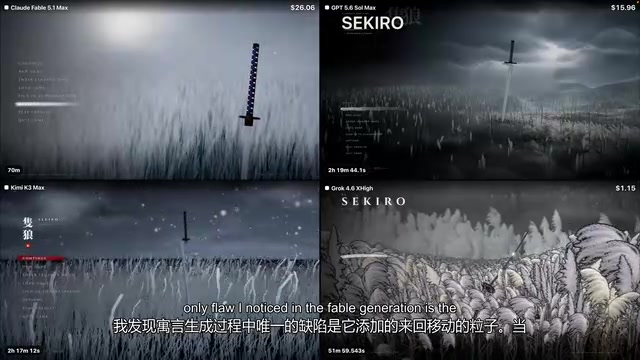
Fable 5.1 Hands-On: AI One-Click 3D Game Scene Generation Crushes GPT and Grok
Hands-on comparison of Fable 5.1, GPT-5.6 Sol, Grok 4.6, and Kimi K3 in 3D game scene generation — from Gothic architecture to Sekiro menus, analyzing real gaps in detail fidelity, speed, and interaction.
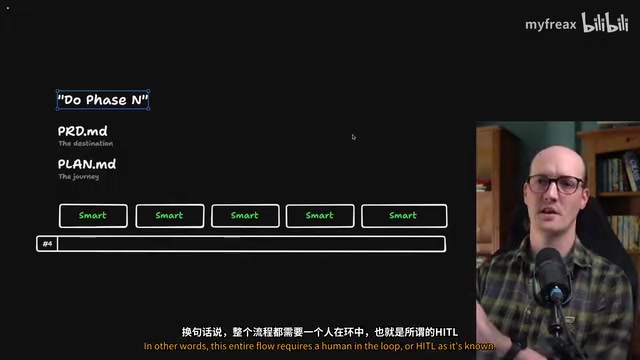
AFK Agent: Let AI Code Autonomously While You're Away From the Keyboard
Explore how AFK Agent mode elevates AI coding from Human-In-The-Loop to autonomous unattended execution through multi-phase plan decomposition and automation loops.
Free Data Science Learning Resources Guide: An Efficient Path to Getting Started on Zero Budget
How to learn data science on a tight budget? This guide covers free resources like Kaggle Learn, freeCodeCamp, and Fast.ai with a complete self-study roadmap from Python basics to machine learning.