bartowski Updates GGUF Quantization: A Guide to Per-Tensor Layout Maps
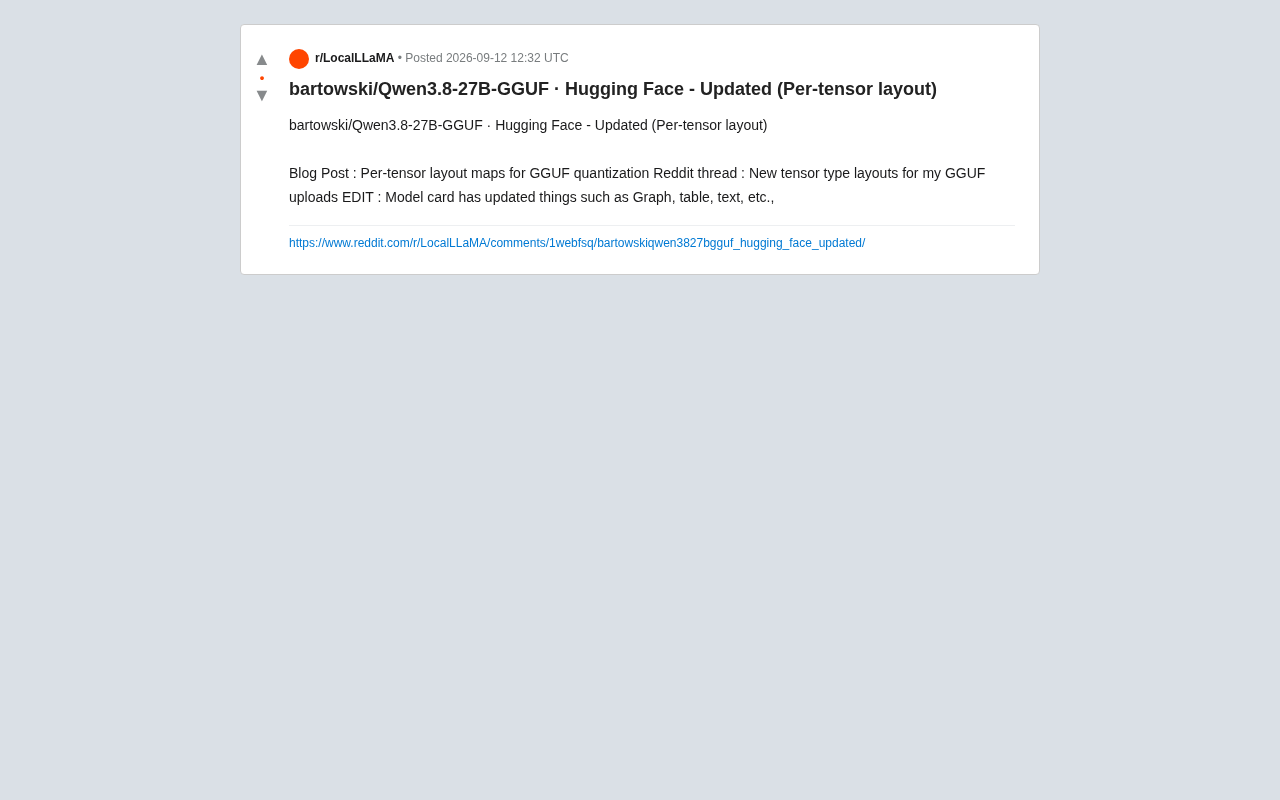
bartowski introduces per-tensor layout maps to GGUF models, turning quantization internals from a black box into auditable data.
Prolific quantization contributor bartowski has updated the Qwen3.8-27B-GGUF repository on Hugging Face, with the key improvement being the introduction of per-tensor layout maps — charts and tables that explicitly show the quantization type applied to each tensor inside a model file. Previously, users downloading a file labeled Q4_K_M had only a broad tier label to go on, with no way to assess how critical layers like attention or output layers were actually compressed. The updated model card, paired with a companion blog post, transforms this black box into an auditable engineering artifact. For local deployment users running LLMs on consumer hardware via llama.cpp, Ollama, or LM Studio, this transparency improvement enables more informed choices among quantized variants — and if widely adopted by the community, could drive meaningful standardization in how quantized model artifacts are documented.
A Practical Update Toward Greater GGUF Quantization Transparency
Prolific model quantization contributor bartowski recently updated the Qwen3.8-27B-GGUF repository on Hugging Face, with the headline change being the introduction of Per-tensor layout maps. While this may look like a simple model card revision on the surface, it delivers information that was previously difficult to obtain intuitively — and that matters greatly to users focused on local LLM deployment and quantization details.
In the corresponding Reddit discussion thread, the author explained that this update introduces a new way to display tensor-type layouts for uploaded GGUF files, accompanied by a blog post providing technical context. The model card itself received a substantial overhaul, adding charts, tables, and written explanations so users can more clearly understand the internal composition of each quantized file.
What Are Per-Tensor Layout Maps?
In GGUF quantization, a model file is not compressed uniformly at a single precision level. Instead, different quantization schemes are applied to different tensors. For example, attention layers, feed-forward layers, and embedding layers may each use different quantization bit-widths and types, balancing file size against output quality.
In the past, when users downloaded a quantized file labeled Q4_K_M or Q5_K_S, they typically saw only a broad quantization tier label — with no visibility into which tensors were compressed to what degree inside the file. That is exactly the gap per-tensor layout maps address: they explicitly list the quantization type for each tensor in chart and table form, turning a black box into something verifiable.
Why This Matters
For local deployment users, the choice of quantization scheme directly affects inference quality and VRAM consumption. Understanding the actual quantization layout of each tensor helps users determine whether a given quantized file preserves higher precision in critical layers — such as the output layer or attention layers — enabling more informed trade-offs between multiple quantized files rather than relying on a vague label alone.
Background: GGUF and K-quants explained
GGUF (GPT-Generated Unified Format) is a model file format introduced by the llama.cpp project. Its design goal is to bundle model weights, quantization metadata, and inference hyperparameters into a single file for easy cross-platform distribution and local deployment. In common quantization labels like Q4_K_M: the number indicates the primary weight quantization bit-width (4-bit); K indicates the use of the K-quants algorithm (a grouped, non-uniform quantization scheme); and M/S/L denotes different "mixed strategies" within that quantization tier — meaning different bit-widths are assigned to different tensors. The core idea behind K-quants is that different layers have different sensitivity to precision loss: for instance, the output layer (output.weight) and embedding layer typically retain higher bit-widths, while intermediate feed-forward weights are compressed more aggressively. It is precisely because a single label conceals this kind of complex mixed strategy that per-tensor layout maps become necessary.
bartowski's Role in the Quantization Community
bartowski is one of the most active quantization contributors on Hugging Face. The large volume of GGUF-format models they have uploaded is widely used in local inference tools such as llama.cpp, Ollama, and LM Studio. Given their influence, any improvement to model card standards or quantization transparency is likely to be adopted by other quantization uploaders, potentially driving standardization across the broader community.
Including per-tensor layouts in the model card is, in essence, an improvement to the interpretability of quantized artifacts. As more models are released with clear tensor-level information, downstream users gain a much finer-grained basis for making selection decisions.
Background: llama.cpp and the local inference ecosystem
llama.cpp is currently one of the most widely used local LLM inference engines. Initiated by Georgi Gerganov and implemented in pure C/C++, it supports efficient execution of quantized models across CPU, Apple Silicon, CUDA, and other hardware. Both Ollama and LM Studio use llama.cpp as their underlying inference core — the former offering command-line and API interfaces, the latter providing a graphical desktop experience. The reason bartowski's GGUF files are so widely adopted by these tools is partly that the quantized outputs are produced with careful parameter selection and testing, typically striking a solid balance between file size and output quality. Quantization contributors play the role of "translators" in the ecosystem — converting official BF16/FP16 source weights into compressed forms that ordinary users' hardware can handle. Their choices directly affect the real-world experience of tens of thousands of downstream users.
Implications for the Local LLM Ecosystem
As open-source model sizes continue to grow, quantization has become almost unavoidable for individual users looking to run large models on consumer-grade hardware. Yet quantization involves a great deal of technical nuance, and ordinary users find it difficult to look past a label and understand the true distribution of precision loss.
bartowski's update reflects a broader trend: quantization is no longer just about "compressing a file" — it is gradually evolving into an auditable, comparable engineering practice. Charted tensor layouts and accompanying blog documentation lower the barrier to understanding while raising information transparency. For users who want to optimize their local inference experience in depth, this kind of documentation improvement may be just as valuable as the addition of a new quantization tier.
It should be noted that this article is based on the original post shared on Reddit. For specific layout chart details and the full technical arguments in the blog, readers are encouraged to consult the corresponding Hugging Face model card and the author's blog directly.
Related articles
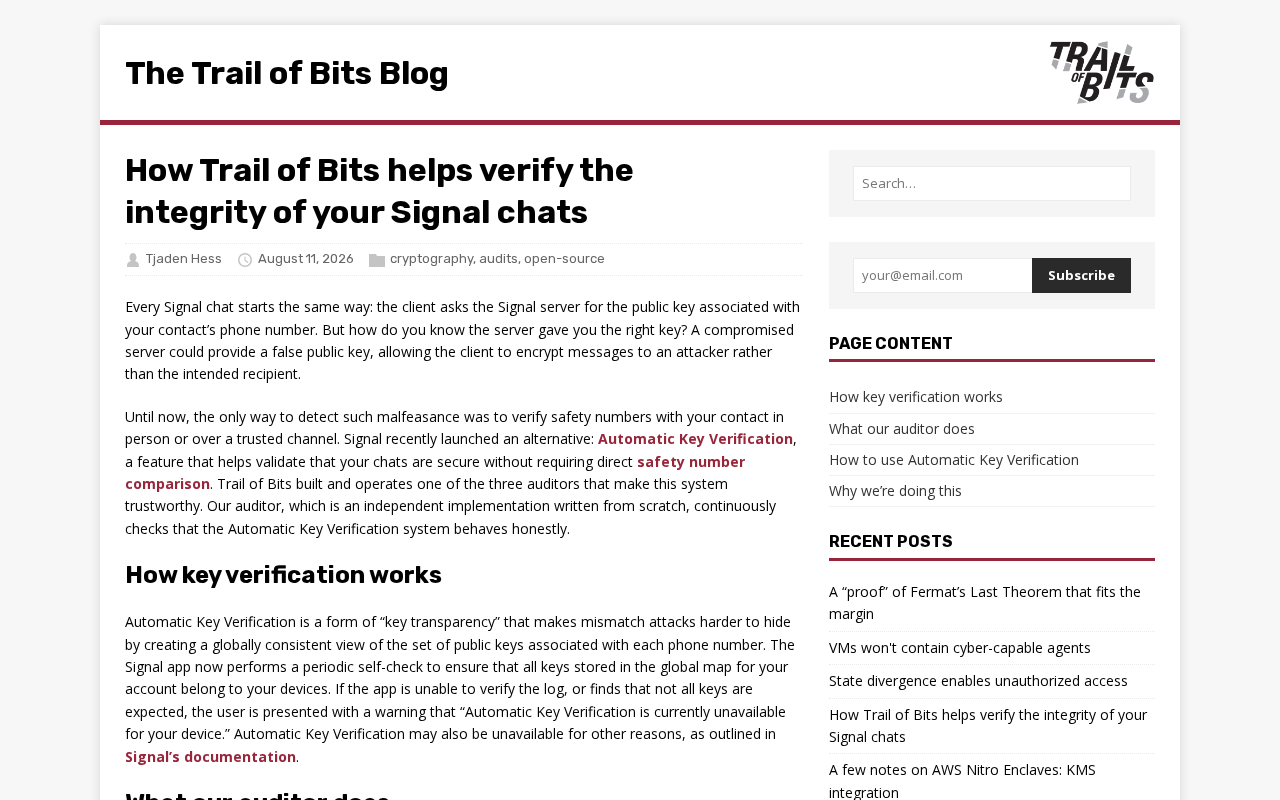
How Trail of Bits Verifies the Integrity of Signal Chat Logs
How does Trail of Bits, as an independent security auditor, help verify the integrity of Signal's end-to-end encrypted chat logs? A technical overview of chat integrity verification and the value of third-party audits.
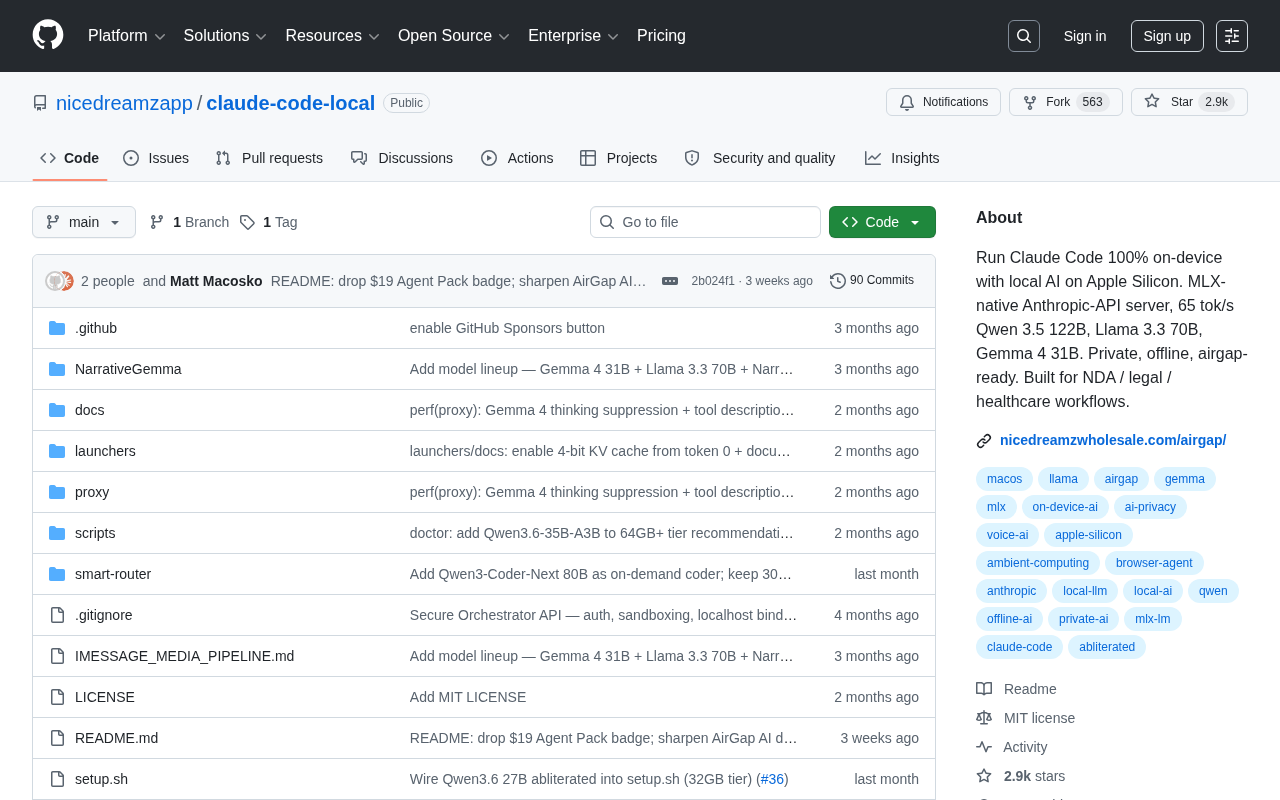
Running Claude Code Locally: A Fully Offline AI Coding Solution for Apple Silicon
claude-code-local runs Claude Code 100% offline on Apple Silicon via MLX, supporting Qwen 3.5 122B at 65 tok/s — built for NDA, legal, and medical privacy workflows.
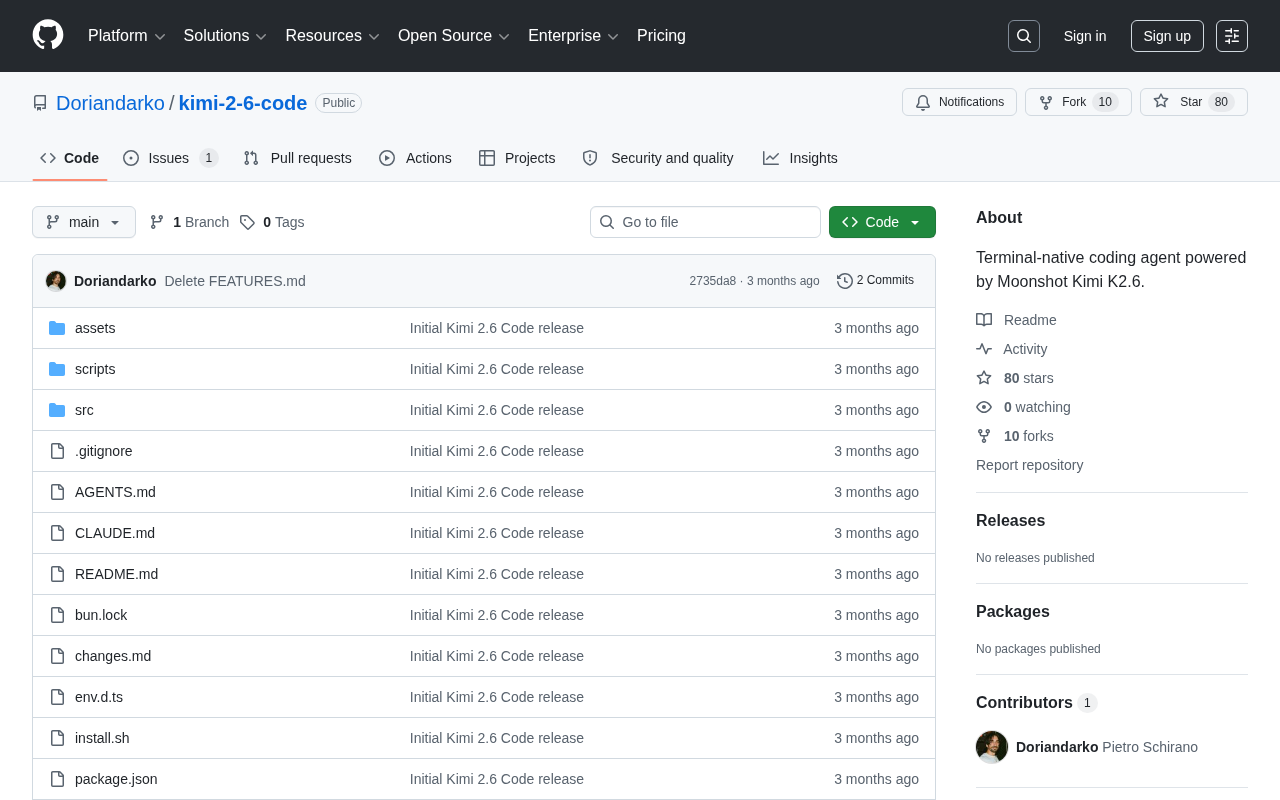
Kimi 2.6 Code: A Terminal-Native Coding Agent Built on the Moonshot Model
kimi-2-6-code is a terminal-native coding agent built in TypeScript on Moonshot's Kimi K2.6 model. Learn about its design, model choice, and maturity level.