Base Code: Let the Whole Team Edit Code Directly in the Browser

Base Code lets non-engineers edit real codebases in natural language, delivered as standard PRs
Base Code is the 4th-ranked tool on Product Hunt, focused on letting non-coders on a team make changes directly to a real product codebase. Its workflow has four steps: connect to GitHub, describe changes in natural language, preview in real time, and send a standard pull request. The core design choice is making PR the delivery endpoint rather than a standalone publishing mechanism, preserving engineers' code review authority and avoiding bypassing existing engineering processes. Positioned between Developer Tools and No-Code, it suits small-to-mid-sized product teams with engineering discipline but stretched thin. Currently, questions about natural-language code editing accuracy, concurrent conflict handling, and permission granularity have no public answers, and community feedback remains sparse.
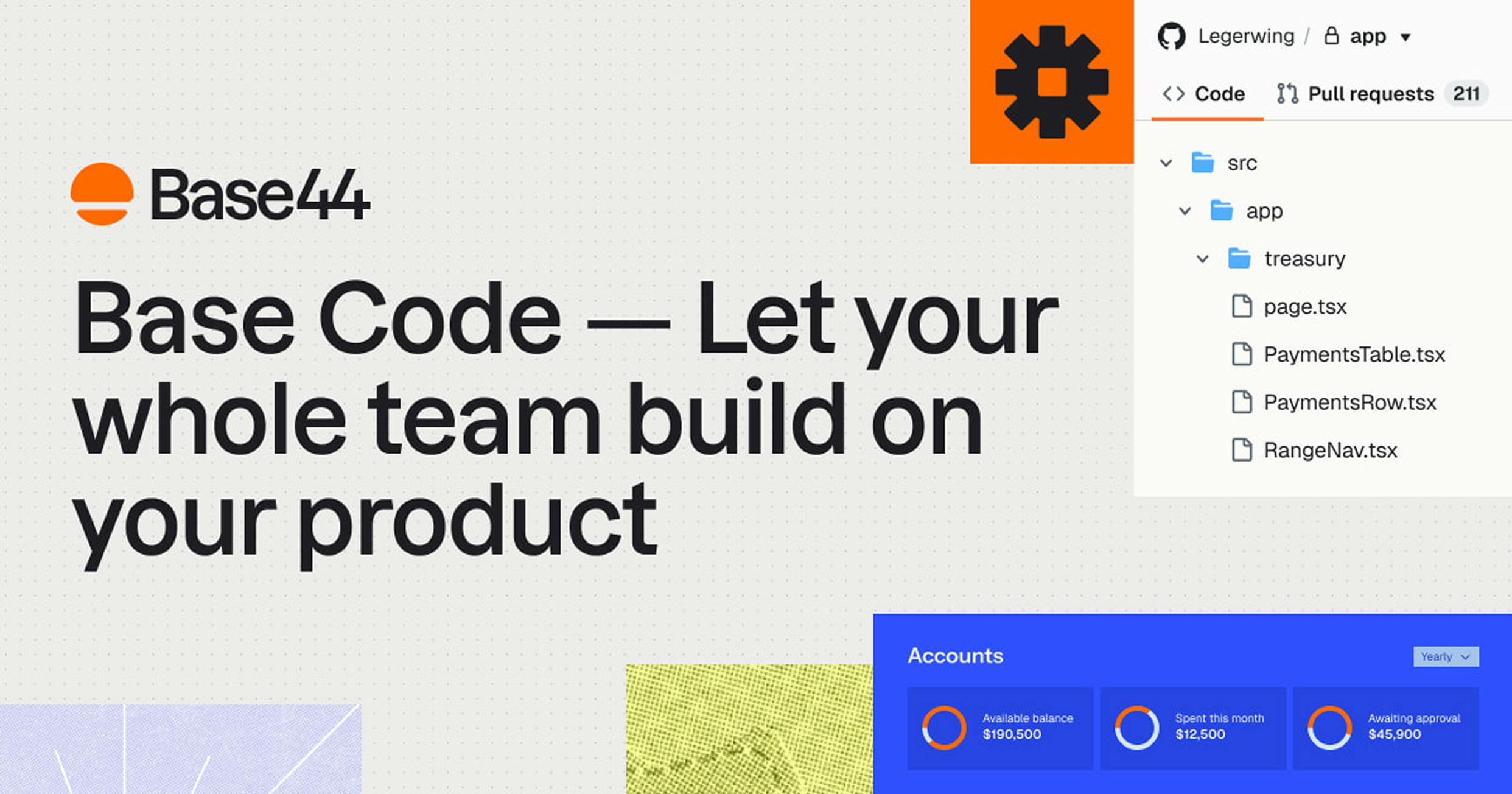
Base Code, which earned 114 upvotes and ranked 4th on Product Hunt, leads with a very straightforward pitch: let non-coding members of a team make changes directly to the product codebase. Connect to GitHub, describe what you need in natural language, preview in real time, and deliver via a standard pull request — the entire flow happens in the browser.
What Problem Does It Actually Solve
Most teams' product iteration gets stuck on a structural tension: the people who understand the business don't touch code, and the people who touch code don't understand the business context. A marketing colleague wants to tweak a landing page button label, customer success wants to update an example in the help center, a designer wants to adjust a spacing value — none of these requests is complicated on its own, but running them through the "file request → schedule → develop → submit for QA → ship" pipeline eats up days.
Base Code's angle is to compress that process into: describe in the browser what you want to change, look at the preview, and ship a PR if you're happy. It doesn't try to replace engineers — it lets non-engineering roles independently handle those "just one step short" small changes. The category tags (SaaS, Developer Tools, No-Code) reflect its positioning too — the tool leans developer-oriented, but the barrier to use tilts toward the No-Code crowd.
Breaking Down the Workflow: Four Stages, None Skipped
Unpacking Base Code's tagline, its core flow consists of four steps, each corresponding to a clear engineering constraint:
Step one: connect to GitHub. This is the prerequisite for the whole chain. What teams use isn't some isolated sandbox environment but their existing, real codebase — meaning that permission management, branching strategy, code standards, and other existing engineering rules aren't bypassed.
Step two: describe the change in natural language. This is the most imaginative and most need-to-verify part of the whole thing. The quality of natural-language-to-code conversion directly determines whether this tool is an "efficiency multiplier" or a "bug factory." The original text doesn't reveal which model or in-house solution powers it, which is worth watching going forward.
Step three: real-time preview. What you see is what you get with the changes, and non-technical roles can judge "is this what I wanted?" without understanding the build pipeline. This step is key to lowering the psychological barrier.
Step four: go through a standard pull request. This is a very restrained design choice — Base Code didn't invent its own publishing mechanism but instead funnels changes back into the PR process engineers are familiar with. Code review, CI checks, rollback strategy — all follow the existing system.
Pull Request (PR) is the core collaboration mechanism of code hosting platforms like GitHub. After a developer finishes their changes, they commit them to a separate branch and then open a PR requesting to merge their branch into the main branch. The PR page shows a line-by-line diff of additions and deletions, team members can leave comments and suggestions on specific lines, and the CI pipeline automatically runs tests and checks. Only after passing review and checks does the PR get merged. Understanding this mechanism makes clear the value of Base Code's design — it doesn't bypass engineering quality control but converts non-technical people's changes into standardized inputs engineers are familiar with.
Why the "Ship a PR" Design Detail Matters
The market isn't short on tools that "let non-technical people change things," but most are either closed page editors or standalone low-code platforms, and they all end up fragmented from the main codebase: how do you sync after the change? Who maintains that separate system?
By choosing to turn outputs directly into pull requests, Base Code is acknowledging one thing: engineers remain the final gatekeepers of code quality. Other roles on the team gain the ability to "make changes hands-on," not the privilege of "bypassing engineering process." That boundary is drawn clearly and is more readily accepted by engineering teams — after all, no tech lead wants to see production changed directly by non-technical people.
From a product design perspective, making PR the delivery endpoint has another implicit benefit: all changes are naturally documented, traceable, and discussable. Discussions in the review comments section accumulate into the team's product knowledge rather than scattering across various communication tools.
CI (Continuous Integration) is an engineering practice where every code change automatically triggers builds, tests, static checks, and other processes. In the PR flow, CI typically runs before code is merged — if tests fail or checks don't pass, the PR can't be merged. This means even changes initiated by non-technical people must pass the same quality gate as code submitted by engineers. For tools like Base Code, CI is a critical safety net: it uses automation to catch syntax errors, type issues, or breaking changes that natural-language-generated code might introduce, filling in blind spots beyond manual review.
Who It's For, and Potential Pitfalls
Judging from its positioning, Base Code's most likely early users are small-to-mid-sized product teams: teams with some engineering discipline (using GitHub, going through PRs) but stretched thin, unable to schedule every small change separately.
There are a few things to watch. How much natural-language code editing's accuracy degrades in real, complex codebases has no public data yet. How conflicts are handled when multiple non-technical members modify the same code simultaneously isn't explained in the intro either. Additionally, the vision of "letting the whole team build on your product" raises new management issues around permission granularity — not everyone should be able to change every line of code.
These aren't negative judgments but questions a freshly listed tool needs to answer. The combination of 114 upvotes and just 1 comment also suggests it's still in an early exposure phase, with very little real community usage feedback. For teams wanting to try it, it's advisable to run the flow on a non-core repo first before considering broader rollout.
Merge conflict refers to when two people modify the same area of the same file at the same time, and Git can't automatically determine which version to keep, requiring manual intervention. In traditional development flows, conflicts are handled by the engineer who submitted the code, because they understand the context. But when multiple non-technical members concurrently modify the same code through Base Code, conflict resolution becomes tricky — these people may be unfamiliar with the syntax of Git conflict markers and unclear about both sides' intent. This is a typical engineering challenge natural-language programming tools face in team collaboration scenarios, and one of the questions Base Code needs to answer clearly.
Permission granularity refers to how finely a system controls "who can do what to which resources." Coarse-grained permissions can only distinguish "has permission" from "doesn't have permission," while fine-grained permissions can be precise down to read/write access for a specific repo, directory, or even file. In Base Code's scenario, "letting the whole team build on your product" sounds great, but if a marketing colleague can touch payment logic or user authentication modules, the risk becomes uncontrollable. A reasonable approach is to partition permissions by repo or directory so different roles can only touch code areas within their responsibility — but this requires the tool to provide sufficient configuration capabilities.
One-line Summary
Base Code lets non-engineering roles make changes to real codebases in natural language, delivered as standard PRs
Paragraph Summary
Base Code is the 4th-ranked tool on Product Hunt, focused on letting non-coders on a team make changes directly to a real product codebase. Its workflow has four steps: connect to GitHub, describe changes in natural language, preview in real time, and send a standard pull request. The core design choice is making PR the delivery endpoint rather than a standalone publishing mechanism, preserving engineers' code review authority and avoiding bypassing existing engineering processes. Positioned between Developer Tools and No-Code, it suits small-to-mid-sized product teams with engineering discipline but stretched thin. Currently, questions about natural-language code editing accuracy, concurrent conflict handling, and permission granularity have no public answers, and community feedback remains sparse.
Related articles

Why Does the Tesla Roadster Need to Fly? A Deep Dive into Musk's Wild Demo
Tesla's Roadster launch showed wall-climbing, upside-down driving, and flying stunts—but The Vergecast notes the demo car may lack a battery, the Rocket version is invite-only and not street-legal, and the website terms don't guarantee delivery. After nine years of delays, why does this car still need to exist?

AI Is Not a Replacement: Human-AI Collaboration Through the Lens of Factory Root Cause Analysis
Starting from factory root cause analysis, this article explains how AI accelerates evidence chain construction rather than replacing human experts, exploring the pragmatic implementation logic and business value of 'AI supporting people rather than replacing them.'

AI Agent Decision Auditing: Building an Evidence Chain in Regulated Workflows
Starting from a Reddit discussion, this article analyzes three core issues in AI agent decision auditing within regulated workflows: what fields audit records should contain, how to handle feedback latency for erroneous decisions, and how to continuously calibrate LLM judge consistency with human judgment.