Batch Generating Ad Creatives from a Single Product Image: Real Bottlenecks and Solutions for Scaled Workflows
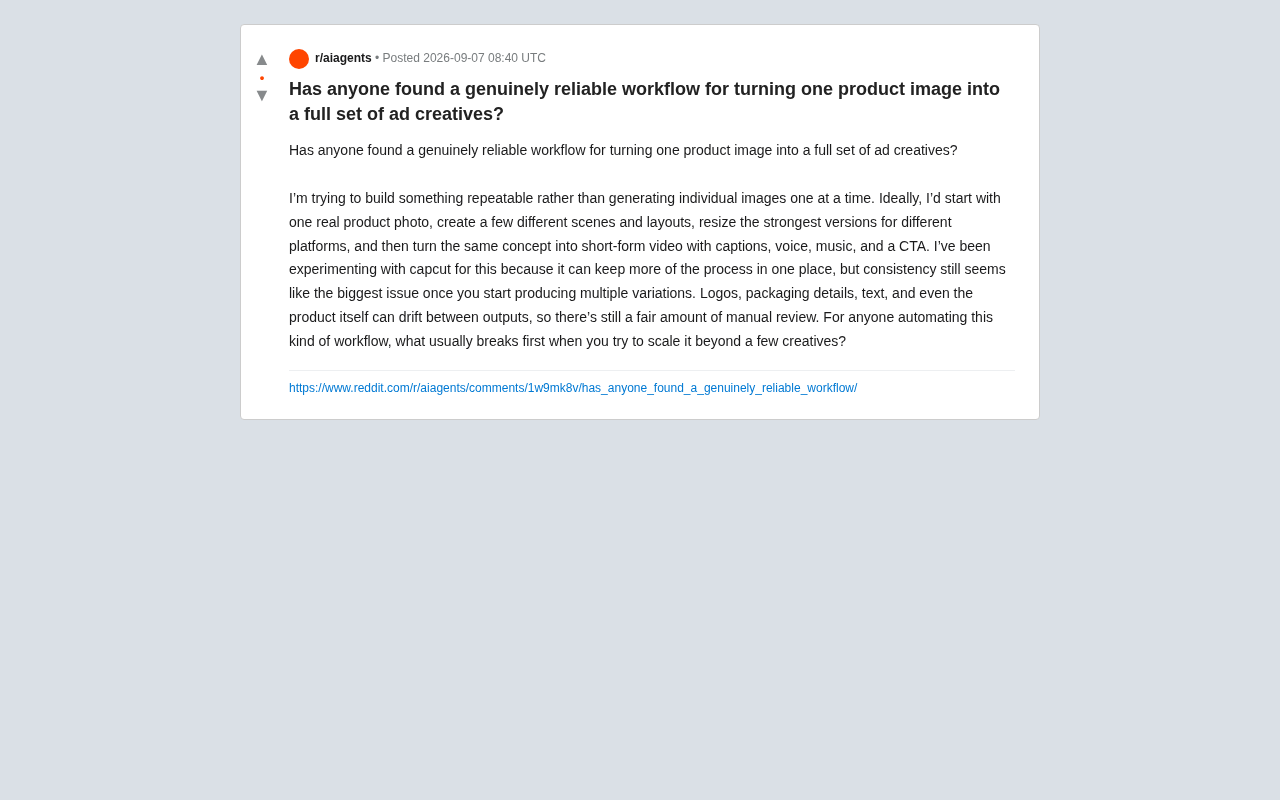
Real bottlenecks in scaling AI ad generation: brand drift, text errors, and multimodal sync issues.
Batch generating ad creatives from a single product image promises efficiency but faces critical bottlenecks: brand asset drift, unreliable text rendering, cross-platform composition failures, and multimodal synchronization challenges in video. Current AIGC tools excel at creative generation but lack deterministic control. Pragmatic solutions involve separating invariable brand elements, using template-driven workflows, and implementing automated quality checks—balancing AI creativity with manual consistency controls.
From One Product Image to a Complete Ad Suite: What an Ideal Workflow Looks Like
In e-commerce and digital marketing, an increasingly common need is emerging: can we start from a single real product photo and automatically batch-generate an entire suite of advertising creatives? This isn't just about generating a few images—it's a complete pipeline that spans multi-scene layouts, cross-platform size adaptation, all the way to short videos with subtitles, voiceovers, music, and calls-to-action (CTA).
The AIGC Marketing Application Wave
AIGC (AI Generated Content) refers to technology that uses artificial intelligence to automatically generate text, images, videos, audio, and other content forms. Since 2022, the explosion of image generation models like Stable Diffusion and Midjourney, along with large language models like ChatGPT, has brought AIGC from the lab into commercial applications. In marketing, AIGC's value lies in dramatically reducing content production costs, compressing what would take designers days to complete into minutes. However, there remains a huge gap between "can generate" and "can scale production of usable assets"—which is precisely the core issue this article explores.
A recent question from a Reddit user precisely hit the core pain point of current AIGC marketing workflows. The ideal process they described goes like this:
- Start with one real product photo
- Generate multiple different scenes and layouts
- Adapt the best versions to different platform dimensions
- Transform the same concept into short videos with subtitles, voiceovers, music, and CTAs
The key word in this requirement is repeatable, not generating images one-off. In other words, they don't want a creative tool—they want a scalable ad asset production line.
Brand Consistency: The First Thing to Collapse at Scale
This user tried using CapCut to handle most of the work, since it centralizes editing, subtitles, voiceovers, and other steps in one platform. CapCut (the international version of Jianying) is ByteDance's video editing app, launched in 2020. It integrates video editing, subtitle generation, voiceovers, effects, and music into one mobile and desktop platform, particularly targeting short video creators and social media marketing needs. After 2023, CapCut heavily incorporated AI features including AI copywriting, smart cutouts, and voice cloning. Users choose it for its "all-in-one" approach—no need to switch between Premiere, After Effects, and Jianying for exports.
However, they discovered that when beginning batch production of multiple variants, consistency became the biggest obstacle. These integrated tools, in batch and template-driven marketing asset production scenarios, often lack sufficient automation control and batch processing interfaces, making it difficult to meet "repeatable workflow" requirements.
The "Drift" Problem with Brand Elements
They pointed out a very typical phenomenon: logos, packaging details, text, and even the product itself "drift" across different outputs. This means the AI cannot perfectly replicate the previous version's brand assets when generating each new variant.
Fundamental Limitations of Image-to-Image Technology
The technical reasons behind this deserve deeper analysis. Image-to-Image is an application mode of Diffusion Models. Its working principle: first add a certain degree of noise to the input image, then guide the model to denoise and reconstruct according to text prompts. This process isn't simple filtering or style transfer, but reinterpretation and generation of images in latent space.
Current mainstream image generation models are essentially probability distribution-based reconstruction. Current mainstream AI image generation technology is based on Diffusion Models, whose core is generating images through progressive denoising. This process is essentially probabilistic sampling: the model learns statistical distributions from massive image datasets, then "samples" new images from this distribution space. Even with identical input images and prompts, each generation produces different results (unless the random seed is fixed).
More critically, even using image-to-image or reference mechanisms, the model's "memory" of details remains a fuzzy approximation, not pixel-perfect reproduction. The model's "memory" of input images is semantic-level rather than pixel-level—it understands "this is a red bottle" but won't precisely remember the font, spacing, and color of each letter on the bottle label. This characteristic is an advantage in artistic creation, but becomes a fatal flaw in commercial scenarios requiring precise brand asset reproduction.
For marketing materials, this is precisely fatal—a slightly deformed logo or packaging copy that the AI "hallucinates" incorrectly can render an entire asset suite unusable.
Why Manual Review Cannot Be Avoided
The result is that even with increased automation, teams still need to invest substantial manual review to check these drifts one by one. This actually cancels out the efficiency gains automation should bring. When generating only three to five assets, manual checking is bearable; once scaling to dozens or hundreds of variants, review costs grow linearly or even non-linearly.
Four Key Points That "Collapse First" in AI Batch Ad Creative Generation
The core question this user raised is: when you try to scale this type of workflow beyond a few creatives, what usually breaks first? Combining community discussions and practical experience, several key failure points can be identified.
1. Brand Asset Fidelity
This is the first and most universal collapse point. The product itself, logo, and packaging are "hard constraints" that allow no creative liberty, but generative models inherently tend toward "re-creation." This fundamental contradiction means pure generative approaches always have a ceiling on brand fidelity.
2. Text Rendering Reliability
Image generation models have long performed unstably in rendering text, especially longer product names, specification parameters, or promotional copy. Text distortion, spelling errors, and missing characters are high-frequency issues, yet ad assets heavily rely on clear and accurate text information.
3. Cross-Platform Adaptation Composition Logic
Adapting an asset from square (1:1) to vertical (9:16) or horizontal (16:9) isn't simple cropping. Different platforms have specific requirements for safe zones, subject positioning, and white space ratios. Relying solely on automatic scaling often crops out the subject or unbalances the layout.
4. Multimodal Synchronization in Video
When the process extends to short videos, complexity compounds further. Multimodal refers to AI systems that simultaneously involve multiple information forms like text, images, audio, and video. In ad asset generation scenarios, not only must static images be generated, but also matching video, voiceovers, subtitles, and music.
Subtitle timelines, voiceover pacing, background music mood, CTA appearance timing—these multimodal elements need coordinated alignment. Complex temporal dependencies and semantic correspondences exist between these elements: voiceover speed must sync with subtitle timing, background music mood must match visual rhythm, and CTA button appearance must align with narrative climax.
Current AI tools are mostly single-modality optimized—image generation models don't understand audio, speech synthesis models don't comprehend image composition. Cross-modal coordination still heavily relies on manual design and debugging, which is why any automation failure in one element disrupts the overall experience, making video the most collapse-prone part of automated workflows.
More Pragmatic Approaches to Batch Ad Creative Generation
While the original post didn't provide a perfect answer (which itself indicates this field lacks a mature "silver bullet" solution), several more feasible workflow approaches can be extracted from the problem itself.
Separate "Variable" and "Invariable" Elements
A more robust approach is to treat brand assets (logos, product images, packaging text) as invariable fixed layers, compositing them through templated methods rather than having generative models redraw them. Generative models only handle creating backgrounds, scenes, and atmospheres—the "variable" parts. This preserves AI's creative capability while locking down brand fidelity.
Template-Driven Rather Than Pure Generation
Truly scalable workflows often follow a template + variable filling pattern rather than end-to-end generation. Pre-designing layout templates that comply with each platform's specifications, then filling AI-generated scenes and fixed brand assets into them, can dramatically reduce drift and review costs.
Establish Automated Quality Check Steps
For text accuracy and logo integrity, automated quality check methods can be introduced. OCR (Optical Character Recognition) is a technology that converts text in images into editable text. In AI-generated ad asset quality check workflows, OCR can automatically extract text content from images and compare it against expected copy, discovering spelling errors, missing characters, or text distortion. Modern OCR systems (like Google Cloud Vision, Tesseract, PaddleOCR) can handle various fonts, tilted text, and complex backgrounds.
Additionally, image comparison techniques can verify logo integrity. However, OCR itself has limitations: for artistic fonts, severely distorted text, or designs that blend with backgrounds, recognition accuracy drops significantly. While it cannot completely replace manual work, it can significantly reduce review burden. OCR quality checking is an auxiliary means to reduce review burden, not a fully automated solution.
Conclusion: Where Are the Boundaries of AIGC Ad Asset Automation?
This real question from Reddit reflects a common dilemma with current AIGC marketing tools: strong creative generation, but weak deterministic control. Marketing assets are precisely a scenario with extremely high deterministic requirements—brands cannot tolerate errors, text cannot be ambiguous.
Therefore, the most reliable workflow in the near term likely isn't pursuing "one-click full automation," but finding balance between automation and manual control: let AI handle what it excels at—creative expansion—and let templates and rules handle what it doesn't—consistency assurance. When you try to scale creative workflows, what collapses first often isn't the technology itself, but those seemingly trivial yet error-intolerant brand details.
Related articles
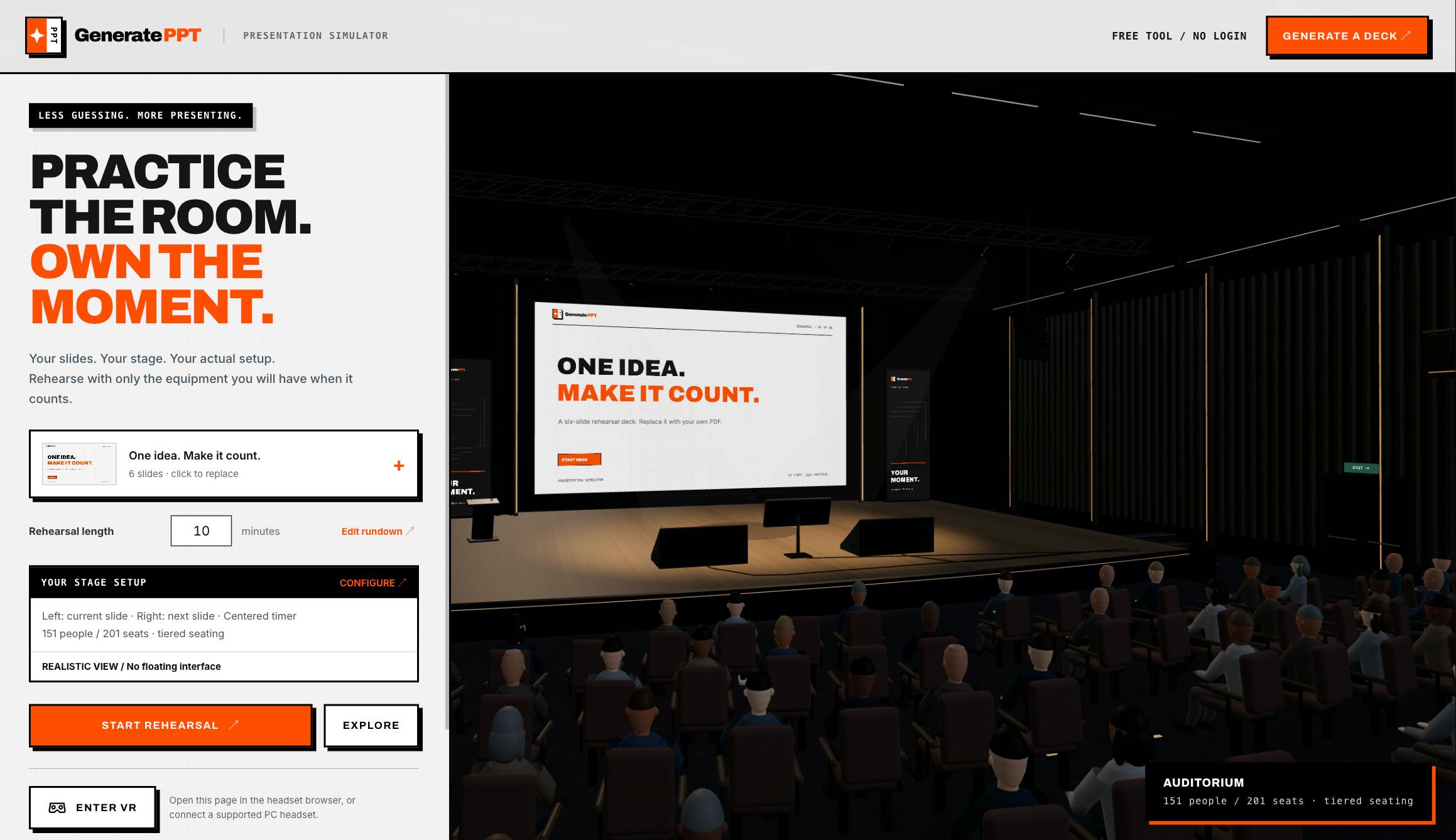
VR Public Speaking Simulator: Practice Your Presentation Skills Right in Your Browser
Public Speaking VR Simulator is a WebXR-based speech practice tool supporting both browsers and VR headsets. Upload slides and rehearse on configurable virtual stages to effectively reduce speaking anxiety.

MCPHub: The AI-Native Launchpad That Uses One MCP to Discover All MCP Servers
MCPHub is an AI-native MCP server discovery tool indexing ~4,000 servers with one-click Cursor, Claude, and VS Code integration for search, config, and stacks.
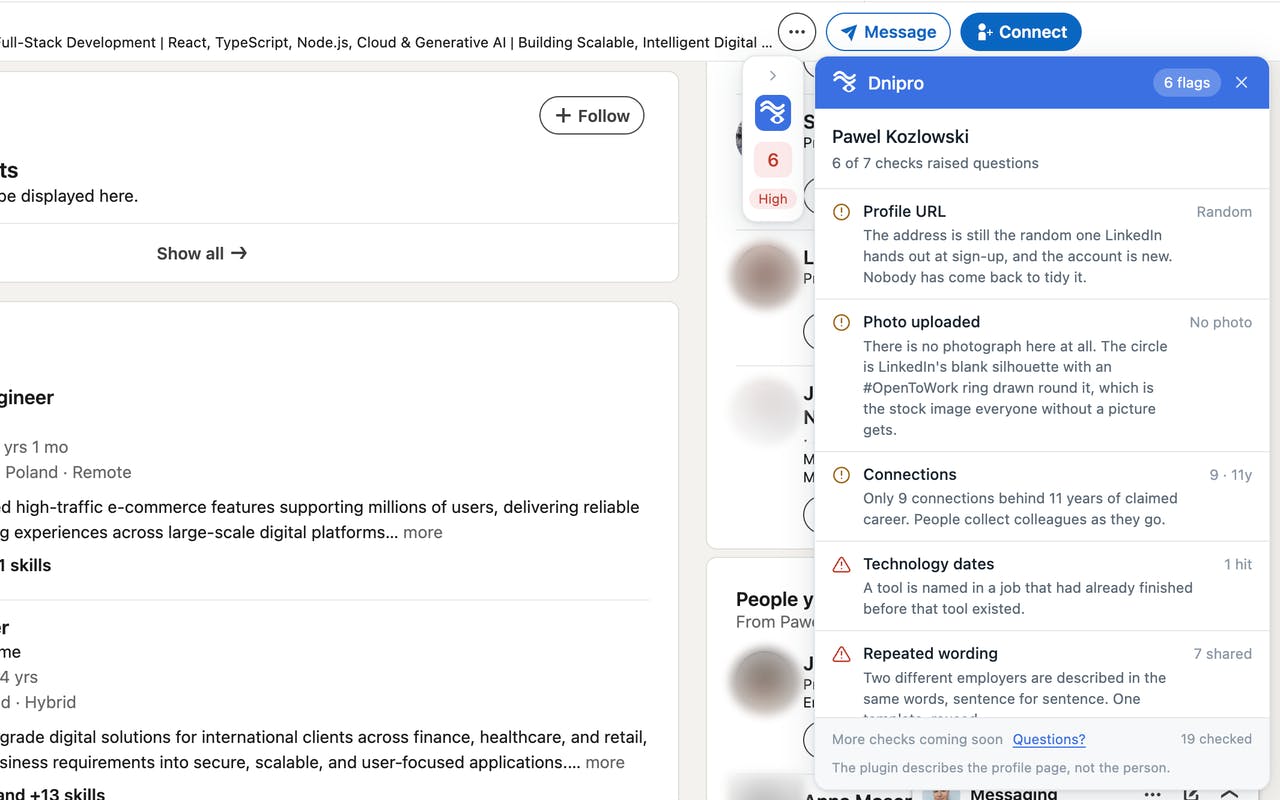
Dnipro: A Chrome Extension That Detects Fake LinkedIn Accounts with One Click
Dnipro is a free, open-source Chrome extension that quickly identifies fake LinkedIn accounts using seven detection mechanisms. Ideal for HR screening and business verification.