bert4torch: A Deep Dive into an Elegant PyTorch Transformers Implementation
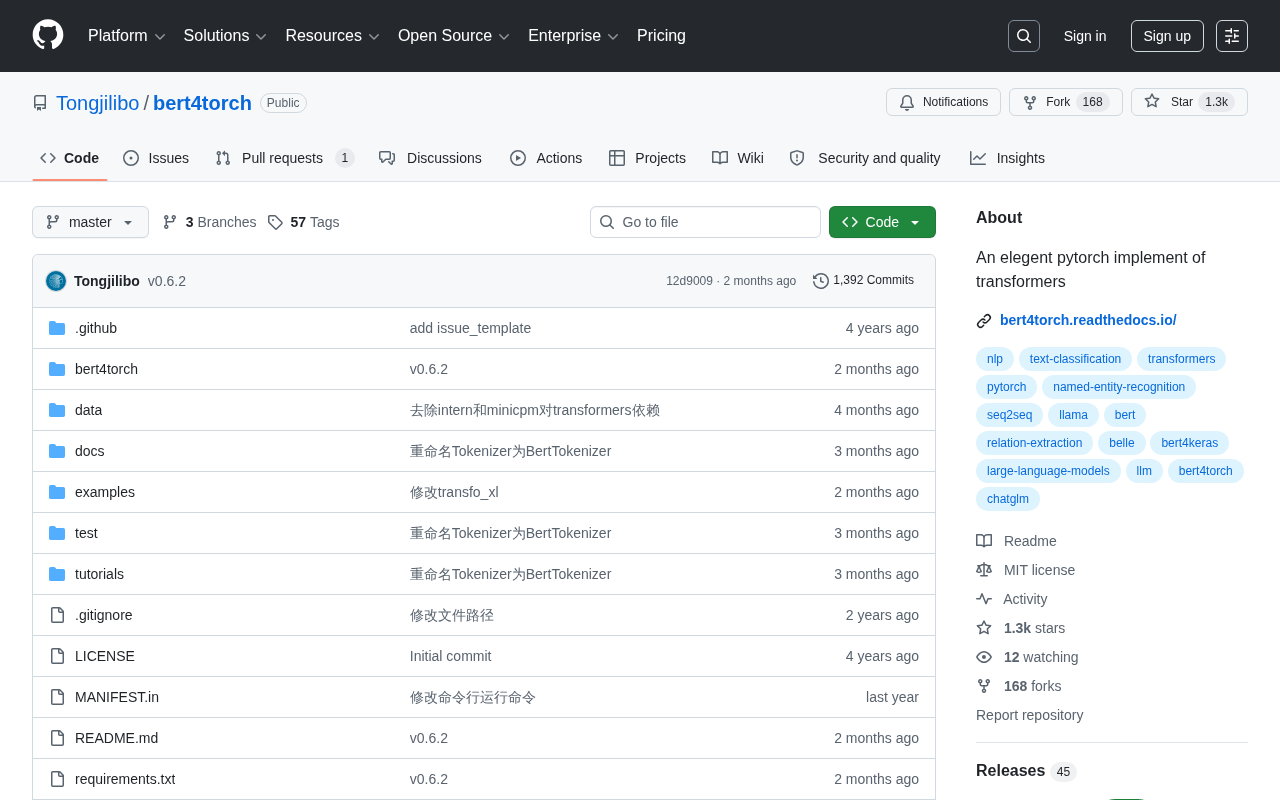
bert4torch is a lightweight PyTorch Transformer library focused on code readability, built for research and model customization.
bert4torch is a PyTorch Transformer implementation library maintained by Tongjilibo, with 1,334 GitHub Stars and 168 Forks. Its core differentiator is clean, readable code: unlike Hugging Face transformers, which is feature-rich but deeply abstracted, bert4torch uses a streamlined structure that lets developers clearly trace how BERT and related models are built layer by layer. Inspired by the widely praised bert4keras from the Keras ecosystem, it serves students studying model internals, engineers needing architecture-level customization, and teams migrating from Keras to PyTorch — filling a niche that mainstream libraries are structurally ill-suited to address.
Project Overview
bert4torch is a PyTorch-based Transformer model implementation library maintained by developer Tongjilibo. The project has accumulated 1,334 Stars and 168 Forks on GitHub, written primarily in Python, and positions itself as an "elegant PyTorch implementation of Transformers."
For developers who have worked in the NLP field for some time, this name should ring a bell — its design philosophy draws clear inspiration from bert4keras, a popular library in the Keras ecosystem, aiming to replicate that clean, readable model-usage experience within the PyTorch framework.
Why Build Yet Another Transformer Library
In an era where Hugging Face's transformers library has all but become the industry standard, why would a developer choose to build something new? The answer lies in the trade-offs behind that word "elegant."
Large, mainstream libraries tend to be feature-rich but operate at deep levels of abstraction, with source code that carries a steep reading curve. For researchers who want to deeply understand a model's internal structure — or need the flexibility to surgically modify network details — code readability becomes a significant pain point. bert4torch's core selling point is its relatively streamlined code structure, letting users clearly see how BERT and its derivative models are built up layer by layer.
This philosophy of "trading some generality for readability" has clear value in educational contexts, research prototyping, and model customization scenarios.
Hugging Face's transformers library wraps model loading, tokenization, and inference into high-level abstractions like AutoModel and Pipeline, allowing developers to call the latest models in just a few lines of code. But the cost of this encapsulation is real: the actual forward-pass logic is scattered across thousands of lines of base-class inheritance chains, with details like attention mask handling and position embedding injection buried under layer upon layer of abstraction. Tracing a complete forward pass often requires jumping between a dozen or more files. bert4keras earned widespread praise in the Keras era for keeping BERT's core logic contained within just a few files. bert4torch carries on this philosophy — exchanging a narrower feature scope for vertical code readability, so developers can see an entire Transformer block in a single file.
Technical Positioning and Target Audience
Based on the project description and community feedback, bert4torch is best suited for the following types of users:
Research and Learning
Students and researchers who want to understand Transformer internals by reading source code can use this library's relatively clear implementation to quickly build intuition around attention mechanisms, position embeddings, multi-layer stacking, and other core components.
Engineers Who Need Model Customization
When business requirements exceed what a standard API can handle and surgical modifications to model architecture are needed, simpler code means easier modification and debugging. bert4torch's lightweight design lowers the cost of this kind of secondary development.
Users Migrating from bert4keras
For teams already accustomed to the bert4keras paradigm who now need to move to the PyTorch ecosystem, bert4torch provides a relatively smooth migration path. The continuity in API style reduces the learning burden considerably.
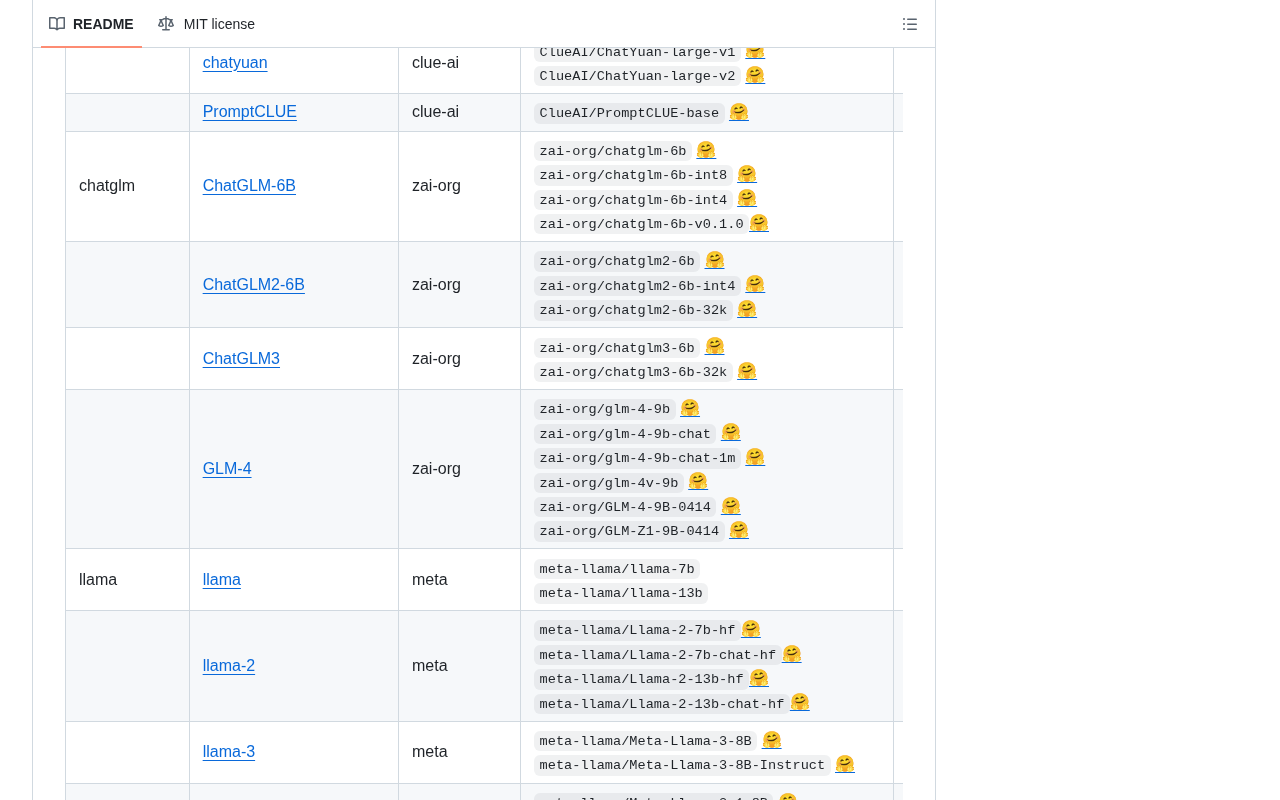
bert4keras was developed by Su Jianlin (known in the community as "Su Shen") and is built on the Keras/TensorFlow ecosystem. It implemented models like BERT, RoBERTa, ALBERT, and GPT with minimalist code, amassing a large user base in China's NLP community. As PyTorch gradually became the dominant framework in academic research, many teams relying on bert4keras faced pressure to migrate ecosystems. bert4torch intentionally aligns with bert4keras conventions in API naming, model loading patterns, and training loop design — for example, adopting similar model configuration approaches and weight-loading interfaces. This means the migration cost is concentrated at the framework level (swapping TensorFlow tensor operations for PyTorch ones), rather than requiring users to learn an entirely unfamiliar set of abstractions from scratch.
Community Traction and Ecosystem Position
With 1,334 Stars, bert4torch has a stable following within the Chinese NLP community, though it remains a niche tool compared to the tens of thousands of Stars that Hugging Face transformers commands. This defines its ecosystem position: not a replacement for mainstream libraries, but a complementary option that leans toward being lightweight, readable, and research-friendly.
The 168 Forks indicate that a significant proportion of users aren't just consuming the library — they're building on top of it or contributing back. For an open-source project driven by an individual developer, that's a healthy signal of active engagement.
Recommendations for Choosing
If you want something that works out of the box, covers the widest range of models, and has the strongest community support, Hugging Face transformers remains the go-to choice. But if your goal is to deeply understand model internals, run architecture-level experiments, or migrate from the Keras ecosystem while keeping familiar coding habits, bert4torch is worth considering.
The value of open-source tools rarely lies in replacing something else — it lies in giving developers with different needs more suitable options. bert4torch's commitment to "clean and elegant" design fills a gap that large mainstream libraries, by nature of their scope, struggle to address.
Related articles
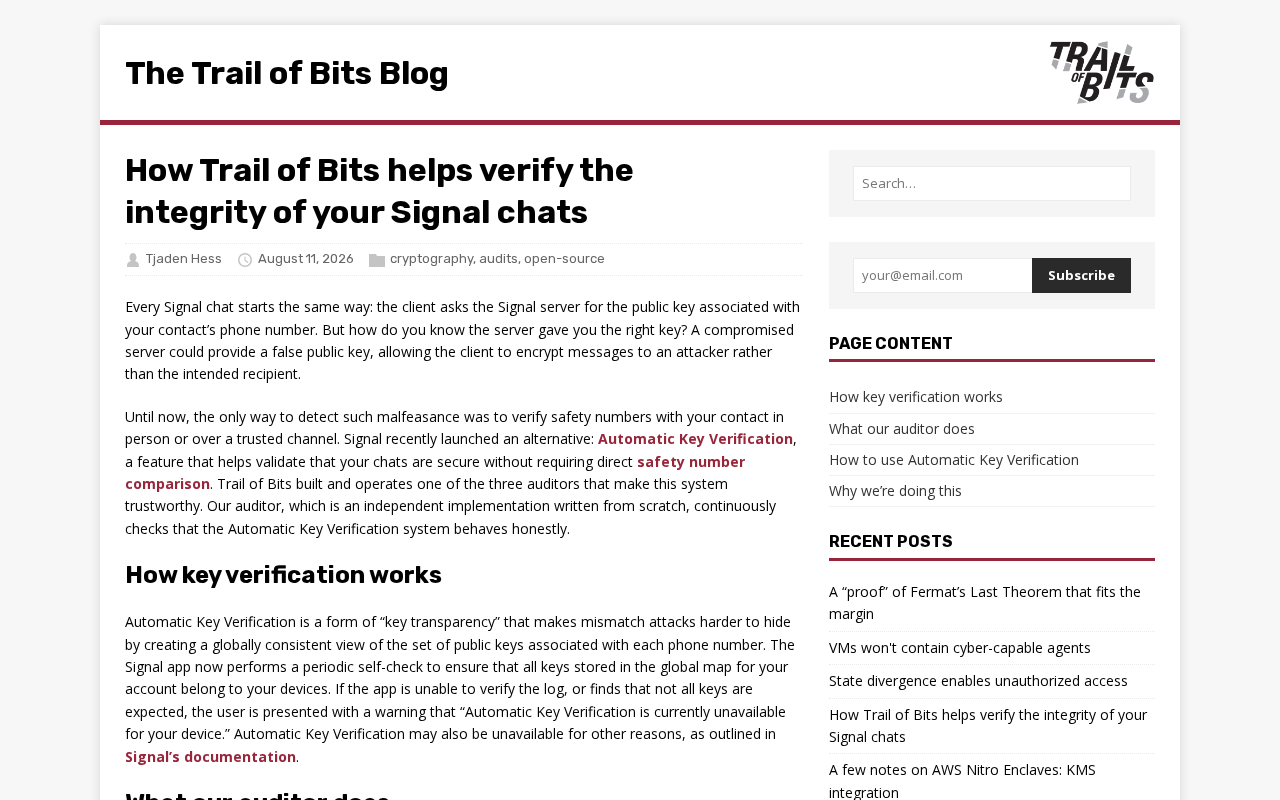
How Trail of Bits Verifies the Integrity of Signal Chat Logs
How does Trail of Bits, as an independent security auditor, help verify the integrity of Signal's end-to-end encrypted chat logs? A technical overview of chat integrity verification and the value of third-party audits.
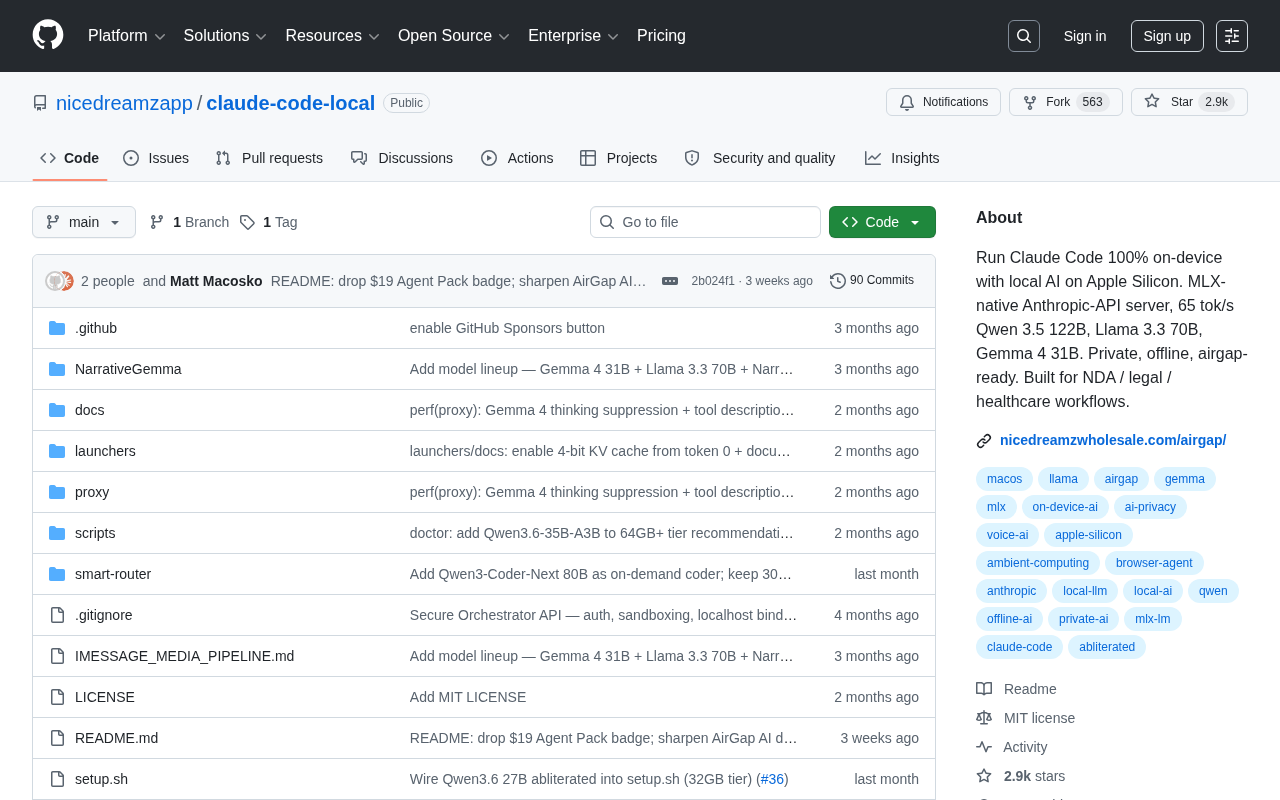
Running Claude Code Locally: A Fully Offline AI Coding Solution for Apple Silicon
claude-code-local runs Claude Code 100% offline on Apple Silicon via MLX, supporting Qwen 3.5 122B at 65 tok/s — built for NDA, legal, and medical privacy workflows.
Kimi 2.6 Code: A Terminal-Native Coding Agent Built on the Moonshot Model
kimi-2-6-code is a terminal-native coding agent built in TypeScript on Moonshot's Kimi K2.6 model. Learn about its design, model choice, and maturity level.