Beware of 'Free GPT-6 Astra' Scams: The Truth Behind These So-Called Hacks

Breaking down the three core scam tactics behind viral 'free GPT-6 credits' tutorials.
Tutorials circulating on video platforms that promise free GPT-6 Astra access and $100 in credits rely on fabricated model names, unverified third-party installers, and engagement-bait tactics to execute a full scam pipeline. This article breaks down each red flag: 'GPT-6 Astra/Ultra' isn't a real OpenAI product; the 'Codex Assistant' installer bypasses system security checks and may carry malware; and the 'like-and-follow for a key' scheme harvests platform engagement data while setting users up for financial fraud. The advice: always use official channels and never enter sensitive information into unverified software.
A "Free Giveaway" Tutorial Worth Being Wary Of
Recently, a wave of so-called tutorials has been circulating on certain video platforms, promising things like "free GPT-6 Astra access," "claim $100 in credits," and "no ChatGPT subscription needed — direct connection from China." These videos typically use hooks like "latest and working" or "100% functional" to lure users into liking, commenting, subscribing, and following in exchange for supposed activation keys, redemption codes, and third-party installer packages.
From a technical and security standpoint, these tutorials are riddled with red flags. This article won't walk you through any of the steps — instead, it breaks down the tactics involved so you can recognize the risks and protect your accounts and finances.
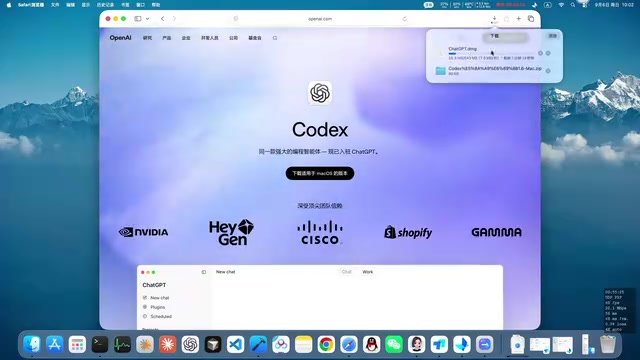
Red Flag #1: The Product Names Don't Add Up
The model names repeatedly mentioned in these tutorials — "GPT-6 Astra," "GPT-6 Ultra," and similar variants — are not part of any officially announced OpenAI product line. Using exaggerated, not-yet-released "next-generation models" as bait is a classic tactic in this kind of gray-market content. It exploits users' curiosity and excitement about emerging technology — which is exactly the psychological vulnerability being targeted.
Claims like "no OpenAI account required" or "direct access from China" implicitly suggest that API requests are being routed through third-party relay services or cracked clients. This means all your conversation content and input data could be passing through untrusted third-party servers — a serious privacy risk.
Red Flag #2: The "Codex Assistant" Is Almost Certainly Malicious Software
These tutorials instruct users to download a third-party "Codex Assistant" installer from an unverified source (installed by dragging its icon into the Applications folder), then enter so-called "keys" and "conversation codes." This step is where the risk is most concentrated.
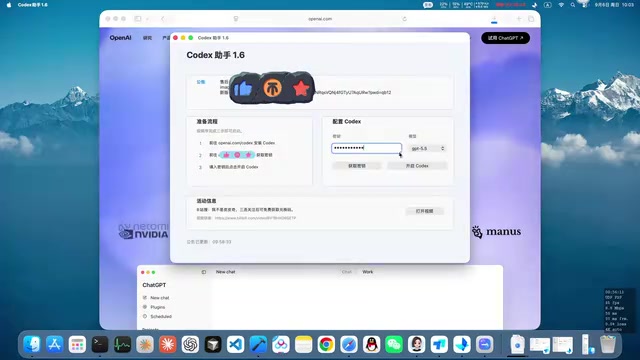
Executable programs distributed through unofficial channels offer no guarantee that they're free of malicious code. Once such software gains system-level permissions, it can steal local files, log keystrokes, hijack network requests, or even conscript your device into a botnet. The tutorial's deliberate instruction to "skip the login button in the middle because it won't work anyway" is essentially nudging users to bypass official authentication and instead trust an opaque relay service of unknown origin.
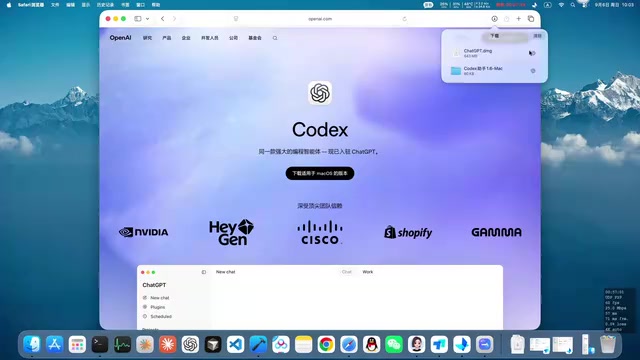
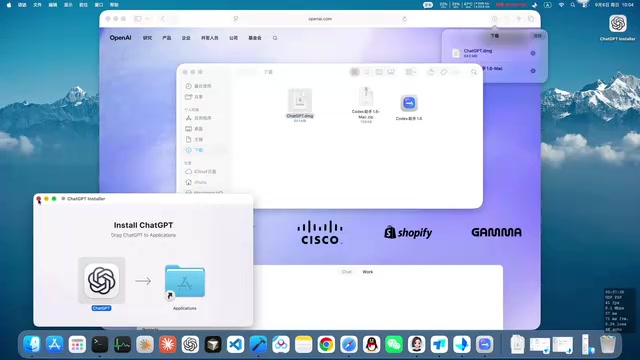
It's worth noting that "Codex" is the name of a real OpenAI model for code generation (its standalone API was discontinued in 2023). Naming the installer package after it is a textbook "name-borrowing" strategy — using legitimate technical terminology to lower users' guard. The instruction to "drag to the Applications folder" is the standard macOS method for installing unsigned applications, which bypasses some of the system's security checks for software outside the App Store. On Windows, the equivalent usually shows up as "unzip and run" or "portable version." This distribution method isn't inherently illegal, but it does mean the software hasn't passed Apple's or Microsoft's code-signing review. Its behavior is entirely up to the developer's actual intentions, and there's no standard way for users to verify its safety.
Red Flag #3: "Like and Follow for a Key" Is a Traffic Harvesting Scheme
The promise of "DM us after you like, coin, favorite, and follow and we'll send you a key" is fundamentally a monetization tactic dressed up as generosity. It exploits the "getting something for free" mentality: users are lured by a high-value incentive ($100 in credits) into handing over likes, coins, favorites, and follows — all valuable platform engagement signals — and then strung along via direct messages for the next step.
There are several likely outcomes here: the promised credits never existed and it's purely a play for engagement metrics; the follow-up DM nudges you into paying for a "redemption code," making it outright financial fraud; or the installer itself is the real product — mining cryptocurrency, stealing data, or selling your device's bandwidth. In any scenario, the user is the one being exploited.
From a platform economics perspective, likes, coins, favorites (the "triple interaction"), and follows are core signals in video platform recommendation algorithms. They directly boost a video's distribution weight and a creator's eligibility for monetization. So even if the keys never materialize, the bulk engagement data harvested through this script has real monetary value. Many of these accounts, once they've accumulated enough followers, pivot to paid courses, fake software promotion, or account sales — forming a complete gray-market pipeline. Phone numbers or email addresses collected during the "DM to claim your key" step may also be packaged and sold to third-party marketing or fraud operations.
How to Actually Use Advanced AI Models Safely
For users who genuinely want access to cutting-edge AI models, the safest path is always the official one:
- Subscribe through the official website or official app — avoid any third-party clients claiming to offer "cracked," "free," or "account-free" access.
- Never enter keys, account credentials, or payment information into software from unverified sources. Official API keys should only be used in trusted environments.
- Be skeptical of absolute claims like "latest and working" or "100% functional." Legitimate services don't use this kind of language in their marketing.
- Think twice before chasing "like-for-perks" incentives. Genuinely valuable resources rarely need to be acquired this way.
Conclusion
These "free top-tier AI model" tutorials exploit people's enthusiasm for cutting-edge AI and their resistance to paying for it. But there's no such thing as a free lunch — what you think you're getting as free credits could cost you a compromised account, a hijacked device, or real financial loss. The only sustainable way to use AI tools is to recognize these schemes for what they are and stick to legitimate channels.
Related articles

iPhone Duo Battery Life Tested: One Charge a Day Is Unavoidable, and the Large Screen Is the Culprit
iPhone Duo battery test: heavy use needs at least one charge a day, and about 30% remains after 6.5 hours of screen-on time. How often the large screen is unfolded is key; a MagSafe battery pack helps, and long-term degradation is also worth watching.

Kimi K3.1 Pro Open-Sourced: 2.8 Trillion Parameters Close In on Opus
Moonshot releases the open-source MoE model Kimi K3.1 Pro, with 2.8T total parameters and 104B activated, trailing Opus 5.5 by under 1 point on Terminal Bench 4.0.

Costco Tech Price Guessing: Are Monitors, Keyboards, Mice, and Bose Speakers Worth It?
A YouTube blogger guesses prices of Costco tech products: 2K 180Hz monitor, Logitech keyboard and mouse, Bose speaker, and CyberPower UPS, revealing warehouse-store selection and brand premium.