Blended Food Startups: Can Mushrooms Replace Red Meat and Change the Dinner Table?
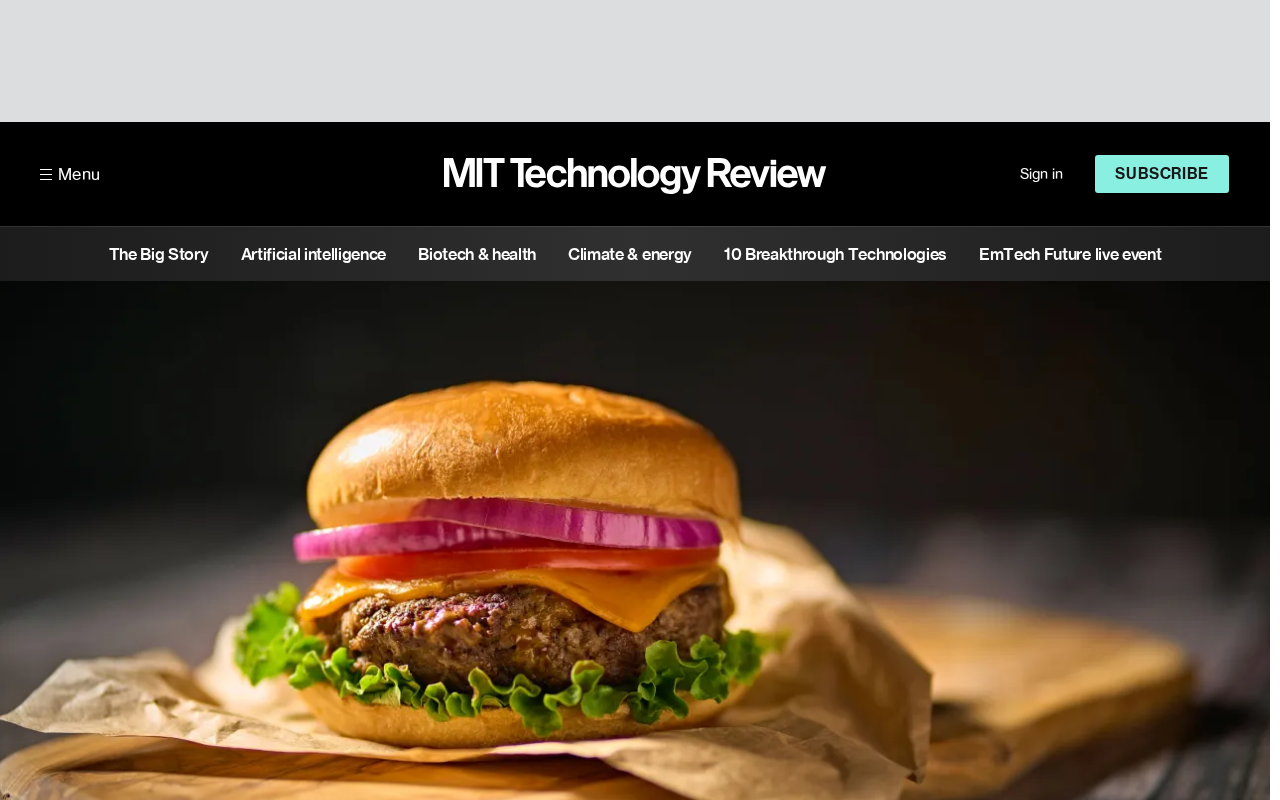
Blended food mixes mushrooms and legumes into red meat, using taste tests and institutional channels to drive incremental meat reduction.
The article focuses on startups trying to enter red meat consumption with a "blended" strategy: rather than persuading people to go vegetarian, they mix mushrooms, legumes, or plant protein into beef and pork to lower the carbon footprint and saturated fat of every bite of patty. Using Jeff Dodge's tasting at the Cane Bay High School cafeteria in South Carolina as an example, the article points out that the core advantage of this route is bypassing the taste and price barriers of plant-based meat and simply doing the "meat reduction" subtraction. Institutional foodservice is seen as a more pragmatic breakthrough due to centralized procurement and stable scale. But ingredient list cleanliness, labeling and school procurement standards, the moral licensing effect, and the undisclosed tasting results in the original report all mean this path is still in an early stage of data accumulation.
Many startups are trying to use a "blended" strategy to crack red meat consumption—not by persuading people to go fully vegetarian, but by mixing mushrooms, legumes, or plant protein into beef and pork so that every bite of a patty carries a smaller carbon footprint and less saturated fat. According to an RSS source, in the fall of 2025, Jeff Dodge set up a six-foot folding table in the cafeteria of Cane Bay High School in Summerville, South Carolina, filled a slow cooker with steaming tomato sauce and meatballs, and invited about 150 hungry students to taste. The kids liked the meatballs—and that is exactly the bet behind this kind of product: if the taste still holds up after replacing part of the meat, consumers may be willing to buy.
Why Target "Blended" Instead of "Alternative"
The plant-based meat industry has slowed in recent years, with controversies over taste, price, and ingredient lists driving many consumers back to real meat. The blended route avoids head-on replacement, keeping red meat as part of the formula and only subtracting: less meat, less fat, fewer emissions. For startups, this lowers the taste barrier—the product doesn't need to persuade you to give up meat, only to accept "a little less meat."
From a nutritional standpoint, mushrooms and legumes add fiber and some micronutrients while diluting saturated fat. For cost-sensitive settings like school cafeterias and chain restaurants, blending can also smooth out the pressure from beef price volatility. Dodge's choice of a high school cafeteria for testing shows that one target channel is institutional foodservice: the student population is large, feedback is direct, and price sensitivity is higher.
Plant-based Meat refers to food made from plant proteins such as soy, peas, and wheat, using processes like extrusion and spinning to mimic the texture and flavor of animal meat, with representative products like the Impossible Burger and Beyond Burger. The category experienced rapid capital and retail expansion from 2019 to 2021, but then slowed due to high unit prices, sodium content, lengthy ingredient lists, and a taste gap versus real meat, with some consumers returning to real meat. This backdrop is the direct driver behind the rise of the "blended" route: rather than forcing consumers to choose between "real meat" and "fake meat," embed plant ingredients as part of the formula within real meat, thereby bypassing the dual taste and price barriers that alternatives must overcome.
Taste Testing Is the Only Pass
One detail in the report is worth savoring: when the first batch of about 150 students rushed to the serving counter, Dodge's slow cooker was already in place. This was not a laboratory sensory evaluation, but a consumption scenario under real hunger. The success of blended food depends almost entirely on this kind of scenario—if the kids taste something "different," repeat purchases are out of the question.
The kids liked the meatballs... (the original ends with an ellipsis, without giving the full tasting results)
The original article's silence on the tasting conclusion itself shows that data for this kind of early-stage product is still accumulating. What startups need to prove is not "blended meatballs are edible," but "you'd be willing to eat them again without knowing."
Real Constraints of Supply Chain and Regulation
Blended food cannot avoid two issues. The first is the ingredient list: whether the combination of mushrooms, legumes, thickeners, and flavorings is "clean" enough directly affects the brand narrative. The second is labeling and regulation: when a product contains both animal meat and plant ingredients, classification, nutrition labeling, and school procurement standards may all become obstacles. Differences in how different markets define "meat products" determine whether such products can enter institutional channels at scale.
Another underappreciated variable is supply stability. Mushrooms have short cultivation cycles and flexible production locations, making them more suitable for regional production than plant protein isolates—a plus for startups focused on local supply chains.
"Clean Label" is one of the most important marketing and formulation trends in the food industry over the past decade, referring to products with short ingredient lists, recognizable ingredient names, and little or no artificial additives. It is not a legal standard but a convention at the retail and consumer perception level. For blended food, clean label constitutes a hidden threshold: to mask the loss of texture and moisture after reducing meat, formulations often need thickeners, binders, yeast extract, or flavor enhancers, and once these appear on the ingredient list, they can weaken the "more natural, healthier" brand narrative. Therefore, blended food startups often need to simplify their processes—for example, using the natural umami and water-holding capacity of mushrooms to replace some additives—in order to compete with pure meat products on the label.
Will Consumers Pay for "Partially Right"?
The implicit assumption of the blended strategy is that consumers are willing to pay for incremental improvement. But behavioral research repeatedly suggests that partial substitution may produce a "moral licensing" effect—people feel they have already contributed and end up eating more red meat at other meals. If startups only tell an emissions-reduction story without solving taste and price, it is hard to build long-term repeat purchases.
Conversely, institutional channels may be a more pragmatic breakthrough: procurement decisions at schools, hospitals, and corporate cafeterias are centralized, and once approved, purchase volumes are stable and consumer education can be achieved at low marketing cost. The tasting at Cane Bay High School was essentially a low-cost market validation.
Moral Licensing is a classic concept in social psychology: when individuals complete a behavior that conforms to moral norms, they feel a kind of "moral credit" has been banked, and thus relax self-restraint in subsequent behavior. In the dietary domain, this effect manifests as: after eating a meal of blended meatballs or plant-based food, consumers may feel they have done their part for emissions reduction, and then more confidently choose steak or bacon at other meals, causing total red meat intake to rise rather than fall. This mechanism poses a substantive challenge to the business logic of blended food—the emissions reduction from a single purchase may be offset by compensatory consumption across meals. This is also why behavioral researchers advocate measuring the environmental benefits of such products by "total volume" rather than "single meal."
Implications for the Industry
Blended food is not an alternative to plant-based meat, but a parallel path to reducing meat. Its ceiling depends on three things: whether the taste can pass blind tests, whether the cost can be lower than pure meat, and whether the label can smoothly enter institutional procurement lists. The slow-cooker tests of Dodge and others are just the earliest batch of data points on this path.
For readers interested in food tech, what is worth tracking is not any single company's funding news, but menu changes at schools and chain restaurants—that is the real signal of blended food taking hold.
One-line Summary
Blended food mixes mushrooms and legumes into red meat, leveraging taste tests and institutional channels to drive incremental meat reduction.
Paragraph Summary
The article focuses on a group of startups trying to enter red meat consumption with a "blended" strategy: rather than persuading people to go vegetarian, they mix mushrooms, legumes, or plant protein into beef and pork to lower the carbon footprint and saturated fat of every bite of patty. Using Jeff Dodge's tasting at the Cane Bay High School cafeteria in South Carolina as an example, the article points out that the core advantage of this route is bypassing the taste and price barriers of plant-based meat and simply doing the "meat reduction" subtraction. Institutional foodservice is seen as a more pragmatic breakthrough due to centralized procurement and stable scale. But ingredient list cleanliness, labeling and school procurement standards, the moral licensing effect, and the undisclosed tasting results in the original report all mean this path is still in an early stage of data accumulation.
Related articles

A Single Prompt Triggers a Global PHP Security Storm: Is AI a Savior or a Hidden Risk?
A single AI prompt triggered a global PHP security crisis affecting Wikipedia and the Internet Archive. This article reviews the incident, analyzes the OpenAI-Amazon controversy, and explores the security paradox of lowered vulnerability discovery barriers in the AI era and developer response strategies.

When AI Is Taken Away: How Reliance on Shortcuts Undermines Your Problem-Solving Resilience
A study of 1,222 people found that after using AI to answer questions, once AI was removed, people gave up on more problems than a control group that never used AI. The article analyzes the impact of AI reliance on learning resilience and metacognition, and explores design implications for AI learning tools.

Carta and NewView Partner to Let Startup Employees Cash Out Equity Early
Carta and NewView Capital partner to simplify startup tender offers, helping employees sell equity early. Analysis of the mechanism, liquidity pain points, and impact.