Bloop: Mac Audio Visualization Tool with Real-Time Rendering and Video Export

Mac audio visualization tool that converts sound to dynamic shader effects and exports videos
Bloop is a Mac-native audio visualization tool that transforms system audio or microphone input into eight GPU-accelerated shader effects in real-time. Optimized for Apple Silicon, it enables content creators to generate professional visualization videos from MP3 playlists without complex editing software. Features include flexible display modes (Mini Player and menu bar), complete video export capabilities, and two permanently free skins with full functionality. The one-time purchase model makes it accessible for individual creators and small studios.
Product Overview
In music production, podcast creation, or video editing workflows, adding dynamic visualization effects to audio content typically requires complex professional software operations. Bloop changes this reality—this audio visualization tool designed specifically for Mac can convert system audio or microphone input into eight different shader visual effects in real-time, with every frame precisely synchronized to the actual audio playback.
Understanding Shader Technology: Shaders are small programs that run on the GPU, specifically designed for real-time graphics rendering calculations. In audio visualization scenarios, shaders receive audio spectrum data as input parameters and dynamically calculate the color, position, and motion trajectory of each pixel through mathematical algorithms. Compared to traditional CPU rendering, the GPU's parallel computing architecture can process millions of pixels simultaneously, enabling complex visual effects (such as particle systems, ripple diffusion, fluid simulation) to maintain smooth 60fps performance. Modern shader programming typically uses GLSL or Metal Shading Language, with the latter being Apple's graphics language optimized specifically for its hardware. Bloop's eight built-in shader skins leverage this technology to deliver rich visual variations while maintaining real-time performance.
Currently, Bloop has received 96 upvotes on Product Hunt, ranking 7th, reflecting genuine market demand for lightweight audio visualization tools. Developed by Donghyun Ryu, this tool is fully optimized for Apple Silicon, notarized by Apple, and uses a one-time purchase model rather than subscription pricing.
Core Feature Analysis
Real-Time Audio Capture and Visualization Rendering
Bloop supports two audio input methods: system audio capture and microphone input. Whether you're playing Spotify music, watching YouTube videos, or recording a podcast through your microphone, Bloop can convert sound into flowing visual imagery in real-time. Its eight built-in shader skins use GPU-accelerated rendering to maintain smooth frame rates even at high resolutions.
Each visual effect is based on audio spectrum analysis algorithms that precisely respond to changes in low, mid, and high frequencies. This isn't simple volume visualization, but rather multi-dimensional audio analysis through techniques like Fourier transforms, giving the visual presentation more depth and artistic expression.
Audio Spectrum Analysis Principles: The Fast Fourier Transform (FFT) is the core algorithm for converting time-domain audio signals into frequency-domain representations. Simply put, it decomposes a complex sound waveform into combinations of sine waves at different frequencies, like splitting white light into a rainbow spectrum. In audio visualization, FFT typically divides sound into 32-256 frequency bins, with low frequencies corresponding to bass and drums, mid frequencies to vocals and guitars, and high frequencies to cymbals and synthesizer highs. Bloop obtains energy values for each frequency band through real-time FFT analysis, then maps them to visual parameters (such as color intensity, particle density, waveform amplitude) to achieve 'audio-visual synchronization.' This technology is also widely used in music player spectrum displays and professional audio analysis software.
Flexible Display Modes
Bloop offers two display modes to accommodate different usage scenarios. The resizable Mini Player can float alongside other applications, perfect for maintaining visual accompaniment while coding or writing, adding dynamic atmosphere to work. Menu bar mode tucks the visualization into the system status bar, saving screen space while remaining readily accessible.
This design philosophy reflects the developer's deep understanding of user workflows—visualization tools shouldn't interrupt work rhythm but should integrate into the work environment, becoming an auxiliary element that enhances focus or sparks creative inspiration.
MP3 Playlist Import and Video Export
Bloop's most attractive feature is its complete video export capability. Users can import MP3 playlists, and Bloop will automatically generate accompanying visualization videos for the entire list. This is significantly valuable for music producers, podcast hosts, or YouTube creators—you can quickly produce professional-quality audio visualization content without learning After Effects or Premiere Pro.
Exported videos fully preserve all the details and smoothness of real-time rendering, ready for direct use in social media posts, music platform uploads, or as background visual material. This one-click workflow compresses what could be hours of production work into just minutes.
Technical Highlights and Performance
Bloop is deeply optimized for Apple Silicon chips, fully leveraging the unified memory architecture and GPU performance of M-series chips. Compared to running similar tools on Intel-based Macs, M1/M2/M3/M4 chips deliver lower power consumption and higher rendering efficiency.
Apple Silicon's Technical Innovation: Apple Silicon is Apple's self-developed ARM architecture chip series, including M1/M2/M3/M4 models. Its revolutionary feature is the Unified Memory Architecture (UMA): CPU, GPU, and Neural Engine share the same high-speed memory, eliminating the need to copy data between system memory and video memory as in traditional architectures. For applications like Bloop that frequently read audio data and pass it to the GPU for rendering, UMA reduces data transfer latency, lowers power consumption, and improves rendering efficiency. Additionally, Metal API is Apple's native graphics framework, deeply optimized for its own hardware, and compared to cross-platform OpenGL or Vulkan, can more fully leverage Apple Silicon's performance potential. The GPU core count of M-series chips (ranging from 8 to 40 cores) also far exceeds contemporary Intel integrated graphics, providing hardware foundation for real-time visual effects.
The application has passed Apple's notarization process, making it fully trusted by macOS's Gatekeeper security mechanism, so users don't need to deal with security warnings or additional permission configurations. For applications that need to access system audio, this is especially critical.
Apple Notarization Explained: Notarization is a security mechanism Apple introduced since macOS 10.14.5. Developers must submit their applications to Apple's automated scanning system, which checks for malicious code, permission abuse, and code signing integrity. Notarized applications receive a 'ticket,' which macOS's Gatekeeper verifies to allow the app to launch smoothly on first run, rather than displaying a warning about 'unidentified developer.' For applications that need to access system audio (by capturing audio streams through the Core Audio framework), notarization is especially important—unnotarized apps are strictly restricted by the system and may not run properly. Bloop's notarization means it meets Apple's basic security standards, and users can confidently grant microphone and system audio access permissions.
Bloop offers two permanently free skins, and this isn't a feature-limited trial version, but a fully functional application. This business strategy both lowers the barrier for users to try it and builds word-of-mouth through high-quality free experience.
Typical Use Cases
Content creators can use Bloop to quickly generate visual content for podcasts, music works, or audiobooks, enhancing their work's appeal and completeness on video platforms.
Music enthusiasts can transform their personal music collections into unique visual experiences, or use visualization imagery as background projection at gatherings or events.
Designers and developers can enable Mini Player while working, letting dynamic visual effects accompany long periods of focused work, creating a kind of 'visual white noise' immersion.
Educators can use Bloop to demonstrate basic principles of audio waveforms and spectrum analysis, turning abstract acoustic concepts into intuitive, tangible visuals.
Market Positioning and Comparison with Similar Tools
In the audio visualization space, one end has professional heavyweight tools like Adobe After Effects, while the other has simple visualization previews built into systems. Bloop precisely positions itself in the gap between them—not requiring users to have professional skills while producing high-quality video results that can be exported.
The one-time purchase pricing strategy appears pragmatic in a software market dominated by subscription models. Users pay once for permanent use, without worrying about monthly fees accumulating or feature lockout. This model is especially friendly to individual creators and small studios, with more controllable long-term costs.
Evolution of Software Business Models: One-time purchase means users pay a single fee for permanent software use, with subsequent updates typically free or charged as upgrades. Subscriptions require continuous monthly/annual payments, with loss of access if subscription stops. Over the past decade, giants like Adobe and Microsoft have fully shifted to subscriptions, reasoning that recurring revenue supports long-term development and cloud services. But this has also triggered user backlash: features remain unchanged yet require yearly payments, with costs accumulating alarmingly (Adobe CC suite exceeds $600 annually). Bloop's one-time purchase model essentially bets that 'one-time revenue can cover development and maintenance costs.' For independent developers, this requires precise control of development scope to avoid the trap of 'continuous updates without income.' But for users, one-time purchase means controllable costs and no subscription expiration worries, especially suitable for occasional users or budget-conscious creators.
From a technical perspective, native optimization for Apple Silicon gives Bloop a clear performance advantage in the Mac ecosystem. As Macs with M-series chips continue to proliferate, the experience difference this optimization brings will become increasingly apparent.
Summary
Bloop proves that professional tools don't have to be complex and expensive. By focusing on the single direction of audio visualization and video export and polishing it to be sufficiently usable, this application has found a clear position in its niche. A clean interface, smooth rendering performance, and practical export functionality transform audio visualization from an exclusive skill of professional producers into a creative tool accessible to ordinary users.
For Mac users, especially content creators and music enthusiasts, Bloop provides a low-barrier, high-efficiency solution. The strategy of two permanently free skins allows users to experience full functionality at zero cost, a practice backed by confidence in product quality. In an environment where audio content continues to grow, tools like Bloop help more creators present sound's expressive power in visual form.
Related articles
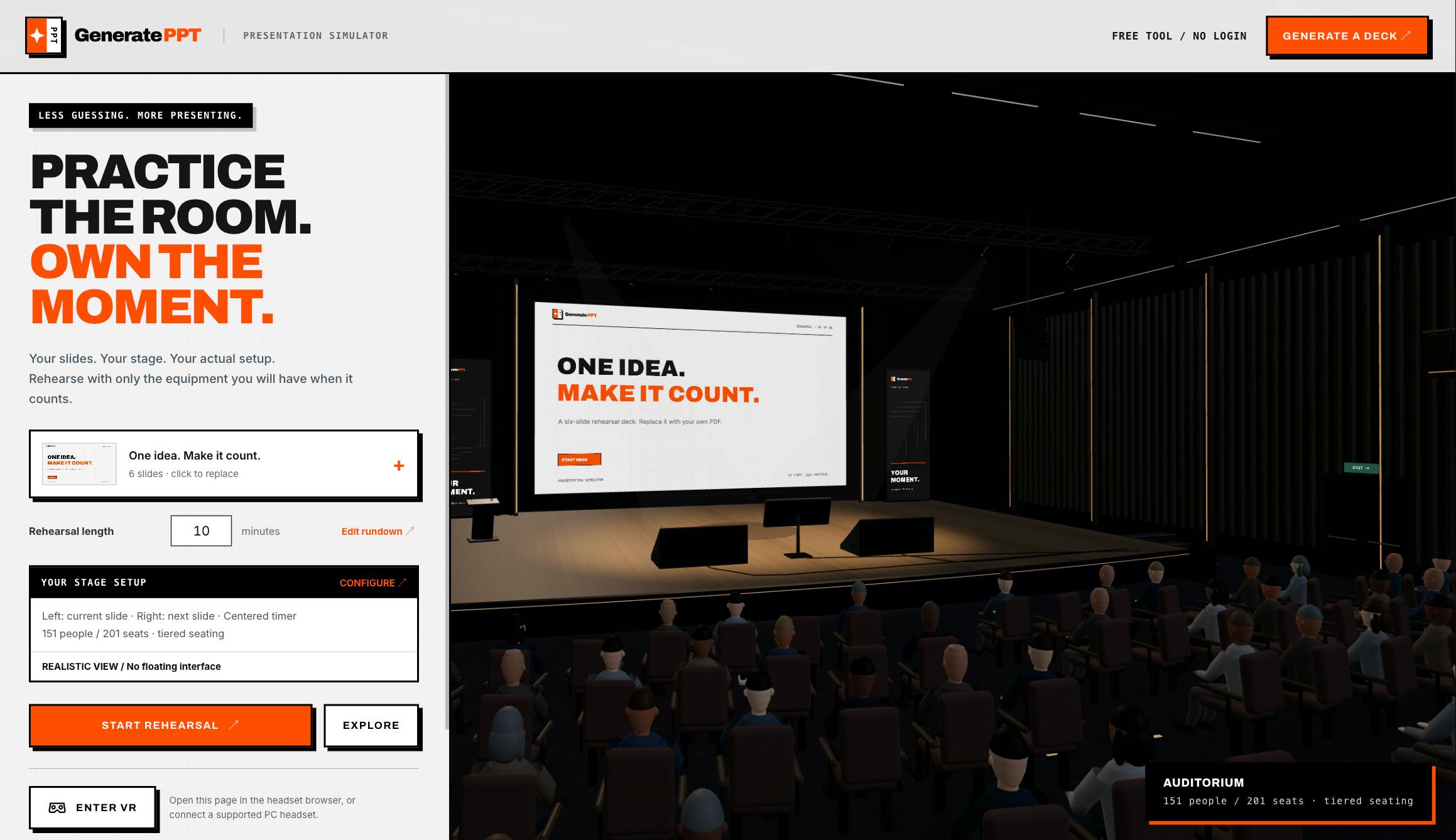
VR Public Speaking Simulator: Practice Your Presentation Skills Right in Your Browser
Public Speaking VR Simulator is a WebXR-based speech practice tool supporting both browsers and VR headsets. Upload slides and rehearse on configurable virtual stages to effectively reduce speaking anxiety.
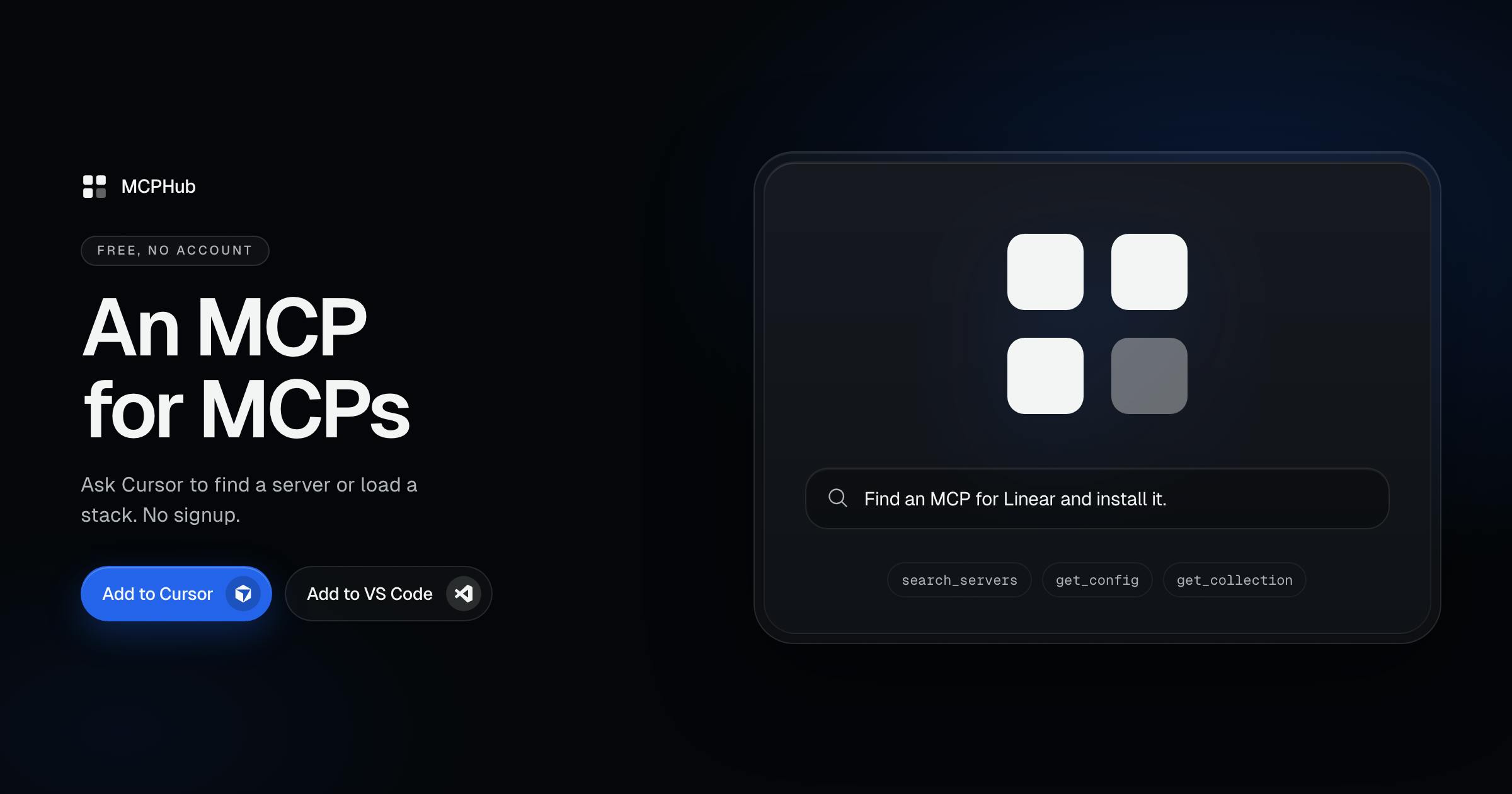
MCPHub: The AI-Native Launchpad That Uses One MCP to Discover All MCP Servers
MCPHub is an AI-native MCP server discovery tool indexing ~4,000 servers with one-click Cursor, Claude, and VS Code integration for search, config, and stacks.
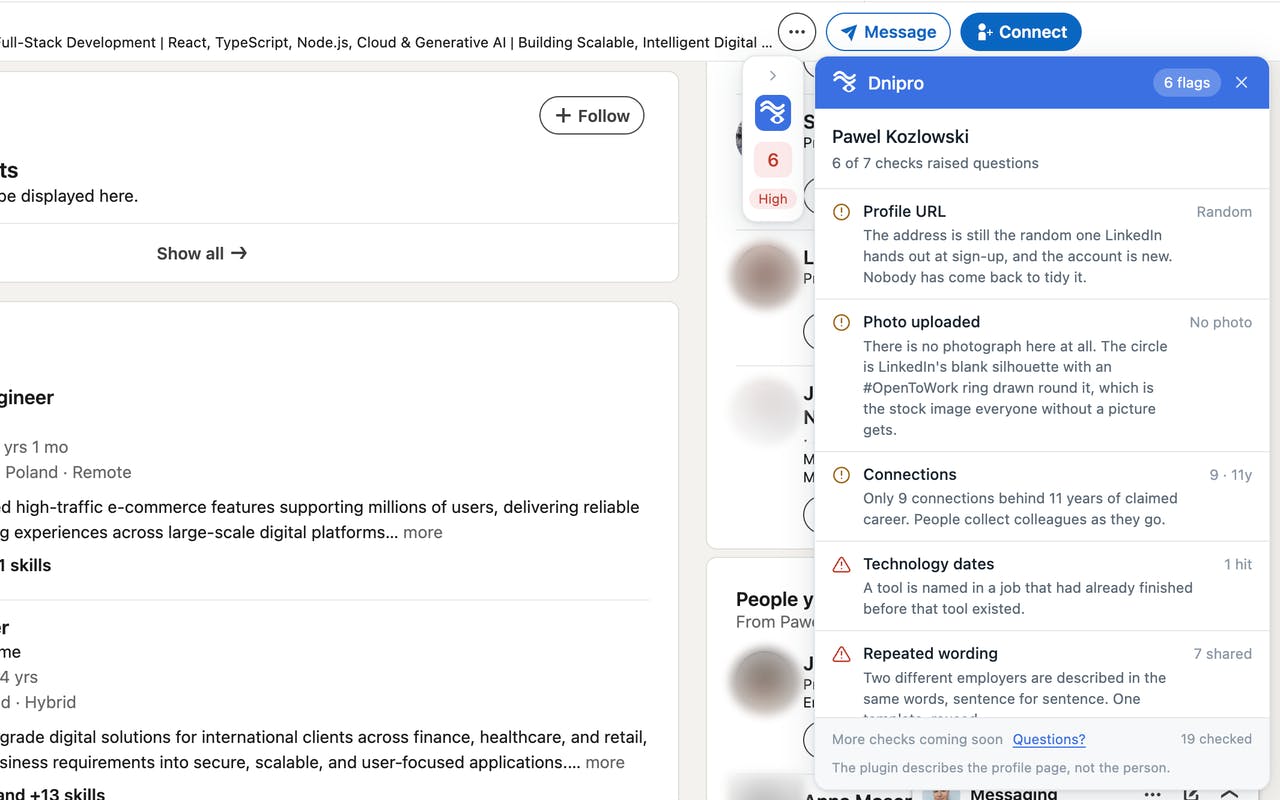
Dnipro: A Chrome Extension That Detects Fake LinkedIn Accounts with One Click
Dnipro is a free, open-source Chrome extension that quickly identifies fake LinkedIn accounts using seven detection mechanisms. Ideal for HR screening and business verification.