Braised Meat Stall Goes Viral, Landlord Raises Rent—She Leaves Gracefully by Contract While Rival Cuts Corners and Loses Everything

Prime shop rent hiked, owner leaves by contract, rival cuts corners and loses everything.
A braised meat stall owner saved a falling child, got a prime shop, and business boomed—until the landlord's son doubled the rent. She moved out by contract, taking her equipment and master stock to a cheap back-alley shop with a three-year lock. Her rival took over, cut corners with frozen meat and seasoning packets, and lost his ¥135K investment. The story shows location amplifies craft but can't replace it, contracts enable graceful exits, and corner-cutting costs more in repeat business.
A small braised meat stall caught the neighborhood's attention after saving a child who fell from a building, and it used the opportunity to rent a prime street-front shop. Business boomed—there were lines every day. The landlord's son got jealous and jacked the annual rent from ¥68,000 to ¥168,000. The female owner didn't argue or make a scene; she simply moved out gracefully when the contract expired. Her rival took over the space, cut corners, and ended up losing even the renovation money. According to this story video posted by a Bilibili creator, the whole thing plays out like a condensed business lesson: location can bring foot traffic, but it's never location that keeps customers coming back.
The Truth About a Prime-Location Business: What Draws the Line Is the Craft, Not the Storefront
The turning point at the start of the story is telling. The female owner originally ran a braised meat stall on the street. After she accidentally saved a child who fell from a building, the neighborhood office gave her a shop that had been vacant for over half a year while clearing out mobile stalls—at an annual rent of ¥68,000. Once she moved in, a long line quickly formed at the door.
The landlord's son, Lu Fugui, had a straightforward logic: so many people are lining up to buy meat, this shop must be worth more. He raised the rent to ¥168,000, reasoning that "without my dad's shop, you'd still be peddling on the street." The female owner's response hit the key point—meat shrinks when it goes into the pot, and fresh meat, spices, utilities, and labor all cost money. The exhaust hood, large stove, freezer, and three braising pots were all bought on borrowed money, and she'd only just paid it off this month.
According to the dialogue in the video, the neighbors watching also saw it clearly: her business is good because of her craft and her master stock—what does that have to do with rent? That line is the core of the whole story. A prime shop can amplify a business, but what it amplifies is craft that's already proven—it doesn't create demand out of thin air.
Master stock (lao tang) in the braised food industry refers to braising liquid that's reused over a long period—filtered, boiled, replenished, and stored after each batch, building a complex flavor over time. It's both the core of the flavor and a living asset: the longer the master stock is maintained, the richer the braised meat, and the more customers recognize that taste. Master stock needs daily upkeep—boiling to sterilize, skimming fat, adding ingredients. Once it's interrupted or spoils, the flavor is ruined. In the story, the female owner took the master stock with her, leaving her rival to substitute with seasoning packets—this is the root of the product difference between them. The master stock's non-replicability forms part of the craft barrier.
Moving Out by Contract: Behind the Grace Is a Clear-Eyed Cost Calculation
Faced with a three-day deadline and more than double the rent, the female owner didn't react impulsively. She did the math: even if she gritted her teeth and stayed at the new rent, it would mean working for the landlord for the rest of her life, paying rent with nothing left over. So she looked for new locations on delivery platforms and along the street, and eventually rented a cooked-food fast-food shop in the back alley behind Qingling Ankang Hospital—annual rent ¥26,000, deposit ¥3,000, with a contract locking in no rent increase for three years.
This choice is discussed repeatedly in the video. The new location is out of the way, with little foot traffic in the back alley, but utilities and drainage are already in place, the exhaust system works, and it's suitable for large-pot braising. The female owner saw the saved rent as room to "breathe": with low rent, she wouldn't need to borrow for renovations, and she could survive a slow start. She moved the master stock, equipment, and signage—every last piece—even taking the meat-cutting board.
The contract played a role twice here. First, when the original shop's lease expired, she handed over the space as agreed; the equipment was self-purchased and could be dismantled and taken. The landlord's son wanted to hold onto the air conditioner and freezer, but the contract terms blocked him. Second, the new shop's contract explicitly stated no rent increase for three years, giving her the certainty to build a long-term business.
Ownership of renovations and equipment by the tenant is a high-frequency point of dispute in lease conflicts. Legally, renovations and movable equipment that the tenant paid for typically belong to the tenant unless the contract specifies otherwise, and can be dismantled and removed at lease end—but the main structure of the property must not be damaged. Landlords often try to withhold them on grounds of "restoring original condition" or "already attached to the property," and it comes down to whether the contract lists the equipment and its ownership. In the story, the female owner could take the air conditioner and freezer precisely because the contract stated that self-purchased equipment could be removed; her rival didn't read the terms carefully and only discovered after taking over that the equipment wasn't his—a classic due-diligence oversight.
The Rival Takes Over: The Location Is Still There, but the Craft Is Gone
After Lu Fugui took over the original shop, his logic remained "good location means good money." He didn't know how to make braised meat, so he planned to buy ready-made seasoning packets, throw everything in a big pot, add some coloring, and have a batch ready in half an hour. In the video, he quit his supermarket job and pulled in Jin Feng to work with him, investing ¥135,000 in renovations and equipment—nearly emptying the family savings out of ¥150,000.
The first few days after opening, inertia from old customers kept volume moving, but problems quickly surfaced. A customer said the meat was cut like wood, with a chemical, fishy smell inside—nothing like Boss Li's braised meat. In summer, meat left out overnight was braised again the next day; a customer tasted sourness, got acute gastroenteritis, and was sent to the hospital—they had to pay medical fees plus compensation. Later they hired a cooked-food chef who agreed to use fresh meat braised on the spot, but then secretly mixed frozen meat and flavor enhancers into the pot behind the chef's back. The chef quit on the spot.
When it came to transferring the equipment, it was even more direct: ¥135,000 in renovations and equipment, and the second-hand dealer offered at most ¥30,000—they settled at ¥40,000. They wanted to sublet the shop; it used to fetch ¥68,000, now even ¥50,000 was hard to find a taker. In the video, Lu Fugui ended up asking about his old job, only to find the position already filled—all that was left was a temp job at ¥3,000 a month.
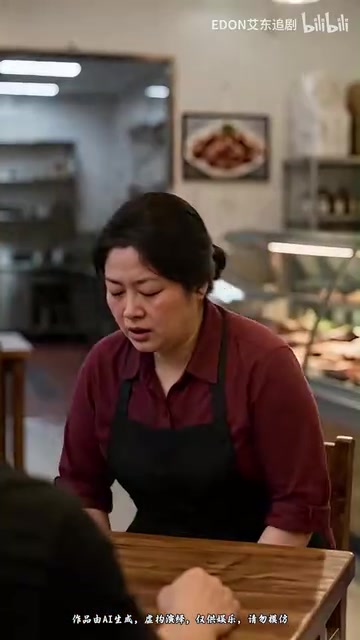
The Comeback in the Back Alley: Treating Customer Needs as the Menu
After the female owner moved to the back alley, business didn't go smoothly at first. The location was out of the way, old customers didn't follow, and she initially relied on families accompanying hospital patients and nearby construction workers. The turning point came from adjusting to demand: people staying with patients couldn't eat anything too greasy, so she added light vegetarian braised items—dried tofu, shiitake mushrooms, wood ear mushrooms—at honest prices. Construction workers needed filling, fast meals, so she made braised meat rice for ¥12 and staggered times to concentrate serving. Hospital caregivers could only gnaw on bread at night, so she extended closing time to 10 p.m.
One detail in the video was repeatedly mentioned in the comments: someone in a hospital caregiver group chat posted, "This braised meat shop is in the back alley behind the hospital, the owner is a young woman, the braised meat is tender and flavorful." One phone call and orders spread through the group. Later, group meal orders came from construction sites and hospital wards—the deep alley ended up generating steady repeat business.
By contrast, the rival at the original shop tried delivery promotion, paying ¥5,000 in promotion fees. But the meat steamed in bags arrived mushy and leaking, and the bad reviews and refunds forced him to stop the promotion—the money was wasted. Traffic brought by location is a cost if you can't handle it.
The Cost of Cutting Corners: Penny-Pinching Doesn't Produce Profit
In the later part of the story, the rival hired a chef and switched to fresh meat, briefly pushing daily revenue to over ¥4,000. But the math showed that a ¥15 portion of braised meat earned only ¥1.50, the chef's salary was ¥8,000 a month, and the two of them worked from 3 a.m. to 10 p.m., leaving only ¥3,700 a month. So he started looking for ways to save again: reducing portions, charging for master stock, mixing frozen meat with fresh. The chef quit again, and the business went back to square one.
The ledger in the video is simple: fresh meat is expensive, master stock refills are free, and unsold meat shrinks and spoils by day's end and has to be discounted or thrown out—spoilage is money. The female owner faced the same cost pressures, but her approach was to set standards in stone—use fresh meat from the day, keep master stock refills free as they should be, break the serving process into portion, write, hand over, and double-check, and even redesign delivery packaging into separate compartments to prevent leaks.

According to the video's ending, the rival later even tried to frame her with spoiled meat, but surveillance footage and test results turned it around, and those involved were dealt with according to law. The master stock at Nianji underwent full testing by an authoritative institution, with all physicochemical indicators exceeding the national premium standard. Evidence speaks for itself, but whether a business lasts is decided by daily ingredients long before any test.
The spoilage rate of braised food is a cost item easily underestimated by outsiders. Fresh meat shrinks 30–40% when braised, master stock needs daily boiling and spice replenishment, and unsold braised items lose flavor overnight and spoil easily, so they can only be discounted or discarded. These losses are invisible on the books but directly eat into gross margin. A ¥15 portion of braised meat earning only ¥1.50 is often the result of spoilage and labor dilution. If cutting spoilage means replacing fresh meat with frozen and reducing portions, the books may improve short-term, but the taste gap will immediately show up in repeat purchase rates, ultimately deducting the saved money from customer traffic.
Three Things This Pot of Master Stock Teaches Businesspeople
First, location is an amplifier, not an engine. A prime shop can amplify lines—and it can amplify bad reviews. After moving to the back alley, the female owner rebuilt her customer base by adjusting dishes and serving times, showing that matching demand matters more fundamentally than storefront location.
Second, a contract is the confidence for a graceful exit. Three years with no rent increase written into the contract, self-purchased equipment removable—these terms protected her at two critical moments. Conversely, the rival didn't read the equipment ownership clearly when signing and only discovered after taking over that the air conditioner and freezer could be taken away.
Third, every penny saved by cutting corners will be deducted doubly from repeat business. Mixing frozen with fresh, switching master stock from free to paid, reducing portions—short-term books may look better, but once old customers stop returning, renovations and equipment become sunk costs. The line in the video—"A life earned honestly through craft is the most solid"—holds true in any industry.

One-line Summary
A prime shop's rent was raised because of the lines, the female owner moved out by contract, rebuilt in a back alley through craft and demand matching, while her rival took over and retreated after cutting corners.
Paragraph Summary
The article tells the story of a braised meat stall owner who, after saving a child from a fall, was arranged by the neighborhood into a prime shop. When business boomed, the landlord's son raised the annual rent from ¥68,000 to ¥168,000. She didn't argue, moved out gracefully when the contract expired, taking her self-purchased equipment and master stock. She rented a back-alley shop for ¥26,000 a year with a locked-in three-year no-increase clause. Her rival took over the original shop, cut costs with seasoning packets and frozen meat, got caught with sour meat, lost his chef, and ended up transferring ¥135,000 in renovations and equipment for just ¥40,000. The female owner rebuilt her customer base with light vegetarian braised items, staggered serving times, and extended hours, achieving steady repeat business. The story reveals: a prime shop is an amplifier, not an engine—keeping customers relies on craft; a contract is the confidence for a graceful exit; and costs saved by cutting corners are deducted doubly from repeat business and reputation.
Related articles

Braised Meat Shop Forced Out by Rent Hike: A Life-and-Death Contest Between Craft and Location
Braised meat shop owner forced out by a 100,000 yuan rent hike moves overnight; landlord's daughter takes over with seasoning packets and overnight meat sickens customers. A tale of location versus craft.

AI One-Click Emotional Short Drama: Bilibili Creator Tests the "Beautiful Landlady" Script
Bilibili creator uses AI to produce the emotional short drama "The Beautiful Landlady Comes to Fix the Guy's Drain," testing everything from script generation to character consistency.

Tenant Paid 7,500 Yuan but Landlord Delayed for a Month—Who Should Be Held Responsible?
Ms. Wang in Haining, Jiaxing paid 7,500 yuan to rent an apartment, but the landlord repeatedly delayed handover and failed to fulfill refund promises. This article reviews the incident, contract breach clauses, and agency responsibilities, with tips for renters to avoid pitfalls.