Brick Launches $129 Nighttime App Blocker to Curb Pre-Bed Phone Scrolling

Brick launches the $129 Night device, replacing tap-to-unlock with location triggers, targeting bedtime phone scrolling.
Following its $59 tap-to-unlock anti-addiction block, Brick has released the $129 Brick Night, whose core shift is from "action friction" to "context isolation": the device uses location-based triggers to automatically restrict specific apps when users enter the bedroom or get into bed, without requiring manual tap-to-unlock. The article argues that hardware solutions beat software screen-time management by raising the cost of breaking rules, especially in nighttime scenarios where willpower is weak; this precommitment mechanism is more reliable than real-time self-control. However, the $129 price needs stronger justification, and the original information did not disclose specifics like the location-sensing technology or customizable time windows. The hardware anti-addiction sector is diversifying into "ritual self-discipline" and "frictionless restriction" categories, with Brick Night belonging to the latter; its actual effectiveness still needs real usage data to verify.
Brick made a name for itself with a $59 physical block that forces users to "tap" their phone against it to unlock apps, interrupting unconscious scrolling. Now it's setting its sights on the bedroom — a more private and harder-to-control setting.
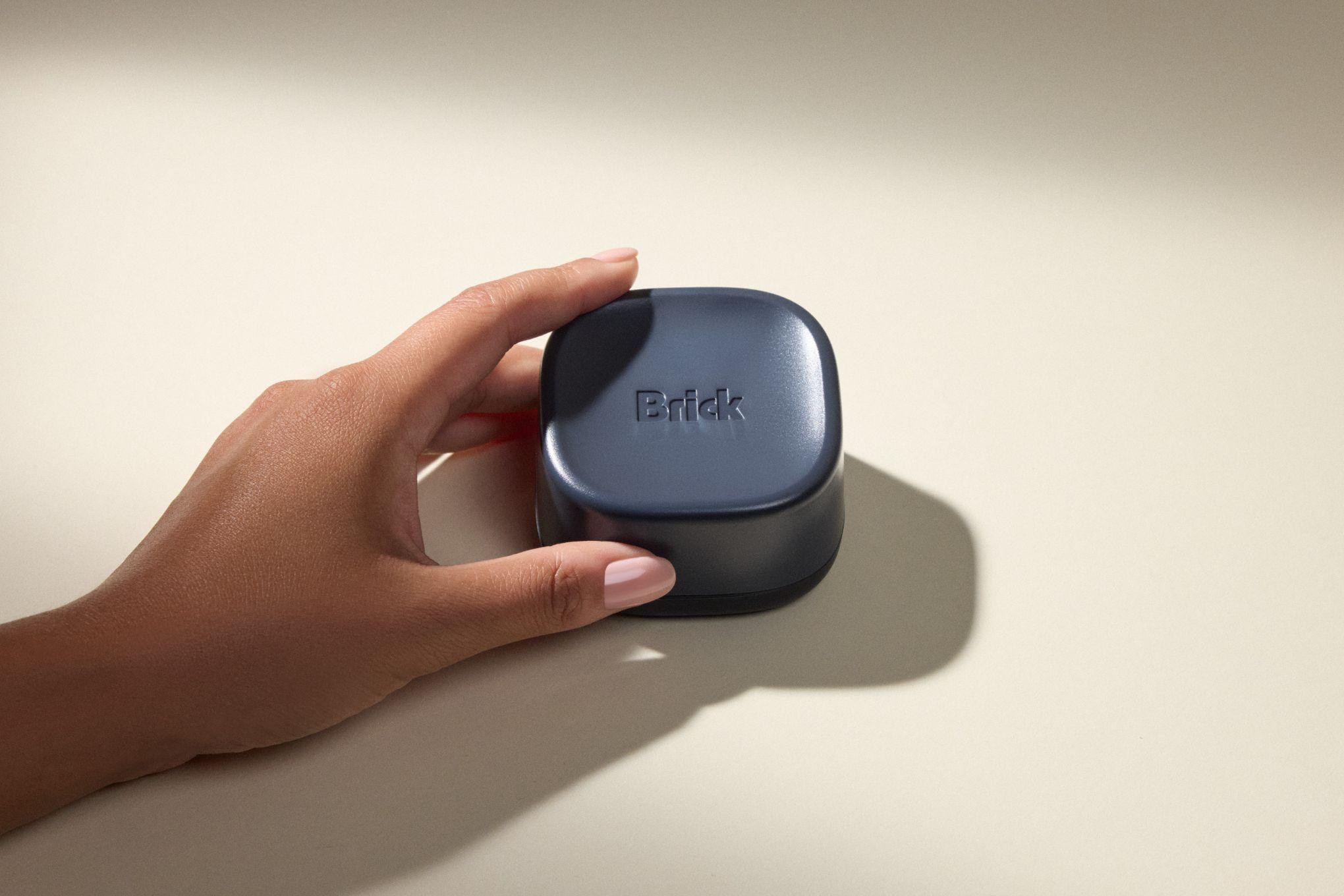
From "Tap It" to "Put It Away": What Brick Night Changes
The original Brick's logic was simple: you had to touch your phone to the small device to temporarily unlock blocked apps. This physical action created friction, giving users a moment to realize "I'm opening an app."
The newly released Brick Night is priced at $129, and the core change is the introduction of a location-based trigger mechanism. According to the original report, it no longer requires you to tap your phone against the device; instead, it uses location to determine when to act — specifically, the device is designed to help users reduce bedtime phone scrolling in bed.
This means Brick's product philosophy has shifted from "action friction" to "context isolation." You don't need to remember to perform an unlock ritual when you're drowsy; instead, the environment itself becomes part of the restriction.
Why Bedtime Scrolling Needs Dedicated Hardware
Software solutions like Screen Time and app limits have existed for years, but many people share a similar experience: the moment a limit popup appears, one tap on "Ignore" and the scrolling continues. Software restrictions have too little friction to pose a real obstacle.
Hardware like Brick's value lies in raising the "cost of breaking the rule." The original product required users to get up and find the small block, and the nighttime scenario is special because: you're already in bed, willpower is at its lowest point of the day, and any restriction that requires extra effort is more effective.
Brick Night simplifies this logic further — if location itself is the restriction, users don't even need to make any decisions before bed. This "precommitment" mechanism is considered more reliable in behavioral design than real-time self-control.
Precommitment is a core concept in behavioral economics, referring to an individual actively restricting their future choices while in a rational state, to counter potential impulses or weak willpower later. Classic examples include Odysseus tying himself to the mast to resist the Sirens' song. In digital health, precommitment can manifest as: setting app blocks in advance, giving your phone to someone else for safekeeping, or using hardware devices to increase unlock difficulty. Brick Night achieves "once you're in bed, certain apps can't be used" through location triggers — essentially a spatialized form of precommitment: users don't need to make decisions when drowsy, but instead let the environment automatically enforce rules set earlier. Research shows precommitment strategies are more effective than real-time self-control, because the latter relies on limited willpower resources, while the former moves the control point to a moment when willpower is abundant.
Is the $129 Price Justified
The original Brick at $59 was already not cheap; Brick Night doubles it to $129. For a device with seemingly more "restrained" functionality, this pricing requires stronger justification.
From a product positioning perspective, Brick Night targets people willing to pay for sleep quality. If it truly reduces bedtime screen time, for users who have long struggled with falling asleep, this expense may be more direct than various sleep-aid subscriptions. However, the original information did not disclose details of how the device works — such as how it senses location, whether it relies on Bluetooth beacons, whether it supports multiple devices, etc. These all affect the actual experience and the reasonableness of the pricing.
Geofencing and proximity sensing are two common technical approaches to location triggering. Geofencing relies on GPS or Wi-Fi positioning to create virtual boundaries around a device, triggering preset actions when a phone enters or leaves the area. Its advantage is no additional hardware needed, but indoor positioning accuracy is limited, and continuous GPS use drains phone battery. Proximity sensing typically uses Bluetooth Low Energy (BLE) beacons or NFC, judging distance through signal strength between devices, with accuracy down to meters or even centimeters, better suited for small spaces like a bedroom. Brick Night hasn't disclosed its specific approach, but considering it needs to distinguish "in bed" from "elsewhere in the bedroom," simple geofencing may not be precise enough; it's more likely to use BLE beacons combined with a phone app. Different approaches affect response speed, battery life, and compatibility — key variables in pricing justification.
The Hardware Anti-Addiction Sector Is Diversifying
Brick isn't the only company trying to use physical means to combat phone addiction. Over the past few years, products have emerged including timed lock boxes and pouches that require a key to open. Brick's differentiation lies in turning "unlocking" into a conscious action, while the Night version attempts to embed restrictions into life contexts.
This sector is diversifying: one category emphasizes ritual and self-discipline training, while another pursues "frictionless restriction" so users don't need to make daily decisions. Brick Night clearly belongs to the latter, which also fits the bedtime scenario — no one wants to complete an unlock ritual when they're too tired to keep their eyes open.
However, hardware solutions always face a fundamental problem: users can choose not to buy, not to charge, or simply set the device aside. Brick's bet is that low enough friction and high enough rule-breaking costs will lead most people to follow their own rules most of the time. This bet may hold during the day, but whether it's equally effective late at night still needs real usage data to verify.
Several Questions Worth Watching
The original report is brief, and many key details of Brick Night remain undisclosed: Does location triggering rely on geofencing or proximity sensing between devices? Can the nighttime mode time window be customized? Is it compatible with the original Brick's block list? The answers to these questions will directly determine whether it's a "bedtime-specific accessory" or a "whole-family phone management solution."
For users already using the original Brick, whether the $129 Night version is worth adding depends on how much you value the specific behavior of bedtime scrolling. If it's just occasional late-night scrolling, software limits plus keeping the charger farther away might suffice; if bedtime scrolling has clearly affected your sleep, dedicated hardware restrictions may provide the friction that software can't.
Related articles

A Single Prompt Triggers a Global PHP Security Storm: Is AI a Savior or a Hidden Risk?
A single AI prompt triggered a global PHP security crisis affecting Wikipedia and the Internet Archive. This article reviews the incident, analyzes the OpenAI-Amazon controversy, and explores the security paradox of lowered vulnerability discovery barriers in the AI era and developer response strategies.

When AI Is Taken Away: How Reliance on Shortcuts Undermines Your Problem-Solving Resilience
A study of 1,222 people found that after using AI to answer questions, once AI was removed, people gave up on more problems than a control group that never used AI. The article analyzes the impact of AI reliance on learning resilience and metacognition, and explores design implications for AI learning tools.

Carta and NewView Partner to Let Startup Employees Cash Out Equity Early
Carta and NewView Capital partner to simplify startup tender offers, helping employees sell equity early. Analysis of the mechanism, liquidity pain points, and impact.