Bringing Software Quality Back to the Mainstream: A Reflection on Speed-First Culture
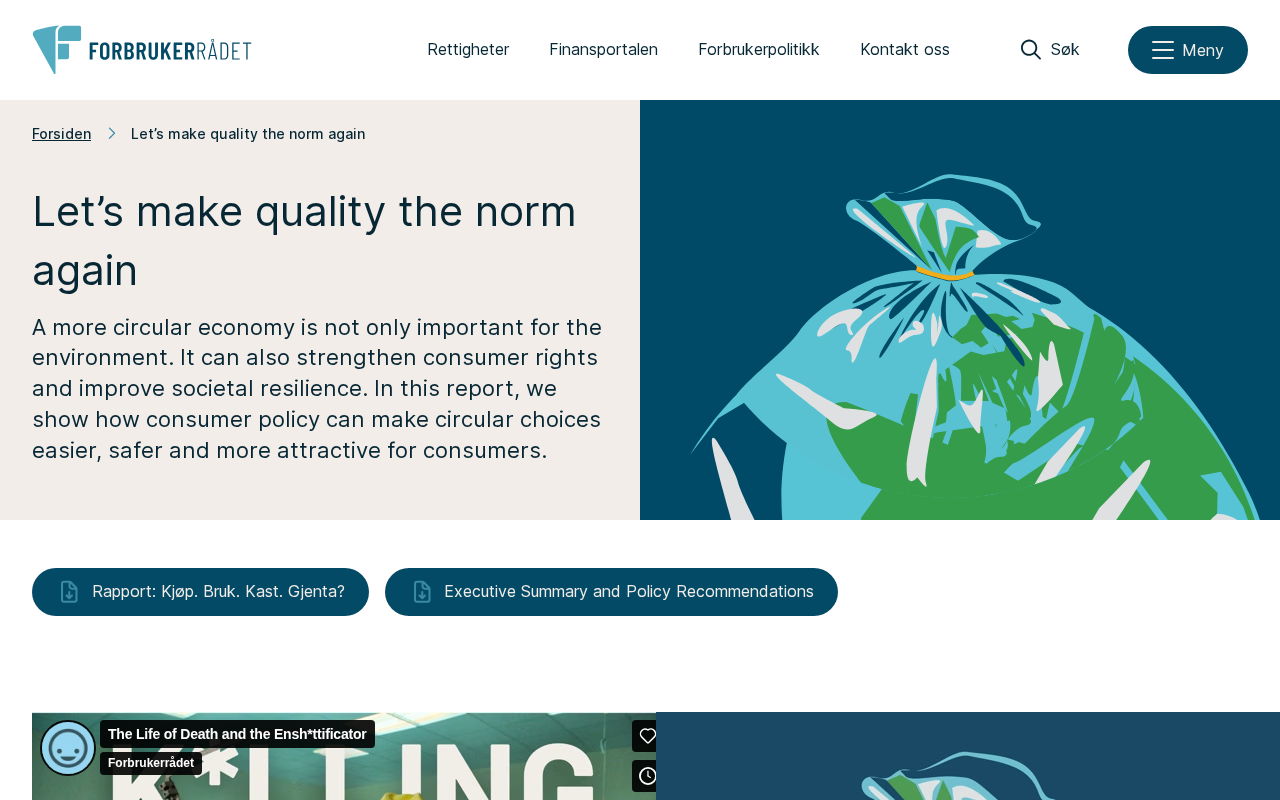
A viral HN post asks: how did software quality go from industry standard to rare exception?
A Hacker News post calling to "make quality the norm again" struck a deep chord with developers, exposing widespread frustration with today's software ecosystem. The article examines the root causes of quality's decline — time-to-market pressure, agile development misused as cover for sloppy releases, and over-the-air updates normalizing "ship now, patch later." Developers widely lament software bloat, accumulating technical debt, and worsening maintainability. Crucially, speed and quality aren't inherently opposed — solid test coverage and automated quality gates can actually accelerate long-term delivery. The real enemy is carelessness, and reversing the trend requires a full reckoning: from individual engineers holding the line, to overhauling incentive structures, performance reviews, and company culture.
In recent years, the software industry seems to have fallen into a collective anxiety: iterate faster, release more frequently, ship more features. In this race to maximize speed, "quality" — once a badge of honor for engineers — has quietly taken a back seat. A Hacker News post titled Let's make quality the norm again sparked a lively debate, with 68 upvotes and 70 comments reflecting the widespread frustration and deeper thinking within the developer community about the current state of software.
Why Quality Is No Longer the Default
The core argument of this discussion points to an uncomfortable reality: in today's software development, high quality has shifted from "taken for granted" to "an extra luxury." In the past, a stable, smooth, rarely-crashing application was a basic expectation. Today, users seem to have accepted app lag, updates that introduce new bugs, and performance degradation from feature bloat as the norm.
The reasons behind this shift are multifaceted. Business pressure to achieve time-to-market leads teams to ship first and fix later; while continuous delivery and agile development improve responsiveness, they sometimes serve as excuses for careless releases. The widespread adoption of over-the-air updates has made "ship now, patch later" an acceptable default. When the perceived cost of fixing something seems low, the motivation to get it right the first time diminishes accordingly.
Technical Debt is a key concept for understanding quality degradation. Coined by software engineer Ward Cunningham in 1992, it uses financial debt as a metaphor: when a team chooses an imperfect solution for the sake of short-term speed, they're essentially borrowing against the future — and will eventually pay a higher price (through refactoring, fixes, or rewrites). Technical debt isn't inherently catastrophic; strategic short-term compromises have their place. The problem arises when the debt accumulates indefinitely and is never repaid — the interest eventually overwhelms the entire engineering team. In practice, the technical debt many companies accumulate during early rapid iteration often comes due only when the product scales, at which point the remediation cost can be several times — or even dozens of times — greater than the original shortcut, confirming the vicious cycle of "going fast to go slow."
The Developer Community's Collective Resonance
The high engagement this post generated makes it clear that the topic struck a nerve with many practitioners on the front lines. A recurring theme in the comments is the problem of modern software "bloat." A simple text editor might consume hundreds of megabytes of memory; a basic chat app has to load an entire browser engine on startup. Developers miss the tools that were lean, efficient, and focused on doing one thing well.
Another frequently cited pain point is maintainability. When codebases accumulate technical debt rapidly under speed pressure, every subsequent change becomes more dangerous and expensive. The absence of quality isn't just a user experience problem — it ultimately backfires on the development team's own productivity, creating a vicious cycle of "the faster you go, the slower you get."
The phenomenon of software "bloat" is exemplified by the widespread adoption of the Electron framework. Electron allows developers to build desktop apps using web technologies (HTML/CSS/JavaScript), dramatically lowering the cost of cross-platform development — but at the price of bundling a full Chromium browser engine into every application, leading to memory footprints that routinely reach hundreds of megabytes. Well-known apps like VS Code, Slack, and Discord are all built on this framework. Critics argue this trades users' hardware resources for developer convenience, a textbook example of the engineering tradeoff pendulum swinging toward speed. Proponents counter that on most modern hardware this overhead is acceptable, and that the gains in development efficiency are significant. This ongoing debate is itself a microcosm of the broader divide in software quality values.
Are Quality and Speed Really at Odds?
It's worth examining more closely whether speed and quality are inherently in conflict. In fact, many seasoned engineers will point out that truly high-quality engineering practices — comprehensive test coverage, clear architecture, automated quality gates — actually increase delivery speed over the long term. Quality isn't the enemy of speed; carelessness is.
The crux of the problem lies in incentive structures. When organizations only reward visible feature output while ignoring invisible quality investment, engineers naturally direct their energy toward the former. Making quality the norm again requires more than individual developer discipline — it demands adjustments at the level of product management, performance evaluation, and the broader company culture. Reintroducing "less is more" as a core value, and treating stability and performance as first-class features rather than afterthoughts, is the only way to reverse the current trend.
Quality Gates are automated checkpoints in a CI/CD (Continuous Integration/Continuous Delivery) pipeline that enforce a set of quality metrics — such as test coverage thresholds, static analysis scores, and performance benchmarks — before code is merged or deployed. Changes that fail a quality gate are automatically blocked, transforming quality standards from "subjective judgment during manual review" into "objective constraints within the pipeline." The core value of this mechanism is front-loading quality costs: catching a problem at the commit stage costs roughly 1/100th of what it costs to fix in production. However, the effectiveness of quality gates is highly dependent on organizational culture — when teams face release pressure, it's not uncommon to lower gate thresholds or bypass checks entirely, which is precisely why technical solutions alone cannot fix cultural problems.
From Individual Practice to Industry Culture
Changing the broader culture of an industry may be difficult, but every developer can start with their own work. Refusing to submit code you know is problematic, carving out time for refactoring and repaying technical debt, holding the line on quality standards during code reviews — these seemingly small acts of persistence are the very foundation on which a quality culture is rebuilt.
The significance of this discussion may not lie in providing a definitive answer, but in reigniting the industry's focus on the fundamental pursuit of building software well. When more and more practitioners begin to question the default assumption that "fast is good," change becomes possible. Quality should be the norm — not an exception that has to be fought for.
Conclusion
This Hacker News discussion about software quality is a snapshot of the tech community engaging in genuine self-reflection. In an era that chases growth and speed, reexamining our definition of "good software" matters not only for user experience, but for whether this industry can sustain healthy long-term development. Bringing quality back to the mainstream requires a reevaluation of values across the entire ecosystem — from individual engineers to management, from technical practice to business logic. This isn't just a slogan; it's a cultural rebuild that demands long-term commitment.
Related articles
Building Open-Source Video Editor Concat with Claude: A Free Alternative to CapCut
A developer used Claude to build Concat, an open-source CapCut alternative, in just three weeks. With nearly 10K downloads, it's a striking example of AI-assisted solo development.
The Overlooked Gems of Self-Hosting: Fun and Useful Services Nobody Talks About
From a Reddit thread, we explore overlooked self-hosted services — including video scraper RECLIP and data viz project WORLD MONITOR — and why fun services are so rare.
CrofAI Fraud Exposed: 'World's Cheapest AI Inference' Turns Out to Be an OpenRouter Wrapper Scam
CrofAI claimed to offer the world's cheapest AI inference, but was exposed as an OpenRouter wrapper silently rerouting requests to cheap models at up to 20x markups.