British Hackers Face Prison for GTA 6 Data Leak and Cryptocurrency Theft
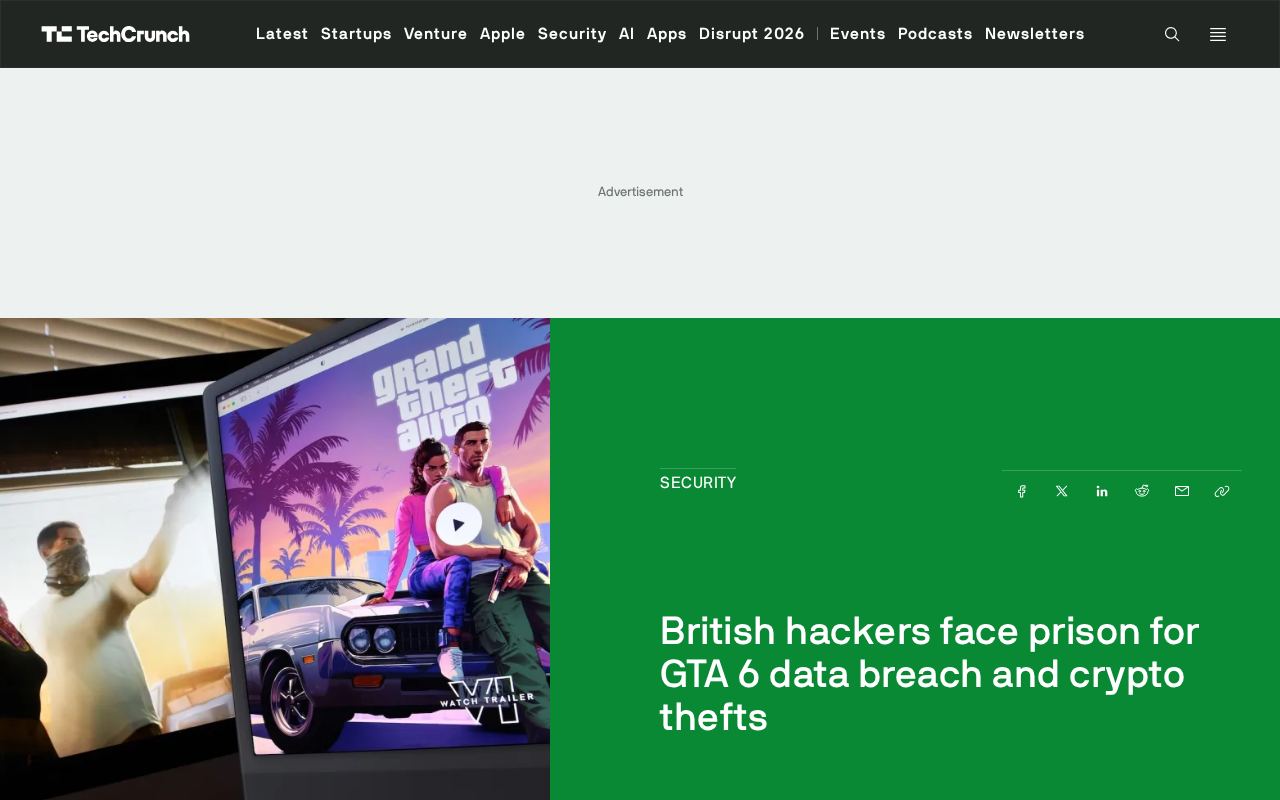
Two British hackers face heavy sentences for breaching the GTA 6 developer and stealing millions in crypto, reflecting a new form of cybercrime.
Two British hackers face lengthy prison terms for breaching Rockstar Games, leaking unreleased GTA 6 data, and stealing millions in cryptocurrency. The case intertwines gaming data security with crypto crime: unreleased game assets are highly valuable on black markets, large studios' distributed environments expand the attack surface, and crypto's anonymity coexists with on-chain traceability as law enforcement improves. Such crime now forms a full chain from intrusion to money laundering; harsh sentences deter but cannot replace systemic security investment.
Two British hackers are facing lengthy prison sentences for breaching the developer of Grand Theft Auto and stealing millions in cryptocurrency. The case intertwines two threads—data security in the gaming industry and cryptocurrency crime—and once again brings the question of sentencing for young cybercriminals into the public spotlight.
The Heart of the Case: One Breach, Two Felonies
According to public reports, the actions of the two British hackers span two dimensions: first, a cyber intrusion into Rockstar Games, the developer behind the Grand Theft Auto series, which led to the leak of unreleased GTA 6-related data; second, the theft of cryptocurrency worth millions. Neither type of crime is rare in the digital age, but their appearance together in the same set of defendants shows that the attackers' skills are not confined to a single domain.
One detail worth noting: GTA 6 is one of the most closely watched titles in gaming history, and any leak of unreleased material can set off chain reactions in player communities and capital markets. The developer's commercial cadence, marketing plans, and content confidentiality systems could all be disrupted as a result.
Rockstar Games is a core studio under Take-Two Interactive, and its Grand Theft Auto series is one of the best-selling game IPs in the world. Since GTA 6 was officially confirmed to be in development in 2022, it has long topped the gaming industry's attention charts. In September 2022, early development footage of the title was leaked on a massive scale, becoming one of the most closely followed leaks in gaming history and directly prompting the industry to reexamine supply chain and remote-work security at large studios.
Why Game Data Becomes a High-Value Target
Internal materials from game companies have always been coveted by hackers. Source code, art assets, story scripts, and release plans for unreleased games command extremely high prices on black markets and leak forums. For attackers, such data can be directly monetized and also used as leverage for extortion.
From the defenders' perspective, large game studios often operate complex distributed development environments with numerous external partners, giving them a far larger attack surface than traditional software companies. Once the perimeter is breached, attackers may move laterally within the internal network and reach assets far beyond the initial entry point.
Attack surface refers to the sum of all entry points through which a system may be accessed without authorization, including external services, APIs, third-party dependencies, employee endpoints, and cloud configurations. A game studio's development environment typically involves teams across multiple regions, outsourced art and testing vendors, and continuous integration/continuous delivery pipelines; weak credentials or unpatched vulnerabilities in any link can become an entry point. Once attackers breach the perimeter, they can exploit internal trust relationships to move laterally and reach core assets such as code repositories, build servers, and release plans.
Cryptocurrency Theft: The Game of Monetization and Asset Recovery
The cryptocurrency theft involved in the case reaches the millions. The anonymity and cross-border liquidity of cryptocurrency make it a common monetization channel for cybercrime, but the public traceability of on-chain transactions also provides leads for law enforcement. In recent years, law enforcement agencies in multiple countries have markedly improved their ability to trace and seize crypto assets, which has to some extent changed attackers' risk-reward calculations.
The combination of the two criminal pathways reflects that some hacker groups have already formed a complete chain from intrusion and data acquisition to money laundering. For law enforcement, this means investigations need both cyber forensics and financial tracking capabilities.
On-chain analysis refers to the technique of tracing fund flows through public blockchain ledgers. Law enforcement agencies and compliance firms can use address clustering, transaction graphs, and exchange KYC data to link anonymous addresses to real-world identities. In recent years, institutions such as the U.S. Department of Justice and the UK's National Crime Agency have successfully seized crypto assets linked to cybercrime on multiple occasions. At the same time, attackers often use mixers, cross-chain bridges, and decentralized exchanges to obscure fund paths, creating an ongoing game of tracking and counter-tracking.
Sentencing Signals and Deterrent Effect
The two defendants face lengthy prison terms, and this sentencing expectation itself carries signal value. The UK judicial system has gradually tightened penalties for cybercrime in recent years, especially in cases involving critical corporate data and large sums of money. For the hacker community, which consists mainly of young tech enthusiasts, whether harsh sentences effectively deter remains a matter of debate.
From an industry perspective, individual verdicts cannot replace systemic protection. Game companies and crypto platforms need to continuously invest in security, including access control, supply chain audits, and employee security awareness training. For ordinary users, this case is also a reminder: protecting digital assets cannot rely on platforms alone—key management and account security at the individual level are equally critical.
Conclusion
The value of this case lies not in its sensationalism but in how it presents the typical shape of contemporary cybercrime: cross-industry targets, hybrid criminal techniques, and globalized law enforcement cooperation. The GTA 6 data leak is only the surface; behind it is a new risk structure created by the assetization of gaming industry data and the spread of cryptocurrency. For developers and users alike, understanding this risk structure is more meaningful than remembering the case itself.
One-line Summary
Two British hackers face heavy sentences for breaching the GTA 6 developer and stealing millions in cryptocurrency, reflecting a new form of cybercrime.
Paragraph Summary
Two British hackers face lengthy prison terms for breaching Rockstar Games, the developer of Grand Theft Auto, leaking unreleased GTA 6 data, and stealing millions in cryptocurrency. The case intertwines gaming industry data security with cryptocurrency crime: unreleased game material commands extremely high value on black markets, while large studios' complex distributed development environments expand the attack surface; cryptocurrency's anonymity coexists with on-chain traceability, and law enforcement's tracking capabilities are improving. The article notes that such crime has formed a complete chain from intrusion and data acquisition to money laundering, and that harsh sentences send a deterrent signal but cannot replace systemic industry security investment.
Related articles

Jensen Huang Returns to Nvidia: The Power Game Behind an "Aggro Reset"
Nvidia's board reappointed Jensen Huang as CEO less than two weeks after his scandal-driven resignation. This analysis explores the board's decision-making, Trump's political intervention, media power failure, and market reaction behind the dramatic return.

Why Voice AI Can't Understand Kenyans' Everyday Conversations
Swahili speech recognition hits 3.24% error on read text, but everyday Kenyan speech mixes English, Sheng slang, and accents—leaving mainstream voice AI struggling.

Data Centers Build Their Own Natural Gas Plants: AI Compute's Breakout Around a Decade-Long Grid Wait
Grid interconnection approvals can take a decade, so xAI and others are building off-grid natural gas plants to power AI clusters. This article analyzes the drivers, costs, and impact of behind-the-meter generation on AI infrastructure.