Cadillac Vistiq: The Value Pick Among Luxury Electric SUVs

The Cadillac Vistiq delivers an excellent luxury EV experience at a reasonable price, but its value edge may not last.
The Cadillac Vistiq is a solid luxury electric SUV whose biggest highlight is delivering the refinement and performance expected of a luxury car at a relatively accessible price, giving it a distinctive value appeal in a competitive market. The article notes that this balance breaks the luxury-EV premium convention and offers a worthy option for buyers who want a luxury experience without overpaying. However, it explicitly warns that this value advantage may not last, with risks of future price adjustments or market shifts—creating a window buyers need to seize. The Vistiq's pricing also reflects the industry trend of legacy luxury brands seeking a new balance between price and product capability amid disruption from newcomers like Tesla.
Introduction
In the luxury electric SUV market, the Cadillac Vistiq has drawn attention in an unexpected way: it's a genuinely excellent luxury EV, yet it carries a relatively reasonable price tag. That value advantage, however, may not last long.
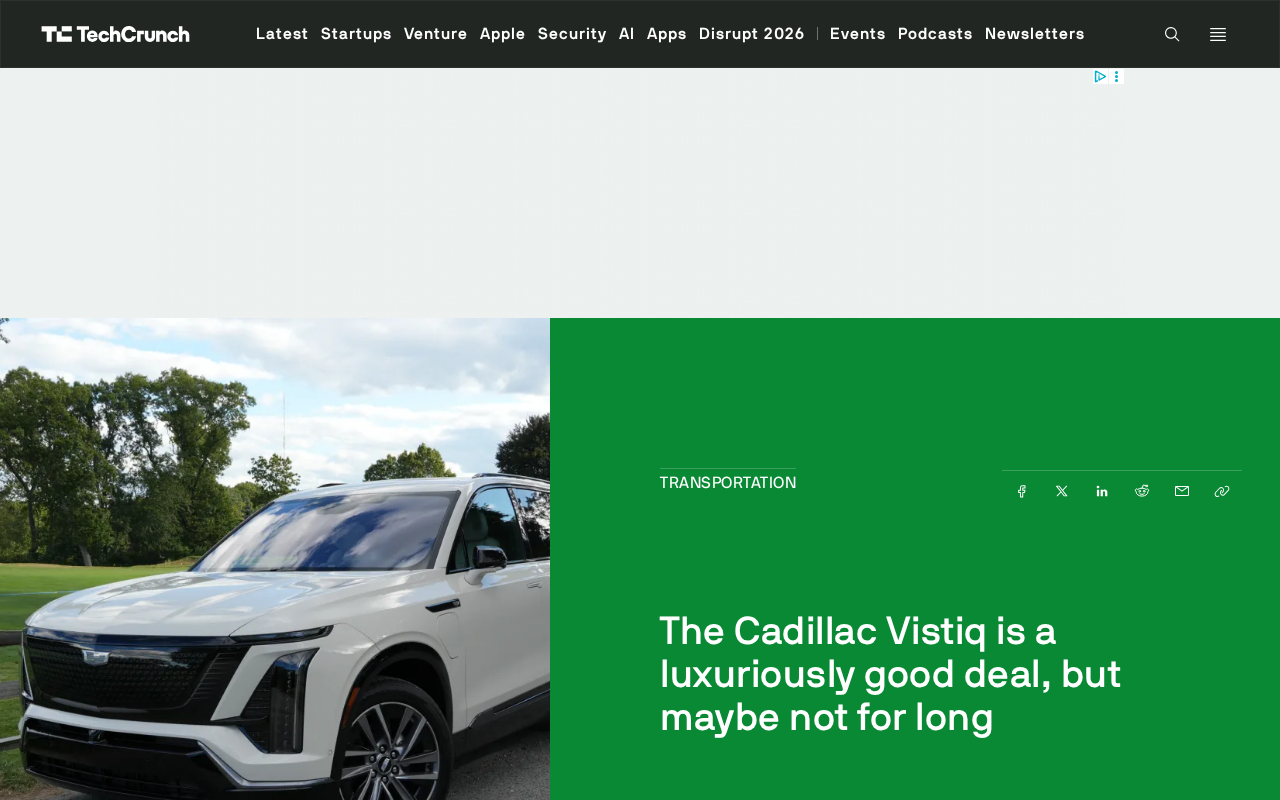
Positioning and Core Strengths
The Cadillac Vistiq is described as an "outstanding luxury electric SUV," and its biggest highlight is the balance between price and product capability. Conventional wisdom holds that luxury-brand EVs come with a hefty premium, but the Vistiq breaks with that convention, offering the refinement and performance expected of a luxury vehicle at a more accessible price.
This pricing strategy gives the Vistiq a distinctive appeal in a fiercely competitive electric SUV market. For buyers who want a luxury experience without paying an excessive premium, the Vistiq offers a choice well worth serious consideration.
The Cadillac Vistiq is built on General Motors' (GM) Ultium dedicated EV platform, a modular battery and drive-system architecture GM developed for EVs across its brands, supporting everything from compact sedans to full-size SUVs. The Ultium platform uses pouch cells and wireless battery management technology, allows flexible configuration of battery capacity and drive type (rear-wheel or all-wheel drive), and supports high-power DC fast charging. The Vistiq is positioned as a three-row, mid-to-large luxury electric SUV, sized between the Lyriq (mid-size) and the Escalade IQ (full-size), making it a key bridge model in Cadillac's electric SUV lineup. Understanding this platform background helps explain where the Vistiq's product strength comes from: its range, charging performance, and cabin layout all benefit from the Ultium platform's standardized design, and platform-based production is also an important foundation for controlling costs and achieving relatively reasonable pricing.
Doubts About the Durability of the Value Proposition
Although the Vistiq's current pricing is quite competitive, the original article explicitly states that "this advantage may not last long." This means Cadillac may adjust its pricing strategy in the future, or changes in the market environment could erode its value edge.
For potential buyers, this creates a window of opportunity: if the Vistiq's reasonable pricing stems from a specific market strategy or temporary factors, then buying sooner may be the wiser choice. Of course, the original article doesn't elaborate on the specific reasons for or timing of price changes, but the warning alone is enough to warrant attention.
U.S. tariff policy on imported EVs is an important external variable affecting luxury EV pricing. Under the Inflation Reduction Act (IRA), only EVs whose final assembly takes place in North America and whose battery components and critical minerals meet specific sourcing thresholds qualify for the federal tax credit of up to $7,500. In addition, models involving imports may face extra tariff costs. These policies directly constrain automakers' pricing room: once tax-credit eligibility changes or tariffs rise, automakers must either absorb the costs themselves and squeeze margins, or pass them on to consumers. The Vistiq's currently accessible pricing may be partly built on a favorable policy window or temporary cost control, and shifts in the policy environment are one of the potential reasons its value advantage "may not last long."
Market Significance and Competitive Landscape
The Vistiq's arrival reflects a trend in the luxury EV market: traditional luxury brands are working hard to find a new balance between price and product capability. With new entrants like Tesla disrupting the market through direct-sales models and aggressive pricing, legacy automakers need to offer more compelling product lineups.
Through the Vistiq, Cadillac is sending a signal: luxury doesn't have to mean a steep premium. If this strategy proves effective in the market, it could prompt other luxury brands to follow suit, thereby changing the pricing logic of the entire segment.
Traditional luxury automakers generally face a dilemma between "brand premium and economies of scale" in the EV transition. Unlike the direct-sales model used by newcomers like Tesla, traditional automakers rely on dealer networks, which have more complex cost structures. At the same time, the three core EV components (battery, motor, and electronic control) account for a far larger share of vehicle cost than in combustion-engine cars, and traditional automakers started later than dedicated EV makers in battery procurement and scaled production. As a result, legacy luxury brands' EVs tend to be priced high and face margin pressure. Cadillac's pricing strategy for the Vistiq is essentially an attempt to trade price for market share and compensate for the brand-perception gap with product strength, at a time when brand premium power has not yet been fully established in the electric era. Its success or failure will directly affect the pace of GM's electrification strategy.
Conclusion
The Cadillac Vistiq is a luxury electric SUV with solid product capability and reasonable pricing, offering a clear value advantage at the current stage. But the durability of that advantage is uncertain, and consumers need to weigh their timing. For those interested in luxury electric SUVs, the Vistiq deserves a place on the shortlist—while keeping an eye on price dynamics.
Related articles
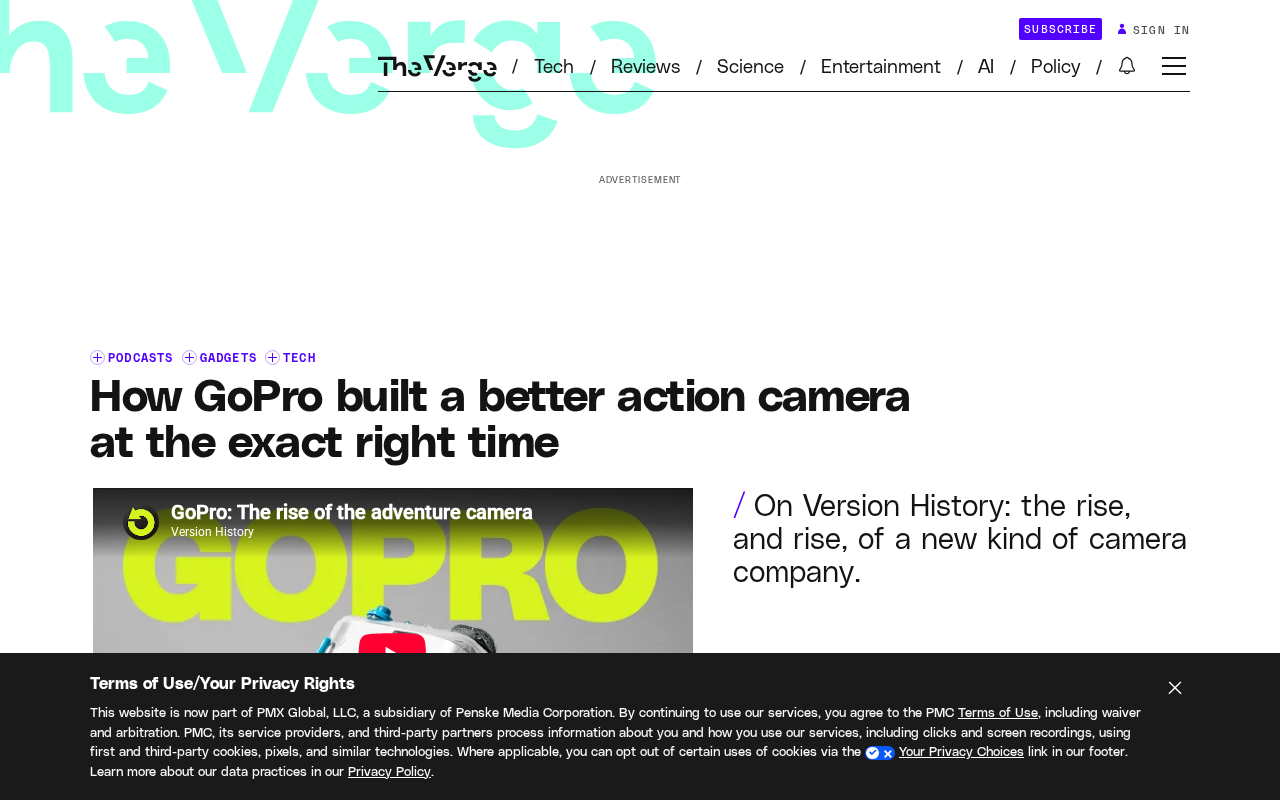
How GoPro Built a Better Action Camera—Right on Time
GoPro's rise is as much a story of timing as of product. This article examines how Nick Woodman defined the action camera category from surfing footage needs, and how the rise of the internet and social media turned first-person content into a cultural phenomenon.

Building a Fine-Tuning Dataset from 23,000 Chat Messages: A Practical Case in AI Data Engineering
A developer shares how he built a fine-tuning dataset from 23,000 chat messages, using Sonnet 5.5 and logical rules to filter out ~3,600 high-confidence samples for training a target agent identification model.

Failover Must Be Used Often to Be Reliable: From Philosophy to Practice
Why does failover always fail at critical moments? Based on a Hacker News discussion, this article explains the high-availability principle that "frequent use makes it reliable," covering regular drills, traffic sharing, automated switching, and common misconceptions, with actionable operations recommendations.