Can Claude Opus 5.5 Really Produce Permit-Level Architectural Drawings?

Can Claude draw permit-level architectural drawings? A title-only claim worth unpacking—and being wary of.
The article examines a Hacker News post claiming "Claude Opus 5.5 can produce permit-level architectural drawings," noting it consists of only a title, with no samples, prompts, or third-party verification. It analyzes that the real bar lies in symbol precision, dimension chain closure, and cross-sheet consistency—precisely the weak spots of large models. More realistic uses are concept-stage drafting, code pre-checks, and cross-sheet verification, with review responsibility still borne by licensed engineers. It also warns against equating "can generate" with "can deliver" and ignoring liability boundaries.
From Chat to Drafting: Claude's Cross-Domain Foray
A rather intriguing discussion surfaced on Hacker News: Claude Opus 5.5 can produce architectural drawings at "permit level." The post title itself is a grabber—a large language model suddenly being compared to architectural drafting, a highly specialized task tightly bound by codes and standards.
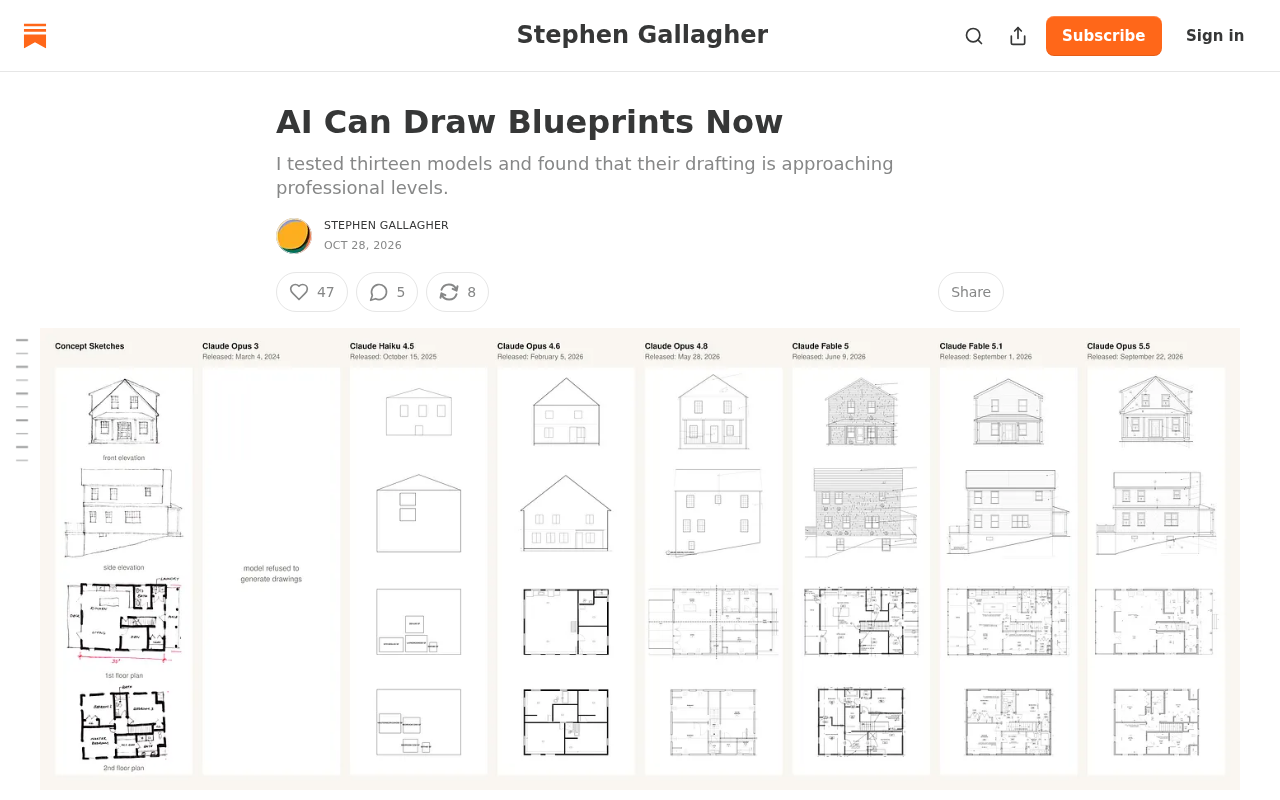
First, a caveat: the source material carries very little information. It's just a title—no sample drawings, no prompts or workflows described, and no third-party verification. So this article doesn't treat it as a "proven capability breakthrough," but as a signal worth unpacking: when models start being used to output regulated engineering documents, what should we be paying attention to?
"Permit-Level": Where Exactly Is the Bar?
For architectural drawings to be used in permit approval, looking right is nowhere near enough. They must satisfy a series of hard constraints: layer organization, dimensioning, symbol systems, title blocks and drawing stamps, scale, code-compliant representation of fire safety and accessibility requirements, and consistency across disciplines.
This is precisely what large models are worst at. Language models excel at semantic plausibility and coherence, while construction drawings demand symbol-level precision and strict self-consistency across sheets—one wrong beam annotation and the whole drawing can be sent back.
So the term "permit-level" usually triggers skepticism among industry insiders: whether a model can produce a visually complete floor plan and whether it can produce a drawing that passes review are separated by an entire system of engineering constraints.
The More Realistic Path: The Model Drafts, Humans Take Responsibility
Even if the claim in the post holds, the more likely deployment isn't "the model directly issues permit drawings," but rather embedding it into existing workflows:
- Rapid drafting at the concept stage: turning text descriptions into editable preliminary floor plans, helping designers skip repetitive sketch work;
- Code pre-checks: having the model check annotations, egress distances, and legend consistency against code provisions, serving as a first-pass filter;
- Cross-sheet verification: whether numbers, dimensions, and material schedules match across disciplines—mechanical but error-prone work that's well suited to a model.
In all three use cases, the final signature and stamp still belong to a licensed engineer. The model's value lies in reducing rework, not in replacing review responsibility.
Layers and Vector Formats in Engineering Drawings: Drawings used by design firms are typically not bitmaps but editable vector formats like DXF/DWG, where every line and annotation belongs to a specific layer (walls, doors and windows, dimensions, axes) and carries coordinate and attribute data. Layer organization is itself part of drafting standards, and reviewers use layers to judge whether a drawing is professional. If a large model can only output a rendered image, then even if it looks flawless, CAD software can't split it by layer, measure it, or edit it further—making its practical usability close to zero. Editability is therefore not a nice-to-have but the entry ticket for engineering scenarios.
The "Professional Spillover" Trend of Multimodal Models
This post isn't isolated when viewed within a larger trend. Over the past year or so, multimodal models have been repeatedly tested on highly structured images such as engineering drawings, circuit diagrams, and flowcharts. The common pattern: models are good at images that "look right" but remain unreliable for images that "must conform item by item to standards."
In architecture specifically, the difficulties cluster around a few points: whether dimension chains close, whether symbols conform to local drafting standards, and the editability of the output—if the model spits out a bitmap rather than a layered vector file, design firms basically can't use it.
Dimension Chain Closure and Local Drafting Standards: A dimension chain is a series of end-to-end dimensions whose segments must sum to the overall dimension; any deviation makes the drawing self-contradictory and impossible to locate during construction. This requires the model to maintain arithmetic and logical consistency across multiple annotations, not just local textual plausibility. Moreover, drafting standards differ significantly across countries and regions (e.g., China's Unified Standard for Building Drawing, the U.S. AIA/NCS standards) in symbols, line types, and legends. If a model isn't trained or constrained on a specific standard, its output symbols tend to be plausible-looking but wrong, and will be rejected outright at review.
Two Pitfalls to Watch For
First, equating "can generate" with "can deliver." Generated images showcased on social media are typically cherry-picked; failures never appear. A single presentable drawing may be the result of dozens of retries.
Second, ignoring the boundary of responsibility. If a drawing error causes construction problems, the liability falls on the signing party. Using model output directly for permit submission creates a wildly asymmetric risk-reward tradeoff.
The "Selective Showcase" Bias of AI-Generated Content: Generated samples circulating on social platforms are usually manually curated, showing only successes while hiding failure rates, retry counts, and the amount of human correction. This differs from the pass@k metric in academic evaluation, which explicitly distinguishes first-try success from success after multiple attempts. When assessing a model's usability in engineering scenarios, one must focus on first-pass rates and human intervention costs rather than the impression made by best-case samples. Without reproducible prompts and original output files, any claim of "reaching a certain level" cannot be independently verified.
How to Read This Post
The post itself has no comments and no details, and its 15-point discussion score suggests it didn't trigger large-scale verification or rebuttal in the community. The rational stance is: treat it as a claim awaiting verification, not a conclusion. If someone later releases reproducible prompts, drawing files, and review results, that's when the topic truly becomes valuable.
For practitioners, the more pragmatic move is to test what the model can do in the specific sub-tasks you know well—say, only having it check annotations, or only having it generate standard title blocks. Use it as a tool, not as an idol.
One-line Summary
Can Claude draw permit-level architectural drawings? A title-only claim worth unpacking—and being wary of.
Paragraph Summary
The article examines a Hacker News post claiming "Claude Opus 5.5 can produce permit-level architectural drawings," noting it consists of only a title, with no samples, prompts, or third-party verification. The author analyzes that the real bar for permit-level drawings lies in symbol precision, dimension chain closure, and cross-sheet consistency—precisely the weak spots of large models. More realistic deployments are concept-stage drafting, code pre-checks, and cross-sheet verification, with review responsibility still borne by licensed engineers. The article also warns against two pitfalls—equating "can generate" with "can deliver," and ignoring the boundary of responsibility—and recommends treating such claims as signals awaiting verification rather than conclusions.
Related articles

How Accurate Are Sci-Fi's Predictions About AI?
How accurate are sci-fi's predictions about AI? Drawing on a Hacker News discussion, this article analyzes sci-fi's foresight and blind spots in AI development, arguing its true value lies in inspiring thought rather than precise prediction.

SwarmEvolve: Latent-Space Agent Swarms Accelerate Evolutionary Search
SwarmEvolve lets hundreds of low-cost agents swarm-reason in latent space, sharing info via KV caches to achieve fast evolutionary search for math and science problems—reaching in a median of 3–8 minutes the best scores other frameworks need 60 minutes for.

trainlint: Static Checks Catch ML Training Bugs That Don't Crash
trainlint is a static analysis tool that finds ML training bugs that don't throw errors, including data leakage, leftover eval mode, and softmax/CrossEntropyLoss conflicts across 14 categories. This article covers its principles, validation results, and limitations.