Can Paid Muse Replace ChatGPT? A Real-World Test of Wait Times and Workflow Differences

Muse excels at async scheduled tasks while ChatGPT wins at instant conversation; they should divide labor along the timeline, not be either-or.
Meta's personal AI agent Muse is now available in Japan. Its cloud VM runs scheduled information gathering and summarization in the background, but generating full deliverables takes noticeably long because each user gets only an isolated VM with 2 CPU cores, 7.7GB RAM, and no GPU. Paid upgrades only relax token quotas and request limits, not VM specs, so waits won't shrink. ChatGPT, with streaming output and shared GPU clusters, delivers second-level responses for iterative dialogue and parallel windows. The article concludes the two serve fundamentally different roles and should be divided along the task timeline—instant dialogue and parallel processing to ChatGPT, background recurring tasks to Muse.
Meta's personal AI agent Muse is now available in Japan. It can automatically handle tasks like information gathering and content summarization at scheduled times—even if you turn off your computer, the cloud VM keeps working. This "asynchronous automation" experience leads many to a natural intuition: if paying to upgrade Muse gets you a stronger AI assistant, can you just uninstall ChatGPT? Yet in day-to-day use, the wall of waiting time forces a rethink of the relationship between the two.
Muse's Real Strength: Scheduled Tasks and Asynchronous Delivery
The most reassuring thing about Muse is that it handles the routine chores that "happen at fixed times every day but don't need to be watched in real time." For example, it can automatically summarize major index movements after the US stock market closes, or fetch subtitles and extract key points after your favorite YouTube channels or podcasts update—by the time you open your screen, the results are already waiting. According to analysis by the YouTube channel CrossOver Mind, Muse's key value is that it doesn't just execute tasks; it takes over the judgment of "when to go collect information" itself. Finding materials, opening pages, reading, and extracting key points—each step takes only a few minutes, but repeated daily, the accumulated time cost is significant. In this kind of asynchronous recurring task, Muse's performance is rated as overwhelmingly reliable.

The problem arises the moment the task type changes. When the need shifts from "patrolling and summarizing" to "producing a complete deliverable," the experience takes a sharp turn for the worse.
Instant Generation Meets Long Waits
Take creating a travel flyer as an example. Muse's progress interface lists a long series of steps: sightseeing spot research, image collection, layout design, font confirmation, and so on. The final product might be just a simple page, but behind it is searching across web pages, downloading assets, and invoking specialized tools to render. Full automation itself is a breakthrough, but when you need this material right now and want to review and revise as you go, a wait of tens of minutes becomes a hard constraint—during that time, you can't move on to the next step.
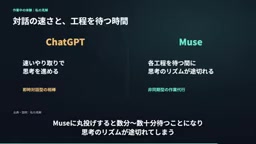
By contrast, ChatGPT's rhythm is completely different: after you submit a prompt, text and code stream out immediately, and you can interject mid-generation to ask for "make this sentence more concise" or "change the structure," iterating at second-level tempo. Opening several conversation windows to handle different tasks in parallel is also standard practice for ChatGPT. This immediacy comes from an architectural difference: ChatGPT runs on a hyperscale server cluster that computes on input instantly and returns results in a stream, while Muse takes a different path—Meta allocates each user a cloud-isolated Linux virtual machine, the MUSE Secure VM.

Streaming Output is a key technology for the large language model chat experience. Traditional API calls wait for the model to generate a complete answer before returning it all at once, whereas streaming output pushes tokens one by one to the frontend via Server-Sent Events or WebSocket, so users see text appear character by character as if being typed. This brings two benefits: first, perceived latency drops dramatically, so users don't have to wait tens of seconds; second, it supports "mid-course intervention"—additional instructions can be appended during generation, and the model can adjust subsequent content based on existing context. ChatGPT's sense of immediacy stems precisely from this, while Muse's asynchronous task mode is inherently unsuited to streaming interaction, because its output is a complete file or report, not a conversation that can be read character by character.
The Physical Root of Waiting: A VM Whose "Hands and Feet" Aren't Strong Enough
According to user verification and investigation, this VM's configuration is quite modest: the CPU is two virtual cores cut from server-grade AMD EPYC chips, memory is only 7.7GB, there is no GPU at all, and the OS is Ubuntu 24.04 LTS. Here one must distinguish "brain" from "hands and feet": Muse's large model inference itself runs on Meta's large-scale GPU servers, but the manual labor of launching browsers, loading pages, downloading files, and rendering video and PDF according to inference instructions is all borne by this small machine. After subtracting system overhead from 7.7GB of memory, about 6GB remains for work—opening heavy web pages while downloading assets and rendering in parallel clearly strains resources. That's why Muse itself notes that high-load processing like speech synthesis and video output won't run simultaneously but will queue up one after another. This is the physical source of the waiting time.
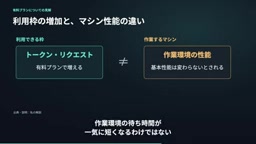
VM Isolation is a common multi-tenant security mechanism in cloud services. Muse allocates each user an independent Linux VM, meaning your tasks run in an OS instance completely isolated from other users—files, browser sessions, and processes don't interfere. This design has advantages in security and reproducibility, but the cost is fixed resources that are hard to elastically scale—each VM's CPU cores, memory, and GPU are determined at creation and cannot be instantly scaled on demand like serverless architectures. By contrast, ChatGPT's inference service runs on shared GPU clusters, combining multiple users' requests through dynamic batching to guarantee throughput while reducing single-request latency. The trade-offs of these two architectures directly determine the experience difference between "instant conversation" and "background jobs."
What a Paid Upgrade Buys—and What It Doesn't
This is the most easily misunderstood point. According to current official information and user confirmation, paying does not change the VM's basic performance—two CPU cores and 7.7GB of memory remain as before. What paying mainly relaxes are token quotas and request limits, not expanding the "workroom." Physical waiting time therefore won't drop sharply just because you pay.
More subtle is the trade-off between token consumption and autonomous tasks. The free tier offers relatively generous tokens for informational tasks, but after paying, when you hand it harder work, the AI's trial-and-error reasoning count surges: complex research, material production, or creative image processing tasks often involve dozens of tool calls and self-checks, and token consumption snowballs. The result is that wanting it to run tasks around the clock may instead see it drained by high-difficulty work, making the originally planned routine tasks unsustainable.
Token quotas and request limits are core means by which AI service providers control costs and abuse risk. A token is the basic unit of text a model processes; a complex task may consume tens of thousands or even hundreds of thousands of tokens, covering input prompts, tool call descriptions, intermediate reasoning steps, and final output. Free tiers usually offer more generous token allowances to attract everyday lightweight use, but paid tiers, while opening up high-difficulty tasks, often impose stricter per-request limits or rate limits to prevent a few users from exhausting shared resources. For autonomous agents, token consumption has a nonlinear relationship with task complexity: each tool call and each self-check requires re-inputting context, causing token usage to snowball. Thus, a paid upgrade may appear "stronger" but may actually drain quotas on high-difficulty tasks, making it impossible to sustain round-the-clock routine recurring tasks.
The Key Isn't "Who's Stronger" but the Timeline
Once the tool constraints are clear, the division of labor emerges. The basis for judgment isn't just the task type but when the deliverable is needed. Needing it right now and having to stare at the screen waiting for completion completely wastes Muse's strength—the wait caused by machine performance directly becomes human constraint time. Conversely, if you don't need something until hours later or tomorrow morning, handing it to Muse in advance completely changes the waiting feeling: while you're in meetings or sleeping, the cloud VM is quietly researching and organizing results.
ChatGPT excels at the immediacy of the moment when a person is actively working. When writing an article, trying out another expression, pasting an error message and getting a fix on the spot, or finalizing a meeting slide structure within minutes through back-and-forth dialogue—in these scenes that need conversational rhythm, ChatGPT's instant response and multi-window parallelism still have clear advantages. Hand such work to Muse, and just launching the browser and collecting materials means waiting in front of the screen for minutes to tens of minutes, interrupting the rhythm of thought.
Conclusion: Two Roles, Not Either-Or
Back to the original question: after subscribing to paid Muse, is ChatGPT still needed? According to CrossOver Mind's analysis, the answer is that they cannot be merged into one. Although both belong to generative AI technology, their roles are fundamentally different—ChatGPT is an instant conversational partner that keeps pace with human thinking speed, running alongside you in the moment; Muse is an asynchronous work agent that keeps pushing procedures forward behind the scenes after you leave the scene. Hand daily fixed information gathering and recurring tasks that can be assigned in advance to Muse; use ChatGPT when you need to concentrate on pushing something forward on the spot or quickly clear multiple cases in parallel. In the era of autonomous AI agents, the real question isn't who is better but whether a piece of work needs instant conversation or can be left to time to complete in the background.
One-line Summary
Muse excels at asynchronous scheduled tasks, ChatGPT at instant conversation; they should divide labor along the timeline rather than be an either-or choice.
Paragraph Summary
Meta's personal AI agent Muse is now available in Japan. Its cloud VM can execute scheduled information gathering and summarization tasks in the background, but generating complete deliverables involves significant waiting, rooted in each user getting only an isolated VM with two CPU cores, 7.7GB memory, and no GPU. Paid upgrades only relax token quotas and request limits, not VM specs, so physical waiting won't drop sharply. By contrast, ChatGPT achieves second-level instant responses through streaming output and shared GPU clusters, supporting repeated corrections during dialogue and multi-window parallelism. The article concludes that their roles are fundamentally different and should be divided along the task timeline—instant conversation and parallel processing go to ChatGPT, while background recurring tasks that can be assigned in advance go to Muse.
Related articles

How Accurate Are Sci-Fi's Predictions About AI?
How accurate are sci-fi's predictions about AI? Drawing on a Hacker News discussion, this article analyzes sci-fi's foresight and blind spots in AI development, arguing its true value lies in inspiring thought rather than precise prediction.

SwarmEvolve: Latent-Space Agent Swarms Accelerate Evolutionary Search
SwarmEvolve lets hundreds of low-cost agents swarm-reason in latent space, sharing info via KV caches to achieve fast evolutionary search for math and science problems—reaching in a median of 3–8 minutes the best scores other frameworks need 60 minutes for.

trainlint: Static Checks Catch ML Training Bugs That Don't Crash
trainlint is a static analysis tool that finds ML training bugs that don't throw errors, including data leakage, leftover eval mode, and softmax/CrossEntropyLoss conflicts across 14 categories. This article covers its principles, validation results, and limitations.