Can the Ark Ship Be Hijacked by Pirates? The Hard-Core Logic of a Space 'Ark Heist'

Ark hijacking risk stems from civilization-level value; defense lies in institutions and redundancy, not weapons.
The article explores the possibility of a generation ship (ark) being hijacked. The ark carries a civilization starter kit and masses tens of billions of tons, creating a million-fold mass disparity with small raider ships and a huge economic incentive. Stealth in space is unrealistic, but the ark can create uncertainty through hidden destinations, decoy burns, and light-speed delay, raising interception costs. Hijacking windows include pre-launch political takeover, departure chaos, deceleration/arrival, and post-arrival colonial dependency. Defense centers on multi-layer authentication, compartmentalization, distributed control, internal legitimacy, and civilization-level redundancy — don't build just one ark.
A generation ship carrying the seeds of human civilization — potentially the most expensive object ever built, with a voyage lasting centuries. The question is: why would no one think to steal it?
This sounds like a sci-fi movie plot, but it actually conceals a series of serious engineering, economic, and political deductions. The YouTube science channel Mustard systematically breaks down the feasibility of "hijacking the Ark" in one episode — from the stealth paradox to the hijacking window, from internal mutiny to post-hoc narratives. The conclusion is more complex than imagined, and more unsettling.
Why the Ark Is the Ultimate Target
The Ark is not a transport ship carrying frozen passengers. According to the video's premise, a true colonization ark must transport a "civilization starter kit": reactors, radiators, fuel and resource extraction systems, machine tools, mining and refining equipment, medical facilities, seed banks, embryo banks, livestock genomes, soil microorganisms, industrial robots, and the spare parts needed to build the machines that make parts.
Add all this up, and the mass skyrockets. A compact interstellar transport carrying only frozen passengers might approach one ton per person; but an ark carrying a complete ecosystem, industrial base, and colonization starter kit could mass tens of billions of tons or more. The video uses this comparison: a raider ship might be only a few thousand tons, while the ark is a million times that.
This mass disparity creates the pirate's economic logic: the attacker doesn't need to bring civilization — only soldiers, drones, docking shuttles, hull-breaching systems, and a bay of frozen reinforcements. Everything else is on the target ship. What's being stolen is not cargo, but the keys to a star system — first claim to a new world, labor, industrial equipment, archives, and founding institutions.
Light-speed delay is the fundamental physical constraint underlying many deductions in this article. Information travels through vacuum at about 300,000 km/s, meaning one light-year takes about one year. This means any action a ship takes several light-years from its home star (such as a trajectory burn) will take years or longer for its optical signal to be observed from Earth. Therefore, observers always see the ship's "past," while the ship has long since reached a new position. This information lag makes real-time monitoring and interception of distant targets physically impossible; any defensive or offensive decision must rely on extrapolated predictions, with error growing exponentially over time. This is precisely the fundamental reason the ark can exploit uncertainty to create safety windows.
The Stealth Paradox: You Can't Hide, But You Can Make Opponents Miscalculate
Stealth in space is almost a false premise. A ship radiates heat, fires engines, reflects and absorbs sunlight — any observer with a decent telescope and patience can spot it. Once a fusion torch or giant laser sail ignites, the entire star system knows something has moved.
But the video proposes a subtler approach: not pursuing disappearance, but manufacturing "uncertainty." The ark can conceal its true destination, announcing one target star first and then adjusting course later; it can release communication relay satellites, using deployment burns to blur its trajectory; it can employ decoy burns, segmented trajectory changes, delayed transmissions, and encrypted mission updates.
Light-speed delay becomes natural camouflage here. A course change made one or two light-years away is already outdated information when it reaches the home star. Observers see old news; to reconstruct the burn and estimate a new trajectory, they'd need far more powerful telescopes than those used to detect the burn. If they can't, they must launch active sensors and wait years to confirm their guesses.
The strategic value of this uncertainty lies in raising the cost of attack. The video makes an estimate: if the ark travels at 10% light speed, even a 1% error in velocity estimation means a deviation of about 300 km per second; after one day, that alone creates a position uncertainty of about 26 million km. Over years of flight, tiny errors balloon into enormous search areas. Interception is not chasing a car on a highway — you must know where it will be, not where it was.
The Hijacking Window: Before Launch, During Cruise, or After Arrival?
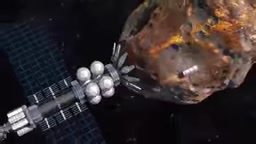
The video breaks the hijacking timeline into several phases, each with different risk logic.
Before launch is the least cinematic but possibly most realistic. Building the ark takes decades, involving procurement contracts, political struggles, security reviews, personnel appointments, and ideological debates. You don't need to storm the bridge — you just need to appoint the bridge crew. Legal seizure, political takeover, financial control, replacing key officers, corrupting navigation software, tampering with the passenger list — all these are more feasible than space combat.
The departure phase is chaotic and crowded. Tugs, fuel tenders, inspection craft, crew shuttles, farewell missions, escort ships, and last-minute cargo deliveries swarm like bees around a bear. Crowding creates cover and provides perfect camouflage for attackers: fuel bays, coolant transports, cryogenic maintenance modules, emergency medical transfers, software patches. The video offers a pithy warning: never trust a cargo bay or fuel tank you didn't order.
Deep-space cruise seems isolated and helpless, but interception itself is extremely difficult. To survive at cruise speed, the ark's sensor coverage is likely formidable; approaching silently is a tall order.
Deceleration and arrival may be the best window. The ark begins burning, deploying sails, interacting with magnetic braking systems, releasing probes, waking crew, preparing landers — transitioning from interstellar vehicle to colonial infrastructure: bright, busy, distracted. And deceleration burns are not a matter of minutes: decelerating from 10% light speed at 1G takes about a month; to avoid disturbing the ecosystem, the ark might decelerate over a year or even a decade. If attackers know the destination, they don't need to chase a whale on the open sea — they just wait at the port.
After arrival may paradoxically be the least secure moment. Crew wake in batches, equipment is unpacked, the population spreads across orbit and surface, and the ark transforms from fortress to construction site, warehouse, hospital, orbital habitat, and command center. Whoever controls the ark controls the colony — you don't need to occupy every valley, just the orbital factory that makes replacement parts; you don't need to occupy every settlement, just the landers.
1G deceleration refers to a ship reversing thrust at an acceleration equal to Earth's surface gravity (about 9.8 m/s²) to reduce speed. If the ark's cruise speed is 10% light speed (about 30,000 km/s), decelerating to rest takes time equal to speed divided by acceleration, i.e., about 300,000 seconds, or roughly 3.5 days (the article's "about a month" may account for low acceleration due to the ship's enormous mass or a more conservative deceleration curve). In reality, to protect the ecosystem and structure, acceleration is often far below 1G, so deceleration can last months to years. This gives attackers a predictable arrival time window — especially when the destination is known, they can set an ambush in advance.
The Real Entry Point: Maintenance Badges Are More Dangerous Than Blindfolds
The video repeatedly emphasizes a counterintuitive point: the most dangerous hijackers may not wear blindfolds, but maintenance badges.
Physical seizure is one option, but the ark is no fishing boat. Even with overwhelming force, boarding could be a long, grueling fight through kilometers of compartments. And if you want to keep the ark intact, many brute-force methods are immediately ruled out. The key is not occupying every corridor, farm deck, or cryo-bay, but controlling critical nodes: communication antennas, power, propulsion, radiators, life support, docking systems. Modern ships have bridges, but a highly automated ark may have no single bridge — control is distributed across systems.
Cryo-bays are a particularly tempting strategic point. Thousands of tightly packed frozen colonists, whose security screening and background checks may be laxer than those of awake crew — one crew member could awaken a strike team. People with extensive cybernetics might even hide equipment inside their bodies, sabotaging cryo systems at a predetermined time or signal.
Trojan horses are easier than brute force. Repair craft, supply modules, escort ships, medical shuttles, rescue missions, refugee ships, follow-up colonist packages — all can serve as disguises. If the mission plan already includes follow-up arrivals, docking itself is not suspicious. A small ship carrying tens of thousands of "invited" frozen colonists might be welcomed; a supply pod might go straight into automated cargo handling; a software update might be installed because its source code checks out — until someone discovers the certificate authority was compromised thirty years ago.
Automated systems are another path. A ship sailing for decades or centuries cannot rely solely on awake humans; it must heavily use expert systems, robots, surveillance networks, navigation computers, medical automation, and even AI. Once these systems are compromised, attackers may need few soldiers to open doors from inside, alter wake schedules, disable defenses, falsify sensor logs, or make the ship believe attackers are friendly.
Internal mutiny is the most classical path. A generation ship is a society, and societies have politics. A faction might decide to change the mission direction, the crew might mutiny, passengers might wake in a crisis to find the destination, government, or founding charter has changed. The video calmly notes: give a mission fifty years and a few charismatic leaders, and you may not need pirates — the pirates are already aboard.
Waypoints, Resource Extraction, and "Second-Mover Advantage"
Interstellar travel may not be a clean burn from start to finish. If the engines are good enough and the mission already spans decades, the ark might choose to decelerate near rogue planets, ice dwarfs, brown dwarfs, or prepositioned relay stations to refuel, harvest volatiles, repair damage, expand the fleet, and establish communication nodes.
Waypoints make interstellar travel more practical, but they also make travel "social." Pirates can hide near relay stations, embed themselves in maintenance crews, squat on nearby ice balls, or launch from some "abandoned" fuel depot between two legitimate waypoints. When the ark starts accepting help from the void, the void gains a vote. A cargo pod launched from a remote outpost might be swapped for a boarding pod, loaded with malware, or packed with armed sleepers while everyone assumes it's just another batch of volatiles.
Post-arrival colonies also face the "young colony problem." On paper it may look impressive: cities, habitats, mines, farms, factories — but the population is small and strategic depth is shallow. Older civilizations have redundancy — multiple industrial centers, power grids, ports, armies, political institutions, and countless accidental backups. A young colony might have only a few fusion power plants, one main shipyard, one genetic archive, one mass driver, one AI-managed industrial network.
And a second ship arriving a century later might be far smaller than the original ark yet far more advanced. Technology progresses; engines, automation, and weapons all improve. The first wave of colonists spent a hundred years struggling from survival to stability, while new technology gives latecomers shorter supply chains and fewer scruples. This is the "second-mover advantage": the first wave builds the beachhead, the second wave decides the beachhead would be better off under new ownership.
Rogue planets (free-floating planets) are planetary bodies that do not orbit any star and drift freely through interstellar space. They emit no light and are hard to detect, but may be rich in water ice, volatiles, and minerals. For long-haul arks, such bodies can serve as concealed supply stations: the ship can decelerate to collect resources without easy detection. They are also ideal pirate hideouts, being far from the law and surveillance of star systems, convenient for launching raids. Similarly, ice dwarfs and brown dwarfs offer both resources and cover, forming "gray zones" in interstellar travel.
Defending the Ark: The Most Effective Measures Are Often the Most Boring
Among the defensive measures the video lists, the least glamorous are the most important.
Authentication is the first. If legitimate support ships and follow-up colonists are expected, the ark must assume that passwords, transponders, and some encryption credentials will eventually be stolen. Verification requires multiple layers: physical tokens, biometrics, time windows, independent cross-checks, and procedures that distrust credentials that "look perfectly valid."
Compartmentalization is the second. No single docking port, software system, officer, AI, or maintenance crew should be able to surrender the entire ship. Seize one compartment, and you get only one compartment — not the future of humanity wrapped in a ribbon.
Distributed control is the third. If life support, radiators, reactors, engines, cryo systems, and communications all depend on one command center, the ship is designed as "capture the bridge and win" — something done by people who watch too much TV and read too little history.
Internal legitimacy is the fourth. If half the crew is already willing to open the door, guns matter less. Crew who believe in the mission are harder to corrupt; passengers with credible institutions are harder to radicalize. A transparent charter, fair governance, and clear emergency powers may prevent a disagreement from becoming a mutiny. Many hijackings begin long before anyone draws a gun.
Redundancy may be the most critical fifth. This is not just onboard system redundancy, but civilization-level redundancy: send multiple arks, send decoys, send precursor probes, pre-deploy automated industry, disperse archives, disperse populations, disperse routes. Do not build a single giant ship so expensive that every pirate, fanatic, tyrant, exile, and ambitious general in history hears a cash register ring at the sight of it. The first rule of ark security is: don't build just one ark.
Compartmentalization originates from ship and nuclear submarine design, referring to dispersing critical systems across multiple physically isolated compartments with independent control permissions. On an ark, this means even if attackers breach one cargo bay or software subsystem, they cannot directly control life support, propulsion, or cryo systems. Each compartment requires independent authentication, and cross-compartment operations require multiple authorizations. This design increases the number of nodes attackers must breach simultaneously, minimizing single-point failure risk. Combined with distributed control, it avoids the fragile "capture the bridge and win" architecture.
Post-Hoc Narrative: Pirates, Revolutionaries, or Founding Myth?
The video closes with a more philosophical question: what does the story become afterward?
If the hijacking fails, they are pirates, terrorists, mutineers, traitors, or invaders. If it succeeds — seizing the ship, reaching the destination, building a colony, raising descendants, constructing cities, writing textbooks — the vocabulary may change. They become revolutionaries, liberators, founders, pilgrims, a brave few who took fate into their own hands. Official history may say the ark was not stolen but saved from corruption; the original mission was not hijacked but redirected; the original crew were not victims but obstacles; the mutiny was not a crime but the birth of a nation.
The ark is full of regimes and ruling families whose origins are far less respectable than later official histories care to emphasize. Give enough generations, and plunder can buy a flag, a seal, and a founding holiday. This doesn't make theft noble, but it reminds us: the ark carries a future nation, its industry, its population, and often a large part of its biosphere. The true wealth aboard is the centuries of work already invested to give that civilization a starting point.
When the first colony ship departs, the engineering problem is only half the story. Someone must know the route, control the shipyard, decide who wakes from cryo, judge whether a friendly ship approaching from behind is truly friendly — and what happens when the ark answers the door.
One-line Summary
The risk of ark hijacking stems from its civilization-level value; the key to defense lies in institutions and redundancy, not weapons.
Paragraph Summary
The article explores the possibility of a generation ship (ark) being hijacked, noting that the ark carries a civilization starter kit and masses tens of billions of tons, creating a million-fold mass disparity with small raider ships and a huge economic incentive. Stealth in space is unrealistic, but the ark can create uncertainty through hidden destinations, decoy burns, and light-speed delay, raising interception costs. Hijacking windows include pre-launch political takeover, departure chaos, deceleration/arrival, and post-arrival colonial dependency. The most dangerous hijackers may exploit maintenance badges, Trojan horses, automated systems, or internal mutiny. Defense centers on multi-layer authentication, compartmentalization, distributed control, internal legitimacy, and civilization-level redundancy — don't build just one ark. A successful hijacking will be rewritten by later generations as a founding myth; narrative power shifts to the victors.
Related articles

How Accurate Are Sci-Fi's Predictions About AI?
How accurate are sci-fi's predictions about AI? Drawing on a Hacker News discussion, this article analyzes sci-fi's foresight and blind spots in AI development, arguing its true value lies in inspiring thought rather than precise prediction.

SwarmEvolve: Latent-Space Agent Swarms Accelerate Evolutionary Search
SwarmEvolve lets hundreds of low-cost agents swarm-reason in latent space, sharing info via KV caches to achieve fast evolutionary search for math and science problems—reaching in a median of 3–8 minutes the best scores other frameworks need 60 minutes for.

trainlint: Static Checks Catch ML Training Bugs That Don't Crash
trainlint is a static analysis tool that finds ML training bugs that don't throw errors, including data leakage, leftover eval mode, and softmax/CrossEntropyLoss conflicts across 14 categories. This article covers its principles, validation results, and limitations.