Canva Craft: Editable Designs Straight from Prompts — AI Image Generation Enters the Layered Era
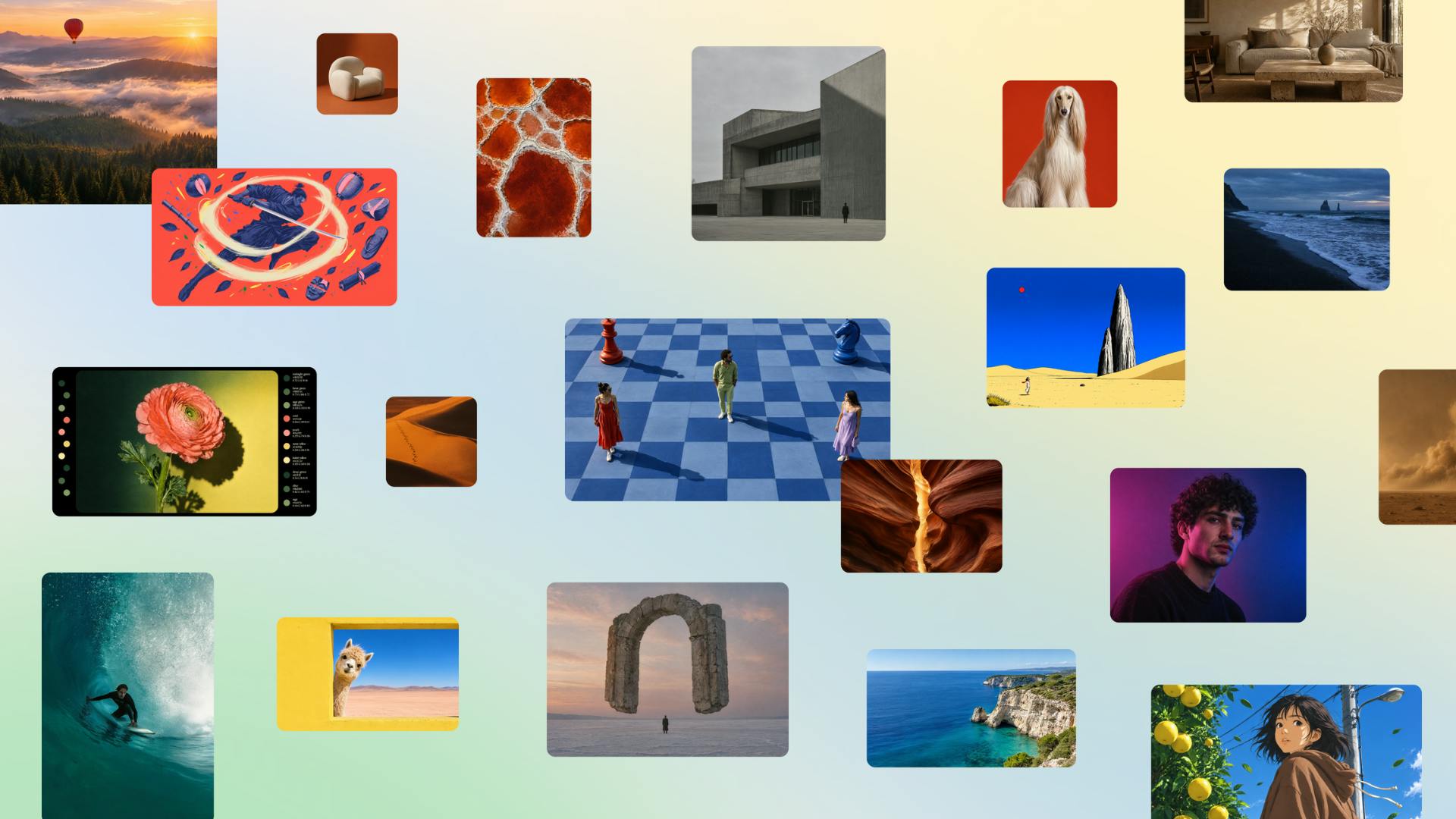
Canva launches its in-house image model Craft, producing editable layered design files straight from prompts.
Canva has released Craft, its first in-house image model, which uses a two-stage "plan the composition, then render" process instead of direct pixel-by-pixel generation. Trained on millions of Canva templates, it supports readable text in 55 languages, 2K resolution, over 30 aspect ratios, and output that can be split into editable layers within Canva. It's live in the product and available via API, though its advantages depend heavily on the Canva ecosystem.
Canva Craft: Editable Designs Straight from Prompts — AI Image Generation Enters the Layered Era
While most AI image models are still competing over how realistic their output looks, Canva has chosen a different path: making generated images directly usable as design files. Canva Craft is Canva's first in-house image model. After launching on Product Hunt, it picked up 77 votes and ranked 7th for the day. The official positioning is clear — it's built for marketers, creators, and designers to produce images that "work as designs," not just "a picture."
The Fundamental Difference from Mainstream Text-to-Image Models: Plan the Layout First, Then Render
According to the official description, Craft is fundamentally different from models trained primarily on photos. The latter tend to render pixel by pixel directly from a prompt, whereas Craft has learned from millions of Canva templates and adopts a two-stage process of "planning the composition first, then rendering the output." This means the model has already planned the layout structure and element positions before generating the image, and the output is 2K resolution with support for over 30 aspect ratios.
The value of this approach lies in how well it fits real design workflows. After getting an AI image, designers often still have to crop it, re-lay it out, and replace the text — fiddling back and forth repeatedly. Craft tries to move this step earlier, into the generation stage, to reduce rework downstream.
The typical architecture of text-to-image models is usually based on diffusion models, such as the Stable Diffusion and DALL·E series. These models are trained on large-scale image-text pairs; at inference time they start from random noise and gradually denoise according to the text prompt, ultimately generating a pixel image. Their core is directly optimizing visual similarity in pixel space or latent space, without explicit modeling of layout structure. As a result, although the models can "draw realistically," they have weak control over design constraints such as element positions and text layout, and often require external modules like ControlNet and LoRA for post-hoc intervention. Craft's "plan first, render later" approach introduces a layout planning stage before generation — essentially moving design priors forward — which contrasts with the traditional diffusion model's "one-step" generation logic.
Three Practical Capabilities: Readable Text, Precise Layout, Decomposable Layers
Craft's published capability list focuses on the pain points of putting designs into production:
Multilingual readable text. The model supports readable text generation in 55 languages. Garbled text has long been a chronic problem for text-to-image models, and for marketing materials, unreadable text in an image basically means a scrapped draft — so this is a highly targeted feature.
Precise positioning. Thanks to the plan-first, render-later process, the positional relationships of elements are more controllable rather than left to luck with prompts.
Decomposable into editable layers. The output can be broken down into independent layers, which is the key way Craft differs from ordinary image models — the generated result can enter Canva's editing workflow for further modification, rather than being a flattened final image.
Editable layers are a foundational concept in design tools, referring to splitting a flat artwork into multiple independent objects (such as text, shapes, and images), each of which can be individually selected, moved, and restyled without affecting the others. In traditional design workflows, layers are manually created and managed by designers. AI-generated images are usually output as flattened bitmaps (such as PNG/JPG), with all elements merged into a single pixel layer, making later modification extremely difficult. Craft's claim that the output can be decomposed into editable layers means the model must simultaneously predict the layered structure of elements during generation, which involves a combination of image segmentation, instance understanding, and vectorization. If this capability matures, it will greatly lower the barrier for AI images to enter design editing workflows — but the precision and semantic sensibility of layer decomposition remain technical challenges.
Available Immediately: Launched Inside Canva and Open via API
Craft is currently available directly within the Canva product, and also offers API access. For ordinary users, this means they can invoke it in a familiar workspace without additional tools; for developers and enterprises, the API opens up the possibility of embedding design-grade image generation into their own systems — for example, batch-generating marketing assets or automating content production pipelines.
Canva co-founder and CEO Melanie Perkins appeared in the launch lineup, showing just how much importance the company places on this model.
An API (Application Programming Interface) is a agreed-upon interface through which software systems interact. In this context, Canva opening up Craft's API means developers can programmatically call the image generation capability and embed the "prompt → design file" workflow into their own applications, e-commerce backends, or marketing automation platforms. Compared with manual operation within the Canva interface, the API supports batch processing, parameterized calls, and system integration, making it suitable for enterprise-grade content production pipelines. The degree of API openness (such as whether it supports returning layer structures, output formats, concurrency limits, and pricing models) directly determines whether Craft can break out of the Canva ecosystem and be adopted by a broader range of developers. Currently, the company has only disclosed capability-level information; the API's specific specifications remain to be revealed.
A Signal of Convergence Between Design Tools and Image Models
The emergence of Craft reflects a trend: image generation is moving from "general-purpose models" toward "scenario-specific models." General text-to-image models pursue covering as many subjects as possible, whereas models like Craft are trained on the design assets of a specific platform in exchange for expertise in layout, text, and editability.
The trade-off is also obvious — its advantages are highly dependent on the template styles and editing workflows within the Canva ecosystem. For teams that use Canva heavily, this is a natural upgrade; for users accustomed to other design tools, its appeal depends on the openness of the API and the compatibility of output formats. The information officially released so far focuses on capabilities, while details such as actual generation quality, layer decomposition precision, and API pricing still need hands-on verification.
Regardless, the direction of "editable design files straight from prompts" offers a new frame of reference for the value proposition of AI image generation: it's not just about drawing well — it's also about being editable.
One-line Summary
Canva launches its in-house image model Craft, producing editable layered design files straight from prompts.
Paragraph Summary
Canva has released Craft, its first in-house image model, which uses a two-stage process of "planning the composition first, then rendering the output," in contrast to mainstream text-to-image models that render directly pixel by pixel. Craft has learned from millions of Canva templates, supports readable text in 55 languages, 2K resolution, and over 30 aspect ratios, and its output can be decomposed into editable layers that go directly into the Canva editing workflow. The model is already live within the Canva product and available via API, targeting marketers, creators, and designers. The article argues that this reflects a trend of image generation evolving from general-purpose models toward scenario-specific, editable design assets, but its advantages depend heavily on the Canva ecosystem, and its actual quality and API details remain to be verified.
Related articles
AWS AgentCore Gateway: Connecting AI A…
AWS AgentCore Gateway: Connecting AI Agents to Enterprise Backends with MCP
How AWS AgentCore Gateway acts as a primary MCP server to aggregate REST APIs, Lambda, and existing MCP services? Analyzing its AST real-time mapping, zero cold start, semantic search for tool overload, session isolation, and key injection security design, plus the architectural approach to decoupling enterprise AI agents from backends.

One Link Gives Figma AI a New Skill: Hands-On with MCP Connectors
Paste one MCP server link and the AI Agent in Figma gains new tool capabilities. We break down the setup flow, 20+ one-click apps, read/write permissions and execution policies, and the public HTTPS requirement.

Cognition SWE-2 in Practice: One Prompt to Handle the Whole Product Launch Process
Analyzing a YouTube creator's prompt for using Cognition SWE-2 to launch a product: a landing page, seven-email sequence, and non-buyer follow-up tool, plus how the 'test and report' constraint changes AI delivery quality.