ChatDev 2.0: Building a Virtual Software Company with Multi-Agent Collaboration
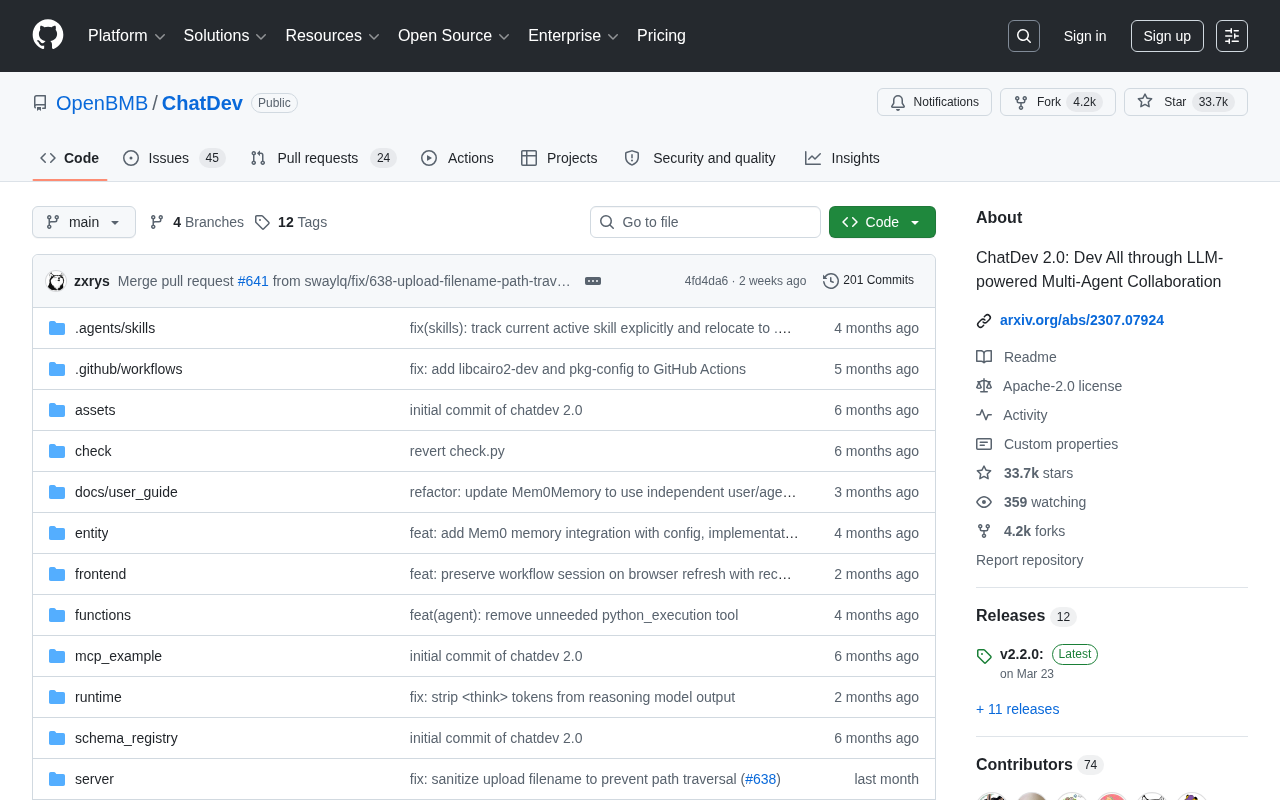
ChatDev uses multiple AI agents to simulate a software company and automate the entire development workflow.
ChatDev is an open-source multi-agent collaboration framework by OpenBMB with over 33,000 GitHub stars. It brings a software company into a large language model — AI agents playing roles like CEO, programmer, and QA engineer collaborate through natural language in phased, waterfall-style workflows to handle requirements, design, coding, testing, and documentation. This role-playing + phased approach reduces hallucination and context drift risks inherent in single-model systems. Version 2.0 expands the scope further with high customizability, serving as both a practical tool and a research platform for multi-agent systems.
What Is ChatDev
ChatDev is an open-source multi-agent collaboration framework developed by the OpenBMB team. Its goal is to complete the entire software development lifecycle using multiple AI agents powered by large language models (LLMs). The project has garnered over 33,000 stars and 4,000+ forks on GitHub, making it one of the most-watched open-source projects in the multi-agent space.
Its core idea can be summed up in one sentence: bring a software company to life inside a large language model. ChatDev simulates a "virtual software company" staffed by AI agents playing roles such as CEO, CTO, programmer, and QA engineer. These agents collaborate through dialogue to collectively handle requirements analysis, system design, coding, testing, and documentation.
How Multi-Agent Collaboration Works
A single LLM call often struggles to reliably complete complex software engineering tasks — one model is expected to understand requirements, design architecture, write code, and find bugs all at once, making it prone to errors across such a long chain. ChatDev's approach is "division of labor" — breaking the entire development process into multiple phases, each handled by an agent playing a specific role.
This design follows the classic waterfall software development model: the CEO and product team first clarify requirements, the CTO and designers settle on a technical approach, programmers then write the code, and QA engineers handle review and bug fixes. Agents exchange information through natural language conversation, with each round of dialogue focused on a well-defined subtask — breaking a large goal into manageable steps.
This "role-playing + phased" mechanism effectively reduces the risks of hallucination and context drift that plague single-model systems, making AI more reliable in scenarios like software development that demand rigorous logic.
From 1.0 to 2.0
The project is branded as ChatDev 2.0, with the tagline "Dev All through LLM-powered Multi-Agent Collaboration." Compared to earlier versions that focused on "conversational software development," version 2.0 broadens its ambitions to cover a wider range of development tasks, emphasizing the use of multi-agent collaboration to handle "all" development scenarios.
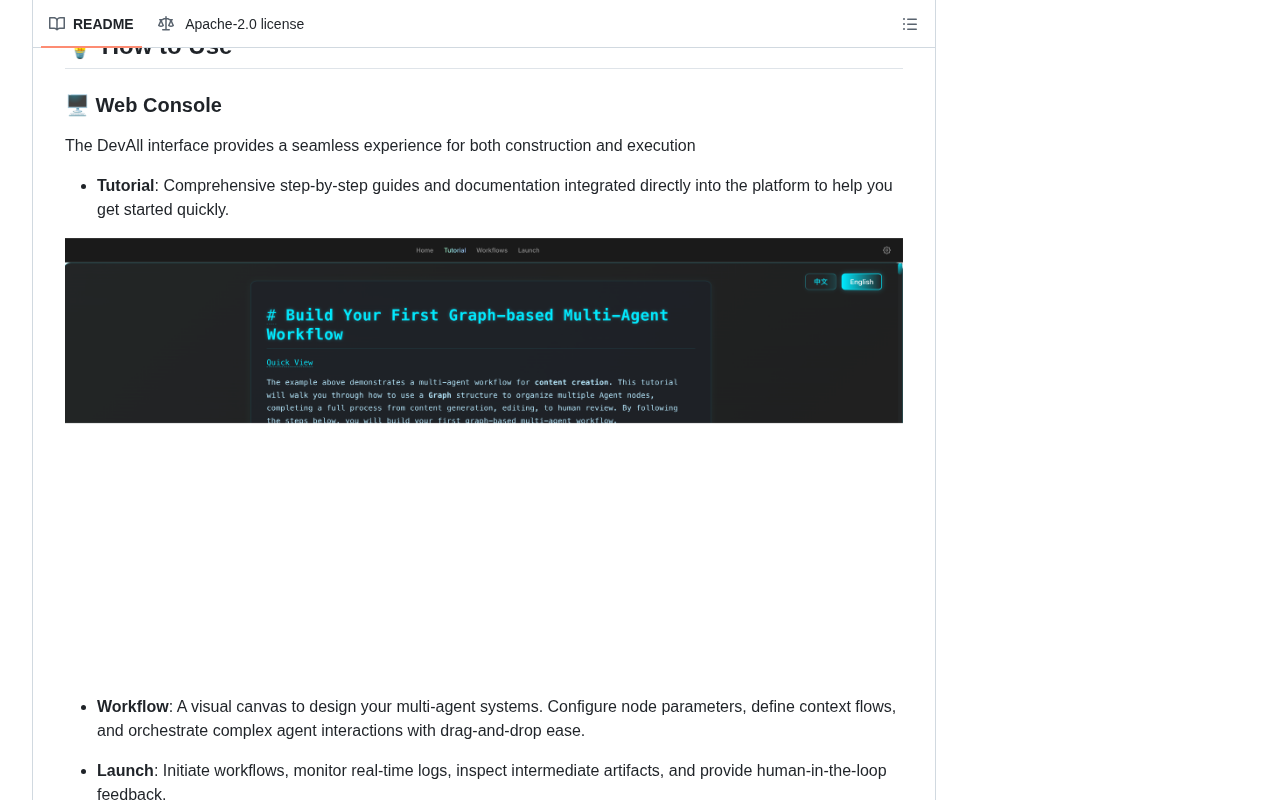
As a Python-based open-source project, ChatDev's extensibility is a key selling point. Developers can customize agent roles, conversation flows, and collaboration rules to fit different project requirements. This makes it not just a ready-to-use tool, but also an experimental platform for researching multi-agent systems.
What This Means
ChatDev's high level of interest reflects the industry's strong enthusiasm for the "Agent" paradigm. In the past, conversations centered on making individual large models smarter. Now, more and more exploration is focused on how multiple models can divide labor and collaborate — mimicking the way human organizations operate to solve complex problems.
For developers, ChatDev offers an intuitive demonstration: much of the repetitive, process-driven work in software engineering could eventually be handled automatically by teams of AI agents, with humans shifting toward defining requirements and providing final oversight. That said, multi-agent systems still face real-world challenges — high costs, inconsistent output quality, and difficulty managing complex projects — and remain far from fully replacing professional development teams.
But as an open-source exploration, ChatDev's value lies in turning the concept of an "AI software company" into runnable, reproducible, and extensible code, providing a solid foundation for the broader community to research multi-agent collaboration. For technical practitioners who want to understand agent architectures or experiment hands-on with multi-agent development, this is a worthy starting point.
Summary
ChatDev 2.0 uses LLM-powered multi-agent collaboration to decompose the software development process and assign each phase to AI agents playing distinct roles — an attempt to achieve automated development through a "virtual software company" model. It functions both as a usable tool and an open research platform. Its 30,000+ stars speak to the immense promise and community excitement surrounding the multi-agent direction.
Related articles
Spotit: Turn Every Mac App into a Real-Time Interactive Tutorial
Spotit is an AI-powered interactive tutorial tool for Mac. Press a shortcut, ask in plain language, and it highlights exactly where to click next — guiding you through any Mac app as you learn by doing.
OpenCode: The Open-Source Coding Agent That Hit 150K GitHub Stars
OpenCode is an open-source TypeScript coding agent with 150K+ GitHub stars. Learn about its features, advantages, and use cases for AI-powered development.
Learning AI Agent Development from Scratch: An Open-Source Tutorial Worth Bookmarking
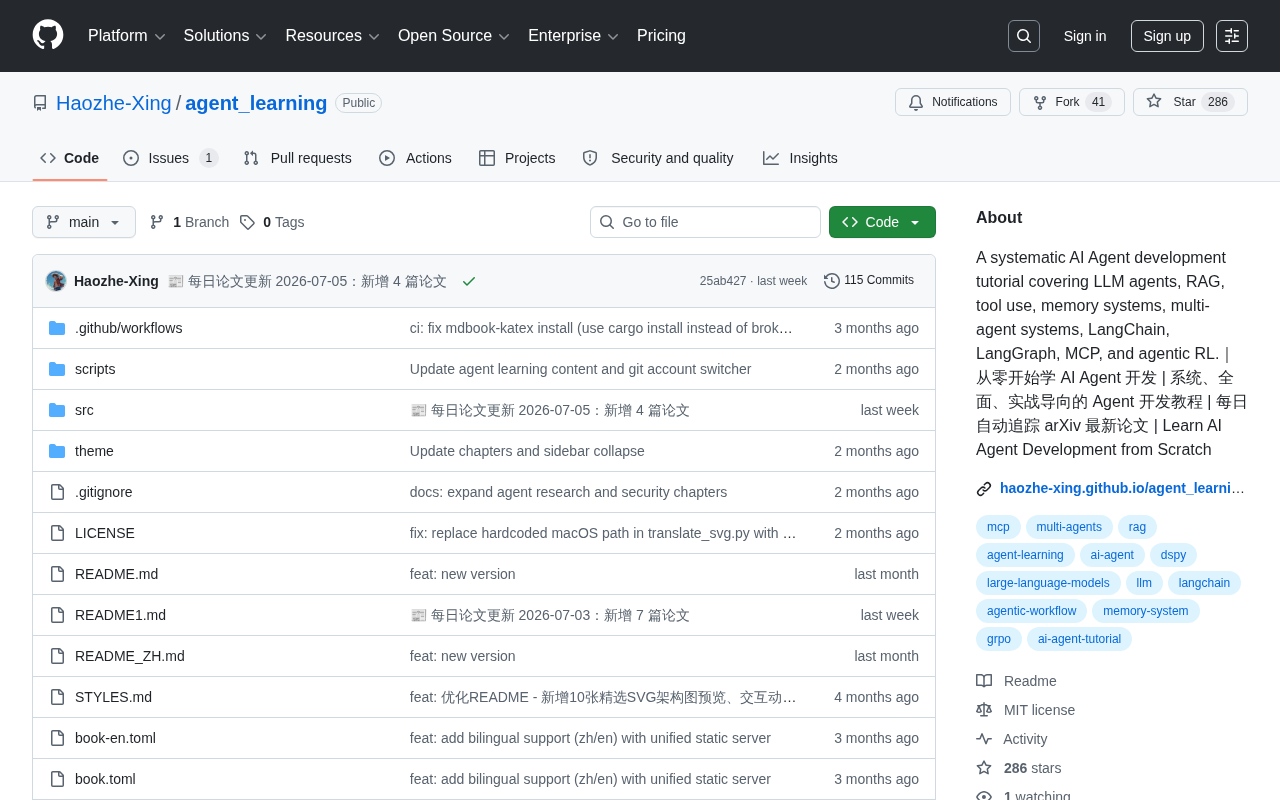
Haozhe-Xing/agent_learning is a systematic, hands-on open-source tutorial for learning AI Agent development from scratch, with daily arXiv paper tracking built in.