ChatGPT Business Premium Seats: A Deep Dive into the $100/Month AI Plan for SMBs
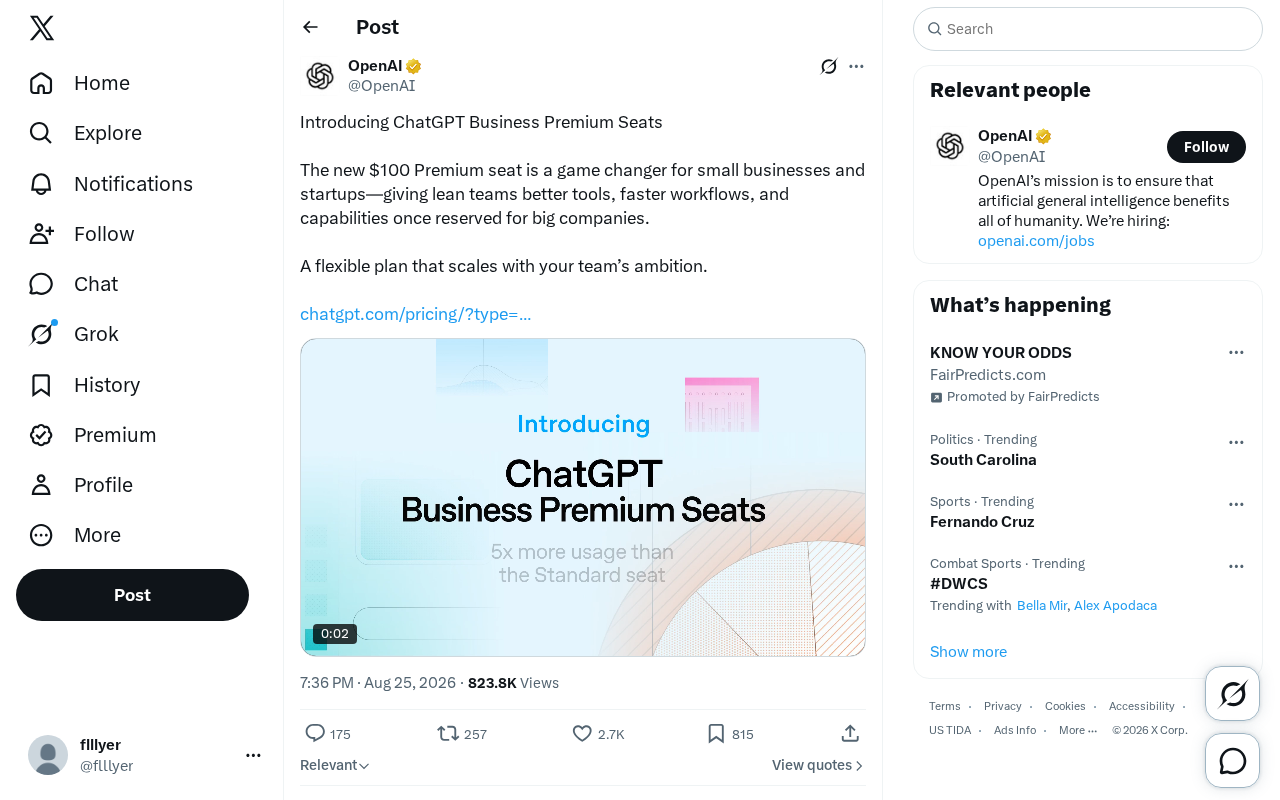
OpenAI launches $100/month ChatGPT Business Premium Seats targeting SMBs and startups.
OpenAI has introduced ChatGPT Business Premium Seats at $100 per seat per month, bridging the gap between its Team and Enterprise tiers. Designed for small businesses and startups, the plan offers enhanced model access, higher usage limits, collaboration tools, and stronger data security. This move reflects OpenAI's accelerating commercialization and the broader trend of AI tools democratizing enterprise-grade capabilities for lean teams.
An AI Tool Tailor-Made for Small and Medium Businesses
OpenAI recently announced the launch of ChatGPT Business Premium Seats, priced at $100 per seat per month. The company positions it as a "game changer for small businesses and startups" — giving lean teams access to more powerful tools, faster workflows, and capabilities that were previously reserved for large enterprises.
ChatGPT Product Line Background: ChatGPT is a conversational AI product launched by OpenAI in November 2022, built on the GPT (Generative Pre-trained Transformer) large language model. Since its release, ChatGPT has evolved from a free preview into a multi-tiered commercial offering. Its product matrix has gradually taken shape: the free tier provides access to the basic GPT-3.5 model; Plus ($20/month) offers GPT-4 access and priority responses; the Team plan is designed for small-team collaboration; and Enterprise provides large organizations with custom deployments, data isolation, and admin consoles. This tiered strategy serves different user segments while building a complete commercial loop from individual users to enterprises.
This move continues OpenAI's recent commercialization strategy: filling the gap in pricing and functionality between the consumer-facing ChatGPT Plus ($20) and the Enterprise tier (which requires custom pricing negotiations). For growing teams that can't afford the steep cost of Enterprise but need capabilities beyond a basic subscription, this new tier is clearly a precision play.
Pricing Logic and Market Positioning
Bridging the Gap Between Enterprise and Individual Plans
From a product segmentation perspective, OpenAI's subscription system is becoming increasingly granular. Individual users have ChatGPT Plus ($20/month) and Pro ($200/month); team users previously relied mainly on the Team plan (approximately $25–30 per seat); and the Enterprise version targets large organizations with customized negotiations.
The $100 Premium seat now sits neatly between Team and Enterprise. Its core audience is crystal clear: startups and small businesses with limited headcount but rapid growth and high AI requirements. These teams typically want near-enterprise-level capabilities but can't — or don't want to — commit to Enterprise's minimum seat counts and contract thresholds.
Cost Breakdown at $100 Per Seat
Per-Seat Pricing in SaaS Subscriptions: "Per-Seat Pricing" is a standard business model in the SaaS (Software as a Service) industry. Companies purchase "seats" based on the actual number of users, with each seat corresponding to one user account's access rights. The advantages of this model include predictable costs, flexible scaling with team size, and lower barriers through pay-as-you-go pricing. For vendors, per-seat pricing enables revenue growth alongside customer expansion and market segmentation through different pricing tiers. OpenAI's $100 seat pricing follows the pricing logic of mature SaaS products like Slack and Zoom, establishing a price anchor in the mid-market.
For a five-person team, the monthly spend on ChatGPT Business Premium Seats comes to approximately $500. Compared to hiring additional staff or purchasing multiple specialized software licenses, this price point remains acceptable in many founders' eyes. OpenAI specifically emphasizes in its official messaging that this is a "flexible plan that scales with your team's ambition," implying that the plan offers elasticity in both seat count and features — well-suited for the fast-changing startup environment.
The Capability Upgrades Behind the "Game Changer" Label
Although OpenAI didn't exhaustively list every feature of the Premium seats in the announcement, the phrase "capabilities that once belonged only to big companies" suggests the value proposition centers on several key areas:
- Higher usage limits and faster response speeds: Designed for teams with high-intensity use cases, reducing interruptions from rate limiting.
- Enhanced model access: Potentially including priority access to the latest flagship models, longer context windows, or models with stronger reasoning capabilities.
- Collaboration and management features: Team workspaces, shared resources, and permission management to help small teams establish standardized AI collaboration workflows.
- Data and security assurances: Providing SMBs with near-enterprise-level data privacy and compliance capabilities.
Capability Tiers in Large Language Models: Commercial deployment of large language models (LLMs) typically involves different capability tiers. Key differences include: model version (e.g., GPT-4 vs. GPT-3.5, with the former significantly outperforming the latter in reasoning, creativity, and accuracy), context window length (determining how much conversation history the AI can "remember," ranging from 4K to 128K tokens), response speed (TPM or tokens-per-minute limits), and specialized capabilities such as code interpreter, web browsing, and image generation. Enterprise subscriptions typically provide the latest models, larger context windows, and higher concurrency — all critical for teams handling complex tasks. The value of Premium seats likely manifests in improvements across these technical parameters.
For lean teams, these capabilities matter not just for a better user experience, but because they enable small teams to leverage minimal headcount to accomplish workloads that previously required much larger staffs.
Potential Impact on the Startup Ecosystem
AI Is Redefining the Capability Boundaries of "Small Teams"
OpenAI's product segmentation adjustment reflects an increasingly clear trend: AI tools are becoming core productivity infrastructure for startups. In the past, large enterprises held the advantage in software tools thanks to their capital and technical resources. Now, an AI subscription costing a few hundred dollars a month can give a three-to-five-person startup execution capabilities rivaling those of much larger companies.
The Productivity Leverage Effect of AI Tools: "Leverage" in a business context refers to the ability to generate outsized output from a relatively small input. AI tools are becoming a textbook example of productivity leverage: a marketing professional skilled in ChatGPT can potentially match the content output of a traditional three-person team; a developer using an AI coding assistant can boost code efficiency by 30–50%. McKinsey's 2023 research shows that generative AI can save knowledge workers approximately 30% of their working time. For small teams, this leverage means "capability multiplication": a five-person team powered by AI might demonstrate the execution capacity of a ten-person team from the past, fundamentally changing the calculus of "output per employee" and redefining the competitive threshold for startups.
This "capability democratization" will continue to compress the traditional relationship between team size and output. An increasing number of micro-startups will be able to leverage AI to achieve business goals that previously required dozens of people.
OpenAI's Commercialization Pace Is Accelerating
From a broader perspective, launching a mid-priced business seat also reflects OpenAI's ongoing efforts to segment the market and increase average revenue per user under profitability pressure. By establishing multiple price anchors between $20, $100, $200, and the Enterprise tier, OpenAI can more precisely capture customers with different willingness to pay, optimizing its overall revenue structure.
Is It Worth Subscribing? Key Decision-Making Advice
The launch of ChatGPT Business Premium Seats marks an important step in OpenAI's deeper push into the enterprise and team market. For growing small businesses and startup teams, the $100 price point offers a pragmatic choice between "just enough" and "overkill."
Data Security Considerations for Enterprise AI Deployment: One of the core requirements for enterprise-grade AI services is data security and compliance. Key concerns include: whether data is used for model training (enterprises want their input data excluded from public model improvement), data storage location and encryption standards, access permission management, audit logs, and support for compliance frameworks such as GDPR and SOC 2. OpenAI's Enterprise version offers a data isolation guarantee — customer data is not used for model training. If Premium seats aim to attract growing businesses, they will inevitably need to provide stronger data governance assurances than the individual plans, which is a key factor supporting the pricing premium. For startups handling sensitive information (such as legal tech or healthcare), these security features may be the deciding factor in the subscription decision.
However, since OpenAI has not yet released the full feature list and usage limit details, the actual value will need to be validated through real-world use. Teams considering this plan should carefully compare the specific differences between the Team plan and this new offering before committing, assess their usage intensity and budget, and make the decision that best fits their business needs.
Key Takeaways
Related articles
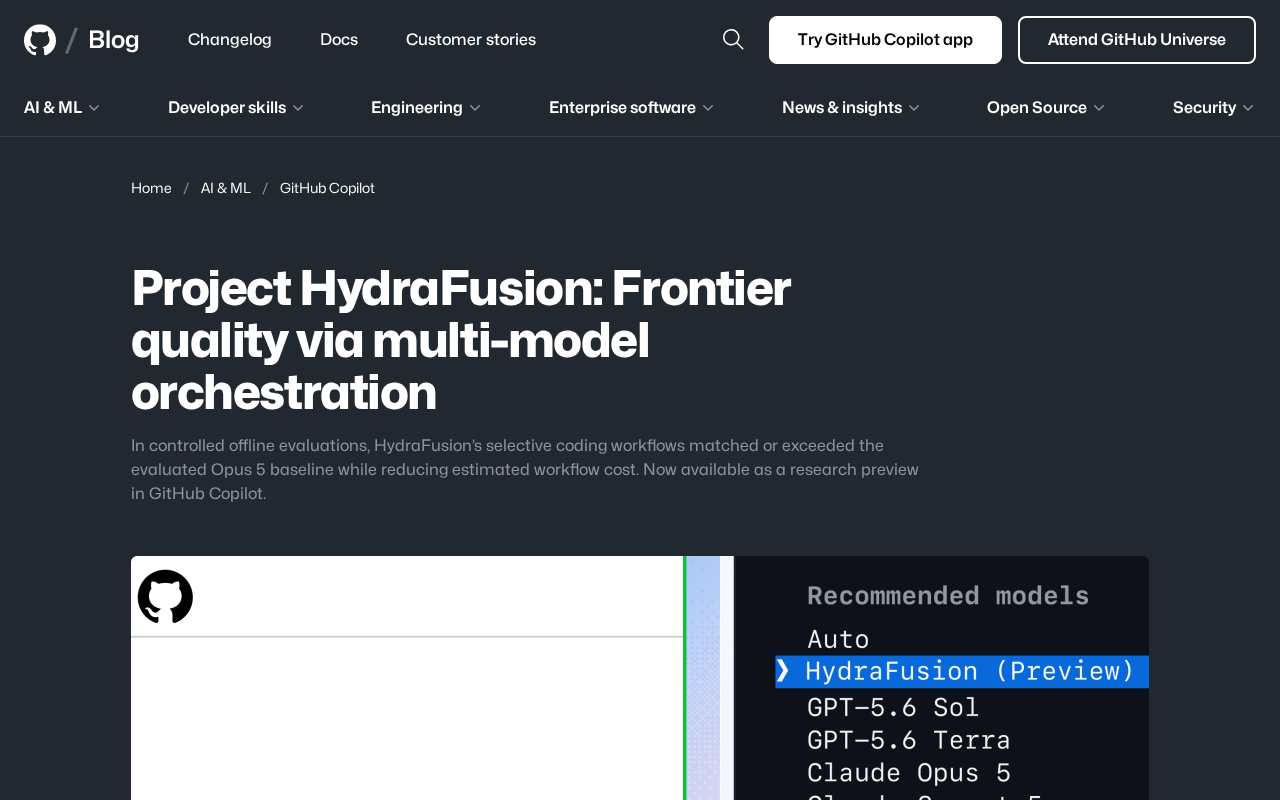
GitHub HydraFusion: How Multi-Model Orchestration Approaches Frontier Quality While Cutting Costs
Deep dive into GitHub Project HydraFusion's multi-model orchestration architecture: how intelligent routing and selective coding workflows match Opus 5 quality while cutting inference costs.
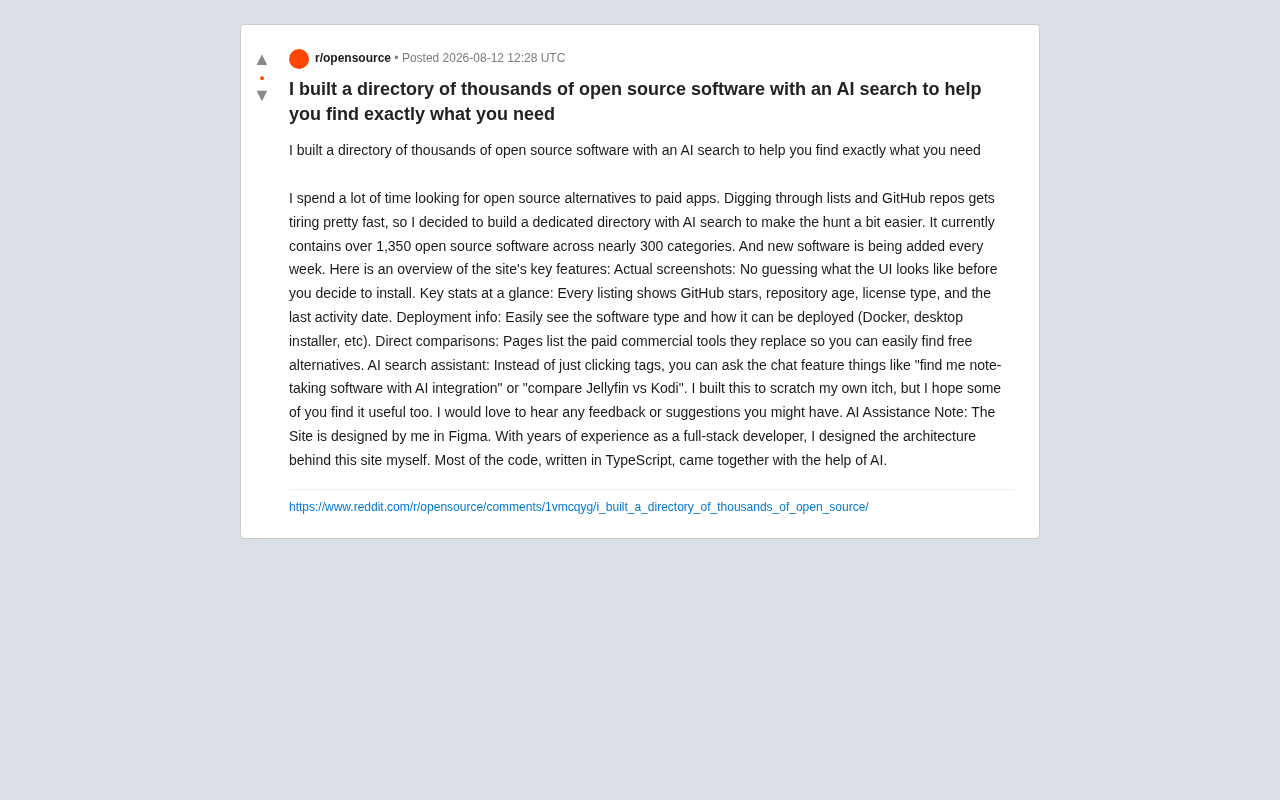
AI Search + 1,350 Open Source Software Directory: Find Alternatives to Paid Apps in One Click
A full-stack developer built a directory of 1,350+ open source apps across 300 categories, with AI-powered natural language search to help users find free alternatives to paid software.
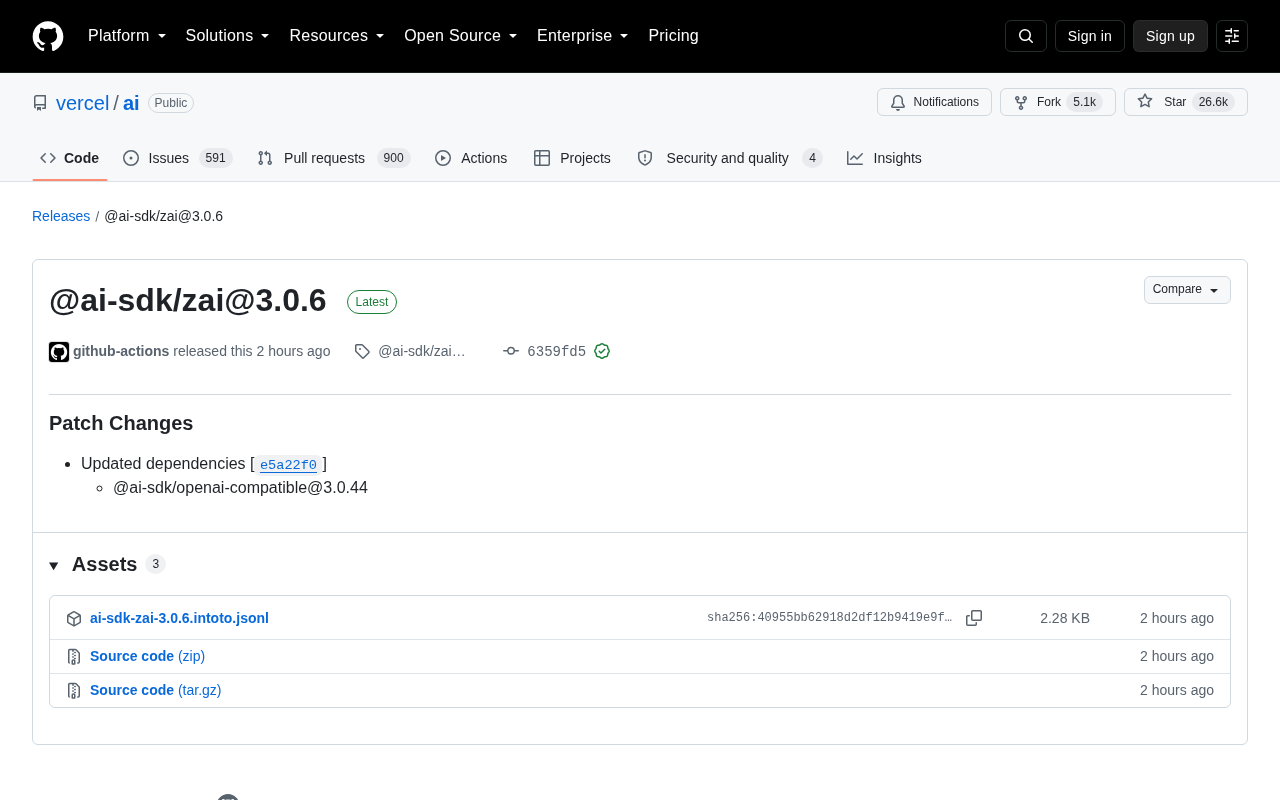
Vercel AI SDK @ai-sdk/zai 3.0.6 Update: A Deep Dive into Zhipu Model Integration
A deep dive into the @ai-sdk/zai 3.0.6 patch update — covering its openai-compatible architecture, dependency upgrade details, and what it means for Zhipu GLM developers.