ChatGPT Image Usage Surges 50%: 360° Viewer Launches as AI Image Generation Becomes Essential

ChatGPT image usage surges over 50%, reshaping the AI image generation market landscape.
OpenAI has released ChatGPT Images 2.0 data showing usage growth exceeding 50%, with nearly 60% being new users. The version leverages GPT-4o to achieve breakthroughs in text rendering and detail reproduction, with the Ghibli-style viral trend serving as a key catalyst for user growth. A new 360° viewer feature has also been launched, pushing AI imagery from 2D into 3D. With its massive user base and natural language interaction advantages, ChatGPT is reshaping the competitive landscape against Midjourney and other rivals.
ChatGPT Images 2.0: Usage Surges Over 50%
OpenAI recently released the latest data on ChatGPT's image generation feature, revealing impressive growth since the launch of Images 2.0. According to official figures, ChatGPT's image usage has grown by over 50% compared to just a few weeks ago, with nearly 60% of daily active users being new sign-ups.
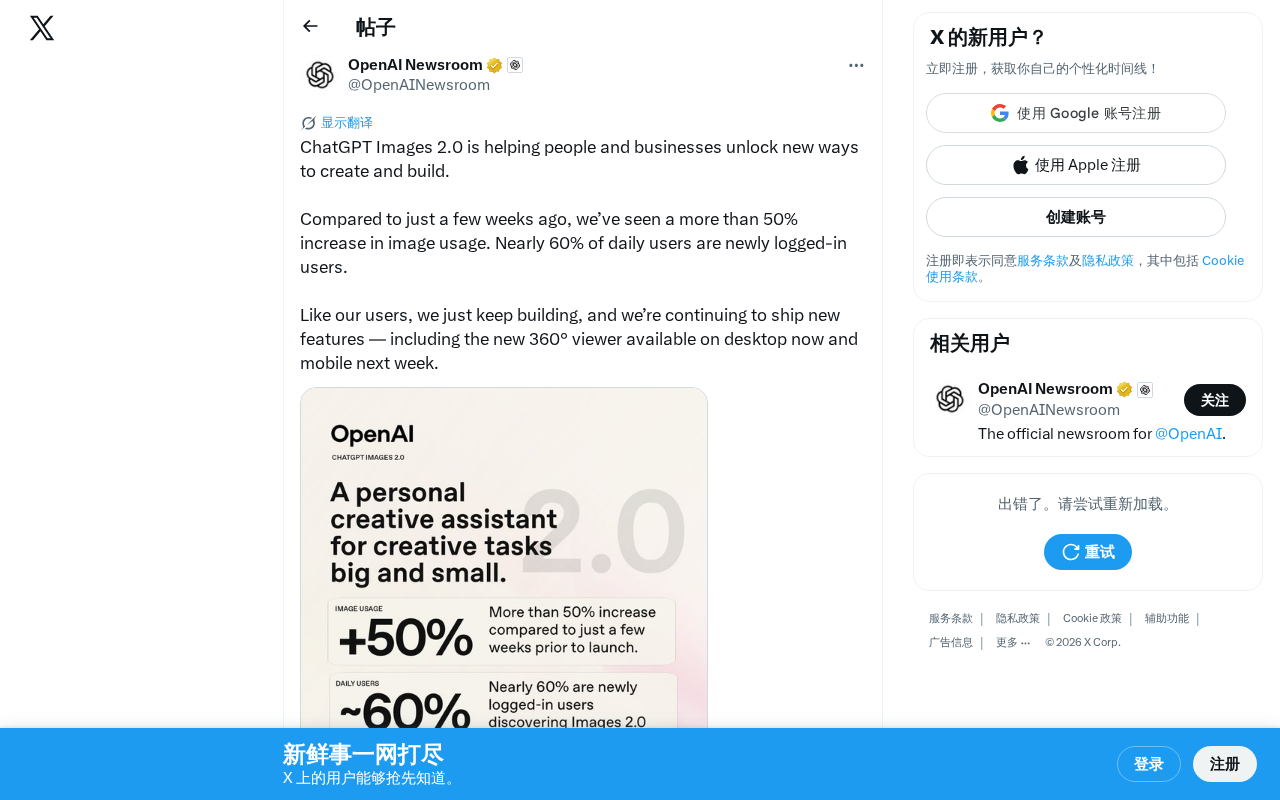
Notably, ChatGPT Images 2.0 isn't just an incremental version update—it represents a fundamental leap in underlying capabilities. This version deeply integrates native image generation powered by GPT-4o. Compared to the earlier approach of relying on standalone DALL-E calls, the new architecture delivers qualitative breakthroughs across three dimensions: text rendering, detail reproduction, and multi-turn conversational instruction following. The improvement in text rendering is particularly significant—this long-standing pain point in AI image generation, once solved, unlocks high-value commercial use cases such as poster design, infographic creation, and brand asset generation, laying the technical foundation for explosive growth in the enterprise market.
This data sends two key signals:
- Image generation is becoming one of ChatGPT's core use cases, with both user stickiness and usage frequency rising rapidly
- A large influx of new users are joining ChatGPT specifically for image features, indicating that this capability is effectively expanding the platform's user base
From Novelty to Necessity: How Users Are Embracing ChatGPT's Image Features
The Logic Behind User Growth
A 50% surge in usage and nearly 60% new user share means ChatGPT's image functionality has broken beyond the early adopter circle and is now penetrating into the broader population of everyday and business users.
This trend is closely tied to the viral spread of Studio Ghibli-style images on social media. In late March 2025, users spontaneously kicked off a craze of converting personal photos into Ghibli animation-style artwork, creating a viral phenomenon across Twitter/X, Instagram, Weibo, and other platforms. At its peak, single-day new user sign-ups broke OpenAI's all-time record. The Ghibli style became the tipping point because Hayao Miyazaki's works enjoy a cross-generational global fanbase, and AI's ability to accurately reproduce this highly recognizable aesthetic dramatically shortened the psychological distance between ordinary users and AI image generation—transforming it from a "technical tool" into a "medium for emotional expression." When users discovered that AI image generation was no longer an exclusive playground for tech enthusiasts but a creative assistant accessible to everyone, the lowered barrier to entry translated directly into explosive user growth.
Enterprises Are Accelerating Adoption
OpenAI specifically mentioned "businesses" in its announcement, signaling that Images 2.0 is far more than a consumer-grade entertainment tool. An increasing number of enterprises are integrating ChatGPT's image generation capabilities into their actual workflows:
- Product Design: Rapidly generating concept art and prototype visuals
- Marketing Asset Production: Batch-producing social media graphics and ad creatives
- Brand Visual Creation: Completing brand identity design at low cost
For small and medium businesses and solo entrepreneurs, this means producing high-quality visual content quickly without the need for a professional design team.
360° Viewer Launches: Another Upgrade to ChatGPT Image Interaction
OpenAI simultaneously announced the launch of a new 360° viewer feature, now available on desktop with mobile support rolling out next week. This feature allows users to view AI-generated images from a panoramic perspective, applicable to scenarios such as:
- 360-degree product showcases
- Spatial and interior design previews
- Virtual scene construction and immersive experiences
From a technical standpoint, the 360° panoramic viewer is based on Equirectangular Projection or Cubemap image rendering principles, using frontend frameworks like WebGL to transform spherical panoramic images into interactive, immersive viewpoints. By combining this capability with AI image generation, OpenAI enables users to directly generate interactive panoramic content rather than static images—offering immediate commercial value for industries like real estate virtual tours, e-commerce product displays, and game scene previews. It also signals that AI-generated content is extending from 2D flat images into 3D spatial experiences.
The launch of the 360° viewer reflects OpenAI's "ship and iterate" product strategy. As the company put it, "we just keep building"—continuously releasing new features within the positive feedback loop of user growth to sustain interest and engagement. This rapid iteration cadence also serves as a response to competitive pressure from rivals like Midjourney and Stable Diffusion.
ChatGPT vs Midjourney: The AI Image Generation Market Is Being Reshaped
From a broader perspective, the explosive growth of ChatGPT's image features is reshaping the competitive landscape of the AI image generation market.
The current market exhibits a multi-polar competitive dynamic: Midjourney is known for its highly artistic style and active Discord community, with roughly 15 million monthly active users, primarily serving professional creators; Stable Diffusion, as an open-source model, occupies a unique position in technical communities and enterprise private deployment scenarios thanks to its high customizability and local deployment capabilities; Adobe Firefly is deeply integrated into the Creative Cloud ecosystem, emphasizing copyright-safe, commercially licensed content. Each of these tools has its strengths, but all rely heavily on "Prompt Engineering"—users need to master specific keyword combinations, weight syntax, negative prompts, and other techniques to consistently produce high-quality images. This learning curve shuts out the vast majority of ordinary users.
ChatGPT's differentiating advantage lies in the combination of its "super app" status and natural language interaction capabilities:
- Massive existing user base: Hundreds of millions of users can access image generation without switching platforms
- Conversational interaction convenience: Powered by GPT-4o's deep semantic understanding, users can describe their needs in everyday language while the system automatically handles internal prompt conversion—expanding the effective user base for image generation from tens of millions of "tech enthusiasts" to billions of "ordinary internet users"
- Deep text comprehension heritage: More precise understanding of user intent, with support for multi-turn conversational refinement
This "zero barrier" user experience positions ChatGPT to become the largest traffic gateway in the AI image generation space. And the nearly 60% influx of new users also means the total addressable market for AI image generation is expanding rapidly.
Now Is the Best Time to Embrace AI Image Tools
For creators and business users, now is the window of opportunity to explore AI image tools and restructure content creation workflows. As ChatGPT's image capabilities continue to mature and new features like the 360° viewer keep enriching the experience, AI image generation will gradually evolve from a "nice-to-have" into an indispensable foundational capability in content creation and business operations.
It's foreseeable that once AI image generation reaches a sufficiently high level of quality and usability, creators and businesses that fail to adopt these tools will actually find themselves at a disadvantage in terms of efficiency and cost.
Key Takeaways
- ChatGPT image usage grew over 50% in just a few weeks, with nearly 60% of daily users being new sign-ups
- Images 2.0, powered by GPT-4o's native image generation, delivers qualitative breakthroughs in text rendering, detail reproduction, and instruction following
- OpenAI launched a new 360° viewer feature based on panoramic rendering technology, available on desktop now with mobile support coming next week
- The viral spread of Ghibli-style images was a key catalyst for this user surge, transforming AI image generation from a technical tool into a medium for emotional expression
- Image features are rapidly expanding from consumer entertainment into enterprise commercial use cases
- ChatGPT is reshaping the AI image generation market landscape through its massive user base and natural language interaction advantages
- A continuous rapid iteration product strategy is key to addressing competitive pressure from Midjourney and other rivals
Related articles
 Tech Frontiers
A Rare Quiet Day in AI: Recursive Self-Improvement Stirs Beneath the Surface
A rare quiet day in AI sees multiple sources go silent simultaneously. Behind the calm, Recursive Self-Improvement (RSI) research continues. What this means for the industry.
 Tech Frontiers
Reve 2 vs. Ideogram 4: A Deep Dive into Layout Control in AI Image Generation
A deep comparison of Reve 2 and Ideogram 4's layout control capabilities, covering technical approaches, real-world use cases, and industry trends for designers and creators.
 Tech Frontiers
In the Weights: Check Your Influence Score in the AI World
In the Weights is an AI influence search engine that quantifies your presence in the AI world with a score. Explore how it evaluates practitioners and what it means for digital identity.