Chenxing LL: Signed a Book Deal as a Sophomore and Became a Web Novel Legend—His Creative Methodology

Chenxing LL went from a sophomore signing to 100,000 average subscriptions, sharing dynamic outlining and how to solve narrative splits.
Chenxing LL (Chen Xing LL) signed his first book during his sophomore summer; his first month's royalties were 4,000 yuan, four times his living expenses, launching his professional writing career. He rates himself as "one hit, one miss," credits talent for half his success, but says a dynamically refined outline is the key to steady output—when blocked, it's time to write the outline. *This Game Is Too Realistic* reached 100,000 average subscriptions, with the core creative difficulty being the identity split between players and natives, requiring a grand narrative to unify both. *I Have an Apartment in the Apocalypse* was banned after accurately predicting international affairs; he admits that reading the news while writing makes it easy to "jinx." His next book will try hybrid genres or a player-perspective Fourth Calamity story, expected next year—after he gets married first.
From a Dorm Bed to the Top of Web Fiction: Chenxing LL's Accidental Rise to Fame
In front of Bilibili creator Dapeng's interview camera, Chenxing LL (Chen Xing LL) recalls that sophomore-year summer with a hint of disbelief in his voice. "I really enjoyed reading novels at the time, so I thought I'd write one myself. I wrote one over the summer, and then somehow ended up signing a contract."
Behind that "somehow" lies the most ideal starting point a web novelist could ask for. Also starting to write as a sophomore, Dapeng lay in bed reading Chenxing LL's novels while Chenxing LL typed away in his dorm. His roommates occasionally peeked over his shoulder, but eventually stopped bothering. They'd offer suggestions—"Can you add a cultivation technique?"—but Chenxing LL knew very well: "What they like to read isn't necessarily what your readers will like."
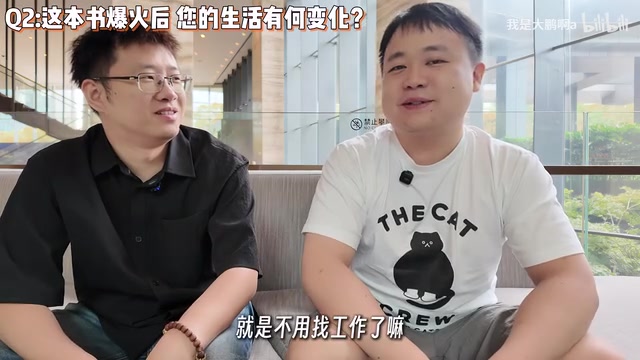
His first book, I Have an Apartment in the Apocalypse, was written during college, and his first month's royalties were 4,000 yuan—four times his living expenses. "I grabbed the opportunity of the era right away," Chenxing LL said. From then on, he never looked for a job, nor did he go "into the wild" at a geological department.
The Clarity Behind "One Hit, One Miss"
To outsiders, Chenxing LL is a "naturally gifted author" who hits it big with every book. He corrects that himself: "Overall, it's more like one hit, one miss."
That clarity runs through the entire interview. When asked whether early fame went to his head, his answer is simple: "My life didn't change much after getting famous. My hobbies are just gaming and reading novels." Do his friends envy him? He says, "Not really—I think they're doing pretty well too."
On talent, he gives a fifty-fifty assessment: "Half talent, half hard work. I scored pretty high on essays as a kid." But more crucial is his command of writing rhythm—when writing apocalypse fiction, he "goes with the feel," but he always writes an outline, and it's a dynamically refined one.
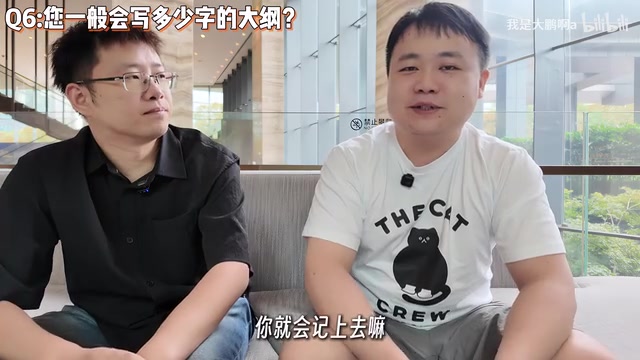
"At first it might only be ten or twenty thousand words. Later, as the plot develops and the worldbuilding grows, I'll add it in." This "refine as you go" outline is the foundation of his consistent output. What does he do when he hits a block? "Hitting a block means it's time to write the outline." As for calling in sick—"Most of the time I'm actually sick."
Dynamic outlining is a common creative method among web novel authors, as opposed to a "static outline" (writing out all plot points before starting). It typically contains only core settings, main characters, and key turning points, running about ten to twenty thousand words, and is continuously supplemented with new settings and foreshadowing as serialization progresses. The advantage of this method is flexibility—it allows adjusting the plot based on reader feedback and writing inspiration, while avoiding the rigidity that comes from an overly detailed outline. Chenxing LL emphasizes that "hitting a block means it's time to write the outline" precisely because a block often means the existing settings aren't enough to support subsequent plot, and one needs to go back and sort out the logic and fill in prerequisites rather than forcing the writing.
This Game Is Too Realistic: The Narrative Challenge Behind 100,000 Average Subscriptions
This Game Is Too Realistic is the work Chenxing LL is most satisfied with: "It basically finished writing out all my ideas about apocalypse and wasteland fiction." The book's subscription surge came around chapter 500, starting at 13,000 first-day subscriptions and climbing all the way to 100,000 average subscriptions.

But the writing process wasn't easy. He points out the core contradiction of "Fourth Calamity" fiction: "There's a fundamental identity split between players and the world's natives. Some people treat it as a game, while others are living, breathing people. If you look at players from the natives' perspective, you can't bring yourself to like them, because they aren't seriously managing these things."
The solution requires a "grand narrative" to unify both sides. This sensitivity to narrative structure comes from his judgment about reader experience: "The most satisfying stage of a farming/settlement novel is when you've achieved something small but haven't flown too high—fly too high and people can't follow anymore."
Fourth Calamity fiction is a colloquial term in web novel circles for stories about "players invading another world." These stories typically set up a real otherworld that players enter as game characters, with privileges like resurrection and system panels, while the natives are NPCs living real lives. The core appeal is players using game mechanics to "cause chaos," but that's also the difficulty: players treat the world as a game, while the natives bear the real consequences—the two operate on inherently conflicting logic. The "identity split" Chenxing LL mentions is a common flaw of the genre, and the solution often requires introducing a higher-dimensional threat or goal that forces players and natives to cooperate, thereby stitching the narrative rift back together.
Accurately Predicting International Affairs? The Author's "Jinx" and the Book Ban Incident
The most dramatic segment of the interview concerns I Have an Apartment in the Apocalypse accurately predicting international affairs. Chenxing LL's first reaction was: "Great, my book's going to get banned again." Sure enough, the book was blocked for a long time.

He admits that when writing novels he reads the news, "and I might accidentally jinx it." As for how long it was banned, he can't remember clearly, "because it's an old book anyway." When Dapeng jokes that he might be a time traveler, Chenxing LL's answer carries a web novelist's unique clarity: "The world's development, though illogical, does conform to a certain degree of logic."
This understanding of the relationship between reality and fiction is actually part of his creative method. Writing apocalypse, wasteland, and Fourth Calamity fiction—on the surface it's fantasy, but underneath it's a deduction of how society operates.
Web novel bans usually refer to works being blocked or removed by platforms due to content violations, with common reasons including politics, pornography, and violence/gore. For fictional plots involving real international affairs, if they are highly similar to real events, they may be judged as "alluding to reality" and trigger censorship. Chenxing LL's I Have an Apartment in the Apocalypse was blocked because its plot happened to coincide with subsequent international events—a typical "jinx"-style ban, where the author had no subjective intent to violate rules, but the content objectively formed a prediction of reality, and the platform blocked it first out of risk control. Such incidents are not rare in web novel circles, and authors often avoid overly specific real-world mappings when writing.
What's Next: Hybrid Genres and Player Perspective
Having just finished My Demon Lord Is Unfathomable, Chenxing LL gives himself an eight out of ten ("six is too low"). On his new book plans, he reveals two directions.
First, hybrid genres: "Combining a genre I'm familiar with and a genre I haven't written before." Second, continuing Fourth Calamity but switching perspectives: "I'm leaning toward writing from the protagonist-as-player perspective—like clearing a game and getting a trait, then returning to the first day of the server launch. But that kind of premise seems to be written a lot. I'm thinking about whether there's an angle nobody has written before."
The new book is scheduled for "next year," because he needs to "get married first."
At the end of the interview, he recommends What Immortal Cultivation on No Money, "it's pretty unhinged, which matches my mental state." Looking back on his web novel career, what impressed him most wasn't the 100,000 average subscriptions, but the surprise of his first contract: "I never expected to become a writer."
Three Takeaways for Creators
From Chenxing LL's experience, several lessons of reference value for content creators can be extracted:
First, seize early positive feedback. The 4,000 yuan in royalties in the first month made him decide to keep writing—that early feedback drives a person forward more than any long-term plan.
Second, outlines are dynamic, not one-time. Starting from ten or twenty thousand words, continuously refining as the plot develops, and going back to supplement the outline when blocked—this method is more realistic than "writing the entire outline before starting."
Third, respect readers but don't cater to individuals. Roommates' opinions can't be directly adopted because "your readers won't necessarily all like it." But readers' overall feedback on pacing—when farming/settlement fiction is most satisfying—is the signal he truly cares about.
In the vast web novel universe, Chenxing LL's path is hard to replicate, but his methodology can be broken down. Behind that sophomore-year book that "somehow got signed" is an author with clear judgment about narrative rhythm, reader experience, and the boundaries of his own abilities. So-called overnight fame is never just luck.
Related articles

Hermes Agent Beginner's Guide: Hands-On with a Self-Evolving AI Agent
A beginner's guide to Hermes Agent, the open-source self-evolving AI agent that gained 41.7K GitHub stars in two months—covering Harness Engineering, the learning loop, three-layer memory, WSL installation, and hands-on configuration.

AI Agent in Action: Building a Smart Office Assistant with WorkBuddy
A practical case study shows how Tencent WorkBuddy batch-converts and archives files, compares chat LLMs with AI Agents, and analyzes WorkBuddy's credit system, use cases, and positioning for office automation selection.

From Single-GPU Bottlenecks to Hundreds of Billions of Parameters: 6 Key Questions in Large Model Distributed Parallelism
Based on a Bilibili tutorial, this article organizes core knowledge of large model distributed parallelism: starting from decoder-only architecture's token-by-token generation and the essence of X times W computation, it analyzes six key questions including data parallelism, tensor parallelism, and pipeline parallelism under single-GPU bottlenecks. Suitable for learners in private deployment and model training scenarios to build systematic understanding.