Chips Can Reach Space, but Can the Financing Keep Up?
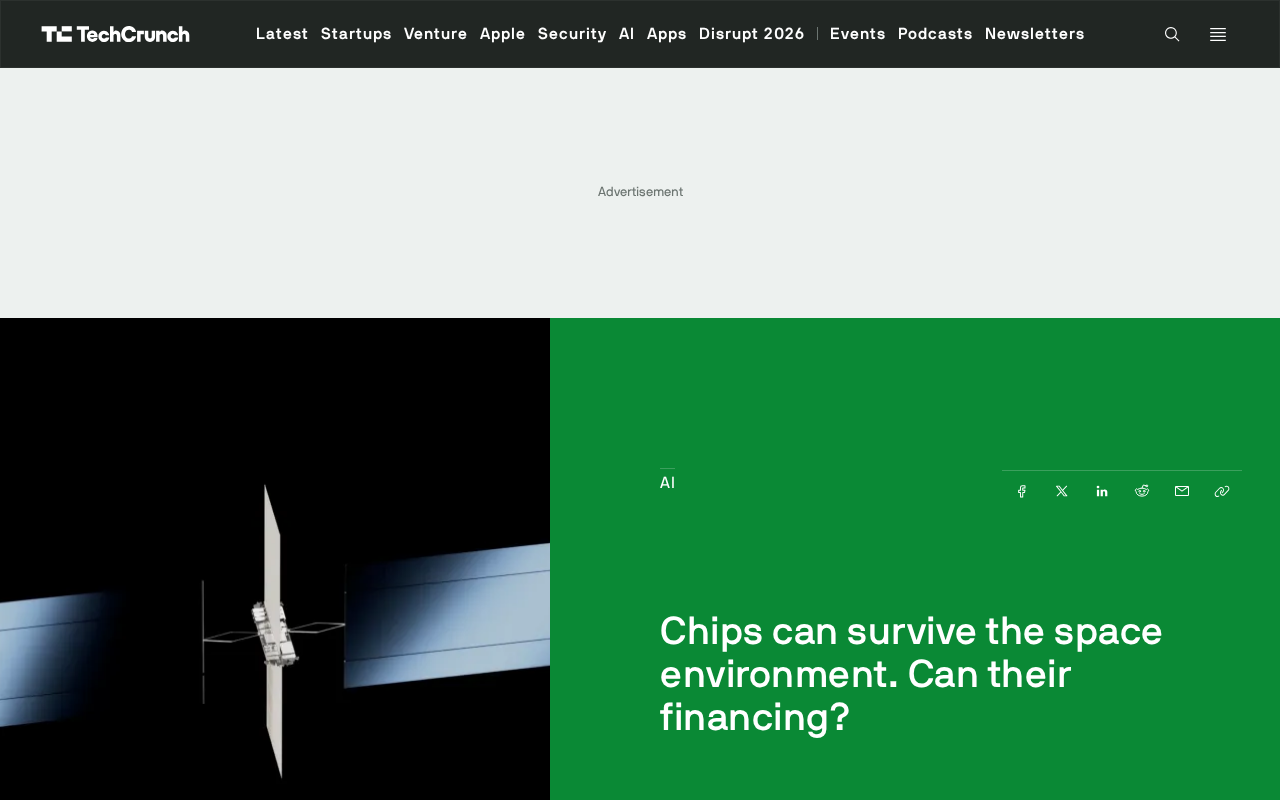
The technical bottleneck of space data centers has given way to a financial one: in-orbit assets cannot be controlled or disposed of by lenders.
The article notes that the engineering feasibility of space data centers has been repeatedly validated, with clear solutions for radiation-hardened chips, thermal management, and power supply, but the real bottleneck has shifted to the capital side. Lenders are unwilling to lend against chips sent into orbit, chiefly because after launch the collateral leaves the legal jurisdiction and cannot be controlled or disposed of. Technical durability does not translate into financial liquidity, and incomplete space insurance coverage makes risk hedging difficult. Short-term financing friction will favor players with their own cash flow or government backing; medium-term solutions may require service contracts instead of hardware collateral and risk-layering innovations.
When space data centers move from science fiction to engineering, the real bottleneck may not be radiation-hardened chips, but whether banks are willing to lend against "in-orbit assets."
When a Chip Is Worth More Than a Satellite, Who Will Guarantee It?
Radiation-hardened chips, onboard compute modules, orbital-grade storage—what sounds like aerospace engineering jargon is now showing up in collateral clauses in financial contracts. According to reports from RSS sources, lenders have shown marked caution about sending SpaceX payloads into orbit: they are not worried that the chips will fail in vacuum and radiation environments, but that in the event of default, they will have no asset they can seize and dispose of.
This contradiction points to the most easily overlooked link in the space data center boom: hardware feasibility has been repeatedly validated, but asset bankability remains on paper. A chip surviving single-event upsets and extreme temperature swings does not mean it can survive a balance sheet.
The Real Bottleneck of Space Data Centers: From an Engineering Problem to a Financial One
Over the past few years, discussion around space computing has centered on the technical side: radiation hardening, thermal management, solar power, and laser downlink bandwidth. These topics all have clear research paths and engineering solutions, and the industry consensus is that "it can be built—it's just a matter of cost and iteration speed."
But once the perspective shifts to the capital side, the problem immediately changes. The value anchors of ground data centers are land, power contracts, and rack density—all of which can be assessed, pledged, and auctioned. What are the value anchors of in-orbit assets? A chip module that is still in the sky, requires a specific orbital window to communicate, and is extremely expensive to repair is nearly impossible for creditors to price.
The core concern mentioned in the report is blunt: lenders are unwilling to let SpaceX shoot their collateral into orbit. The subtext of this sentence is that the launch itself is the moment the collateral slips out of control—from that moment on, control of the asset shifts from a legal jurisdiction on Earth to a physically unreachable location.
Why the "Durability" of Radiation-Hardened Chips Failed to Convince the Financial Side
Technical Lifespan and Asset Lifespan Are Not the Same Thing
The design goal of radiation-hardened chips is to "continue working in harsh environments for a number of years," which is a technical metric. What the financial side cares about is "whether it can be quickly liquidated in a default scenario," which is a liquidity metric. There is no natural correspondence between the two.
A chip that can operate stably in orbit for years may attract no buyers on the secondary market, because buyers need a supporting onboard platform, frequency licenses, and ground station resources. Technical durability actually exacerbates the difficulty of asset disposal—it won't break, but it's also hard to sell.
Single-event upset (SEU) is a phenomenon in which high-energy particles in the space radiation environment (protons, heavy ions, etc.) strike sensitive nodes of semiconductor devices, causing non-destructive flipping of memory cells or logic states. It does not permanently damage the chip, but it can cause erroneous computation results, abnormal instructions, or even system crashes, and is one of the most common and most critical radiation effects to guard against in aerospace electronics design. In engineering, it is usually mitigated through redundant design, error-correcting codes (ECC), watchdog timers, and periodic refresh. For the financial side, the recoverability of SEU precisely shows that the "durability" of radiation-hardened chips is a durability that requires continuous operational support, rather than an asset attribute that is set-and-forget—a fundamental difference from ground equipment depreciation models.
The Absence of Insurance and Reinsurance
Ground data centers have a mature system of property and liability insurance, while space assets rely on specialized space insurance, whose coverage, deductible clauses, and claims cycles differ from those of conventional assets. When the insurance chain for collateral is incomplete, lenders' risk exposure cannot be effectively hedged, and financing willingness naturally declines.
Space insurance is usually divided into three major categories: launch insurance, in-orbit life insurance, and third-party liability insurance, with coverage spanning launch failure, partial failure, and in-orbit malfunction. Its pricing is highly dependent on launch history data, satellite platform reliability records, and catastrophe risk concentration for a single insured event; market capacity is limited, and the reinsurance chain is long. Unlike ground property insurance, space policies often have higher deductibles, longer claims cycles, and strict standards for determining "partial loss." When in-orbit assets are used as collateral, lenders need protection that covers asset impairment losses in default scenarios, and existing space insurance types do not naturally fit this need—this is precisely the key gap that makes the risk layering structure difficult to close.
What This Means for the Space Computing Industry
In the short term, this financing friction will push the pace of space data centers toward two types of players: aerospace companies with their own cash flow that can backstop with the parent company's balance sheet, and projects with government or defense contracts backed by stable payers. Independent space computing companies launched purely on venture capital and project finance will encounter more resistance in their capital structure.
In the medium term, the industry may need a new asset classification and valuation framework. For example, "in-orbit computing power" could be split into independently tradable service contracts rather than treating the hardware itself as collateral; or the launch provider, operator, and insurer could jointly bear the risk layering during the asset's in-orbit period. Such structures already have precedents in ground infrastructure financing, and transplanting them to space scenarios will require coordination with regulatory and accounting rules.
Interestingly, the business logic of space data centers itself has not been refuted. The report lands on a more specific question: when chips have proven they can survive in the space environment, can their financing structure also survive? The answer to this question may determine the actual pace of this track more than any radiation test.
Project finance is a financing method that uses the project's own cash flow and assets as the source of repayment, relying on limited-recourse or non-recourse structures, and is widely used in infrastructure such as power plants, toll roads, and data centers. Its core premise is that project assets can be independently valued, cash flow can be locked in by contract, and assets can be taken over and disposed of in default. If space data centers adopt project finance, they need to overcome three obstacles: in-orbit hardware cannot be physically controlled by creditors, service revenue contracts lack long-term creditworthy counterparties, and asset residual value is difficult to assess. This is also why the article notes that the industry may shift toward structural innovation such as "service contracts" rather than "hardware collateral."
One-line Summary
The technical bottleneck of space data centers has given way to a financial one: in-orbit assets cannot be controlled or disposed of by lenders.
Paragraph Summary
The article points out that the engineering feasibility of space data centers has been repeatedly validated—radiation-hardened chips, thermal management, and power supply all have clear solutions—but the real bottleneck has shifted to the capital side. Lenders are unwilling to lend against chips sent into orbit; the core concern is not chip failure, but that after launch the collateral leaves the legal jurisdiction and cannot be controlled or disposed of. There is no correspondence between the technical durability of radiation-hardened chips and the liquidity of financial assets; instead, high supporting requirements exacerbate disposal difficulty. The incomplete coverage of the space insurance system also makes lenders' risk exposure difficult to hedge. Short-term financing friction will push the track toward players with their own cash flow or government contract backing, while in the medium term structural innovations such as replacing hardware collateral with service contracts and establishing risk layering may be needed.
Related articles

Nothing CMF Buds 2A Drops to $17.89 on Black Friday: A New Low for ANC Earbuds
Nothing CMF Buds 2A wireless earbuds Black Friday deal: just $17.89 on Amazon, about $11 off retail and a record low. ANC earbuds at an entry-level price.

When AI Creation Gets Accused of "Spitting": Hacker News Heats Up Over the Glaude Controversy
A Hacker News post, "Spitting in the Face of Glaude," sparks debate on AI creation transparency and attribution ethics. This analysis examines the blurred creator identity behind the controversy and offers practical advice for AI content production.

Akai Embraces Custom Firmware: MPC Sample 1.4 Lets Users AI-Program Their Sampler
Akai embraces the modding community with MPC Sample 1.4 firmware, supporting vibe-coded custom firmware and effects. We analyze the impact of this open strategy on music hardware and AI-assisted programming.