Chrome Lighthouse Integrates with AI Agent: Automatically Diagnose and Fix Website Performance and Accessibility Issues

Chrome DevTools now uses AI Agents to automatically run Lighthouse audits and fix the issues found.
Google has integrated Lighthouse into Chrome DevTools' AI Agent workflow, powered by Gemini. Developers can now delegate performance, accessibility, and SEO audits to an AI Agent that not only diagnoses issues but autonomously fixes them in source code. The update also introduces a new "Agentic Browsing" audit category, preparing websites for an era where AI Agents—not just humans—browse the web.
Lighthouse Enters the AI Agent Era
For years, Lighthouse has been a core tool for frontend developers to optimize website performance, accessibility, and SEO. Originally released by Google in 2016, Lighthouse is an open-source automated auditing tool built into Chrome's DevTools, and can also run independently via the command line or as a Node.js module. Its audit system covers five key dimensions: Performance, Accessibility, Best Practices, SEO, and Progressive Web Apps (PWA). Each dimension receives a composite score from 0 to 100, along with specific audit items and improvement recommendations. Over the years, Lighthouse has become an indispensable part of frontend engineering workflows, with many teams integrating it into their CI/CD pipelines as a quality gate before code merges.
It generates a comprehensive audit report telling you what's wrong—slow page loads, insufficient color contrast, missing image descriptions, and more. But the problem has always been this: Lighthouse only handles the "diagnosis." The actual "treatment" still falls on the developer to carry out manually.
Now, that's changing. Google has announced the direct integration of Lighthouse into Chrome DevTools' AI Agent workflow. The AI Agent here refers to the intelligent assistant built into DevTools, powered by Google's Gemini large language model. Unlike traditional conversational AI, the Agent has "tool-calling" capabilities—it can proactively operate various DevTools panels and features, read contextual information like the page's DOM structure, network requests, and console logs, then make decisions and take action based on that information. This capability relies on a protocol design similar to MCP (Model Context Protocol), enabling the AI model to interact bidirectionally with development tools in a structured way.
This means you no longer need to review failed audit items one by one, then manually copy and paste them into an AI assistant for fix suggestions. You can simply tell the AI coding Agent: "Run a Lighthouse check for me and fix all the issues you find."
This "diagnose-and-fix" closed loop represents a textbook example of how development tools are evolving from "manual operation" to "Agent automation."
From Manual Copy-Paste to One-Click Delegation
In the traditional workflow, the developer's optimization path typically looks like this: open DevTools and run Lighthouse → get the report → read through failed items one by one → search online for solutions or paste them into an AI → go back to the code and make manual changes → run the audit again to verify. This cycle often requires multiple iterations, making it both tedious and error-prone. Statistics show that a moderately complex website typically flags 20 to 50 audit issues of varying severity on its first Lighthouse run, and many of these fixes are highly formulaic—such as adding alt attributes to images, setting the correct meta viewport tag, or enabling text compression. This kind of repetitive work is exactly where AI Agents deliver the most value.
With the new integration, the AI Agent can directly invoke Lighthouse's auditing capabilities, read the results, and autonomously locate and fix issues in the source code. The entire process shifts from "humans shuttling information back and forth" to "humans declare intent, Agents execute."

The value of this model goes beyond saving time—it also lowers the barrier to optimization. For developers who aren't well-versed in accessibility standards or performance tuning details, the Agent is essentially an on-call senior engineer who can both diagnose and fix issues. This is especially important for solo developers and small teams, who often lack dedicated performance engineers or accessibility specialists. The Agent fills exactly that capability gap.
What Lighthouse Issues Can the AI Agent Automatically Fix?
According to official demos, the AI Agent can already handle several common categories of Lighthouse audit failures. Here are two typical scenarios.
Missing Method Descriptions
Many websites have information gaps at the structured data, API documentation, or code comment level, which affects maintainability and certain aspects of SEO performance. For example, when using Schema.org structured data markup, if key properties (such as description, name, author) are missing, search engines can't generate Rich Snippets, directly impacting the page's click-through rate in search results. Similarly, at the code level, JavaScript functions or API endpoints lacking JSDoc comments not only reduce code readability but also affect IDE features like intelligent hints and auto-completion. The Agent can identify these gaps and fill in the appropriate descriptions, automatically generating accurate text by analyzing contextual semantics—saving developers from hunting down each missing item.

Color Contrast Issues
One of the most common issues flagged in Accessibility audits is insufficient contrast between text and background, which directly affects the reading experience for users with visual impairments. "Contrast ratio" here is a precise mathematical concept: according to WCAG (Web Content Accessibility Guidelines) standards, color contrast is calculated from the relative luminance of two colors, ranging from 1:1 (no contrast) to 21:1 (maximum contrast, i.e., black and white). WCAG 2.1's AA level requires a minimum contrast ratio of 4.5:1 for normal text and 3:1 for large text (bold 18px or 24px and above); the stricter AAA level requires 7:1 and 4.5:1 respectively. Globally, accessibility has evolved from a "recommended practice" to a legal requirement—the EU's European Accessibility Act will take full effect in 2025, and the U.S. ADA (Americans with Disabilities Act) has already brought website accessibility within its enforcement scope.
The Agent can automatically detect elements with insufficient contrast and adjust color values to meet WCAG standards. Specifically, the Agent fine-tunes the luminance of either the foreground or background color while staying as close to the original color as possible, until the target contrast ratio is met.

These seemingly trivial yet frequently overlooked details are exactly the kind of scenarios that AI Agent tools excel at handling in bulk.
A New Audit Category Built for the Agentic Web
A notable highlight of this update is Lighthouse's addition of a dedicated "Agentic Browsing" audit category.
This change reflects an emerging trend: in the future, it won't just be human users visiting websites—there will be a growing number of AI Agents as well. When AI assistants browse web pages, extract information, and complete tasks on behalf of users, whether a website is "friendly" to these automated visitors becomes an entirely new optimization dimension.
This new category aims to ensure websites are adequately optimized for the "agentic web"—whether the content structure is clear, semantic markup is complete, and key information is easily parseable by machines. Specifically, this involves considerations across multiple technical layers: Semantic HTML requires using tags like <nav>, <main>, <article>, and <section> instead of semantically meaningless <div> nesting, making the page's information hierarchy clearly visible to machines; structured data markup (such as Schema.org annotations in JSON-LD format) enables AI Agents to understand the type and relationships of page content in a structured way—for example, whether it's an article, a product page, or an event listing; ARIA attributes (Accessible Rich Internet Applications) provide additional semantic information, helping Agents understand the state and purpose of dynamic interactive components. Additionally, traditional machine communication protocols like robots.txt and sitemap.xml also need to be updated and optimized for AI Agent crawling patterns. Looking ahead, we may see new protocols like agents.txt specifically designed for declaring a website's policies and capability statements for AI Agent access.
In essence, the target audience for website optimization is expanding from "humans + search engine crawlers" to a three-party landscape of "humans + crawlers + AI Agents."
What the Lighthouse AI Integration Means for Developers
Deeply integrating Lighthouse into the Agent workflow represents a substantive step for Chrome DevTools toward becoming an "AI-native development tool." This move isn't an isolated event—it's a microcosm of the entire development tools industry's shift toward AI-native design. The competitive landscape for AI coding tools is evolving rapidly: GitHub Copilot has expanded from code completion to Copilot Workspace (automated development workflows), AI-first IDEs like Cursor and Windsurf deeply embed models into every aspect of the editor, and Anthropic's Claude has introduced Computer Use capabilities that let AI directly operate desktop applications. Google injecting AI Agent capabilities into DevTools is essentially building its own AI-native moat on the critical battleground of browser development tools.
It sends several clear signals:
First, tools are shifting from displaying information to executing tasks. Development tools of the past leaned toward "showing you data," while the current trend is "getting things done for you." In software engineering, this transition is described as a leap from "Observability Tools" to "Autonomous Action Systems." Traditional DevTools belong to the former—they collect and present information, with all decisions and execution depending entirely on humans. Agent-powered DevTools are evolving toward the latter, where the system can not only perceive problems but also take autonomous action.
Second, the developer's role is moving up the stack. When repetitive diagnostic and fix work can be delegated to an Agent, developers can invest more energy in architecture design, product logic, and creative work. This aligns with the broader trend of "abstraction level elevation" in software engineering—from machine language to assembly, from C to Python, from hand-written CSS to design systems. Each rise in abstraction level enables developers to think and create at a higher level.
Third, optimizing websites for AI Agents will become the new standard. Just as we once adapted for mobile devices and optimized for search engines, optimizing for AI Agents is likely to become a required skill for every frontend developer. Looking back at internet history, when Google introduced Mobile-First Indexing around 2010, responsive design went from "nice to have" to "must have." Now, as AI products like ChatGPT, Perplexity, and Google AI Overview increasingly access and parse web content on behalf of users, being "Agent-friendly" is becoming the next must-have.
Of course, Agent-powered auto-fixing isn't a silver bullet. Issues involving complex business logic or visual design trade-offs still require human review. For example, the Agent might adjust a brand color to something that doesn't conform to design guidelines just to meet contrast standards, or it might misinterpret domain-specific semantics when fixing structured data. In these scenarios, the developer's professional judgment and final sign-off remain irreplaceable. But for standardized audit items with clear specifications, delegating them to the Agent undoubtedly brings a massive boost in efficiency.
Developers who are interested can watch the full Developer Tooling Tips series, which provides specific example prompts to help you get started with this new workflow more quickly.
Related articles

A World First in Australia: Delivery Riders to Receive Minimum Wage Guarantee
Australia introduces the world's first minimum wage guarantee for delivery riders, balancing gig flexibility with income protection. Explore the agreement's details, platform impacts, and global regulatory trends.
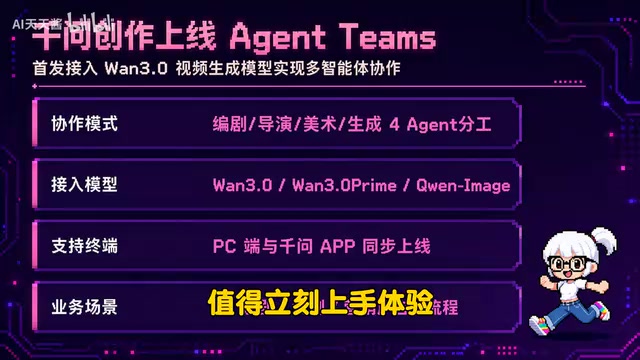
DeepSeek Open-Sources Its First Vision Model, Dramatically Lowering the Bar for Multimodal Agents
DeepSeek open-sources V-Flash-Vision-XP, its first vision model rivaling top closed-source models; Alibaba launches multi-agent video creation; sub-$400 bipedal robot goes open-source.
ReactOS 0.4.16 Released: Graphical Installer, 3D Hardware Acceleration, and Broader Hardware Support
ReactOS 0.4.16 ships with a new graphical installer, real hardware GPU 3D acceleration, and broader hardware compatibility for this Windows NT-compatible open-source OS.