Citroen Revives the 2CV: A Classic People's Car Enters the Electric Era

Citroen plans to revive the classic people's car 2CV as an EV for Europe's affordable electric market.
Citroen is planning to revive its most iconic model, the 2CV, in electric form. The EV is expected to keep the original's boxy shape, minimalist interior, and lightweight philosophy, targeting Europe's entry-level affordable EV market. The move is both a nostalgia play and a market positioning strategy as Europe shifts toward affordable EVs, though competition and cost pressures remain significant.
Citroen Revives the 2CV: A Classic People's Car Enters the Electric Era
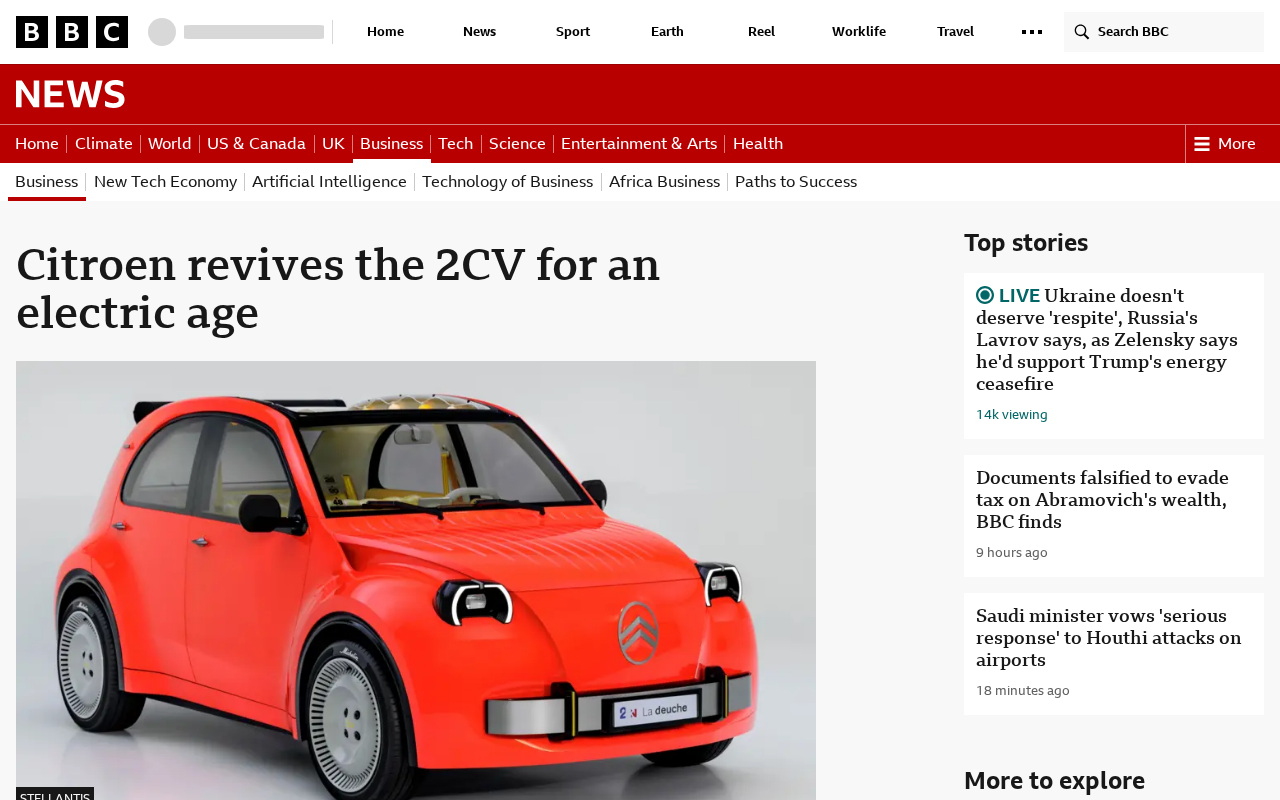
According to discussions in the Hacker News community and RSS feed reports, Citroen is planning to revive its most iconic model in history—the 2CV—in electric form. This people's car, once described as "four wheels and an umbrella," may return with a completely new look in the electric era.
The 2CV's Historical Significance and the Meaning of Its Revival
The 2CV (Deux Chevaux) was an economy car launched by Citroen after World War II, and it swept across Europe for decades thanks to its minimalist design, low price, and outstanding practicality. It was originally designed so that ordinary farmers could afford a car—one that could carry people, haul goods, and handle rough country roads. This "good enough is enough" philosophy stands in sharp contrast to the current trend of EVs chasing huge screens and long range.
Citroen's decision to revive the 2CV is no accident. In recent years, demand for small, affordable EVs in Europe has continued to rise, and the 2CV's brand appeal is perfectly suited to support an affordable EV. This strategy follows the same logic as Renault's revival of the Renault 5 and Volkswagen's revival of the ID.Buzz.
The electric revival of the Renault 5 is an important reference point for understanding this trend. The Renault 5 was one of France's best-selling people's cars from the 1970s to the 1990s, and together with the 2CV it became a symbol of the democratization of the French auto industry. In 2021, Renault announced it would revive the Renault 5 as a pure EV, and in 2024 it officially launched the production version, the Renault 5 E-Tech Electric, positioned in Europe's entry-level EV market with a starting price of about 25,000 euros. Upon release, the model drew intense attention from European media and consumers, with orders far exceeding expectations.
The Volkswagen ID.Buzz represents another path: rather than reviving an affordable small car, it reinterprets the image of the classic T1 microbus on an electric platform, positioned toward lifestyle appeal and nostalgic premium pricing at a higher price point.
These two paths show that electric revivals of classic models can take either the "affordable and practical" route (like the Renault 5) or the "nostalgic premium" route (like the ID.Buzz). The revival positioning of the Citroen 2CV is clearly closer to the former—using a classic IP to tap into a price-sensitive entry-level market rather than simply selling nostalgia. The prerequisite for success with this strategy is that the product must genuinely win over ordinary consumers on price and practicality; otherwise, the classic IP may instead accelerate the erosion of brand trust because it fails to live up to its name.
Electrification Concept and Product Direction
According to information revealed in community discussions, the electric 2CV is expected to retain the original's boxy shape and minimalist interior, while shifting entirely to pure electric power. Core selling points may include:
- Affordable pricing: Positioned in Europe's entry-level EV market, targeting urban commuting and second-car needs
- Lightweight design: Continuing the original's lightweight body philosophy to reduce battery costs and improve efficiency
- Retro-modern fusion: Keeping iconic elements such as the canvas roof and round headlights while adding modern safety features
From a technical perspective, lightweight design is key to the electric 2CV. The original 2CV weighed only about 500 kilograms. If the electric version can be kept around 1,000 kilograms, it could achieve acceptable range even with a smaller battery while significantly reducing manufacturing costs.
The impact of lightweight design on EV range deserves a more specific explanation. An EV's driving range is determined jointly by battery capacity and overall vehicle energy consumption, and overall energy consumption is strongly positively correlated with vehicle weight. Based on industry experience, for every 100 kilograms of weight reduction, energy consumption per 100 kilometers can drop by about 0.5–1 kWh, corresponding to roughly 5–10 kilometers of additional range, depending on the model and driving conditions.
The original 2CV weighed only about 500 kilograms. If the electric version can be kept around 1,000 kilograms, that would be nearly half the weight of today's mainstream EVs, which generally range from 1,600 to 2,200 kilograms. This means:
- A small battery of around 40 kWh could deliver 300-kilometer-class range under WLTP, enough to cover urban commuting and short trips
- Battery costs could be greatly reduced—the battery is usually the single most expensive component of an EV, so using less of it directly lowers the vehicle's overall cost
- Wear and tear on tires, brakes, and other components would also be lower, reducing users' long-term ownership costs
This is precisely the continuation of the 2CV's "good enough is enough" philosophy in the electric era: not chasing ultra-long range, but achieving a balance among cost, efficiency, and practicality through extreme lightweighting.
Market Background and Competitive Landscape
Europe's EV market is undergoing a turn toward affordability. As subsidies in various countries phase out, consumer acceptance of high-priced EVs has declined, and small, affordable EVs have once again become the focus. Citroen's revival of the 2CV at this moment is both a brand nostalgia play and a market positioning move.
That said, the challenges are equally obvious: profit margins for affordable EVs are limited, while manufacturing costs in Europe remain high. Citroen needs to find a balance among cost control, supply chain management, and brand premium. In addition, the advance of Chinese brands such as BYD and Wuling in Europe's small EV market is intensifying competition in this segment.
The phaseout of European EV subsidies is a key backdrop for understanding the current market shift. From late 2023 to 2024, major European markets including Germany and France successively cut or canceled EV purchase subsidies: Germany abruptly ended private EV subsidies in December 2023, while France tightened subsidy eligibility, excluding China-made models. The subsidy phaseout directly slowed the growth rate of EV sales in Europe, and consumers' willingness to buy high-priced EVs clearly declined.
At the same time, Chinese brands' advance in Europe's small EV market has continued to strengthen. Models such as the BYD Dolphin and Seagull have entered the European market with strong value for money, while Wuling has captured the entry-level market with even lower-priced models. These models have a significant price advantage and pose direct pressure on the entry-level products of European brands.
The timing of Citroen's 2CV revival happens to fall at this turning point: on one hand, the subsidy phaseout has increased demand for affordable EVs; on the other, competition from Chinese brands has created unprecedented price pressure. This means the electric 2CV must be priced competitively enough while still maintaining the quality and brand premium of European local manufacturing—an extremely narrow balance to strike.
Editorial View
The electric revival of the 2CV is a typical move of "using a classic IP to attack a new market." Its success depends not only on the product itself, but even more on whether Citroen can truly understand the spiritual core of the 2CV—not a nostalgic symbol, but the pragmatism of "making it affordable for ordinary people to buy and use." If the electric 2CV is just an ordinary EV wrapped in a retro shell, its significance will be greatly diminished.
At present, the relevant information mainly comes from community discussions and RSS sources. The specific launch timing, technical specifications, and pricing strategy have not yet been officially confirmed, and they are worth continued attention.
One-line Summary
Citroen plans to revive the classic people's car 2CV in electric form, positioning it in Europe's affordable EV market.
Paragraph Summary
Citroen is planning to revive its most iconic model in history, the 2CV, in electric form. This people's car, once praised as "four wheels and an umbrella," may return in the electric era. The electric version is expected to retain the original's boxy shape, minimalist interior, and lightweight philosophy, positioned in Europe's entry-level affordable EV market and targeting urban commuting and second-car needs. Citroen's move is both a brand nostalgia play and a market positioning move—Europe's EV market is turning toward affordability, and the phaseout of subsidies has made small affordable cars the focus again. But the challenges are equally clear: affordable EVs have limited profits, European manufacturing costs are high, and competition from Chinese brands such as BYD and Wuling is intensifying. At present, the information mainly comes from community discussions, and the official details have not yet been confirmed.
Related articles

OpenAI Partners with Shield: How the Astra Agent Revolutionizes IT Troubleshooting
OpenAI and Shield launch the Astra agent, which autonomously logs into computers and legacy systems to fix IT issues in real time, 35-40% faster than traditional models, with humans involved only when judgment is needed.

iPhone Duo Battery Life Tested: One Charge a Day Is Unavoidable, and the Large Screen Is the Culprit
iPhone Duo battery test: heavy use needs at least one charge a day, and about 30% remains after 6.5 hours of screen-on time. How often the large screen is unfolded is key; a MagSafe battery pack helps, and long-term degradation is also worth watching.

Kimi K3.1 Pro Open-Sourced: 2.8 Trillion Parameters Close In on Opus
Moonshot releases the open-source MoE model Kimi K3.1 Pro, with 2.8T total parameters and 104B activated, trailing Opus 5.5 by under 1 point on Terminal Bench 4.0.