Claude 3.8 Quietly Goes Live: PRO Users Get First Access via Gradual Rollout
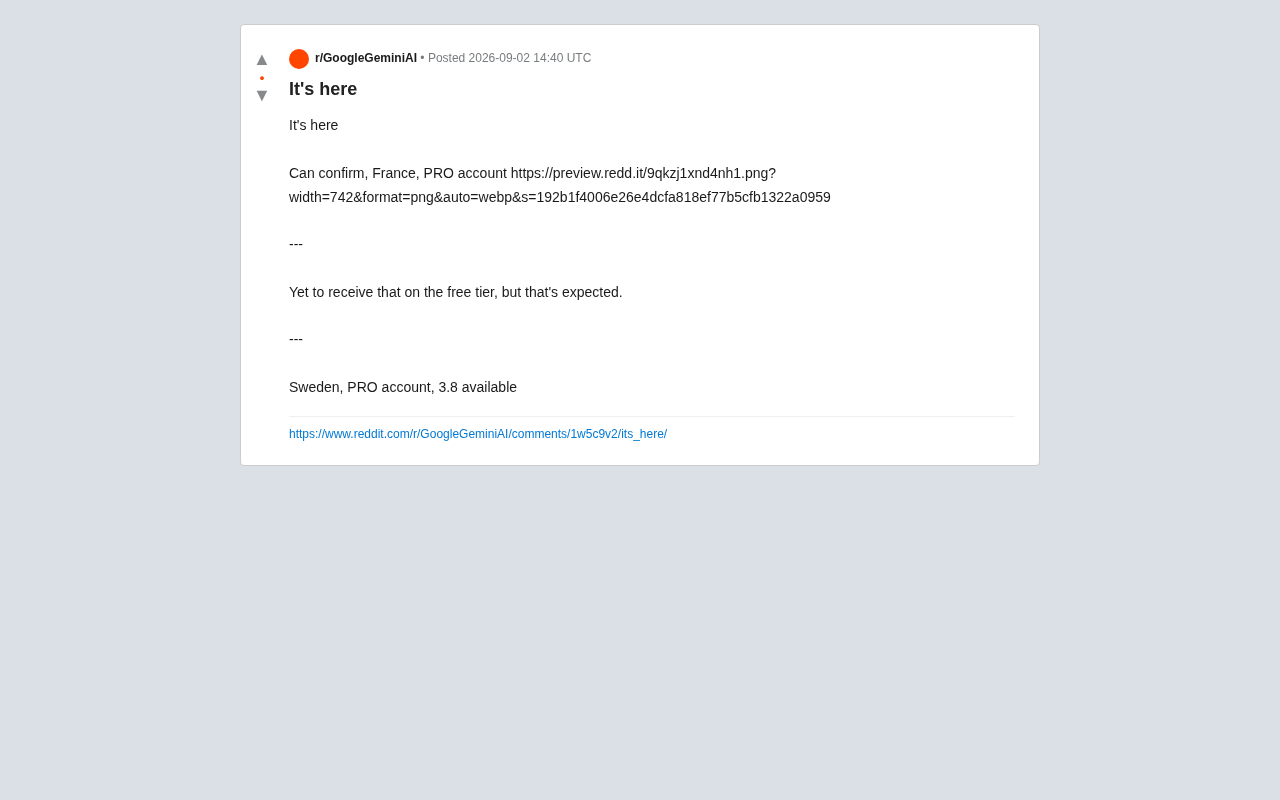
Claude 3.8 silently rolls out to PRO users first via gradual gray release across multiple regions.
Anthropic has quietly begun rolling out Claude 3.8 to PRO subscribers through a gray (canary) release strategy, with users in France, Sweden, and other regions confirming access. Free-tier users have not yet received the update. This phased approach helps control compute costs, gather quality feedback, and reinforce subscription value. Community evaluations are expected to reveal the model's real-world improvements in the coming days.
New Model Silently Pushed to PRO Users First
Recently, a wave of discussions about a new Claude model surfaced on Reddit. Multiple users reported that a previously unannounced model version — labeled "3.8" — had appeared in their accounts. This change wasn't accompanied by any fanfare from Anthropic. Instead, it was silently rolled out, gradually opening access to select subscribers.
Since 2023, Anthropic has released multiple generations of Claude models. From Claude 1 laying the groundwork, to Claude 2 improving long-text processing, to the Claude 3 family in 2024 introducing a tiered product line with Haiku (lightweight), Sonnet (balanced), and Opus (flagship) — model capabilities have been continuously iterated. Claude 3.5 Sonnet subsequently delivered strong results across multiple benchmarks in code generation and reasoning tasks, and was considered on par with or even surpassing GPT-4-class models. If the Claude 3.8 version number is accurate, it may represent an important iterative milestone between 3.5 and the next flagship release, or a shift in Anthropic's naming conventions. This kind of non-integer version numbering is not uncommon in the industry — OpenAI has also used derivative names like GPT-4o and GPT-4 Turbo to distinguish different variants within the same model generation.
Based on community feedback, PRO (paid) account users were the first to gain access. A user from France confirmed: "Got it, France, PRO account," with a screenshot of the interface as evidence. Another PRO user from Sweden also reported that "Claude 3.8 is available." This consistent feedback across regions and users essentially confirms that the new version is undergoing a phased gray release.
Gray Release: The Classic "Paid First, Free Later" Strategy
Here's a detail worth noting: free-tier users have not yet received the update. One user explicitly stated: "Haven't gotten it on the free version, but that's expected."
It's worth explaining the technical background of gray releases here. A gray release, also known as a canary release, is a gradual rollout strategy originating from internet engineering practices. The name comes from the early mining practice of using canaries to detect toxic gases in mines — a small subset of users is exposed to the new version first, and if problems arise, the rollback can happen quickly without affecting the entire user base. In the large language model space, gray releases are particularly important because new models may exhibit increased hallucination, safety guardrail failures, or abnormal inference latency in certain scenarios — issues that often only surface under real user traffic. Major AI providers including Anthropic, OpenAI, and Google all employ similar strategies, typically combining A/B testing frameworks and feature flag systems to precisely control the rollout scope.
This phenomenon reflects the phased strategy commonly used by AI vendors when releasing new models:
Why Open to PRO Users First?
- Compute Cost Control: New models often have higher inference costs, and prioritizing paid users effectively manages the initial compute load. Inference cost is one of the core economic variables in AI provider operations. Unlike model training, which is a one-time large-scale investment, inference costs accumulate with every user request, primarily consisting of GPU compute time, memory usage, and network bandwidth, typically priced per million tokens. Larger, more powerful models generally require more computational resources — a model with double the parameters may need exponentially more floating-point operations (FLOPs) per inference. Prioritizing paid users for new model access is essentially an economic efficiency maximization decision within the constraints of limited GPU cluster resources.
- Risk-Controlled Validation: The paid user base is relatively stable, making it easier to collect high-quality feedback and quickly identify potential issues.
- Subscription Value Reinforcement: Early access to the latest capabilities is a core selling point of paid subscriptions, helping to improve user retention and conversion. Most mainstream AI products currently adopt a freemium model — offering basic free services to attract users while monetizing through paid subscriptions that unlock premium features. Anthropic's Claude Pro subscription is priced at $20 per month, matching OpenAI's ChatGPT Plus, and this price point has become an industry benchmark. The differentiated value of paid tiers typically includes higher message quotas, priority access to new models, and longer context windows. Notably, since 2024, several providers have introduced even higher-priced "super subscriptions" — such as ChatGPT Pro ($200/month) and Claude's Max plan — targeting heavy professional users with near-unlimited usage, signaling that AI subscription services are evolving toward finer-grained tiering.
This "paid first, free later" cadence has become standard practice for mainstream AI product iterations. Free users typically need to wait anywhere from several days to several weeks until the model's stability and costs are fully validated before general availability.
Regional Differences Behind the Phased Rollout
Based on current community reports, PRO users in European regions such as France and Sweden can already access the new Claude 3.8 version. This indicates that the rollout didn't start from a single region but covered multiple markets fairly broadly.
However, a hallmark of gray releases is "inconsistent experiences among users of the same tier" — even among PRO accounts, some users may have access while others are still waiting, depending on factors like account batch assignment and server region. The mechanisms behind this phased approach often rely on technical methods such as user ID hash bucketing, geographic routing, and data center load balancing, enabling vendors to precisely control the new version's coverage ratio across different dimensions. So if you're a paid user who hasn't seen the new version yet, there's no need to worry — just wait for the rollout to reach you.
How to Check Whether You've Received the Claude 3.8 Update
For users eager to try Claude 3.8 as soon as possible, here's how to check:
- Check the Model Selection Menu: In the model dropdown on the conversation interface, look for a new option labeled "3.8."
- Refresh or Re-login: Frontend caching can sometimes delay the appearance of new options. Try refreshing the page or logging out and back in.
- Confirm Your Subscription Status: Make sure you're on a PRO subscription — free users cannot access this version for now.
Summary and Outlook
Although this Claude 3.8 launch lacked an official announcement, consistent feedback from multiple PRO users across different countries is sufficient to confirm that the new version is steadily rolling out. This low-key gray release approach reflects Anthropic's cautious considerations around cost and stability, and aligns with industry norms.
For everyday users, the key question is: what tangible capability improvements does Claude 3.8 actually deliver? Better reasoning quality? Extended context length? Faster response times? The community hasn't yet produced systematic evaluation results. It's worth noting that beyond official benchmarks (such as MMLU, HumanEval, GPQA, and other standardized evaluations), user-driven evaluations on Reddit, X (Twitter), and specialized forums have formed an important unofficial assessment ecosystem. The value of these community evaluations lies in their proximity to real-world use cases — users test model performance on everyday writing, code debugging, mathematical reasoning, multi-turn conversation consistency, and other practical tasks that standardized benchmarks often can't fully cover. For example, the Chatbot Arena anonymous battle platform maintained by LMSYS generates ELO rankings by having users blindly evaluate responses from two models, and has become one of the most authoritative references in the industry. When a new model quietly goes live, the community typically produces a large volume of unstructured evaluation feedback within 24-72 hours. While this information tends to be subjective, when aggregated it often reveals the model's true capability boundaries.
As more users gain access, expect more detailed hands-on comparisons to emerge over the coming days. We recommend keeping an eye on community feedback from Reddit and other platforms, as well as Chatbot Arena ranking changes, to get first-hand capability assessments.
Related articles

Why Does the Tesla Roadster Need to Fly? A Deep Dive into Musk's Wild Demo
Tesla's Roadster launch showed wall-climbing, upside-down driving, and flying stunts—but The Vergecast notes the demo car may lack a battery, the Rocket version is invite-only and not street-legal, and the website terms don't guarantee delivery. After nine years of delays, why does this car still need to exist?

AI Is Not a Replacement: Human-AI Collaboration Through the Lens of Factory Root Cause Analysis
Starting from factory root cause analysis, this article explains how AI accelerates evidence chain construction rather than replacing human experts, exploring the pragmatic implementation logic and business value of 'AI supporting people rather than replacing them.'

AI Agent Decision Auditing: Building an Evidence Chain in Regulated Workflows
Starting from a Reddit discussion, this article analyzes three core issues in AI agent decision auditing within regulated workflows: what fields audit records should contain, how to handle feedback latency for erroneous decisions, and how to continuously calibrate LLM judge consistency with human judgment.