Claude Code Deep Research: A Multi-Agent Framework for Citation-Backed Research
An early-stage open-source multi-agent research framework integrating OpenAI and Gemini with a focus on citation-backed insights.
The open-source project `franklin798/Claude-Code-Deep-Research-main` is a multi-agent framework for deep research that decomposes complex tasks across multiple AI agents while leveraging both OpenAI and Google Gemini models for complementary capabilities. Its central design goal is producing citation-backed insights to address LLM hallucination and credibility concerns, using RAG-style retrieval and structured verification steps. However, with only 5 stars and 0 forks, the project remains in an early experimental stage with limited stability and documentation — making it better suited as an architectural reference than a production-ready tool.
Claude Code Deep Research: A Multi-Agent Framework for Citation-Backed Research
As AI-assisted research tools continue to evolve rapidly, enabling large language models to produce conclusions that are both substantive and traceable to reliable sources has become a core challenge in academic and professional analysis contexts. The open-source project franklin798/Claude-Code-Deep-Research-main on GitHub proposes one approach: a multi-agent framework that integrates the capabilities of OpenAI and Google Gemini to produce citation-backed research insights.
Project Overview and Core Concept
Based on the project description, this is a tool framework designed for "Deep Research" use cases. It centers around three key concepts: a multi-agent framework, multi-model collaboration, and citation tracing.
The multi-agent framework refers to breaking down a complex research task and distributing it across multiple AI agents with distinct roles, rather than relying on a single model to generate an answer in one shot. A typical division of labor might look like this: one agent handles task planning and decomposition, multiple agents run parallel searches and compile information on different sub-topics, and a summarization agent then synthesizes and verifies the results. This architecture significantly improves the completeness and coverage of long-chain research tasks.
Notably, the project calls on models from both OpenAI and Google Gemini. This cross-vendor collaboration approach theoretically allows different models to contribute where they excel — for instance, using one model for reasoning and planning and another for retrieval and summarization — thereby reducing the bias and hallucination risks associated with relying on a single model.
Citation Support: The Key to Building Trust in LLM Outputs
The repeated emphasis on "citation-backed insights" in the project name addresses the most fundamental trust issue with AI research tools.
Large language models are prone to "hallucinations" — generating plausible-sounding but factually nonexistent claims or sources. In serious contexts like academic research, industry analysis, or due diligence, a conclusion without a verifiable source has almost no practical value. This framework attempts to map every conclusion to a checkable original source, which is both its core value proposition and a direction that current Deep Research tools (including OpenAI's and Google's own features by the same name) are broadly pursuing.
From an engineering perspective, implementing citation tracing typically requires preserving links to original web pages or documents during the retrieval phase, mapping conclusions to evidence during the generation phase, and clearly annotating sources in the output. The multi-agent division of labor naturally creates structural space for inserting verification steps throughout this pipeline.
An Honest Assessment of the Project's Current Maturity
It's important to be clear-eyed: based on publicly available data, this project is in a very early stage. It has 5 stars, 0 forks, and no primary programming language listed in the repository. These indicators suggest it has not yet undergone large-scale community validation and lacks an active contributor ecosystem.
This implies several things:
- Code stability and documentation quality may be limited; real deployment will require a fair amount of hands-on effort;
- With little user feedback available, the claimed capabilities have yet to be widely tested in practice;
- As an experimental project by an individual or small team, it is better suited as a reference for architectural ideas than as a production-ready solution.
For developers who want to understand how multi-agent research frameworks can be implemented in practice, the value of a project like this lies more in its architectural design as a reference point than as an out-of-the-box solution.
A Broader Observation on the AI Research Tool Space
Zooming out, Claude-Code-Deep-Research reflects a clear industry trend: Deep Research is gradually moving from closed, vendor-specific features toward open-source community reproductions. Developers are attempting to build controllable, auditable research pipelines through a combination of multi-model orchestration, retrieval-augmented generation (RAG), and citation verification.
The exciting potential of this path is that users are no longer locked into a single vendor's black-box service. Instead, they can freely combine OpenAI, Gemini, or even locally hosted open-source models, scheduling them flexibly based on cost and task requirements. Of course, cross-model collaboration also introduces new engineering challenges around API costs, compounding latency, and output consistency.
Summary
franklin798/Claude-Code-Deep-Research-main is an early open-source attempt at multi-agent deep research. Its core strengths lie in the conceptual design around cross-vendor model collaboration and citation tracing. While community interest and overall maturity are currently limited, the direction it represents — trustworthy, source-traceable automated research — is a genuinely valuable frontier in applied AI. Interested developers would do well to treat it as a learning reference for multi-agent architectures, while maintaining realistic expectations about its actual performance.
Related articles
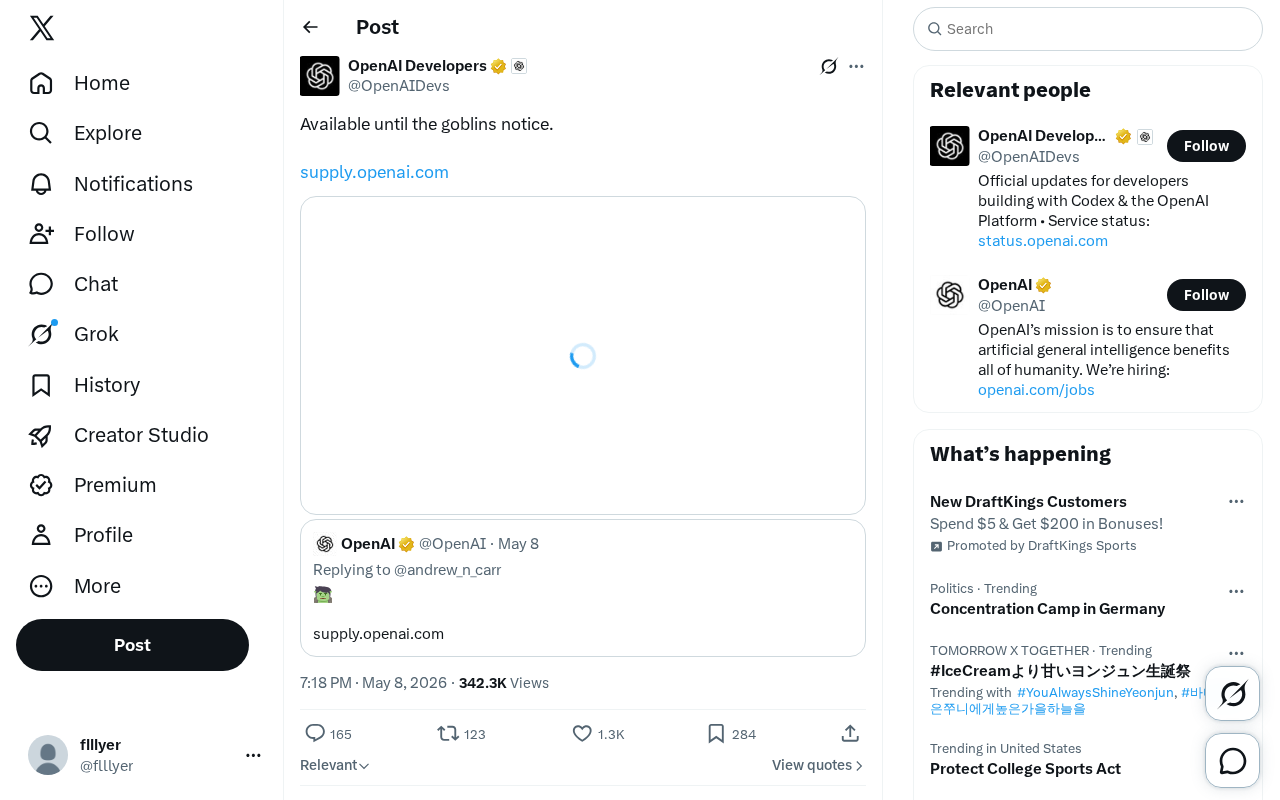
Insufficient Source Material: A Tweet With No Substantive Content
A single tweet reading 'Available until the goblins notice.' with two unexpanded links provides no substantive content to write an article from.
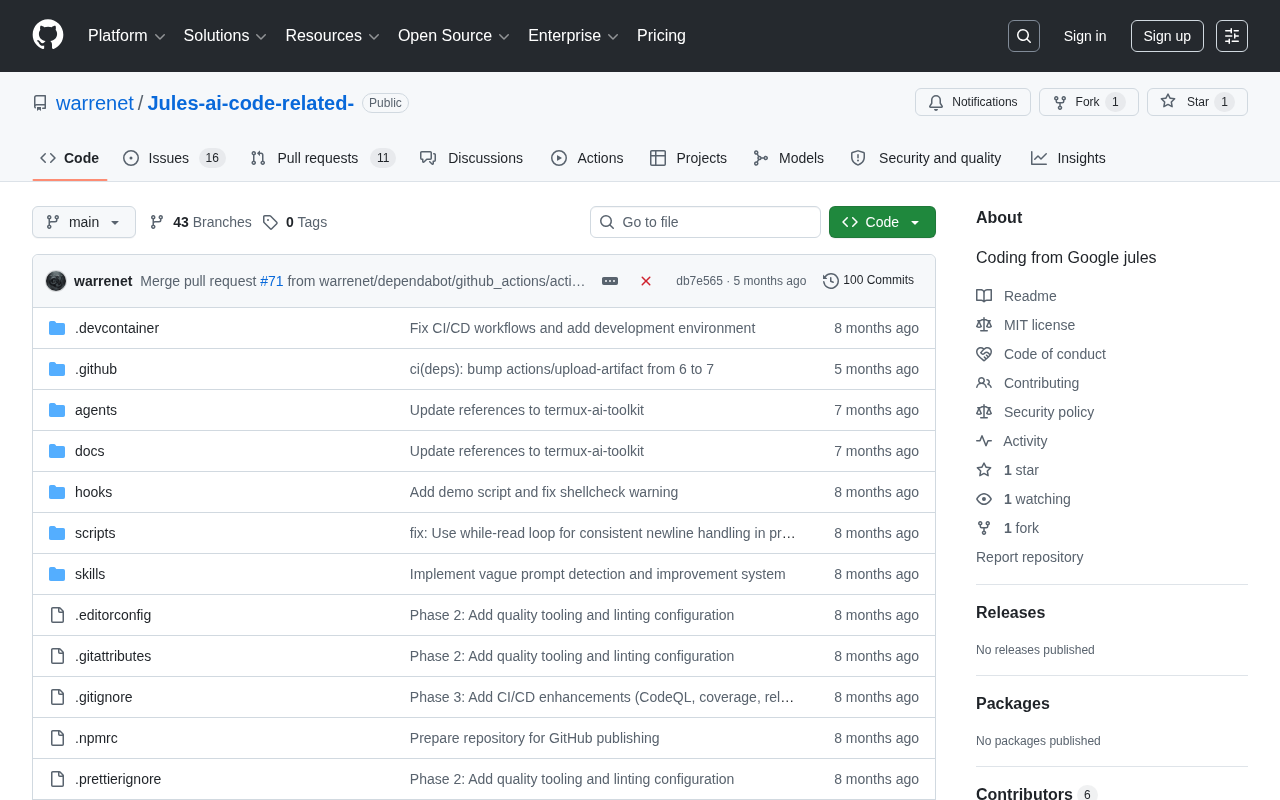
Google Jules AI Coding Assistant: A Quick Look at an Open-Source Practice Repo
A look at a small GitHub repo centered on Google Jules, an autonomous AI coding agent. Explores what Jules does, the repo's practical value, and how to evaluate early-stage AI tool projects.
GitHub Project Overview: prateek0221/jules — Critically Lacking Information
The GitHub repo prateek0221/jules has only 1 star, no code, and no README. We review available info and provide background on Google's Jules AI coding agent.