Claude Code in Practice: How AI Coding Tools Can Protect Your Secret Keys

How to protect API keys and credentials when using AI coding assistants like Claude Code.
AI coding assistants like Claude Code can access your entire project directory — including .env files and API keys. This article analyzes three key risks (context leakage, accidental commits, and permission abuse) and provides practical defenses: ignore lists, secret externalization via Vault/Secrets Manager, mandatory human review, and the Principle of Least Privilege.
Frontier Field Notes: When AI Coding Assistants Meet Secret Management
As AI coding assistants become increasingly mainstream, one question keeps resurfacing without a clean resolution: When we hand our code over to an AI to read, write, and execute, are the keys, tokens, and sensitive credentials hidden in our projects actually safe?
This post — titled Chronicles from the Frontier #5: Claude and the Chamber of Secrets from the Reddit developer community — uses the "Chamber of Secrets" metaphor to dive into one of the most pressing security issues of the AI programming era. Drawing on this real-world account, we'll take a deep look at the risk boundaries and mitigation strategies for AI coding tools when handling sensitive information.

The "Chamber" Metaphor: AI Can See Far More Than You Think
The "Chamber of Secrets" title isn't a casual literary nod. In modern software projects, almost every code repository has its own hidden chamber:
- Database passwords in
.envenvironment variable files - API keys and access tokens
- Cloud service credentials (AWS, GCP, etc.)
- Private certificates and signing keys
When developers enable an AI coding assistant like Claude Code — which has full filesystem access — the AI can theoretically read any file in the project directory. This means sensitive information that should only ever exist locally could end up inside the model's context window during a casual "help me find this bug" request.
Understanding this risk requires grasping a core technical concept: the context window. Modern large language models (like Claude and GPT-4) package all input information into a "context" that gets sent to the model for inference. Claude's context window, for instance, can hold hundreds of thousands of tokens — meaning the contents of multiple project files can coexist in a single inference request. When an AI coding assistant reads project files, their contents are serialized into a token stream and transmitted over HTTPS to cloud inference servers. While the transmission itself is encrypted, the data must be in plaintext during server-side inference — a fundamental conflict with the traditional "data never leaves local" security model. That's the real meaning behind the "chamber" metaphor: the AI has been handed the key, and most developers haven't even noticed the door is open.
Three Categories of Secret Security Risk in AI Coding
Context Leakage: Data Quietly "Leaving Local"
The most direct risk is context injection. Once an AI reads a file containing secrets, that content becomes part of the conversation history. Even if you never intended the AI to process those secrets, the moment the relevant files fall within its analysis scope, the secrets have already "left local."
For AI tools that rely on cloud inference, this means sensitive data has been transmitted to a third-party server. Even though major vendors all claim they don't train on user data, the mere exposure of that data during transmission and processing already constitutes a breach of the security boundary.
Accidental Commits: Hidden Dangers from AI's "Helpfulness"
The second category of risk lies in unintended mistakes when AI generates code. When an AI rapidly scaffolds a feature prototype, it might hardcode secrets directly into source files — or even use real credentials in example code — just to make things run. If a developer commits without reviewing, those secrets end up in version history as a permanent API key leak.
The risk here is far more persistent than it appears. Version control systems like Git are designed on the philosophy of "permanently recording history" — even if a developer deletes a hardcoded key and recommits immediately after discovering it, the key still exists in Git's commit history, recoverable by anyone with repository access via git log or git show. Platforms like GitHub even deploy Secret Scanning services that automatically detect API key patterns in historical commits of public repositories. More dangerously, once code is pushed to a remote, automated crawlers can pick up exposed keys within minutes — the widespread existence of tools like Trufflehog and GitGuardian speaks to how prevalent and real this attack surface is.
Permission Abuse: The Latent Threat of Execution Capability
The third risk category involves AI's command execution capability, which security researchers describe more precisely as Prompt Injection and Supply Chain Poisoning. Prompt injection occurs when an attacker embeds malicious instructions in content the AI might read — code comments, README files, or even third-party library documentation — tricking the AI into executing attacker-defined operations without awareness. Supply chain poisoning works by publishing malicious dependency packages to npm, PyPI, or similar registries; the malicious code triggers when the AI automatically installs dependencies or runs build scripts.
OWASP has listed prompt injection as the top security threat for LLM applications (LLM01:2025). What makes these attacks so insidious is that the victim sees the AI "working normally" while the attack instructions have already been quietly executed — and secrets may have been read and exfiltrated without any sign of compromise.
Countermeasures: Setting Boundaries for AI
The developer community has converged on several practical defensive approaches.
Explicit Ignore Lists
The most basic and effective measure is using configuration files to explicitly tell the AI which files it cannot read. Following the .gitignore model, set up an .aiignore file or equivalent exclusion rules for your AI coding tool, keeping .env files, key directories, and credential files completely out of the AI's view.
Secret Externalization and Placeholder Strategy
A more thorough solution is to isolate secrets at the architectural level. Move all sensitive information out of the code repository and manage it centrally through environment variables or secrets management services (such as HashiCorp Vault or AWS Secrets Manager). Keep only placeholders in the code, ensuring the AI never touches real credentials.
Services like HashiCorp Vault and AWS Secrets Manager represent enterprise-grade best practices for secret security. Their core mechanisms include: dynamic secret generation (returning short-lived temporary credentials per request, fundamentally eliminating the risk of long-term key exposure), fine-grained access control (using IAM policies to precisely define which service or role can access which secret and when), and complete audit logging (recording every secret access event). In AI coding scenarios, adopting such services means the repository only contains service endpoint addresses and access policies — even if the AI reads the entire source code, it cannot obtain real credentials, architecturally severing the leakage path entirely.
Human Review Is Non-Negotiable
No matter how capable the AI becomes, human review cannot be skipped. Especially when AI generates code involving configuration, authentication, or deployment, developers must go line by line to confirm no hardcoded secrets have been quietly embedded.
Principle of Least Privilege
For AI tools with execution capabilities, strictly follow the Principle of Least Privilege (PoLP) — a foundational axiom in information security that has a specific engineering implementation path in the context of AI tools. Consider this layered defense architecture: at the OS level, run AI processes under a dedicated low-privilege account and restrict system call scope via Linux seccomp or macOS sandbox mechanisms; at the filesystem level, use chroot or container technology (e.g., Docker) to define the directory boundaries accessible to the AI; at the network level, use firewall rules to restrict outbound connections from AI processes and prevent data exfiltration; at the credentials level, create read-only service accounts specifically for the AI so that even if a leak occurs, they cannot be used for write or delete operations. This Defense in Depth strategy ensures that a single defensive layer failing does not lead to total compromise, keeping damage to a minimum even when incidents occur.
A Deeper Reflection: The Eternal Trade-off Between Convenience and Security
The productivity gains from AI coding assistants are real and significant, but this "Chronicles from the Frontier" post reminds us: every expansion of capability comes with an expansion of the attack surface. As AI evolves from "code completion" to "autonomous read-write-execute," its depth of control over a project multiplies.
This is fundamentally the classic trade-off between convenience and security. Developers can't afford to reject AI tools out of fear, but they also can't naively assume AI is unconditionally trustworthy. The rational stance is: treat AI as an extremely capable but supervised junior collaborator — would you hand your production database password to a brand-new colleague on their first day? Of course not. The same logic applies to AI.
Conclusion: In the AI Era, Security Practices Must Evolve in Parallel
Behind the title "Claude and the Chamber of Secrets" lies a challenge that every practitioner in the AI coding era must confront head-on. Once the chamber door is open, the ownership of the key becomes critical.
As AI coding tools penetrate deeper into the development workflow, security practices must evolve in lockstep. Ignore lists, secret externalization, human review, least privilege — these seemingly old-school code security principles haven't become obsolete in the AI era. If anything, they've become more valuable than ever. Truly mature AI-assisted development isn't about handing everything to the AI — it's about fully leveraging its capabilities while drawing clear, solid boundaries around what it can and cannot touch.
Key Takeaways
Related articles
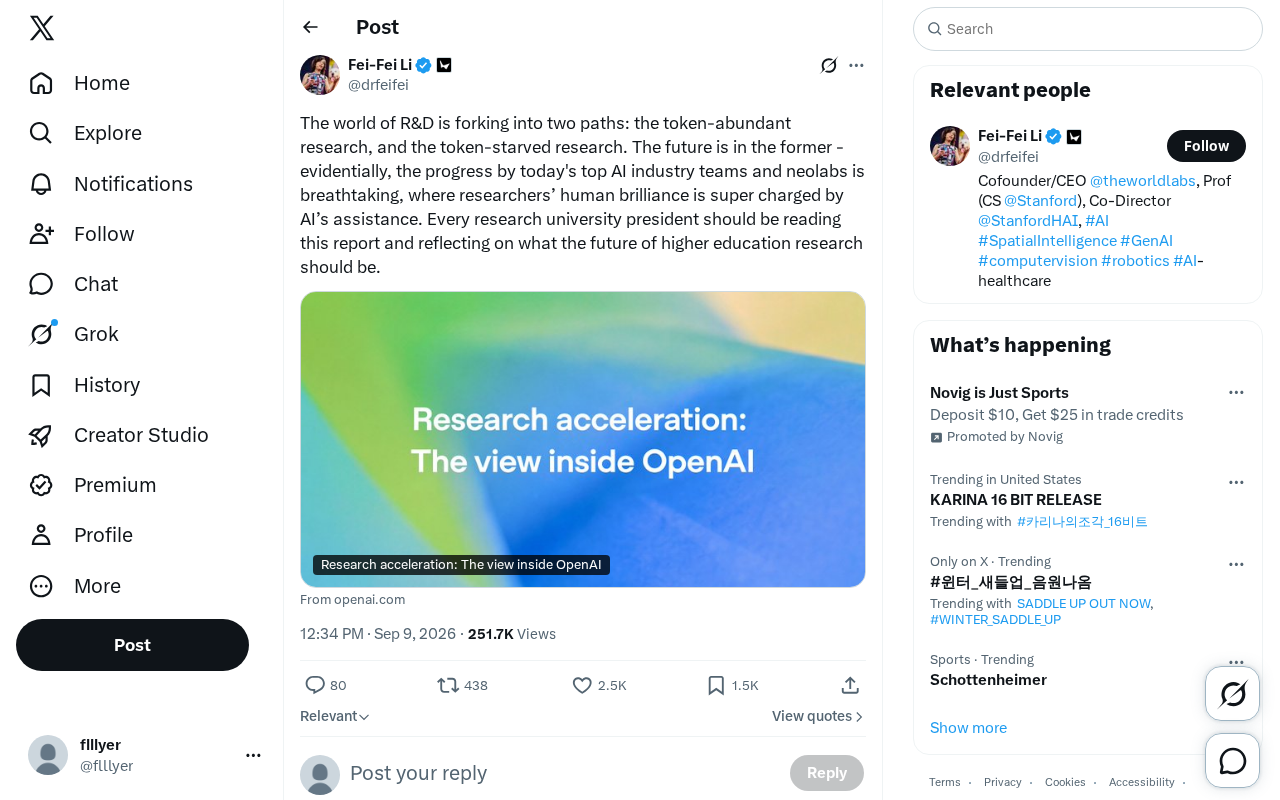
R&D Is Forking: The Coming Battle Between Token-Abundant and Token-Starved Research
R&D is splitting into token-abundant and token-starved research. Top AI labs are pulling ahead—here's what it means for universities and the future of science.
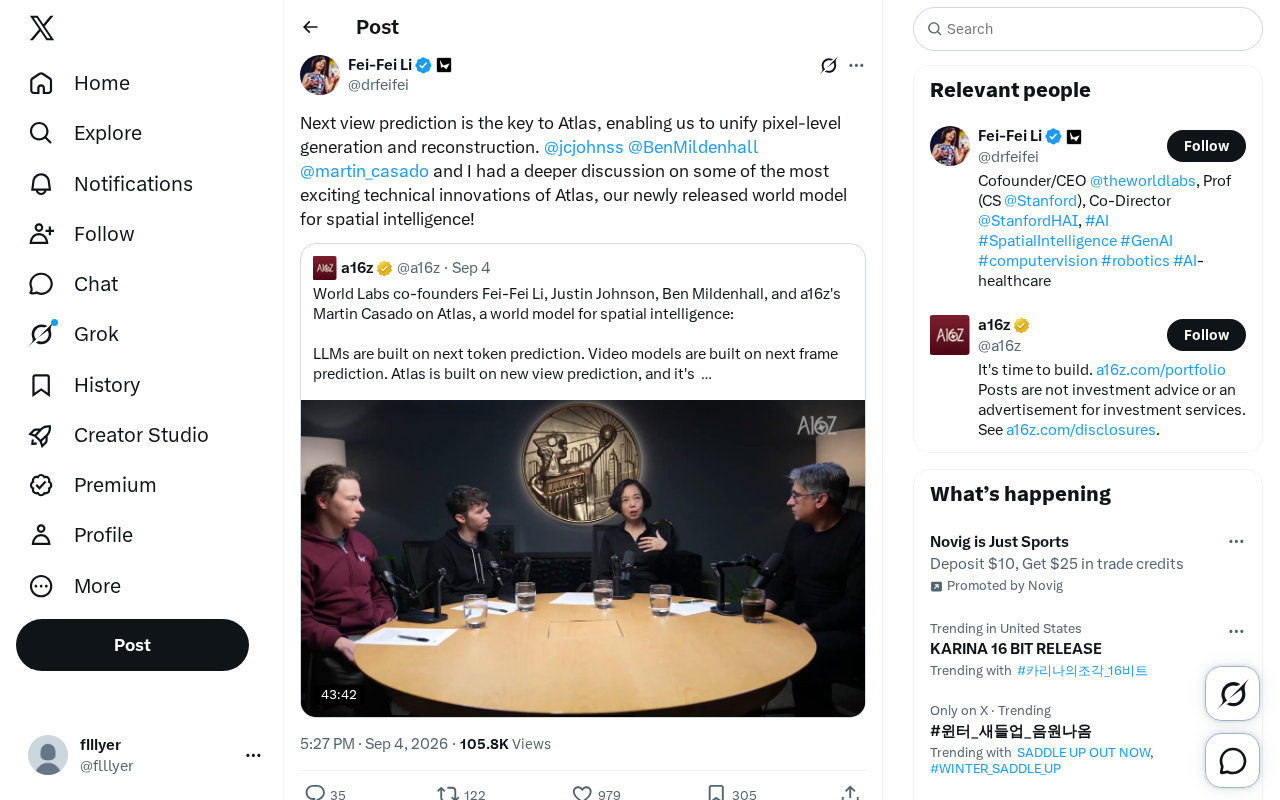
Atlas World Model Explained: How Next View Prediction Unifies Generation and Reconstruction
The Atlas world model uses Next View Prediction as its core to unify pixel-level generation and reconstruction, offering a new approach to spatial intelligence.
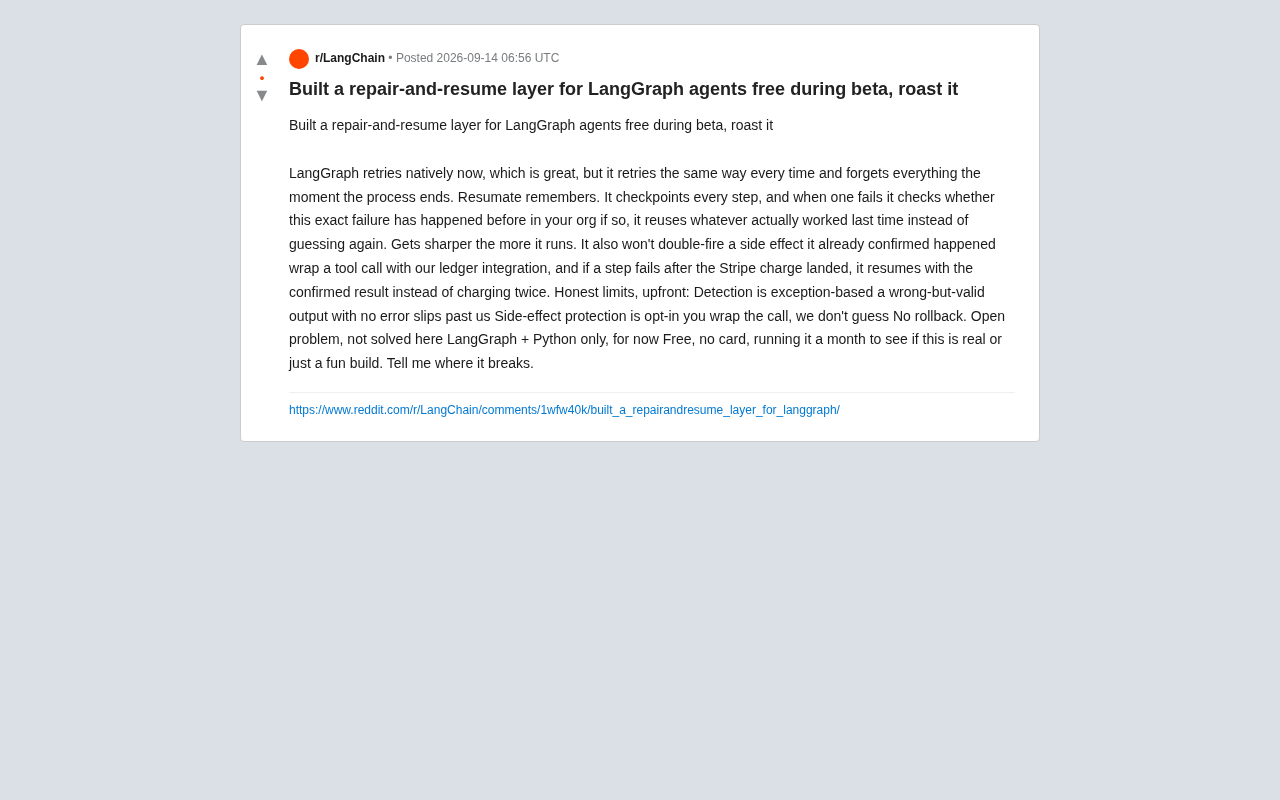
Resumate: A Deep Dive into the Repair-and-Resume Layer for LangGraph Agents
Resumate adds memory-aware checkpointing and idempotent side-effect protection to LangGraph agents, preventing issues like duplicate Stripe charges on retry.