Claude Code Multi-Agent Parallel Development in Practice: Post-Mortem and Engineering Pitfall Guide
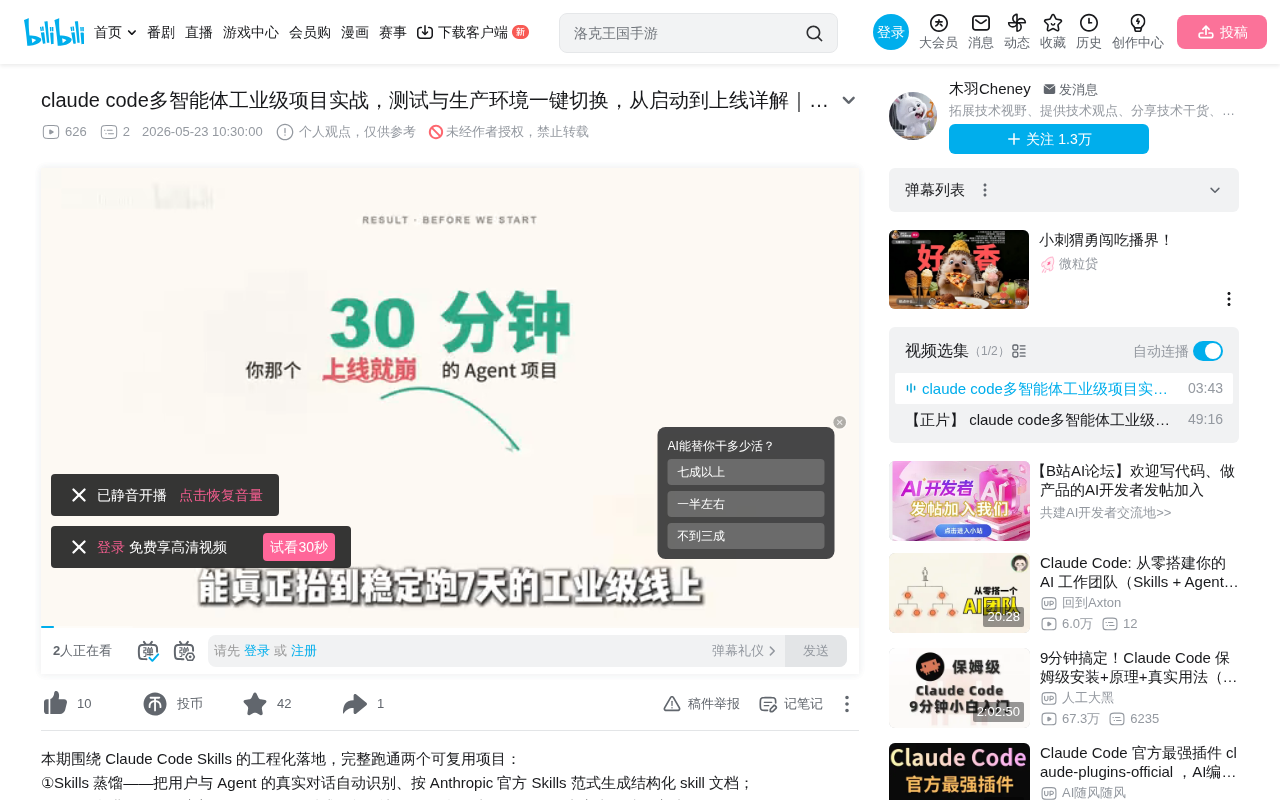
Stable AI Agent deployment depends on engineering discipline, not model tuning
Based on two years of hands-on experience, this article argues that AI Agent projects crash on launch not because of poor model selection or prompt tuning, but because three engineering fundamentals aren't properly addressed: consistency guarantees in multi-agent parallel development, accuracy control in frontend-backend API integration, and standardized system packaging for delivery. The article focuses on naming conflicts in parallel development and the common problem of AI inventing non-existent APIs, providing concrete solutions including unified constraints and review mechanisms.
Introduction: The Real Reason Agent Projects Crash on Day One
Many people spend enormous time selecting models and tuning prompts when building AI Agent projects, only to have everything crash on the first day of deployment. Two years of hands-on experience reveals a harsh truth: Getting an Agent project to run stably for 7 days in production doesn't depend on how well you pick your model — it depends on finishing all the unglamorous engineering grunt work that nobody wants to do.
Specifically, there are three hard problems you must overcome:
- How to make multiple AI modules work in parallel without stepping on each other
- How to connect the frontend to real APIs without things falling apart
- How to package the entire system for ops handoff without rework
These three things don't sound sexy, but they're precisely what determines whether a project can actually ship.

Multi-Agent Parallel Development: Pitfalls and Solutions When Four AIs Work Simultaneously
The Parallel Development Model of Agent Teams
Claude Code's Agent Teams feature is essentially a Multi-Agent Collaboration Framework. In software engineering, this parallel development model borrows from microservices architecture thinking — decomposing complex tasks into mutually independent subtasks processed by different execution units in parallel. Traditional AI-assisted programming is single-threaded: one model, one context window, one task at a time. The multi-agent parallel model breaks this limitation, allowing multiple AI instances to simultaneously operate on different modules of the codebase, theoretically scaling development speed linearly.
In practice, a runnable backend skeleton can be produced in just 20 minutes — over 5x faster than traditional line-by-line development.
But fast doesn't mean stable. Parallel development and serial development are completely different things. This introduces the classic Consistency Problem from distributed systems: when multiple writers simultaneously operate on shared resources, how do you ensure consistency of the final state? After a morning of running this setup, the biggest issue surfaced: four AIs each doing their own thing, producing API endpoints that didn't match up.
For example, one module defines /api/getContract, while another calls /api/contract/get. Behind this lies a fundamental naming style conflict — RESTful style favors resource-centric naming (/api/contracts), while RPC style favors action-centric naming (/api/getContract). Without unified constraints, different AI instances will each follow the most common naming patterns from their training data, resulting in both styles being mixed within the same project. This kind of inconsistency would never occur in single-developer work, but it's almost inevitable in multi-agent parallel scenarios.
Solution: Unified Constraints + Review Mechanism
The final solution establishes a three-layer safeguard:
- Clear division of labor: Each AI module's responsibility boundaries must be hardcoded in the startup prompt — who owns which APIs, what naming conventions to use, with no ambiguity allowed
- Unified review: Designate one AI role specifically responsible for reviewing API definitions produced by other modules, ensuring naming and parameter format consistency
- Knowledge accumulation: Every pitfall encountered during parallel development gets documented as rules, serving as constraints for the next session
In practice, things only truly stabilized after switching models and restarting once. This shows that model selection does matter in parallel scenarios, but the design of constraint mechanisms is even more critical.
API Integration: The Biggest Disaster Zone in AI Programming
The Common Problem of AI Inventing Its Own APIs
The API integration phase is the most crash-prone part of the entire workflow. The most typical problem: AI will invent API paths that simply don't exist on the backend.
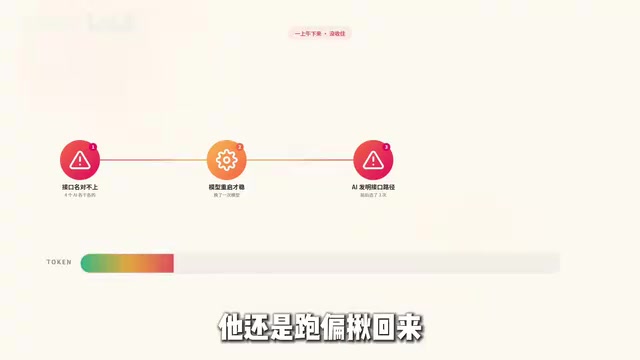
In testing, the AI generated non-existent backend API paths three times in a row. Even when you're watching it code, it still goes off-track. This isn't a prompt engineering problem — it's that AI, when generating frontend calling code, tends to "guess" what the backend API should look like rather than strictly referencing existing API documentation.
There's also a deeper technical reason for this issue: the forgetting effect of the Token context window. Tokens are the basic unit of text processing for large language models, and each model has a fixed context window limit (e.g., approximately 200K tokens for the Claude 3 series). During integration, the context needs to simultaneously maintain frontend code, backend API definitions, error logs, fix history, and other large volumes of information. When the context window fills up, the model begins to "forget"
Related articles
 Tutorials
ChatGPT Plus Subscription Guide: Are GPT-5.5, image-2, and Codex Worth the Upgrade?
A detailed look at ChatGPT Plus features — GPT-5.5, image-2, and Codex — with a Plus vs Pro comparison and a complete step-by-step subscription guide for users outside the US.
 Tutorials
Harness AI Engineering in Practice: Using Claude Code to Master Enterprise-Level E-Commerce Development
Deep dive into Harness AI Engineering: master enterprise e-commerce development with Claude Code using the Rules, Skills, Wiki, and Changes framework.
 Tutorials
Cursor + Codex Dual-IDE Collaboration: A Practical Methodology for Open-Source Project Customization
A complete methodology for open-source project customization based on real-world experience, detailing the Cursor+Codex dual-IDE workflow, seven-stage process, MVP validation, and AI source code reading techniques.