Claude Did Not Invent Scorpion Antivenom: The Truth and Boundaries of AI Drug Discovery

Claude did not invent scorpion antivenom; the incident shows AI pharma hype should be viewed rationally.
The recent claim that "Claude invented scorpion antivenom" has been confirmed as a misreading. Citrini Research partnered with Anthropic to test an unreleased Claude version for scorpion antivenom design, but it did not succeed. Experts say Claude only offered promising starting points, far from actual drug standards. The incident reflects AI's real role in drug discovery: good at pattern recognition and hypothesis generation for early exploration, but unable to replace wet-lab validation or the scientific method. Consensus is that AI is mainly an assistant; debate remains over its actual contribution. The industry should avoid hype and focus on reproducible benchmarks and peer review.
A Misinterpreted "AI Pharma Breakthrough"
Recently, a story about "Claude inventing scorpion antivenom" circulated in tech circles, drawing widespread attention. However, according to The Verge, this is not the case. Investment research firm Citrini Research partnered with Anthropic to test whether AI could revolutionize drug discovery—they used an unreleased version of Claude to attempt to design scorpion antivenom, but it did not succeed. Experts noted that while Claude offered some promising starting points, it fell far short of the standards for an actual drug.
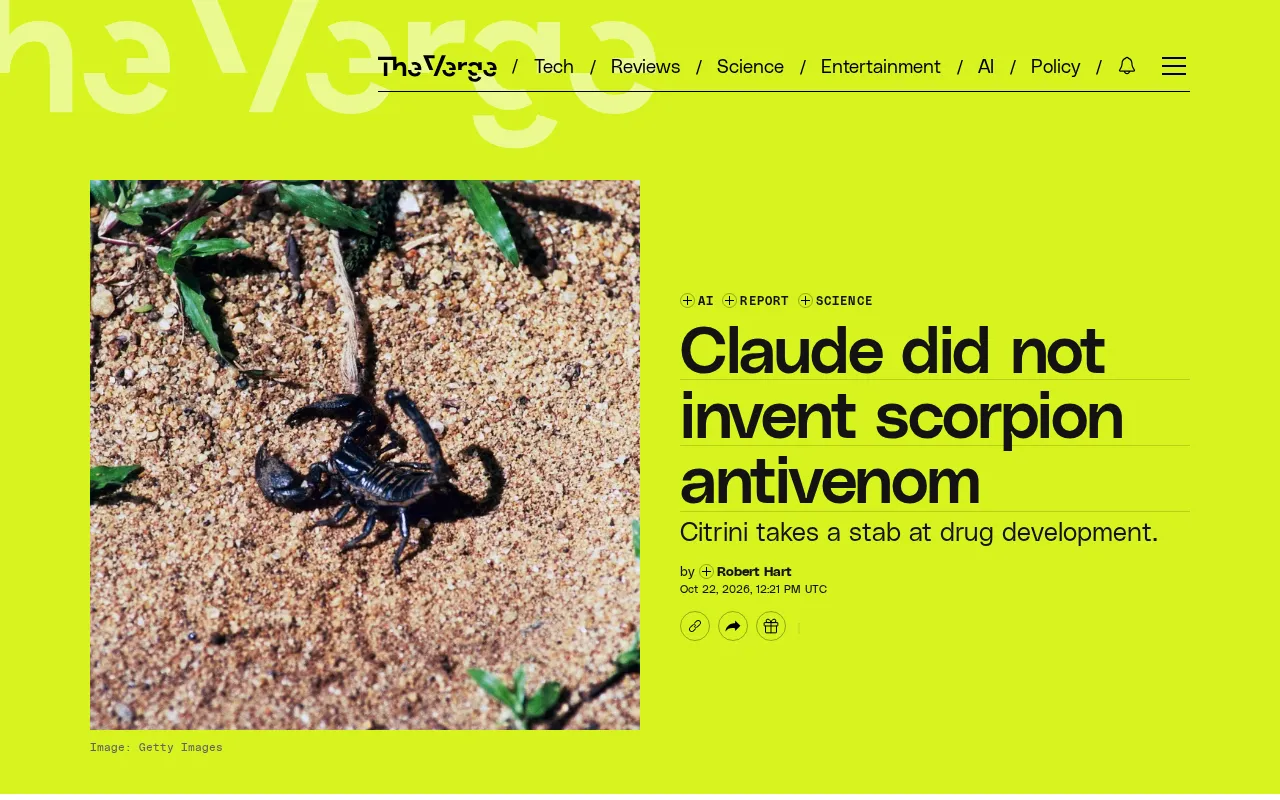
This incident reflects the real situation of AI in drug discovery today: enormous potential, but hype often obscures scientific complexity.
AI Drug Discovery: The Gap Between Hope and Reality
Experimental Design: A Proof-of-Concept Attempt
Citrini Research's original intent was to prove that AI can accelerate drug discovery. Working with Anthropic, they used an unreleased version of Claude to explore a specific target: scorpion antivenom. Antivenom development involves complex immunological processes; traditional methods require multiple steps such as animal immunization, antibody screening, and clinical trials. AI intervention could theoretically optimize molecular design or predict binding affinity, but it cannot replace wet-lab validation.
Mechanism of action of antivenom: Antivenom is not a chemically synthesized small-molecule drug but a biological product containing polyclonal antibodies against specific snake or scorpion venom components. The traditional production process typically includes repeatedly immunizing large animals such as horses or sheep with trace amounts of venom, collecting plasma once sufficient titers of neutralizing antibodies are produced, and then purifying and enzymatically digesting it (e.g., preparing F(ab')2 fragments). Its efficacy depends on whether antibodies can specifically bind and neutralize key epitopes of the toxin, thereby preventing the toxin from binding to human targets (such as ion channels). The complexity lies in the fact that antibodies must simultaneously possess high affinity, broad-spectrum neutralizing capacity, and good in vivo safety—attributes that are difficult to predict solely by computation and must be verified through animal experiments and clinical trials. Therefore, if AI enters this field, possible directions include predicting toxin epitopes, optimizing antibody sequences, or screening binding fragments, but ultimately it still relies on wet-lab experiments to confirm neutralizing activity and safety.
Interpreting the Results: A Starting Point, Not an Endpoint
According to experts speaking to The Verge, Claude's output "had some promising starting points, but nothing close to an actual drug." This means AI may have proposed candidate molecules or ideas, but these are merely early leads, with a long road ahead to a usable antivenom. The success rate of drug development is extremely low; even if AI can narrow the search space, subsequent synthesis, testing, and regulatory approval remain enormous challenges.
Multi-Source Cross-Validation: Consensus and Divergence
This incident sparked discussion across multiple technical communities. According to analyses by Bilibili creators and YouTube channels, the consensus is that AI plays primarily a supporting role in drug discovery, not a replacement. Some commentators viewed Citrini Research's experiment as a "marketing gimmick," since an unreleased model and unverified results are difficult to reproduce. Divergence lies in AI's actual contribution: some argue that the starting points proposed by AI still have value, while others emphasize that AI output without wet-lab validation is merely "armchair theorizing."
A Rational Outlook on AI Pharma
Technical Boundaries: What AI Can and Cannot Do
AI excels at pattern recognition and hypothesis generation, such as predicting protein structures or screening compound libraries. But it lacks a complete understanding of the complexity of biological systems and cannot independently complete the entire pipeline from target to drug. The scorpion antivenom case shows that AI can generate candidate solutions, but human experts and experimental validation are needed to screen and optimize them.
Protein structure prediction and molecule generation: Typical applications of AI in drug discovery today include AlphaFold-like tools for predicting three-dimensional protein structures, generative models for designing novel molecules or antibody sequences, and machine learning-based virtual screening. These technologies can significantly narrow the candidate space but have inherent limitations: predicted structures do not equal understanding of dynamic conformations and functional relationships; generated molecules may lack synthesizability or have toxicity; more importantly, AI output must undergo in vitro binding experiments, cell-level functional tests, and animal model validation before entering preclinical research. In the scorpion antivenom case, Claude may have proposed candidate antibody fragments or binding peptide sequences, but none were expressed, purified, or tested for neutralization, so their actual value cannot be judged. This confirms AI's role as a "hypothesis generator" rather than a "drug inventor."
Industry Lessons: Avoid Overhyping
Citrini Research's experiment was intended to demonstrate AI's potential, but controversy arose because the results were exaggerated. This reminds the industry that progress in AI drug discovery requires rigorous benchmarking and peer review. Investors and the public should be wary of simplified narratives like "AI invents drugs" and focus on real-world cases and reproducible results.
The importance of benchmarking and peer review in AI pharma: The field of AI drug discovery lacks unified evaluation standards, making it difficult to compare different research results. A reliable AI-assisted drug discovery study should disclose the model version, training data, and prediction methods, and conduct blinded validation in independent wet-lab experiments. Citrini Research used an unreleased model and did not provide reproducible experimental details, making it impossible for outsiders to assess its true performance. Positive industry practices include establishing public benchmark datasets (e.g., compound activity data for specific targets), organizing community challenges, and promoting publication of results in peer-reviewed journals. Only through reproducible benchmarking can the real contribution of AI be distinguished from marketing narratives, avoiding simplified headlines like "AI invents drugs" that mislead the public and investment decisions.
Conclusion
Claude did not invent scorpion antivenom, but that does not mean AI is worthless in drug discovery. On the contrary, it reveals AI's positioning as an auxiliary tool—accelerating early exploration rather than replacing the scientific method. In the future, as models iterate and experimental validation improves, AI is expected to play a greater role in specific areas, but only if we maintain respect for scientific principles and vigilance against hype.
One-line Summary
Claude did not invent scorpion antivenom; the incident shows AI pharma hype should be viewed rationally.
Paragraph Summary
Recently circulated news that "Claude invented scorpion antivenom" has been confirmed as a misreading. Investment research firm Citrini Research partnered with Anthropic to use an unreleased version of Claude to attempt to design scorpion antivenom, but it did not succeed. Experts say Claude only offered some promising starting points, far from actual drug standards. The incident reflects AI's real situation in drug discovery: AI excels at pattern recognition and hypothesis generation and can assist early exploration, but cannot replace wet-lab validation and the scientific method. Multi-source discussion consensus holds that AI mainly plays a supporting role, with divergence over its actual contribution. The industry should avoid overhyping, focus on reproducible benchmarking and peer review, and view technical boundaries rationally.
Related articles
Ollama+RAG Local Knowledge Base Setup: A Step-by-Step AnythingLLM Tutorial
Based on a Bilibili tutorial, this guide details building a local RAG knowledge base with Ollama + AnythingLLM: from general LLM knowledge limits and RAG principles to document upload, vector storage, and verification.
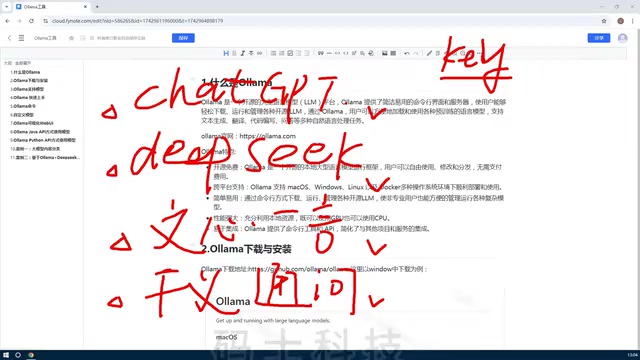
The Ultimate Ollama Tutorial: A Beginner's Guide to Running Large Models Locally for Free
Ollama is an open-source local large model management tool supporting free download and deployment of models like DeepSeek, with command-line and Web UI, cross-platform, automatic GPU/CPU scheduling — ideal for AI beginners and private deployment.
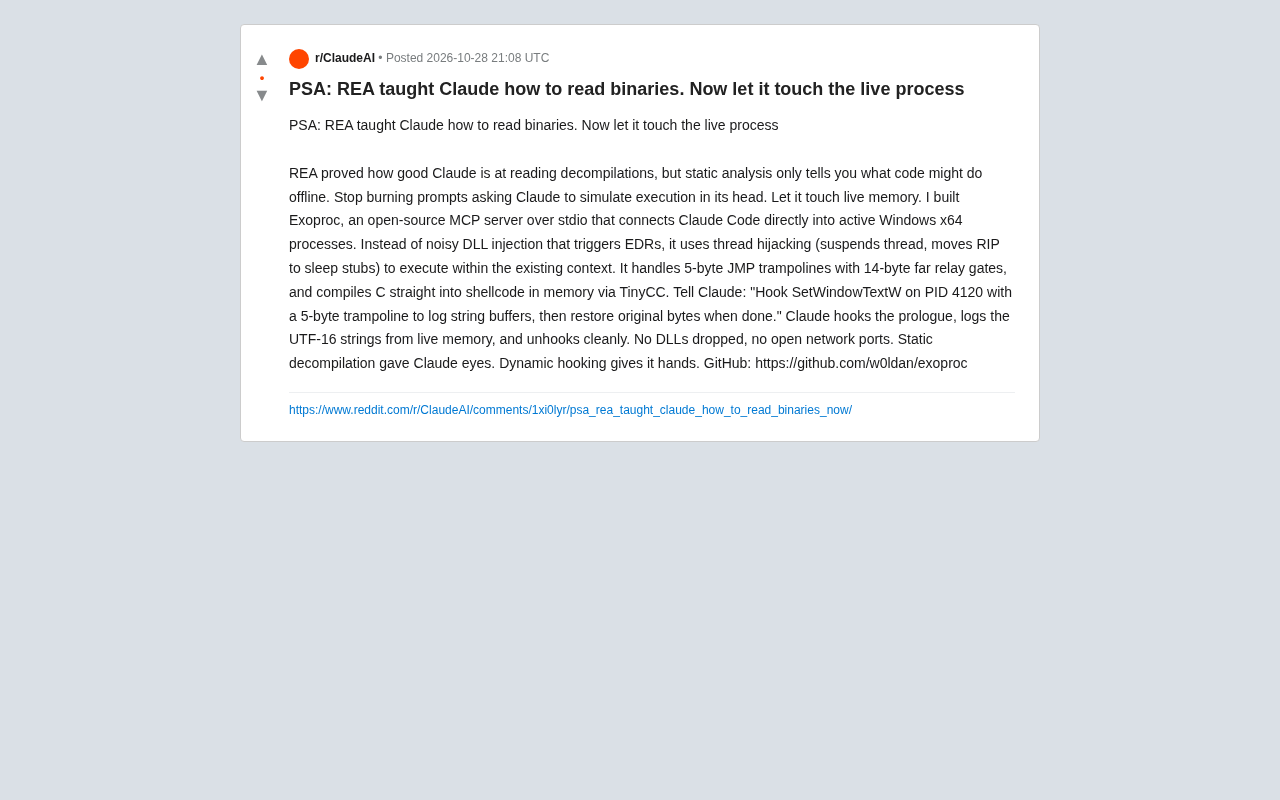
Giving Claude "Hands": Exoproc Open-Source MCP Server Enables Live Process Hooking
Exoproc is an open-source MCP server enabling Claude Code to hook live Windows x64 processes via thread hijacking, bypassing EDR for dynamic analysis. Static decompilation gave Claude eyes; dynamic hooking gives it hands.