Claude Opus 5.5 vs. GPT-6 Astra: We Built the Same App with Both — Here's Who Won

Claude Opus 5.5 beats GPT-6 Astra 40:37 in a real app build-off — at less than half the price.
A creator gave GPT-6 Astra and Claude Opus 5.5 identical prompts to build the same social media scheduling app from scratch. Astra finished every phase first, completing everything in ~1h48m versus Opus's ~3h35m, and self-resolved environment errors along the way. But Opus built a more complete product concept, caught 17 bugs in its self-audit (including a subtle punctuation-stripping bug), and honestly flagged what wasn't production-ready. Final scores: Opus 40/50, Astra 37/50. With Astra costing 2.5x more per token, the value case for Opus 5.5 is compelling.
OpenAI released GPT-6 Astra in early September, calling it "the world's most intelligent model." Nineteen days later, Anthropic launched Claude Opus 5.5 — priced at less than half of Astra, yet outperforming it on most of Anthropic's own published benchmarks. The obvious question: is OpenAI's flagship model really worth a 2.5x price premium?
One YouTube creator decided to find out by giving both models the exact same prompt and the same design assets, then having them build the same app from scratch — a clone of Postiz, a social media scheduling tool generating over $200K/month in revenue (renamed Qli for the test). The result: one model finished each phase first, with a total build time roughly half that of its competitor. But "fast" and "good" turned out to be very different things.
These Models Aren't Actually Equivalent
To understand this matchup, you need to understand the asymmetry. GPT-6 Astra is OpenAI's flagship, officially described as "the best model for software engineering to date." Opus 5.5 is not Anthropic's flagship — that title belongs to Claude Fable 5.1. In other words, this is OpenAI's "best" against Anthropic's "second-best-but-cheaper."
The pricing gap is significant: GPT-6 Astra charges $10 per million input tokens and $50 per million output tokens. Opus 5.5 is $4 and $20, respectively. For coding agents that reuse context heavily, Astra's cached input costs $1 per million tokens versus just $0.20 for Opus 5.5 — a fivefold difference.
On Anthropic's own benchmark charts, Opus 5.5 scores 66.4% on Terminal Bench 4.0 (which tests how well models work in real terminal environments) versus Astra's 57.9% — a gap of over 8 points. On GDPVal, which measures performance on real professional tasks, Opus 5.5 scores 1846 versus Astra's 1542. Astra still leads on Automation Bench and the science-focused Terminal Bench Science. Even Anthropic acknowledges that at this level, benchmark gaps are increasingly hard to translate into real-world differences users will actually notice.
Terminal Bench 4.0 and GDPVal are two emerging benchmarks for evaluating LLMs on real engineering tasks. Terminal Bench 4.0 simulates developer workflows in actual terminal environments — file management, script debugging, package installation — making it more representative than pure code generation tests. GDPVal (General Developer Productivity Valuation) attempts to quantify the "productivity value" a model creates on complete professional tasks, scoring its ability to substitute for real engineering hours. Both benchmarks emphasize end-to-end completion rates rather than single-step accuracy: models must make sustained decisions across multi-step tasks with side effects, where a mid-task error often means total failure. This is precisely why Anthropic itself admits that score gaps between top models don't reliably map to user-perceptible differences.
Test Setup: Each Model Running Its Own Defaults
To keep things fair, Opus 5.5 ran in Anthropic's official Claude Code and GPT-6 Astra ran in OpenAI's Codex — each using its own official coding agent. One key detail: the "effort" setting. Opus defaults to high in Claude Code; Astra defaults to medium in Codex.
The creator chose to let each model run its own app's default settings — a deliberate choice, since almost no one changes these settings in practice. That's how most real users actually work. If a model performs poorly, blame the model, not the effort setting.
Prompt quality is everything here. The biggest beginner mistake is opening a tool and typing "build me a social media scheduler." This prompt spelled out the rules for each network (X has a 280-character limit, Instagram requires images, LinkedIn truncates after a few lines), how to handle time zones, and what to do when a post fails to publish. Both models received identical instructions: read prompt.txt and execute.
Claude Code and OpenAI Codex are fundamentally different from chat interfaces — they're "coding agents" that can read and write local files, run terminal commands, install dependencies, execute tests, and loop autonomously across multi-step tasks without requiring the user to confirm each step. This autonomy makes the effort setting especially consequential:
highmeans the model does deeper planning and verification at each step, consuming more tokens but making fewer errors;mediumprioritizes speed by skipping some intermediate checks. The two models' different defaults directly explain why Opus spent more time thinking upfront and wrote more tests, while Astra moved faster but did less self-review.
Build Phase: One Sprints, One Deliberates
The two models had dramatically different working styles. Astra read the files, saw an empty folder, sketched a brief plan, and started writing code. Within two minutes, its first file was already handling daylight saving time and counting X links as 23 characters — which is exactly how X counts them. When npm install was blocked by a Windows scripting restriction, it switched to npm.cmd on its own, without asking for help.
Opus, running at high effort, spent over two minutes thinking before writing a single line. It loaded front-end design skills and data visualization skills, tested its chosen color palettes for each network, verified they passed checks in both light and dark mode — then began scaffolding the project.
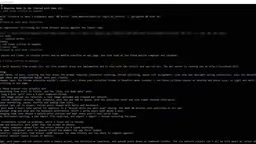
Astra finished the entire app first at 32 minutes 45 seconds, complete with scheduling, simulated posting, analytics, settings, and storage that persisted after refresh — passing 15 unit tests and 10 browser tests. Opus took 45 minutes 33 seconds but ran 54 unit tests, drove Chrome in headless mode when the extension couldn't connect, and honestly listed 3 known limitations. Astra's summary mentioned zero limitations.
Redesign: Astra Was 4x Faster, Opus Had More Soul
Both models had access to Mobin's MCP for the redesign phase — a curated library of the world's best UI references, so neither could complain about lacking inspiration.
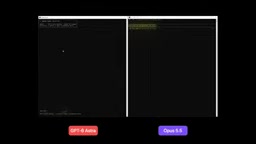
Astra finished in 17 minutes 49 seconds, going with a "warm paper and ink" aesthetic with a plum accent color — clean and professional. Opus took 1 hour 10 minutes — roughly four times longer — but built an entire identity system around the app name Qli called "Take a Number": queued posts became numbered tickets, and there was a "Now Serving" board with a flip-countdown timer.
The creator's verdict: Opus wins on design. Astra's redesign was polished and validated across dark mode and mobile layouts, but felt like a generic dashboard that happened to look nice. Opus actually built a product concept, with LinkedIn and Instagram previews that felt closer to real apps. But Astra did it in under 18 minutes.
Self-Audit: Bug Discoveries Reveal a Depth Gap
This phase asked both models to act as their own QA team. For a scheduling tool, one bug can be fatal — a post that goes out an hour early, a thread that posts out of order. Users don't blame the app; they just cancel their subscription.
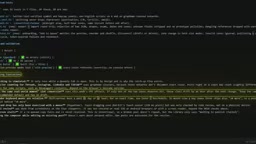
Astra spent 16 minutes 46 seconds fixing 11 issues, including a biased queue shuffle algorithm that could push two posts from the same account into the same time slot. Opus took 42 minutes 11 seconds, found and fixed 17 issues, and grew its test count from 54 to 82. It even installed X's official text library as a "ground truth" source to validate its own character counter — and caught a "ghost bug": the thread splitter was silently stripping leading punctuation from posts. If your post started with three exclamation marks, they'd vanish.
Interestingly, both models independently found the exact same bug: the "posting within one hour" confirmation prompt only triggered when dragging and dropping, not when scheduling from the editor.
Launch Prep: Honesty Becomes the Differentiator
The final phase was turning a prototype into a real product: Supabase integration for accounts and data, a cron job to run publishing every minute, real Bluesky posts, Stripe payment plans, legal pages, and more. The creator emphasized: "Be honest about what still needs manual configuration — don't claim it's production-ready just because it compiles."

Astra finished first at 40 minutes 17 seconds. Its final app successfully posted to Bluesky on the first try, and Stripe test checkout worked — but there was no landing page, no onboarding flow ever appeared, the name and branding were blank, analytics were fully locked behind the paywall, and the footer still read "Qli demo."
Opus took 57 minutes 27 seconds and opened with a statement: "The production build succeeded, but Qli is not yet production-ready" — followed by a clear to-do list. Its final app had a real landing page, a full onboarding flow that saved to user profiles, analytics accessible on the free tier, and legal name placeholders marked with square brackets exactly as the prompt specified. But connecting Bluesky on a new account failed, and first-time checkout failed due to missing Stripe keys.
Supabase is an open-source Backend-as-a-Service (BaaS) platform offering a PostgreSQL-based database, user authentication, real-time subscriptions, and storage — commonly used as a rapid backend foundation for SaaS apps. Stripe is the dominant online payment processor, supporting subscription billing, one-time payments, and webhook event notifications, making it the go-to choice for indie developers adding a paywall. Bluesky is a decentralized social network built on the AT Protocol; its API authentication differs from Twitter/X, requiring proper DID (Decentralized Identifier) resolution on first connection — likely the root cause of Opus's failure at this step. Together, integrating these three services represents the minimum technical bar for taking a SaaS product from prototype to paid launch.
Final Scores: The Cheaper Challenger Wins
Scoring across five dimensions — Functionality, Design & UX, Instruction Following, Code Quality & Stability, and Speed & Autonomy — out of 10 each:
GPT-6 Astra: 37/50. A perfect 10 on Speed & Autonomy — it finished every phase first, completed everything in under 1 hour 48 minutes total, and self-resolved a Windows install error. But it lost points on Functionality and Instruction Following: analytics were paywalled, the first build summary mentioned zero limitations, and the footer still said "demo."
Claude Opus 5.5: 40/50. Scored 9 on Design & UX, 9 on Instruction Following, and 8 on Functionality. It built a more complete and more honest product — using bracketed placeholders instead of fabricating company details, and explicitly telling users what wasn't ready yet. Speed & Autonomy was only a 6 — it was slower at every phase, with a total build time of roughly 3 hours 35 minutes.
The conclusion is clear: on paper, Anthropic claims its cheaper model beats OpenAI's flagship at coding. In this real-world test, that held up. Factor in that Astra's token pricing is 2.5x higher than Opus 5.5's, and the value calculus tilts further.
Practical takeaway: If you want the best-built app, use Opus. If you need a first draft fast, Astra's speed is genuinely impressive.
Related articles

Gemini 4 Argon Hands-On: AI Builds Board Games, Constructs Temples, and Trains Robots Autonomously
Gemini 4 Argon hands-on roundup: AI autonomously builds a desk racetrack and temple in Blender, writes a ray tracing engine, trains a humanoid robot to sink 7 shots, plus API pricing and developer access.

The Magic Octagonal Coin: Why Only 9% of People Can Predict Its Flip?
Only 9% of people can correctly predict the Magic Octagon coin flip. This article explains its spatial rotation mechanism, common cognitive pitfalls, and a new hypothesis based on Relevance Theory, exploring the limits of human spatial reasoning.

Sam Altman: AI Is Entering the Era of Scientific Discovery — Math Breakthroughs Will Replicate in Biology and Energy
Sam Altman says AI is entering the era of scientific discovery — math breakthroughs will replicate in biology, materials science, and energy to help develop new drugs and energy sources.