Claude Solves the Riemann Hypothesis? The Truth and Controversy Behind Lean Verification
A YouTube video claims Claude proved the Riemann Hypothesis with Lean, but with no public code or peer review, it doesn't hold up.
The article examines the claim circulating on YouTube that "Claude has solved the Riemann Hypothesis and verified it line by line with Lean." The video's popular-science explanation of the prime staircase, zeta function, critical line, and superposition of zero waves is basically correct, but the assertion of a proof lacks any public materials. The article points out that passing Lean verification only guarantees logical consistency within the formal system; it cannot guarantee that the formalized proposition is the Riemann Hypothesis itself, nor can it rule out hidden assumptions. The difficulty of the Riemann Hypothesis lies in requiring entirely new mathematical insight, while proof-like texts generated by large language models often contain logical leaps. The claim appears in only a single video source, in stark contrast to AlphaProof's practice of releasing code and reports. Computer verification of 10 trillion zeros on the line is not equivalent to a rigorous proof, and a cautious attitude is the only rational choice.
A Video Triggers a Mathematical Earthquake
Recently, a shocking claim has been circulating on YouTube: Claude has solved the Riemann Hypothesis—the million-dollar problem that has stumped mathematicians for 167 years—and has also produced a complete Lean formal proof that passes verification line by line. The news immediately set the AI and mathematics communities ablaze.
But on closer, calmer inspection, the claim is full of holes. The video itself uses highly simplified animations to explain the core of the Riemann Hypothesis: the prime staircase, the zeta function, spirals on the complex plane, and the critical line (real part equal to 1/2). This popular-science content is basically correct, but the assertion that "Claude has proven it" lacks any verifiable evidence.
What the Video Says
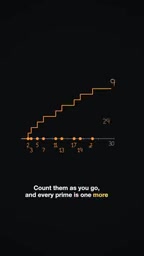
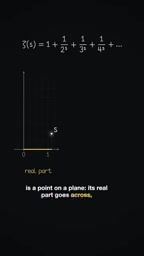
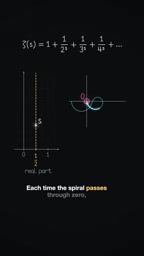
The video starts with primes: 2, 3, 5, 7, 11… each time a prime is encountered, you step up, forming a staircase. Zoomed in, each step of the staircase appears completely irregular; zoomed out, it approximates a smooth curve. Riemann studied the zeta function and extended it to the complex domain. A point s on the complex plane is mapped by zeta to a point ζ(s) on another plane. Let s slide along the line with real part 1/2, and ζ(s) traces out a spiral. Each time the spiral passes through the origin, the corresponding input is a zero.
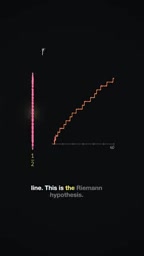
Riemann discovered that each zero adds a wave to the smooth curve. The more zeros, the closer the resulting waveform approximates the prime staircase. He asserted: all nontrivial zeros must lie on this line—this is the Riemann Hypothesis. If even one zero deviates, the wave it produces grows sharply, pulling the staircase far away from the curve.
Computers have already verified 10 trillion zeros, all on the line, but this does not constitute a proof. The video claims Claude wrote a complete proof and verified it line by line with Lean. If experts confirm it, the greatest mystery in mathematics would be solved.
The Riemann zeta function was originally defined as the infinite series ζ(s) = 1 + 1/2^s + 1/3^s + …, which converges only when the real part is greater than 1. Riemann's key contribution was to extend this function to the entire complex plane via analytic continuation (except for a simple pole at s=1), thereby giving it meaning within the critical strip. "Nontrivial zeros" refer to complex solutions that make ζ(s)=0, apart from the negative even integers (trivial zeros). The Riemann Hypothesis asserts that all these nontrivial zeros have real part equal to 1/2, i.e., all lie on the critical line Re(s)=1/2. The connection between this conjecture and prime distribution comes from the explicit formula: the error term in the prime-counting function is controlled by the locations of the zeta zeros; the closer the zeros are to the critical line, the smaller the error oscillations.
Lean Verification Is Not a Mathematical Proof
This is the crux of the problem: passing Lean verification and "proving the Riemann Hypothesis" are two entirely different things.
Lean is an interactive theorem prover that can only check whether each step of a proof is logically consistent, but it cannot guarantee that the formalized proposition is the Riemann Hypothesis itself. If someone formalizes the wrong proposition, or introduces unproven assumptions during the proof, Lean will still "verify" it. In other words, Lean is a proofreader, not a judge.
More importantly, the video provides no publicly accessible Lean code repository, proof summary, or peer-review record. If a Millennium Prize Problem unsolved for 167 years had really been solved by AI, the normal academic process would be: publish a preprint, release the formalized code, and submit to line-by-line community review. None of this has appeared.
Lean is an open-source project initiated by Leonardo de Moura at Microsoft Research in 2013, based on dependent type theory (the calculus of inductive constructions). Its core is a small trusted kernel that only checks whether each step of a derivation conforms to the type rules. Mathematical propositions and proofs are encoded in Lean as types and terms; a "proof passing" means an inhabitant term has been constructed. Thus Lean's guarantee is: if the kernel is correct and the axioms are consistent, then the formalized statement is indeed provable. But it is completely unable to judge whether the formalized statement faithfully expresses the Riemann Hypothesis in natural language, nor can it prevent the use of additional axioms (such as large cardinal assumptions) or definitional deviations. This gap between formal correctness and mathematical semantic correctness is precisely where scrutiny is needed when evaluating such claims.
Why AI "Proving the Riemann Hypothesis" Is Unbelievable
The difficulty of the Riemann Hypothesis lies not in computation but in the need for entirely new mathematical insight. Current large language models excel at pattern matching and text generation, but mathematical proofs require rigorous logical chains and creative breakthroughs. A model can write text that looks like a proof, but it often hides subtle logical leaps or circular reasoning.
Formal verification tools can indeed help uncover these gaps, but only if the formalized proposition itself is correct and all lemmas have been rigorously proven. If Claude had really accomplished such work, it should be subject to public scrutiny, just like AlphaProof or other results from the Lean community.
The video also mentions a detail: "If one zero deviates, the wave grows larger and pulls the staircase away." This is a correct mathematical intuition in itself, but it describes the necessity of the conjecture holding, not a proof. Equating the intuitive explanation of a popular-science animation with a rigorous proof is a common misleading tactic in such viral videos.
AlphaProof is a system announced by DeepMind in 2024 that combines AlphaZero-style reinforcement learning search with the Lean formal environment, achieving silver-medal level at the International Mathematical Olympiad (IMO) 2024. Its key engineering lies in automatically formalizing natural-language math problems into Lean propositions and then constructing proof terms through search. The system subsequently released a technical report and part of the formalized code. Compared with the scenario in which Claude is claimed to have "proven the Riemann Hypothesis," AlphaProof's results are evaluable because the problem formalization, proof scripts, and search logs are all open, and the problem scale is clearly defined. This provides an actionable benchmark: the credibility of any AI mathematical breakthrough depends on the openness of the formalized statement and the feasibility of independent reproduction.
The Lack of Multi-Source Cross-Verification
In the AI field, major breakthroughs usually appear simultaneously across multiple channels: preprint platforms, GitHub repositories, academic conferences, and reproduction reports by independent researchers. Currently, the claim that "Claude proved the Riemann Hypothesis" appears only in this single YouTube video, with no corroboration from any other independent source.
By contrast, when DeepMind's AlphaProof solved IMO problems, it immediately released the formalized code and a detailed technical report for mathematicians worldwide to review. That is the credible path to verification. A single-source claim with zero public materials is enough to make any experienced practitioner wary.
What We Should Focus On
This does not mean there is no progress in AI for mathematics. The combination of formal mathematics and AI is indeed a hot direction: the Lean community continues to advance the formalization of mathematical libraries, and AI-assisted proof tools are gradually maturing. But packaging a breakthrough that has not yet happened as "already solved" is harmful to public understanding of AI capabilities.
As for the Riemann Hypothesis itself, the computational verification of 10 trillion zeros is real, and the mathematics community has a consensus on this. But it is still fundamentally far from a rigorous proof. If an AI system in the future really claims to have proven the Riemann Hypothesis, the criteria are simple: open code, open proposition, and peer review. Until then, remaining cautious is the only rational attitude.
Related articles
Nvidia CEO Removal Saga: Trump Intervenes Over the Weekend, Jensen Huang Reinstated Monday
Vergecast podcast reveals Nvidia CEO drama: earnings call said he wouldn't return and a new CEO was being sought; Trump intervened over the weekend, with J.D. Vance brokering a security guarantee to the board; Jensen Huang reinstated at 9 a.m. Monday.
Semantic Caching Explained: Reusing the Same Answer for Similar Questions
Semantic caching uses embeddings to judge whether queries are similar in meaning and reuses cached results for similar prompts. This article explains how it works, the difficulty of threshold tuning (such as the risk of misjudging negations), and its applicable boundaries.

How Did Trump Personally Turn Nvidia into the "Twelfth Board Member"?
A YouTube political commentary offers a sharp view: behind Nvidia's market cap milestone, Trump's deep involvement earns him the title of "twelfth board member." The article breaks down the commentator's logic on stock market achievements, the break from small-government tradition, and power display.