Clive: Let Claude Set Your iPhone Alarms — AI Assistants Take Over Daily Reminders
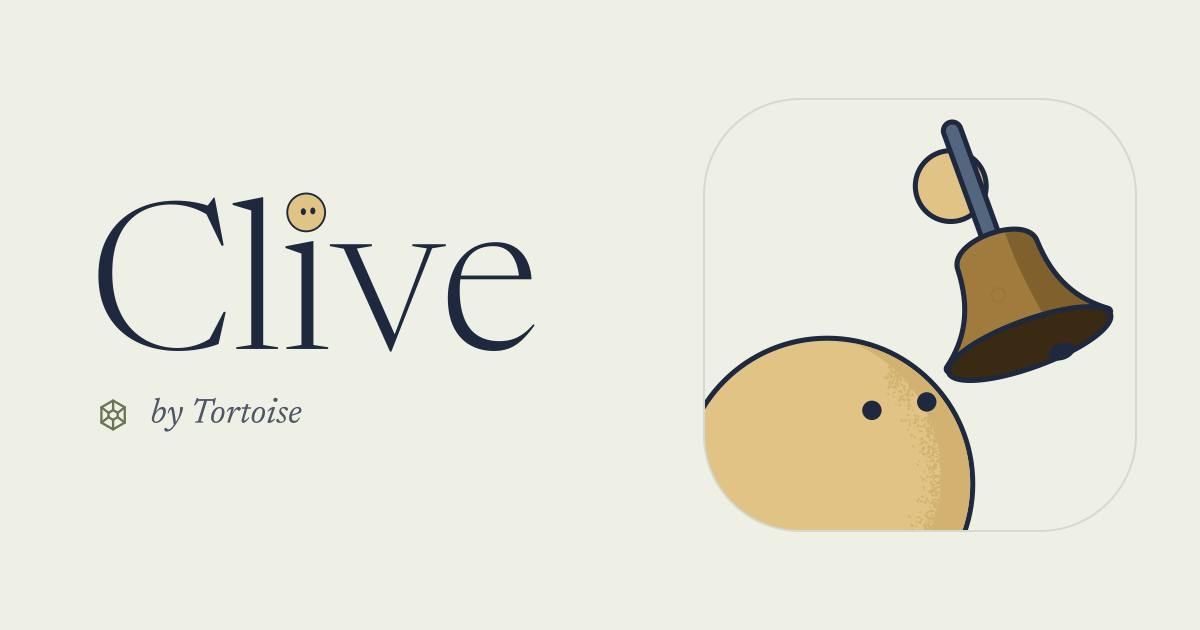
Clive uses Apple's AlarmKit to let AI assistants set iPhone alarms and auto-generate reminders from calendar events.
Clive is an iOS productivity tool on Product Hunt that uses Apple's AlarmKit framework to let AI assistants like Claude set iPhone system alarms via natural language commands. It can also extract time info from calendar events to auto-generate reminder alarms, and features visual feedback during setup. With 65 upvotes and ranking 18th on Product Hunt, it represents AI assistants moving from conversation to real action.
Tired of Setting Alarms Manually? Let AI Do It
Setting multiple alarms every day is a routine for many people, but doing it one by one is both time-consuming and easy to forget. A new product on Product Hunt called Clive targets this pain point: it lets users set iPhone alarms directly through AI assistants like Claude, and can even generate them automatically from calendar events.
According to its Product Hunt page, Clive leverages Apple's AlarmKit framework to let AI invoke the system alarm functionality. Users simply give Claude a command like "set an alarm for 7 AM tomorrow," and Clive handles the rest. The app also features a lively interaction: Clive "walks up to the right instrument and plays it," providing visual feedback as the alarm is set.
Clive currently has 65 upvotes on Product Hunt, ranking 18th in the iOS, Productivity, and Artificial Intelligence categories. Developer Connor Spencer positions it as an extension of AI assistants into personal productivity scenarios.
From Calendar to Alarm: Extending the AI Assistant's Reach
The core value of Clive lies in bridging the gap between AI assistants and system-level alarms. In the past, AI assistants could help you schedule events and send messages, but directly controlling phone hardware features like alarms remained a hurdle. Through AlarmKit, Clive enables Claude to understand user intent and execute concrete actions.
Even more practical is Clive's ability to extract time information from calendar events and set alarms automatically. For example, if you add a "9 AM meeting" to your calendar, Clive can set an 8:30 reminder alarm accordingly. This automation reduces manual steps and is especially useful for users with packed schedules.
This feature also reflects a broader trend in AI assistants: moving from conversational interaction to real action. Claude is no longer just answering questions — it's becoming a tool that can operate your phone for you.
What Is AlarmKit
AlarmKit is a system framework Apple introduced in iOS 26 that allows third-party apps to create and schedule system-level alarms. Previously, iPhone system alarms could only be set by the Clock app itself; third-party apps could at most send local notifications or play background audio, but could not trigger the full-screen alarm interface or bypass Silent and Focus modes. AlarmKit opens these capabilities to developers and allows apps to expose alarm actions through App Intents, making them callable by Siri, Shortcuts, and AI assistants integrated with system App Intents. Clive relies on this mechanism to let assistants like Claude translate natural language commands into real system alarms.
A New Approach to Productivity Tools: Integrating AI into the System
Clive offers a new way of thinking about productivity tools. Traditional alarm apps are limited in function, whereas Clive enables natural language interaction and cross-app integration through AI assistants. Users don't need to open a dedicated app — they simply state their needs in a Claude conversation, and the alarm is set automatically.
This "AI as interface" concept is being adopted by more and more products. Though focused in scope, Clive targets a high-frequency, essential use case: alarms. For users who regularly use AI assistants, it offers a seamless experience.
That said, Clive currently only supports iPhone and depends on AlarmKit and AI assistants like Claude. Its real-world performance, recognition accuracy, and response speed remain to be tested by users. But as an attempt to bring AI assistants into practical action, it's worth watching.
App Intents and the AI Assistant Call Chain
For an AI assistant to "operate a phone," it typically relies on the intent frameworks provided by the system. Apple's App Intents allows developers to declare in-app functions as system-recognizable actions, which Siri, Shortcuts, and AI clients supporting the framework can match semantically and execute. Compared to automation scripts that directly manipulate the UI, App Intents is an officially supported path with better guarantees for permissions and stability, but the range of callable actions is limited to the interfaces apps actively expose. Clive encapsulates "set an alarm" as such an intent, so the AI only needs to generate structured parameters (time, label, repeat rules) to complete the task — which also explains why it must depend on AlarmKit and specific iOS versions.
Conclusion
Clive lets AI assistants set iPhone alarms directly and generate reminders automatically from calendar events, simplifying daily operations. It demonstrates the shift of AI from conversation to action and offers a new direction for productivity tools. Though still early-stage, it has already gained initial recognition from the Product Hunt community.
Related articles

Gemini 4 Neon Leak: A Potential Strong Contender Against Opus 5.5
A Hacker News thread suggests Gemini 4 Neon looks like an Opus 5.5 competitor. This article unpacks the product positioning behind this community signal, shifts in the top-model competitive landscape, and what it means for developers' model selection strategy.

Claude Fable 5.2's Self-Authored Short Film 'Fable' Sparks Discussion
A short film 'Fable,' credited to Claude Fable 5.2 for script, visuals, and directing, appears on Hacker News. This article analyzes the significance of full-pipeline AI creation, community reactions, and what it means for content creators.

Anthropic IPO Pricing: A Signal of AI Giants Going Public
Anthropic's IPO pricing draws attention. This article analyzes its potential impact on AI industry valuation, commercialization paths, and the competitive landscape, and highlights public-market expectations and challenges for AI companies.