Codex CLI Practical Guide: From Setup to Enterprise-Level AI Development

A complete guide to mastering Codex CLI — from basic setup to enterprise AI development workflows.
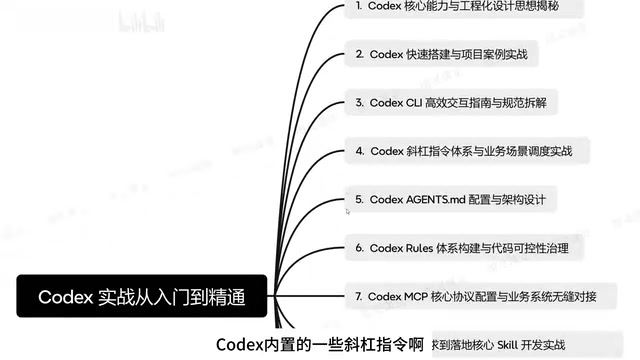
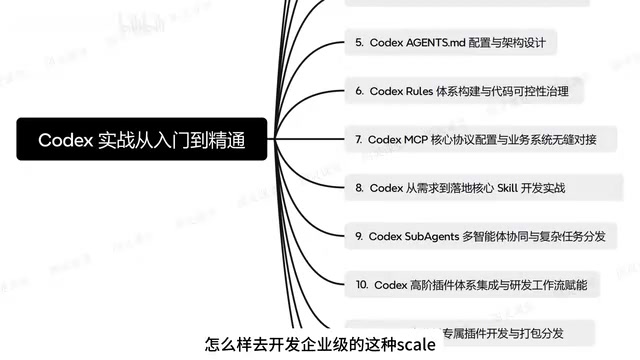
This guide covers the full Codex CLI capability stack: effective interaction conventions, slash commands, AGENTS.md configuration, code governance, MCP protocol integration for business systems, multi-agent coordination, enterprise plugin development, and a hands-on RAG intelligent customer service project. It's designed to help developers build a complete AI-assisted R&D workflow.
1. Why You Should Learn Codex CLI Systematically
OpenAI's Codex CLI is becoming a core productivity tool for a growing number of developers. Beyond code completion, it functions as a full-featured programming agent capable of deeply integrating into every stage of the development lifecycle. This article provides a complete learning path — from installation and configuration to enterprise-level use cases — to help developers quickly build a comprehensive understanding of Codex CLI's capabilities.
Unlike casually using an AI coding assistant, truly harnessing Codex for productivity requires understanding its full capability stack. Many developers stop at "asking it to write a few lines of code," but Codex CLI actually offers a complete system — from interaction conventions and slash commands to configuration files and multi-agent coordination.
Only by connecting all these pieces can you independently build a complete project from scratch with AI, rather than treating it as a glorified search engine. The core value of this system lies in deeply embedding AI into the development workflow, rather than keeping it as a peripheral tool.
2. Basic Configuration and Effective Interaction
Interaction Guidelines and Usage Conventions
The first step in learning Codex CLI isn't rushing to start a project — it's mastering effective interaction guidelines and usage conventions. The quality of output from AI coding tools depends heavily on the quality of input. Clear task descriptions, appropriate context, and structured conversation rhythm directly determine whether Codex can accurately understand your intent.
The Built-in Slash Command System
Codex CLI includes a comprehensive built-in slash command system. Slash commands are a structured input paradigm for CLI tools, first widely adopted in IRC chat protocols, and later evolved into a standard interaction pattern for AI conversation tools. Compared to natural language instructions, slash commands have clear semantic boundaries and predictable execution behavior, which significantly reduces AI misinterpretation of user intent. In Codex CLI, slash commands are essentially abstraction wrappers over underlying API calls — each command maps to a set of predefined context injections and model behavior constraints.
These commands don't exist in isolation; they need to be applied flexibly based on specific business scenarios. Mastering this command set means you can drive Codex to perform specific operations in a more structured and predictable way, rather than relying on natural language trial and error every time. In practice, slash commands are often the key dividing line between efficient and inefficient users — experienced developers can quickly identify issues, generate code, and run tests with just a few commands, while beginners often get stuck in inefficient back-and-forth exchanges.
3. AGENTS.md Configuration and Code Quality Governance
The Architecture of AGENTS.md
AGENTS.md is a critically important configuration file in the Codex ecosystem — it serves as the "project constitution" for AI agents, defining project structure, coding standards, dependencies, and the behavioral guidelines the agent must follow.
Its design philosophy draws from the "Infrastructure as Code" concept in software engineering, making implicit team collaboration conventions explicit and documented. From a technical implementation perspective, Codex injects the contents of AGENTS.md as part of the system prompt into the context window before processing user requests, persistently influencing the model's output behavior. This mirrors the philosophy behind project-level standardization tools like .editorconfig and .eslintrc — the key difference is that AGENTS.md constrains the behavior of an AI agent rather than static code formatting.
How well you write AGENTS.md directly determines how "reliable" Codex is within your project. A well-architected AGENTS.md helps the agent maintain consistency when handling complex tasks and significantly reduces unexpected outputs.
Code Controllability Governance
As AI-assisted programming becomes increasingly widespread, code controllability governance is an unavoidable topic for enterprise applications. Codex's Rules system was built precisely for this purpose — by establishing explicit rule constraints, it ensures that AI-generated code aligns with team standards and remains maintainable and traceable.
The concept of technical debt was introduced by Ward Cunningham in 1992 to describe the "hidden cost" accumulated by sacrificing code quality in pursuit of short-term development speed. In the era of AI-assisted programming, technical debt can accumulate dramatically faster — a model can generate hundreds of lines of code in seconds, but whether that code follows team conventions, is testable, or adheres to domain architecture constraints is often left uncontrolled. Codex's Rules system essentially introduces a "guardrails" mechanism into the AI code generation pipeline, filtering and correcting generated output through predefined constraint rules. This is conceptually aligned with traditional DevOps quality gates like static application security testing (SAST) and code review — the difference is that the Rules system shifts constraints upstream to the generation stage rather than applying them after the fact.

This distinction highlights the essential difference between mature engineering practice and "just letting AI generate code": the former focuses on long-term maintainability and team collaboration, while the latter tends to surface serious technical debt as a project scales.
4. MCP Protocol and Business System Integration
Codex's support for MCP (Model Context Protocol) is a core capability that enables it to integrate with and transform business systems. MCP is a standardized protocol proposed and open-sourced by Anthropic in late 2024, designed to address the problem of "interface fragmentation" between AI models and external tools and data sources. Before MCP, every AI application had to implement its own integration logic for external services, leading to massive duplicated engineering effort. MCP draws architectural inspiration from the Language Server Protocol (LSP): just as LSP unified communication between code editors and language services, MCP aims to play the same standardizing role between AI agents and external tools. The protocol uses JSON-RPC 2.0 as the underlying communication format and defines three core capability types — Resources, Tools, and Prompts — enabling different AI platforms to invoke the same external services through a unified interface.
By configuring MCP, developers can connect Codex directly to existing business systems, achieving a complete closed loop from requirement understanding to real-world action. This means Codex is no longer confined to the code editor — it can become a hub that connects various enterprise resources.
For enterprises, this capability is especially critical: it elevates AI programming from a personal productivity tool to a core component that can be embedded into organizational-level R&D infrastructure.
5. Multi-Agent Coordination and Enterprise-Level Practice
The Sub-agents Multi-Agent Coordination Mechanism
For complex tasks, a single agent often falls short. Codex's Sub-agents mechanism supports multi-agent collaboration, decomposing complex tasks and distributing them to different agents for parallel processing.
Multi-agent collaborative architecture has deep theoretical roots in AI engineering, drawing from the core ideas of task decomposition in distributed systems and parallel computing. In large language model scenarios, a single agent faces two key bottlenecks: context window limits and attention dilution — when task complexity exceeds single-inference capacity, output quality degrades significantly. Codex's Sub-agents mechanism essentially implements an "Orchestrator-Worker" pattern: the primary agent handles task decomposition and result aggregation, while sub-agents each process their subtasks within independent context spaces and collaborate through structured message passing. This architecture closely aligns with the design philosophy of mainstream multi-agent frameworks like AutoGen and LangGraph, reflecting current best practices in AI engineering.
This "divide and conquer" approach mirrors how real teams collaborate: different agents take on different responsibilities, working toward an overall goal through task distribution and result aggregation. For large-scale project development, multi-agent coordination is a critical mechanism for improving both efficiency and quality.
Enterprise Plugin Development and Automation
Codex also supports advanced plugin integration for deep interoperability with development workflows. Enterprises can develop custom plugins for automated scenarios such as scheduled development tasks, then package and distribute them for reuse on the web or by other team members.

This plugin mechanism transforms Codex from a general-purpose tool into a customizable enterprise platform, enabling teams to build bespoke automated R&D capabilities tailored to their specific business needs.
6. Full Project Implementation: A RAG Intelligent Customer Service System
All of these capabilities ultimately need to be validated through real project work. A compelling end-to-end example is building a complete RAG-based intelligent customer service system from scratch using Codex CLI.
RAG (Retrieval-Augmented Generation) was formally introduced by Meta AI Research in 2020 in the paper "Retrieval-Augmented Generation for Knowledge-Intensive NLP Tasks." Its core idea is to combine the generative capabilities of large language models with the retrieval capabilities of external knowledge bases, effectively addressing two major pain points of pure generative models: hallucination and knowledge cutoff. A typical RAG system consists of three core components: a document vectorization module (converting raw documents into high-dimensional vectors and storing them in a vector database), a semantic retrieval module (recalling relevant document segments from the vector database based on user queries), and a generation module (feeding retrieved results as context to the LLM to generate the final response). In enterprise deployments, RAG has become the mainstream technical solution for knowledge base Q&A, intelligent customer service, and internal document retrieval, thanks to its strong interpretability, low knowledge update cost, and controllable hallucination risk.
Building such a system end-to-end with Codex brings together all the capabilities discussed above: from requirements analysis and architecture design to code generation, MCP protocol integration, multi-agent coordination, and plugin integration.
Once the project is complete, conducting a systematic retrospective and distilling best practices is what transforms scattered knowledge into a reusable methodology. This step is often the most overlooked by learners — and yet the most valuable.
Summary
The value of Codex CLI lies not in any single feature, but in the complete AI-assisted development system it provides: from basic interaction conventions and slash commands, to AGENTS.md configuration and code governance, to MCP protocol integration, multi-agent coordination, and enterprise plugin development.
For developers who truly want to master AI programming, systematically learning this stack and validating it through complete project work is far more meaningful than casually "trying it out." As AI programming tools grow increasingly powerful, the ability to use them systematically will become the real differentiator between developers.
Related articles
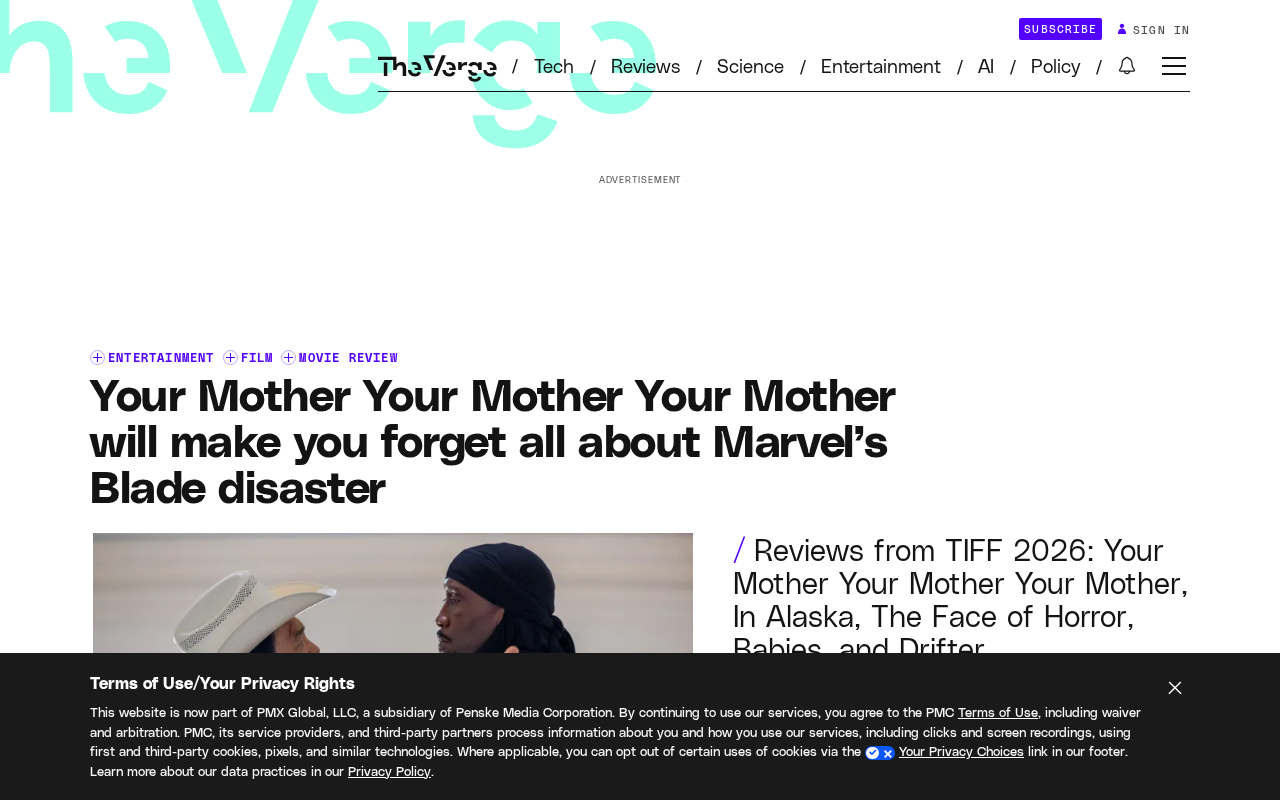
Can 'Your Mother' Make Us Forget Marvel's Blade Disaster?
Marvel's Blade reboot starring Mahershala Ali collapsed due to mismanagement. We explore why its failure may not be the worst outcome — and what 'Your Mother' has to do with it.
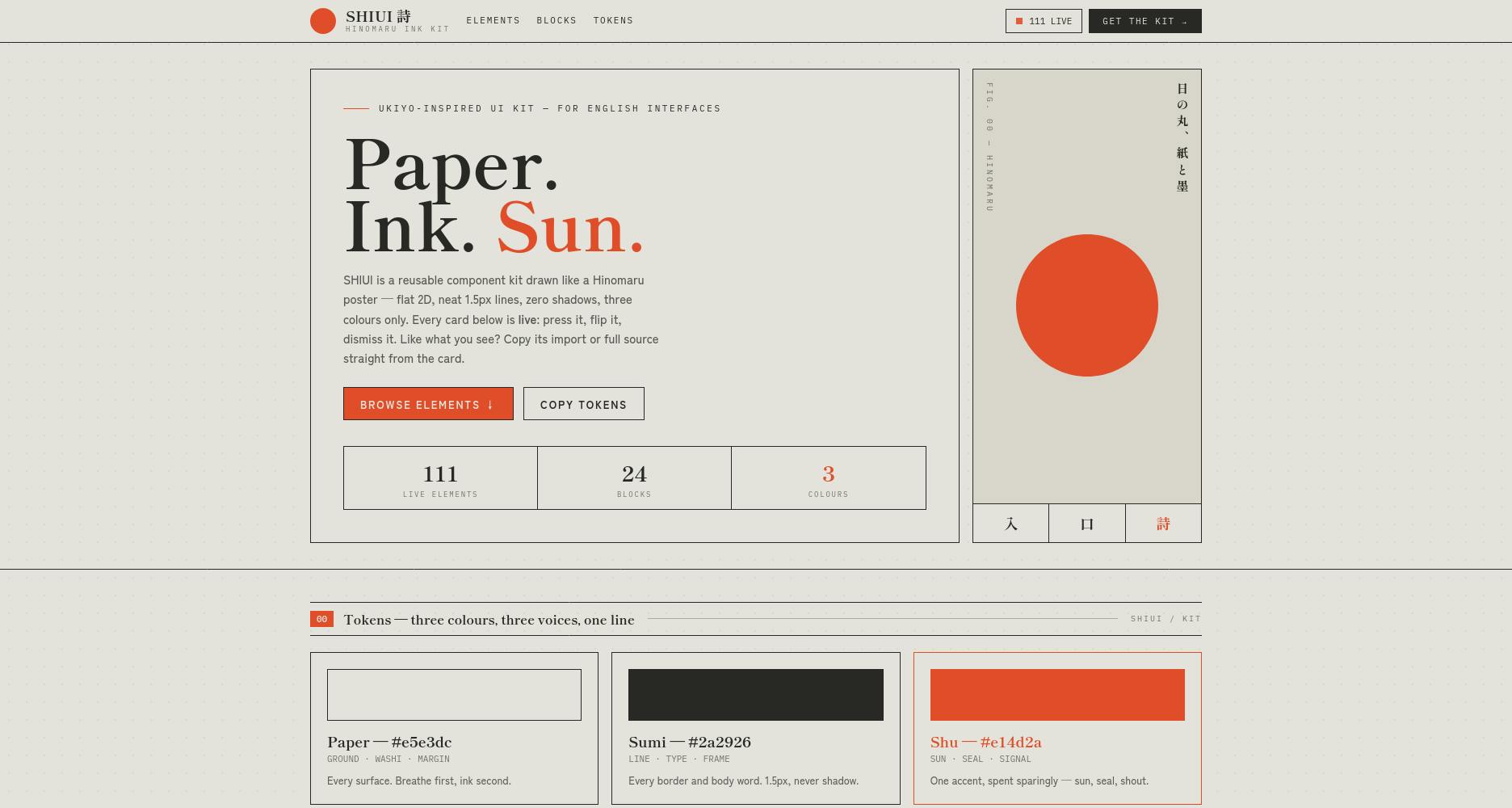
SHIUI: A Minimalist Ink-Wash UI Kit Inspired by Japanese Hinomaru Aesthetics
SHIUI is a flat ink-wash Web UI kit inspired by Japanese Hinomaru poster aesthetics, built around paper, sumi ink, and vermilion with zero shadows. A design breakdown.

Kirokune: An iPhone Work Incident Logger That Requires No Account
Kirokune is an iPhone app for logging workplace incidents — no account required. Combines text, audio, and photos in a timeline. Ranked #9 on Product Hunt with 86 votes.