Codex in Action: A Complete Guide to Building a WeChat Mini Program with AI — No Coding Experience Required

How a non-coder used OpenAI Codex and ChatGPT to build and launch a WeChat Mini Program in 5 days.
This article documents a full real-world workflow for building a WeChat Mini Program — a World Cup MBTI personality test — using OpenAI Codex and ChatGPT, with zero coding background. It covers AI-assisted prototyping, Codex Plan Mode for autonomous development, and the often-overlooked time cost of China's sequential ICP filing and WeChat review process. The MVP was delivered in roughly 5 days.
For anyone without a programming background, building a WeChat Mini Program that's actually searchable and live in the app feels like an impossible feat. But as AI coding tools mature, that barrier is dropping fast. This article, based on a hands-on tutorial from a Bilibili creator, provides a complete walkthrough of how OpenAI's Codex was used to turn a "soccer fan personality test" concept into a real, searchable product on WeChat — step by step. The entire process took about 5 days, most of which was spent on review and approval, not development.
From Idea to Plan: The Product Work That Comes First in the AI Era
The concept for this project was deliberately lightweight — an MBTI personality test mini program with a World Cup theme. MBTI (Myers-Briggs Type Indicator) is a personality assessment tool developed by Isabel Myers and Katharine Briggs in the 1940s, based on Jungian psychology, that classifies personalities into 16 types. While its academic rigor is debated, MBTI has earned massive traction in popular culture thanks to its "labelable and shareable" nature. It naturally drives two powerful user behaviors: completion drive (users are eager to see their result) and sharing drive (results carry social currency). This makes it an ideal vehicle for viral growth. Users answer around 10 questions, and the app generates a personalized "fan personality card" they can share to Moments. The simple flow made it a perfect test case for validating a full AI-driven development pipeline.
What's worth noting is the developer's preparation work before a single line of code was written. Rather than jumping straight into coding with Codex, he started with a casual "chat-style" technical discussion — dictating his project ideas via voice input (using the Doubao app). Even with speech recognition errors in the transcript, Codex accurately understood the intent. Codex then proposed a lightweight implementation plan: skip the complex backend, adapt the native mini program directory structure, and use a simple, controllable scoring system to map personality dimensions.
The key insight here is: In the AI coding era, human value shifts upstream to the "product definition" layer. You don't need to understand technical details — but you do need to clearly articulate product logic and user flow.
Generating High-Fidelity Prototypes and Layered Assets with ChatGPT
Traditional mobile app design typically follows a chain of information architecture → low-fidelity wireframes → high-fidelity visual designs → asset handoff. Product managers sketch wireframes in Axure or Figma, UI designers complete the visual design, and the whole process takes days with heavy cross-team dependency. In this tutorial, that entire step was dramatically compressed using ChatGPT's image generation capabilities.
The developer copied the same project brief he had given Codex directly into ChatGPT, asking it to generate high-fidelity prototype screens in a "World Cup theme, cartoon/humorous style, with a modern aesthetic" — specifying four pages: home screen, quiz screen, results screen, and share screen.
After the first version was generated, he made several targeted iterations: remove the redundant results preview from the home screen and keep only one large "Take the Test" button; remove the "Next Question" button from the quiz screen (replace with auto-advance on selection); change the results screen to a single full-screen card. This conversational "generate → feedback → iterate" design loop is precisely what sets AI tools apart from traditional design software.
He also made a clever move: asking ChatGPT to split the prototype into layered assets — each element exported individually, maintaining relative positioning, with a white opaque background for easy use in development. This "layered assets" request essentially replicates the layer management logic of traditional design software, evolving AI-generated output from "inspiration reference" to "production-ready engineering assets" that code can directly reference. The result was three core prototype screens and a set of component images, all placed in the project folder for Codex to use.
Codex Plan Mode: Using High Standards to Drive Autonomous AI Iteration
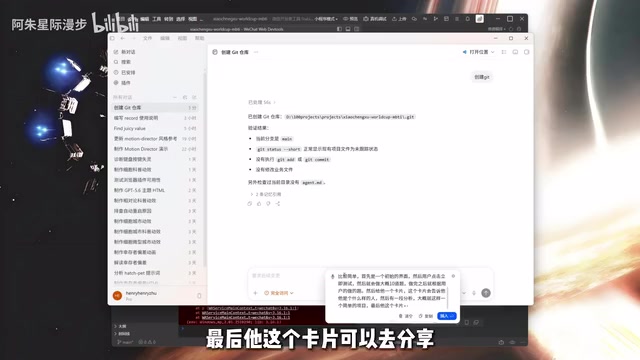
With assets ready, the developer activated Codex's Plan Mode, prompting it to write a detailed development document similar to a PRD. Codex Agent is OpenAI's autonomous coding agent — unlike the earlier GitHub Copilot, which only did code completion, it can autonomously execute multi-step programming tasks in the cloud: clone repos, install dependencies, run tests, and iterate in a loop until the task is complete. In Plan Mode, Codex doesn't immediately generate code. Instead, it first analyzes the full scope of the task and proactively asks clarifying questions (e.g., "How many personality types should there be?" "Does the share feature need to generate a poster?"), using dialogue to define the scope of requirements. This mechanism is grounded in "Chain-of-Thought Reasoning" from large language model research — having the model reason step by step before acting significantly improves performance on complex tasks.
One easily overlooked detail: the developer initially forgot to provide the quiz questions and personality result copy documents. After supplying them, Codex regenerated a much more complete development plan. The completeness of your context directly determines the quality of AI output.
The most instructive technique was how he set acceptance criteria. He asked Codex to write a development goal with "very high acceptance standards," covering dimensions like visual quality and interaction smoothness. His reasoning was clear:
If you set the target very high, Codex will keep iterating in a loop until it reaches that goal — if it hasn't met the standard, it won't stop.
This leverages Codex's goal-driven mechanism: when the model is given explicit quality standards, it self-evaluates after each execution and continues iterating if it falls short — creating a working loop similar to an engineer's own "test → fix → test" cycle. In essence, it transfers the cost of quality assurance from manual review to the AI's own autonomous iteration. This development task had Codex running continuously for about 2 hours and 26 minutes, ultimately flagging its goal as "blocked" due to "requiring real WeChat device authorization" — meaning everything it could do autonomously had been completed.
Iterative Refinement: From "Functional" to "Polished"
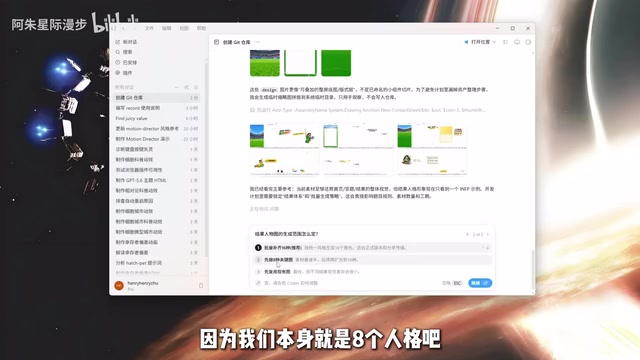
The first version had a complete flow but a rough interface. The developer made targeted improvements, including: replacing the "Take the Test" button icon with a World Cup trophy and adding an animation effect, and replacing quiz progress icons with World Cup-themed elements.
The most significant change was on the results screen — he asked Codex to generate one complete image per personality type, with each image containing the personality name, an exaggerated/humorous fan illustration, and detailed personality analysis text, rather than assembling multiple separate modules. He also asked Codex to rewrite the bottom buttons in code rather than using image assets, to fix issues like off-center text and cropped borders.
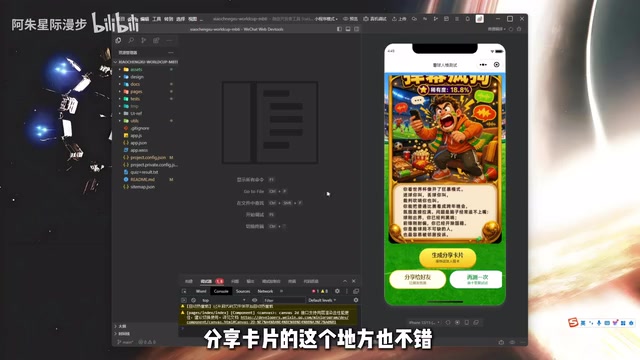
This process once again confirmed: AI development is not "one shot and done." It's a collaborative model where humans lead aesthetic judgment and AI handles implementation details. The developer's sensitivity to roughness and his ability to give clear revision instructions are the real guarantors of final product quality.
Mini Program Review and Approval: Where the Real Time Cost Lives
If development was fast, the review process was the true time sink of this project. The full launch process involves multiple sequential steps.
Registration and Configuration
Register a mini program account with a fresh email address, select "Individual" entity type (fewer features than Enterprise but sufficient for simple projects), and enter the APP ID in WeChat DevTools. The developer noted that enterprise accounts offer richer categories, community forums, and monetization options, but the personal account verification fee of ¥30 is far lower than the ¥300 for enterprise.
ICP Filing and Certification
WeChat Mini Program ICP filing is part of China's mobile internet regulatory compliance framework. Since 2022, the Ministry of Industry and Information Technology (MIIT) requires all mini programs to complete ICP registration. Developers must submit real identity information and a handwritten signature declaration — electronic signature versions are rejected outright. This requirement exists to ensure traceable accountability for internet content. On top of ICP filing, WeChat has its own "WeChat Certification" requirement, which typically completes within a day or two.
Naming also has pitfalls: the name "Soccer Fan MBTI Personality Test" — specifically the term "MBTI" — may trigger risk-control rules during review, flagged as overly generic. After several rounds of back-and-forth, the name was changed to "Green Eagle Soccer Fan Personality Test" before it was approved. This shows that naming compliance often requires multiple rounds of negotiation with reviewers. For independent developers hoping to launch quickly, understanding the time structure of this sequential review process is often more important than the technical development itself.
Submission and Publication
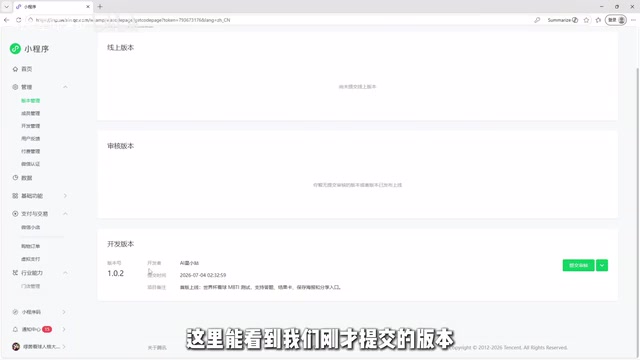
WeChat Mini Programs have strict package size limits (main package cap of 2MB, total subpackages of 20MB), a result of their technical architecture running within the WeChat client sandbox environment. During upload, the developer encountered issues including the main package exceeding the size limit and image/audio assets failing quality checks. He fed the error screenshots directly to Codex, which automatically compressed and optimized the resources. Image resource "warnings" don't block publication; main package size "failures" must be resolved.
Post-Launch Bug Fixes: Codex as Technical Support
The launch wasn't the end. The developer discovered two issues on a real device: the live version couldn't save card images, and the share card was missing the mini program QR code, making user re-engagement impossible.
For the save failure, Codex accurately identified the cause — this relates to WeChat Mini Program's privacy permission declaration mechanism. Since 2023, WeChat requires developers to explicitly declare every category of user data collected in the public platform. The legal basis is China's Personal Information Protection Law (PIPL), which is structurally similar to the EU's GDPR. If the code calls APIs that access user data — such as wx.saveImageToPhotosAlbum (saving images to the photo album) — but the corresponding declaration isn't made in the privacy policy, WeChat's system will block the API call at runtime. This is a scenario that purely code-level AI tools cannot handle automatically and requires the developer to configure it in the platform directly. The developer followed Codex's instructions, added the declaration in the WeChat public platform, submitted for review, and the issue was resolved within 12 hours.
For QR code re-engagement, Codex designed a solution to automatically append a module with the mini program QR code and copy text below the card when users save it. While the initial styling was rough, several rounds of conversation brought it to an MVP-acceptable standard.
These two cases illustrate a deeper value of Codex: it's not just a code generator — it's a technical consultant that can diagnose problems, propose solutions, and guide you through platform configuration.
Takeaways: Key Lessons from AI-Driven Mini Program Development
From a raw idea to a searchable, live product on WeChat, this process validates that AI coding tools can now support non-technical people through a complete product delivery cycle. A few key lessons are worth keeping:
- Human role shifts upstream: from writing code to defining products, making aesthetic judgments, and articulating requirements;
- Prototype first: use ChatGPT to generate high-fidelity prototypes and layered assets so AI development has a concrete reference;
- Set high standards: define strict acceptance criteria and leverage Codex's autonomous iteration to reduce rework;
- Review is the main cost: ICP filing, certification, and privacy declarations — the sequential review process consumed the majority of the 5-day timeline.
This is still an MVP, with room to improve in visual polish and feature depth. But it proves one thing: the technical barrier is disappearing. The remaining competition comes down to creativity, product thinking, and execution.
Key Takeaways
Related articles
Understanding GitHub's Availability Report: Platform Stability and Developer Response Strategies
Deep dive into GitHub's monthly availability report: analyzing service degradation impacts, CI/CD fault tolerance, and platform dependency risk strategies for resilient development.
OpenAI's Claim of Solving a Millennium Prize Problem Sparks Academic Controversy
OpenAI claims its AI solved a Millennium Prize Problem, sparking debates over attribution, verification, and AI's role in reshaping mathematical research.

Ledoit-Wolf Covariance Shrinkage in Practice: 57% Lower Turnover + 10x GPU Acceleration
Learn how Ledoit-Wolf covariance shrinkage reduces portfolio turnover by up to 57% and how cuML GPU acceleration cuts backtest time from 1.5 hours to 9 minutes.