Cold-Starting an APP from Zero Followers to $14,000/Month: The Complete Influencer Partnership Growth Playbook

Indie developer grows fitness APP to $14K/month revenue through strategic influencer partnerships
Young developer Evan built a gamified fitness habit tracking APP called "Locked" in just six weeks using AI tools, incorporating RPG mechanics to boost user retention. Instead of running ads, he focused exclusively on partnering with short-form video creators, using precise CPM calculations to ensure every collaboration was profitable. One creator partnership generated 1 million views, 1,800 downloads, and $3,000 in revenue, ultimately scaling to $14,000 in monthly income.
A young developer with no followers and no advertising budget managed to grow a fitness APP to $14,000 in monthly revenue within just a few months. The answer: finding an underestimated growth channel and executing it to perfection.
This article breaks down Evan's complete cold-start strategy—from product development to growth engine. This methodology is highly relevant for anyone looking to launch an APP business in 2025-2026.
Gamified Product Design: Redefining Habit Tracking with RPG Mechanics
Evan built an APP called "Locked"—essentially a gamified health habit tracking application. Unlike the sea of homogeneous habit trackers on the market, Locked's core differentiator is its comprehensive gamification experience:
- Users select a character from the moment they sign up
- Completing tasks earns XP (experience points)
- Leaderboards, badges, and leveling systems are built in
- Community competition mechanics keep users engaged
Gamification isn't a new concept, but systematically applying it to health habit formation represents an important trend at the intersection of behavioral science and product design. The underlying logic comes from Self-Determination Theory in psychology: XP and leveling systems satisfy users' sense of Competence, character selection satisfies Autonomy, and leaderboards and community competition satisfy Relatedness. Duolingo is the most successful commercial example in this space—its gamification design drives daily active retention rates approximately 3x higher than traditional learning apps. Locked migrates the same mechanics to the fitness habit domain, essentially leveraging the human brain's natural preference for "progress visualization"—when users can see their growth trajectory, the psychological cost of quitting increases significantly.
On the business model side, it uses a subscription model: $40/year or $7/week, with a 3-day free trial included in the annual plan. There's also a "quit deal" recovery mechanism—when users close the paywall, a discounted $20/year offer pops up.
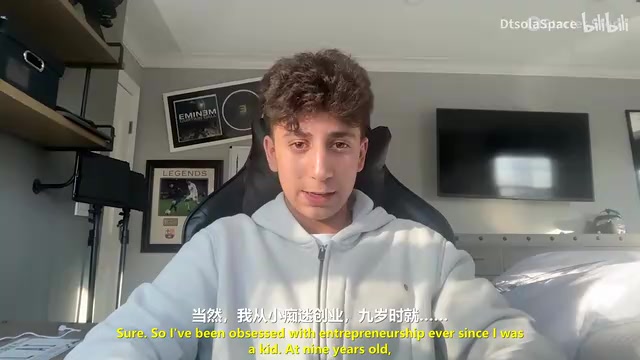
Notably, this APP went from design to App Store listing in just one and a half months. The design phase took two weeks using Figma, and development was completed with Claude Code. Claude Code is Anthropic's AI programming assistant, and its core difference from tools like GitHub Copilot lies in its stronger "project-level comprehension"—it can generate and modify code while understanding the overall code architecture, rather than just doing local completions. For indie developers, AI coding tools deliver more than just efficiency gains—they fundamentally lower the "feasibility threshold": traditionally, a non-technical founder would need 3-6 months to learn Swift or React Native before independently developing a mobile app, but with Claude Code, someone with basic programming concepts can complete an MVP within weeks through a "describe requirements → generate code → debug and iterate" loop.
The tech stack is remarkably lean: Figma for design + Claude Code for development + Superwall for paywall A/B testing + Supabase for the database. Supabase, as a Backend-as-a-Service (BaaS) platform, provides out-of-the-box database, authentication, and real-time features, compressing backend development complexity to near zero. This "AI + BaaS" combination is becoming the standard configuration for indie developers in 2025, with monthly operating costs that are virtually negligible.
Core Growth Strategy: Low-CPM Influencer Partnership Promotion
This is the most valuable section of the entire article. Evan didn't run paid ads, didn't do SEO, didn't build a content matrix—he used one single strategy: partnering with short-form video creators for promotion.
Why Choose Influencer Partnerships Over Traditional Ad Spend?
Evan's logic is crystal clear:
- Trust Transfer: Creators have already built trust relationships with their followers, making APP recommendations more persuasive than traditional ads
- Cost Control: By precisely calculating the relationship between CPM (cost per thousand impressions) and RPM (revenue per thousand impressions), every partnership is guaranteed to be profitable
- Content Assets: Short-form video content continues to generate long-tail traffic—a single partnership can deliver months of ongoing exposure
The core asset of influencer marketing is "Parasocial Trust"—the one-sided emotional connection fans build with creators, which gives their recommendations persuasive power similar to a friend's word-of-mouth. Nielsen research shows that 92% of consumers trust personal recommendations, while only 33% trust brand advertising. This trust premium is especially pronounced with micro-influencers (creators with 10K-500K followers)—their engagement rates are typically 3-5x higher than million-follower mega-influencers, and partnership costs are lower. Evan's choice to use comment section quality as the core metric for screening creators is precisely a way to quantify the authenticity of this trust asset: high-quality comments indicate genuine emotional connections between fans and creators, and only this kind of connection can effectively convert into APP download behavior.
Real Case Study: One Video Generating $3,000 in Revenue
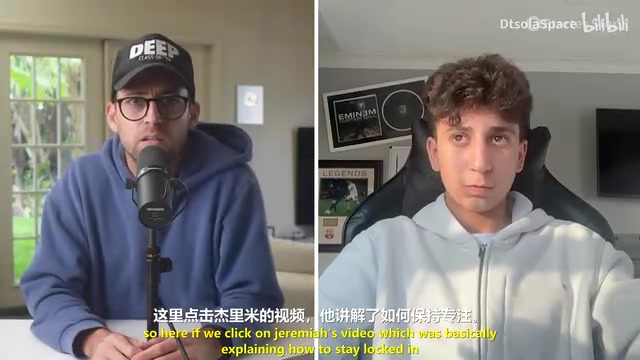
Evan shared collaboration data from working with creator Jeremiah Jones:
- Video topic: How to stay focused (perfectly aligned with APP positioning)
- Cross-platform views: ~1 million
- Downloads generated: ~1,800
- Revenue produced: ~$3,000
- Partnership cost: $800 (with a 600K minimum views clause)
Three key factors behind this video's success:
- The creator's comment section quality was high, indicating strong follower loyalty
- The content topic naturally aligned with APP functionality
- The APP showcase was completed within the first 15 seconds of the video, creating a short conversion path
Five-Step Influencer Partnership Playbook
If you're starting from zero to promote a new APP today, Evan recommends following these steps:
Step One: Find Short-Form Video Creators in Your Vertical
Search for keywords related to your product on Instagram or TikTok, browse videos one by one, click through to creator profiles, and send a unified opening message: "Paid promo?"
Related articles
 Tutorials
ChatGPT Plus Subscription Guide: Are GPT-5.5, image-2, and Codex Worth the Upgrade?
A detailed look at ChatGPT Plus features — GPT-5.5, image-2, and Codex — with a Plus vs Pro comparison and a complete step-by-step subscription guide for users outside the US.
 Tutorials
Harness AI Engineering in Practice: Using Claude Code to Master Enterprise-Level E-Commerce Development
Deep dive into Harness AI Engineering: master enterprise e-commerce development with Claude Code using the Rules, Skills, Wiki, and Changes framework.
 Tutorials
Cursor + Codex Dual-IDE Collaboration: A Practical Methodology for Open-Source Project Customization
A complete methodology for open-source project customization based on real-world experience, detailing the Cursor+Codex dual-IDE workflow, seven-stage process, MVP validation, and AI source code reading techniques.