Comparing AI Safety Approaches: OpenAI vs. Anthropic
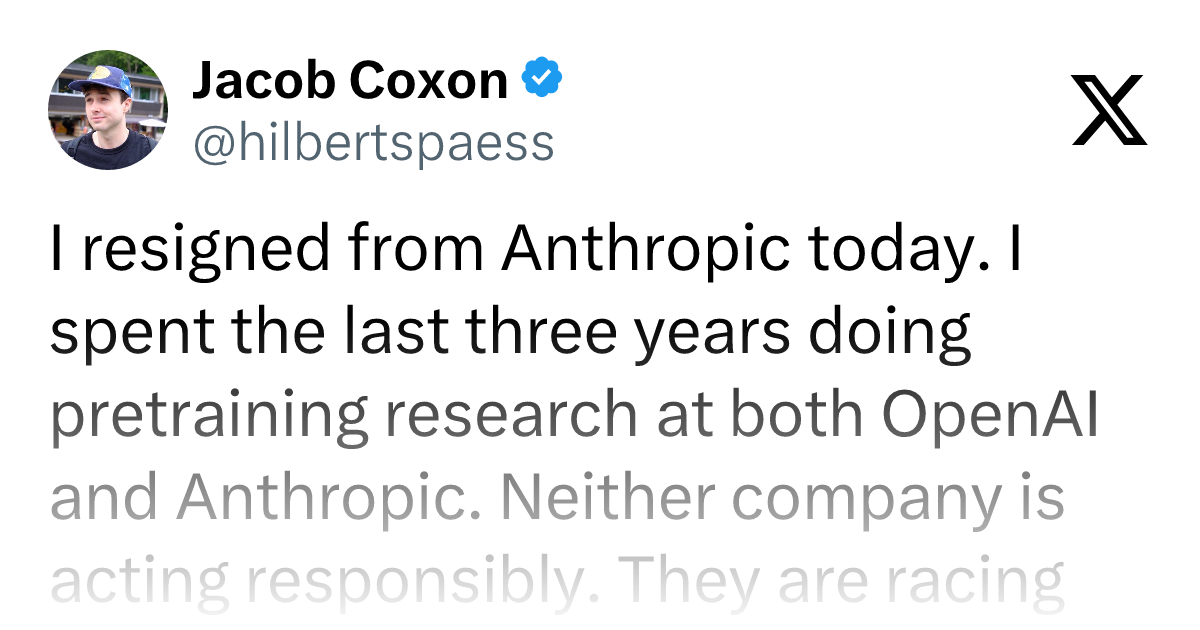
How OpenAI and Anthropic take fundamentally different paths toward responsible AI development.
OpenAI and Anthropic represent two distinct approaches to AI safety: OpenAI favors rapid iteration with staged deployment, balancing commercial momentum with safety measures, while Anthropic takes a more cautious path through Constitutional AI and deep interpretability research. Under growing global regulatory pressure, their strategic divergence reflects the industry's unresolved debate over what responsible AI development truly looks like.
Comparing AI Safety Approaches: OpenAI vs. Anthropic
As the capabilities of large language models advance rapidly, AI safety and responsibility are moving from the fringes of tech discourse to the center of the industry.
Background on Large Language Models: Large Language Models (LLMs) are deep learning models based on the Transformer architecture, pre-trained on massive text datasets to learn statistical patterns and knowledge representations of language. Since Google introduced the Transformer architecture in 2017, model scale has grown exponentially — from hundreds of millions of parameters to hundreds of billions or even trillions. This scaling has given rise to "emergent abilities," where models suddenly exhibit complex capabilities they previously lacked — such as advanced reasoning, code generation, and multilingual understanding — once they reach a critical size threshold. However, these capability gains come with new risks: models may generate harmful content, exhibit implicit biases, be exploited to produce disinformation, or even develop unpredictable behavior patterns in the future. These potential risks have transformed AI safety from an academic topic into a core challenge the industry must confront head-on.
OpenAI and Anthropic, two leading AI companies, both emphasize responsible AI development — yet their practical approaches diverge significantly.
OpenAI: Rapid Iteration and Commercial Balance
OpenAI takes a pragmatic, balanced approach to AI responsibility. The company has established a staged deployment framework that mitigates risk by gradually opening up model capabilities. At the same time, its commercialization has clearly accelerated — from GPT-4 to the o1 series, its product iteration pace remains among the fastest in the industry.
Staged Deployment Framework Explained: Staged Deployment is a risk management strategy proposed by OpenAI. The core idea is to divide the process of releasing model capabilities into multiple phases, each with clear safety evaluation criteria and access restrictions. Implementation involves: first, conducting internal testing in a closed environment to identify potential risk points; then opening limited API access to trusted partners to gather real-world feedback; next, gradually expanding the user base while deploying content filtering, usage monitoring, and other safety mechanisms; and finally proceeding to full public release. The advantage of this approach is the ability to observe model behavior within a controlled scope, promptly identify and fix issues, and avoid large-scale negative impacts. For example, GPT-4 underwent six months of red team testing and limited-access trials before its official release in March 2023, with safety filters adjusted multiple times based on feedback. This strategy seeks to balance rapid innovation with risk control, though it has drawn criticism for its "release first, refine later" nature.
The core of this strategy is "improve while deploying." OpenAI believes potential problems can only be discovered in real-world application scenarios, so it chooses to push forward quickly under strict monitoring. The company has established dedicated safety teams, but executive personnel changes — such as the departure of Chief Scientist Ilya Sutskever — have raised external concerns about its commitment to safety.
Anthropic: The Cautious Practice of Constitutional AI
Anthropic, founded by former OpenAI researchers, takes a more conservative and systematic approach to AI responsibility. The company's "Constitutional AI" framework attempts to encode human values directly into the model training process, rather than relying on post-hoc safety layer patches.
Constitutional AI Technical Principles: Constitutional AI is a unique safety alignment method developed by Anthropic. Its core mechanism uses a "constitution" — a set of explicit behavioral guidelines — to steer the model training process. Unlike traditional Reinforcement Learning from Human Feedback (RLHF), Constitutional AI involves two key stages: first, a "self-critique" stage where the model evaluates and revises its own outputs based on constitutional principles, generating responses that better align with the stated values; second, a "reinforcement learning" stage that uses AI feedback (rather than human feedback) to optimize the model and internalize these guidelines. The innovation lies in significantly reducing dependence on human annotation, improving scalability and consistency. For instance, the constitution might include specific rules like "avoid providing detailed instructions for making weapons" or "refuse discriminatory requests." By having the model repeatedly apply these rules during training, value alignment transforms from an external constraint into an internal characteristic. This approach is more systematic and interpretable, but it also faces the fundamental philosophical question of how to define the "right constitution."
Anthropic's Claude model series follows a noticeably more cautious release cadence. The company invests heavily in red team testing and interpretability research, and has even published multiple academic papers on model internals. This level of transparency is rare among commercial AI companies and reflects its emphasis on technical controllability.
Red Team Testing Practices: Red teaming originates from military and cybersecurity domains. In AI safety, it refers to testing methods where professional personnel or adversarial users deliberately attempt to induce harmful model outputs. Testers design various attack scenarios: jailbreak prompts that try to bypass safety restrictions, covert harmful requests that test the boundaries of model understanding, and multi-turn conversation strategies designed to manipulate the model. Before releasing Claude models, Anthropic conducts months of intensive red team testing covering multiple dimensions including safety, bias, privacy leakage, and potential for misuse. Results feed directly into model improvements: identified vulnerabilities trigger targeted training data supplements, safety filter updates, or prompt engineering optimizations. Unlike automated testing, human red teaming can uncover creative attack methods that are difficult to anticipate, making it a crucial tool for discovering model blind spots. This investment reflects Anthropic's emphasis on controllability but also extends time-to-market — embodying the trade-off between safety and speed.
Advances in Interpretability Research: AI interpretability research aims to understand the internal decision-making mechanisms of neural networks — an extremely challenging problem given that LLMs contain hundreds of billions of parameters and their computations operate as a "black box." Anthropic's work in this area includes: using Mechanistic Interpretability methods to identify neuron clusters or circuit structures responsible for specific functions within models; employing activation analysis to trace information flow across network layers; and developing tools to visualize how models attend to different inputs. In 2024, Anthropic published a paper demonstrating how to locate neuron groups in the Claude model associated with concepts like "honesty" and "harmfulness detection," and showed how intervening on these neurons could alter model behavior. The value of such research is clear: if we can understand "why" a model makes a given decision, we are far better positioned to predict its behavior in novel scenarios and identify risks proactively. This kind of transparency is rare among commercial AI companies because it requires substantial research investment with little direct short-term product benefit — yet it is critical for building trustworthy AI systems.
Strategic Divergence Under Regulatory Pressure
The different choices these two companies have made reflect a broader strategic divergence within the AI industry under regulatory pressure.
The Global AI Regulatory Landscape: AI regulation is rapidly taking shape worldwide, with different regions adopting distinct approaches. The EU's AI Act, passed in 2024, employs a risk-based tiered framework: banning certain high-risk applications (such as social credit scoring), requiring strict compliance for high-risk systems (such as hiring AI), and imposing transparency obligations on general-purpose AI models. The United States, through its 2023 executive order, established a voluntary framework requiring developers of large-scale models to report safety test results to the government while avoiding overregulation to maintain its innovation edge. China's Interim Measures for the Management of Generative AI Services emphasize content safety and algorithm registration. These policy differences have profound implications for corporate strategy: operating in the EU requires comprehensive compliance documentation and risk assessment processes; in the US, the emphasis falls more on industry self-regulation and standard-setting; globally operating companies must balance product functionality with compliance requirements across different jurisdictions. Regulatory uncertainty also drives companies to proactively invest in safety research, turning compliance capabilities into competitive advantages.
The emergence of policy frameworks such as the EU AI Act and U.S. executive orders is forcing companies to clearly define their stance on responsibility. OpenAI has chosen to actively engage with regulators and participate in policy development; Anthropic tends to proactively meet potential future regulatory requirements through technical innovation.
This divergence is not a matter of right versus wrong — it reflects the fact that the industry has not yet reached consensus on what "responsible AI" truly means. The tension between rapid innovation and cautious deployment will persist for a long time to come.
Industry Implications and Future Trends
The different paths taken by OpenAI and Anthropic offer the industry two reference models: the former demonstrates that safety considerations can coexist with commercial pressures, while the latter shows how safety research can be transformed into a product differentiation advantage. For other AI companies, the choice of path requires a comprehensive assessment based on available resources, market positioning, and risk tolerance.
Something you may not have noticed: both companies are continuously recruiting AI safety talent, indicating that regardless of strategy, building technical safety capabilities is foundational. As model capabilities continue to advance, the importance of AI responsibility will only grow more prominent. This exploration of "how to develop AI responsibly" has only just begun.
Key Takeaways
- OpenAI employs a "rapid iteration + staged deployment" strategy, seeking balance between commercialization and safety
- Anthropic pursues more systematic safety alignment through Constitutional AI and deep interpretability research
- Divergent global regulatory frameworks are reshaping the strategic choices of AI companies
- Both approaches have their strengths and weaknesses, reflecting the plurality of perspectives on what "responsible AI" means
- AI safety talent and technical capability building form the common foundation for all approaches
Related articles

AI Video Generation in Practice: Tutorial on Krea2 Image-to-Image with Minimax Audio-Driven Technology
In-depth analysis of new AI video production techniques: Create dynamic videos from static images using Krea2 image conversion and Minimax H3 REF2VA audio-driven technology. Includes practical cases and tool combination tips.
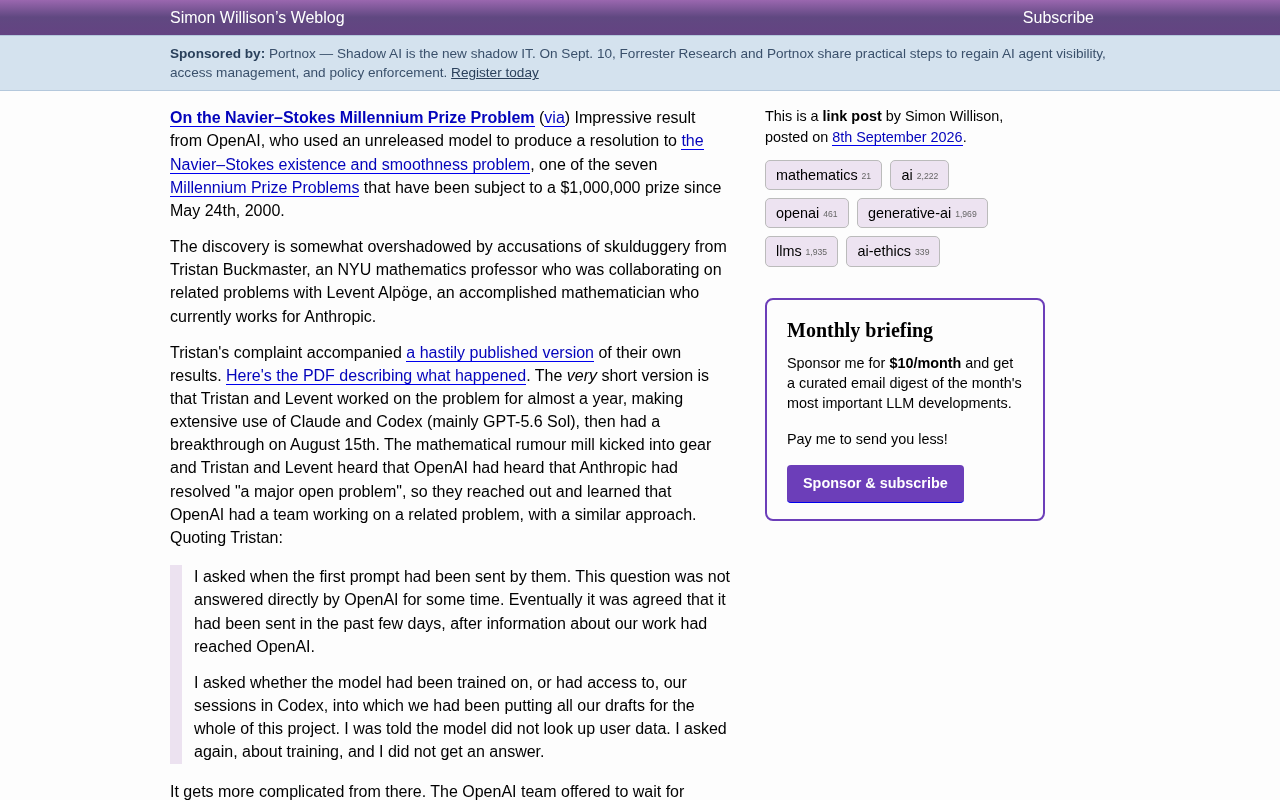
OpenAI's Millennium Problem Controversy: Where Are the Boundaries of AI Training Data?
OpenAI claims breakthrough on Navier-Stokes millennium problem, sparking data ethics controversy. Researchers question if models used their conversation data, exposing conflicts between academic priority and data privacy in the AI era.
AI Model Distillation Explained: Global Competition and Compliance Boundaries
Deep dive into AI model distillation: principles, applications, and controversies. Explore how knowledge distillation reduces training costs while navigating service terms and IP protection challenges in the global AI race.